Why Some Brand-Name Drugs Have No Generic Alternatives
 Jul, 3 2026
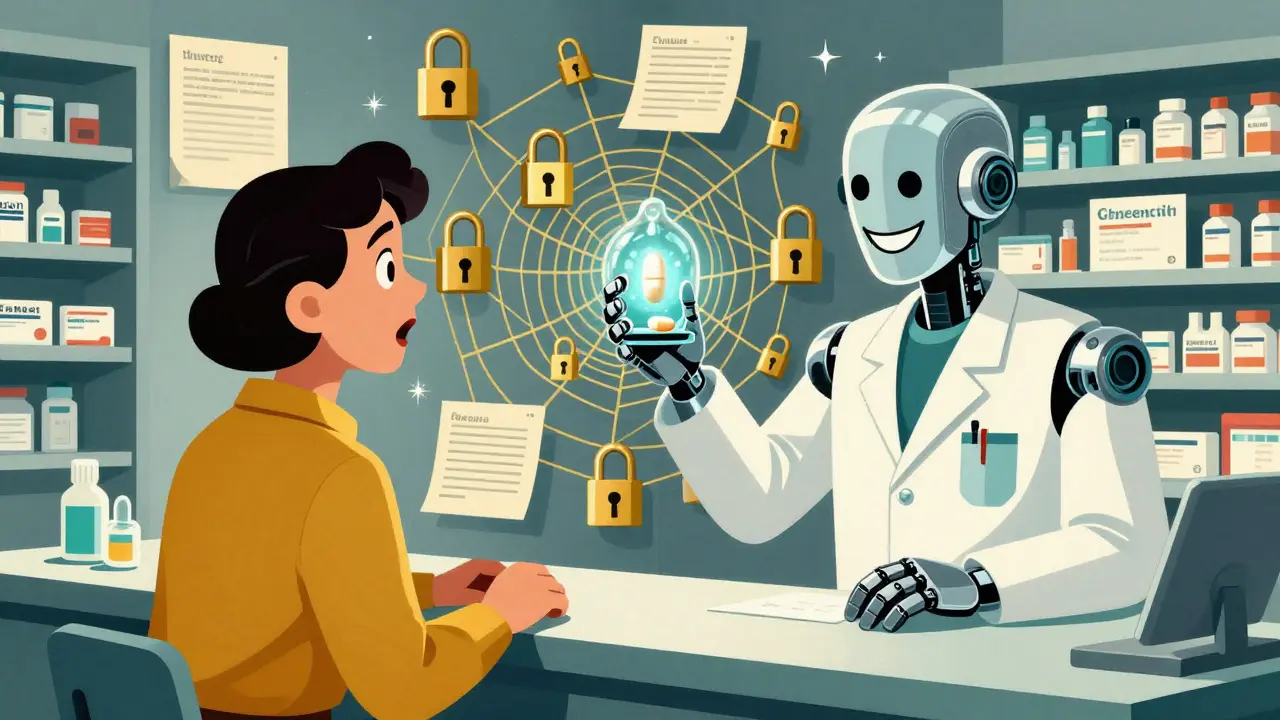
You walk into your pharmacy with a prescription for a life-saving medication. The pharmacist tells you there is no generic version available. You have to pay the full brand-name price, which could be hundreds or even thousands of dollars more than what you expected. It feels unfair. After all, aren't generics supposed to be cheaper copies that come out once patents expire? For most drugs, yes. But for a significant chunk of the market, that simple timeline doesn't apply.
As of 2026, roughly 25% of top-selling brand-name drugs still lack generic competition, even after their initial patents have technically expired. This isn't an accident. It is the result of a complex web of legal strategies, scientific hurdles, and regulatory rules designed to keep competitors at bay. Understanding why this happens helps you navigate your healthcare costs and talk to your doctor about real options.
The Patent Thicket Strategy
Patent thickets are clusters of overlapping patents covering different aspects of a single drug product, used by manufacturers to extend market exclusivity beyond the original expiration date. This is the most common reason you see high prices on older medications.
When a pharmaceutical company develops a new drug, they get a patent. This gives them exclusive rights to sell it for usually 20 years from the filing date. During this time, they recoup billions in research and development costs. Once that patent expires, generic companies can step in, make the same pill, and sell it for pennies on the dollar.
But big pharma companies don't wait around for that clock to run out. They file dozens of additional patents related to the drug. These might cover the specific color of the tablet, the coating that makes it dissolve slowly, the method of manufacturing, or even the packaging. This creates a "thicket" of legal protections. Even if the main patent for the active ingredient expires, generic makers still face lawsuits over these secondary patents.
A classic example is Nexium (esomeprazole), made by AstraZeneca. The original patent for the molecule expired in 2001. However, the company filed multiple follow-up patents covering its use for specific conditions and its delivery system. They successfully defended these in court until 2014. That means Nexium kept its monopoly for 13 extra years, generating massive profits while patients paid premium prices.
Dr. Robert J. Goldberg from Harvard Medical School notes that these tactics extend market exclusivity by an average of 3.2 years beyond the original patent. In some cases, like with EpiPen, the strategy was even more aggressive. Mylan Pharmaceuticals introduced minor design changes to the auto-injector just before patents were set to expire. This reset the patent clock, allowing them to maintain dominance for decades despite the core technology being old.
Biologics and Biosimilars: A Different Game
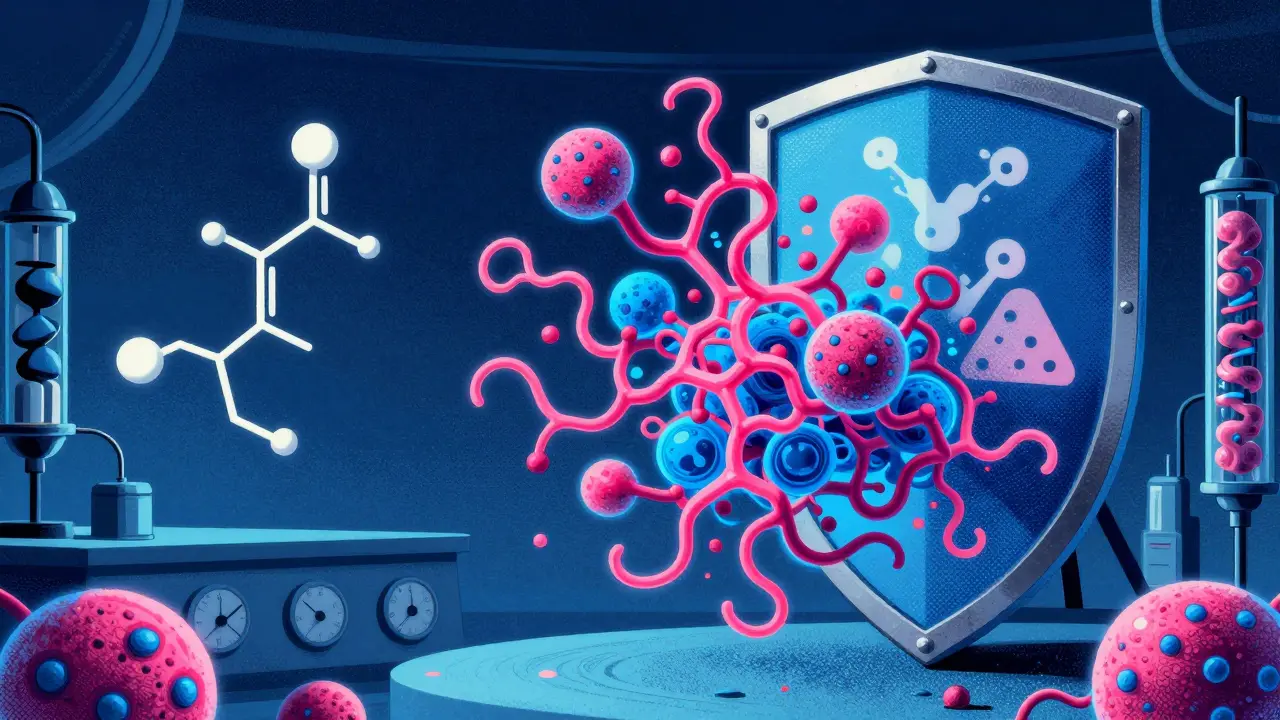
If small-molecule drugs (like aspirin or Lipitor) are hard to copy due to patents, biologic drugs are hard to copy because of science. Biologics are large, complex molecules made from living organisms. Think of antibodies, proteins, or hormones. Drugs like Humira (adalimumab) and Enbrel (etanercept) fall into this category.
You cannot simply mix chemicals in a lab to create a generic biologic. Because they are grown in cells, tiny variations in the manufacturing process can change the structure of the molecule. This means a "copy" is never identical to the original. Instead of generics, we call these copies biosimilars.
| Feature | Small-Molecule Drug (e.g., Lipitor) | Biologic Drug (e.g., Humira) |
|---|---|---|
| Manufacturing Process | Chemical synthesis; precise and repeatable | Grown in living cells; highly variable |
| Copy Name | Generic | Biosimilar |
| Approval Pathway | Abbreviated New Drug Application (ANDA); proves bioequivalence | Biosimilar Application; requires extensive clinical testing |
| Exclusivity Period | Typically 20 years + extensions | 12 years data exclusivity under BPCIA + patents |
| Price Drop Potential | 80-85% drop upon generic entry | Variable; often slower and smaller drops |
The regulatory barrier here is huge. The Biologics Price Competition and Innovation Act of 2009 created a pathway for biosimilars, but it includes a strict 12-year period of data exclusivity. This means no one else can use the original manufacturer's safety and efficacy data to get approved for 12 years after the biologic itself is approved. On top of that, biologics have their own patent thickets.
Take Humira. Its core patent expired in 2016. But AbbVie, the maker, fought fiercely using litigation and settlements. The first biosimilar didn't reach the U.S. market until 2023. That seven-year delay cost consumers billions. As of 2026, while biosimilar approvals are growing, complex biologics remain largely protected. About 68% of oncology drugs lack generic or biosimilar alternatives because of these combined scientific and legal walls.
Complex Formulations and Delivery Systems
Sometimes, the problem isn't the molecule itself, but how it gets into your body. Some drugs use sophisticated delivery systems that are incredibly difficult to replicate. If a generic version doesn't deliver the drug at the exact same rate or in the exact same way, the FDA won't approve it.
Consider inhalers like Advair Diskus or Spiriva HandiHaler. These devices must aerosolize the medication perfectly so it reaches deep into the lungs. A generic device that sprays slightly differently might not work as well. Patients report feeling a difference in symptom control even when the active ingredient is the same. One user on PatientsLikeMe noted that generic tiotropium "feels different in my lungs" compared to the brand.
Other examples include extended-release capsules, transdermal patches like Androderm, and injectables with unique needle technologies. Creating a generic version of these requires reverse-engineering complex engineering. The FDA demands rigorous testing to prove that the generic device performs identically to the brand. This takes time, money, and expertise. Many generic companies decide it's not worth the risk. If they can't guarantee perfect performance, they won't launch the product.
This is particularly true for drugs with a narrow therapeutic index. These are medications where a tiny difference in dose can cause serious side effects or treatment failure. Examples include certain thyroid medications and anti-seizure drugs. The FDA is extremely cautious here. If a generic formulation varies even slightly in how quickly it dissolves, it could be dangerous. This caution slows down approvals and discourages generic manufacturers from entering the market.
Anti-Competitive Practices: Pay-for-Delay
Not all barriers are technical or legal. Some are purely financial games played behind closed doors. One notorious tactic is called "pay-for-delay." Here's how it works: A brand-name company faces a lawsuit from a generic challenger who claims the patents are invalid. Instead of fighting to the end, the brand company offers the generic company millions of dollars to stay out of the market for a few years.
To the outside observer, this looks like a settlement. But in reality, it's a bribe. The brand company pays the generic competitor to keep prices high. Consumers lose out because they continue paying brand-name prices. The Federal Trade Commission (FTC) has identified hundreds of these settlements. Between 1999 and 2012 alone, 297 such deals affected 42 major drugs, costing consumers an estimated $3.5 billion annually.
Another tactic is "product hopping." Just before a patent is set to expire, the brand company launches a "new" version of the drug. Maybe it's a slightly different dosage form, or a combination with another mild drug. They then aggressively market this new version to doctors and patients, encouraging them to switch. Meanwhile, they stop making the old version. Generic companies can only make generics of the old, discontinued version. Since no one wants the old pill, the generic fails. The brand keeps its monopoly on the new version, which has its own fresh patents.
These practices frustrate regulators and patients alike. Laws like the CREATES Act of 2019 have tried to curb some abuses by forcing brand companies to provide samples to generic testers. But the game of cat and mouse continues. Companies constantly find new ways to legally delay competition.
The Cost Impact on Patients
All these barriers have a direct impact on your wallet. The price gap between brand-name drugs without generics and those with generic competition is staggering. According to a 2022 analysis by GoodRx, brand-name drugs without generic alternatives cost, on average, 437% more than comparable medications with generic options.
For Medicare beneficiaries, this is a crisis. Data shows that 22% of seniors taking medications without generic alternatives spend over $5,000 annually out-of-pocket. Compare that to just 8% of those taking generic-covered meds. When you're managing a chronic condition like cancer or rheumatoid arthritis, these costs can force impossible choices between medication and food or rent.
Real-world stories highlight the pain. A patient with chronic myeloid leukemia reported paying $14,500 a month for brand-name Gleevec before its patent expired in 2016. Once the generic imatinib became available, the price dropped to $850 a month. That's a 94% reduction. Imagine having access to that savings five years earlier. Now multiply that by millions of patients stuck on non-generic drugs today.
Even when generics do exist, switching isn't always seamless. Some patients worry about efficacy differences. A GoodRx survey found that 63% of users express concern about efficacy for chronic conditions like epilepsy or thyroid disorders. While studies generally show generics are equally effective, the perception of risk remains. For drugs without any generic option, patients have no choice but to accept the high price or seek alternative treatments.
What Can You Do?
Facing a high-cost brand-name drug with no generic alternative feels helpless. But there are steps you can take. First, talk to your pharmacist. Pharmacists are experts in therapeutic equivalence. They can check if there is a different brand-name drug that treats the same condition but has a generic version. For example, if you are prescribed Viibryd (vilazodone) for depression and it lacks a generic, your pharmacist might suggest switching to sertraline, which has a cheap generic equivalent and similar efficacy for many patients.
Second, look into patient assistance programs. Most brand-name manufacturers offer copay cards or foundation support for uninsured or underinsured patients. Websites like NeedyMeds or the manufacturer's own site can help you find discounts. Third, ask your doctor about clinical trials. Sometimes, participating in a study provides free access to new treatments or existing ones under investigation.
Finally, stay informed about patent expirations. The FDA's Orange Book lists all approved drugs and their patent status. While it's dense reading, knowing when a major patent is set to expire can help you plan. Advocacy groups also track these dates. Pressure from patients and policymakers is increasing scrutiny on pay-for-delay tactics. The FDA's recent focus on approving complex generics under GDUFA III is a positive sign, with a 27% increase in approvals for complex generics in 2022.
The landscape is changing. By 2030, experts predict generic competition will cover 95% of drug categories. But for now, that remaining 5%-ultra-complex biologics and orphan drugs-will likely stay expensive. Understanding why helps you advocate for yourself and push for better policies that prioritize patient access over corporate profit.
Why are some brand-name drugs so much more expensive than generics?
Brand-name drugs without generic competition allow manufacturers to set higher prices because they face no direct competition. Research and development costs are recouped during the exclusivity period. Additionally, complex manufacturing processes for biologics and specialized delivery systems add to the cost. Without generic rivals driving prices down through competition, brands maintain premium pricing.
What is a patent thicket?
A patent thicket is a strategy where a pharmaceutical company files multiple overlapping patents covering various aspects of a drug, such as its formulation, packaging, or method of use. This creates a legal barrier that makes it difficult and risky for generic manufacturers to enter the market, effectively extending the brand's monopoly beyond the original patent expiration.
Can I switch from a brand-name drug to a biosimilar?
Yes, in many cases. Biosimilars are highly similar to reference biologic products with no clinically meaningful differences in safety, purity, and potency. However, switching should always be discussed with your doctor. Some insurance plans automatically substitute biosimilars, while others require physician approval. Interchangeability laws vary by state.
How long does it take for a generic drug to become available after patent expiration?
Ideally, generics appear immediately after patent expiry. However, due to litigation, regulatory reviews, and manufacturing setup, it can take months to years. Complex drugs or those involved in pay-for-delay settlements may face delays of several years. The FDA aims to streamline this, but legal battles often dictate the actual timeline.
Are biosimilars as safe and effective as brand-name biologics?
Yes. The FDA requires biosimilars to demonstrate that they are highly similar to the reference product with no clinically meaningful differences. Extensive clinical trials verify safety and efficacy. Studies have shown comparable outcomes in treating conditions like rheumatoid arthritis and Crohn's disease. Patient monitoring is standard practice when switching.
What is "pay-for-delay" in the pharmaceutical industry?
Pay-for-delay occurs when a brand-name drug manufacturer pays a generic competitor to delay launching a generic version of the drug. This is often done through settlement agreements in patent lawsuits. Critics argue this practice harms consumers by keeping prices artificially high and reducing competition, leading to billions in unnecessary healthcare costs.
Why do some drugs have no generic alternative even after many years?
Several factors contribute: complex manufacturing processes that are hard to replicate, ongoing patent litigation, low market demand that doesn't justify generic production costs, and regulatory hurdles for drugs with narrow therapeutic indices. Additionally, some drugs are biologics, which require biosimilar pathways rather than traditional generic approval.
How can I find lower-cost alternatives if my drug has no generic?
Talk to your doctor about therapeutic alternatives that may have generic versions. Ask your pharmacist about manufacturer copay assistance programs or patient foundations. Check if your insurance covers mail-order pharmacies which sometimes offer discounts. Clinical trials may also provide free access to medications. Never stop or change medication without consulting your healthcare provider.