Why Generic Drugs Are Vanishing: The Hidden Crisis Behind Drug Shortages
 Dec, 16 2025
Every year, Americans fill over 4 billion prescriptions for generic drugs. They’re cheaper, widely available, and trusted - or at least they used to be. But today, shelves in pharmacies and hospital pharmacies are emptying out, not because of high demand, but because the system keeping them stocked is breaking down. Generic drug shortages are no longer rare exceptions. They’re the new normal - and the reasons why are deeper than most people realize.
The Numbers Don’t Add Up
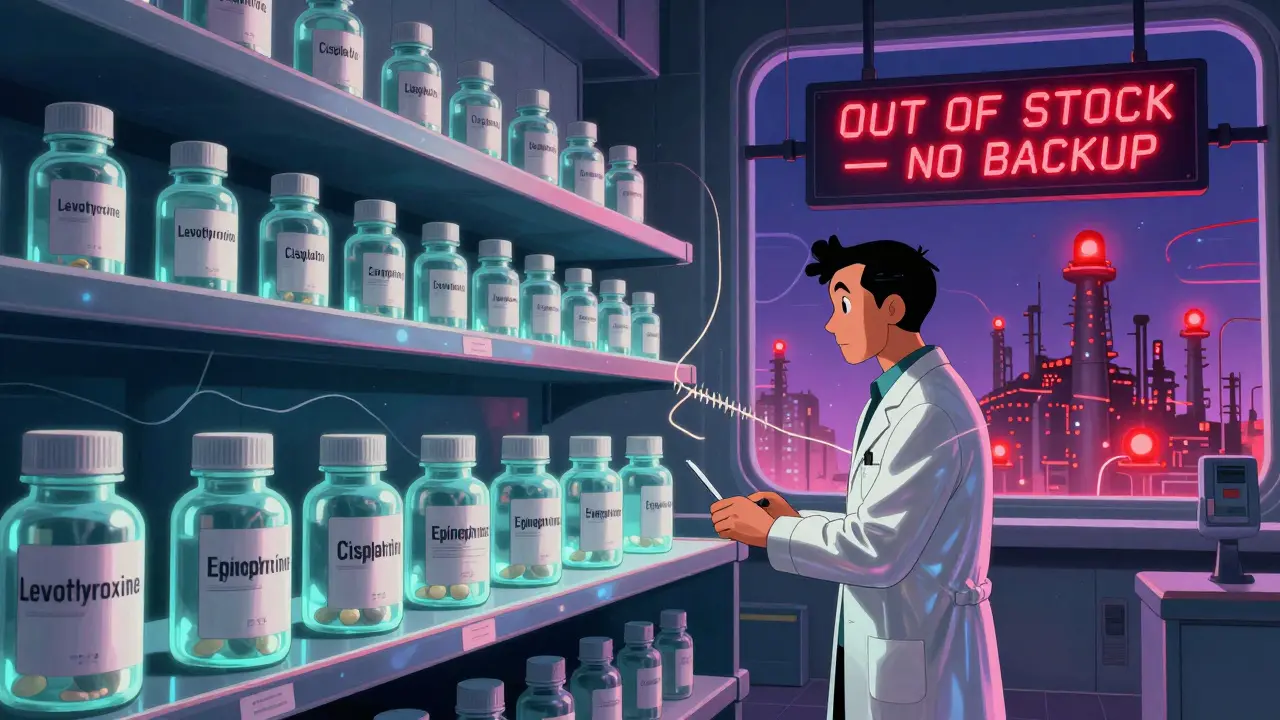
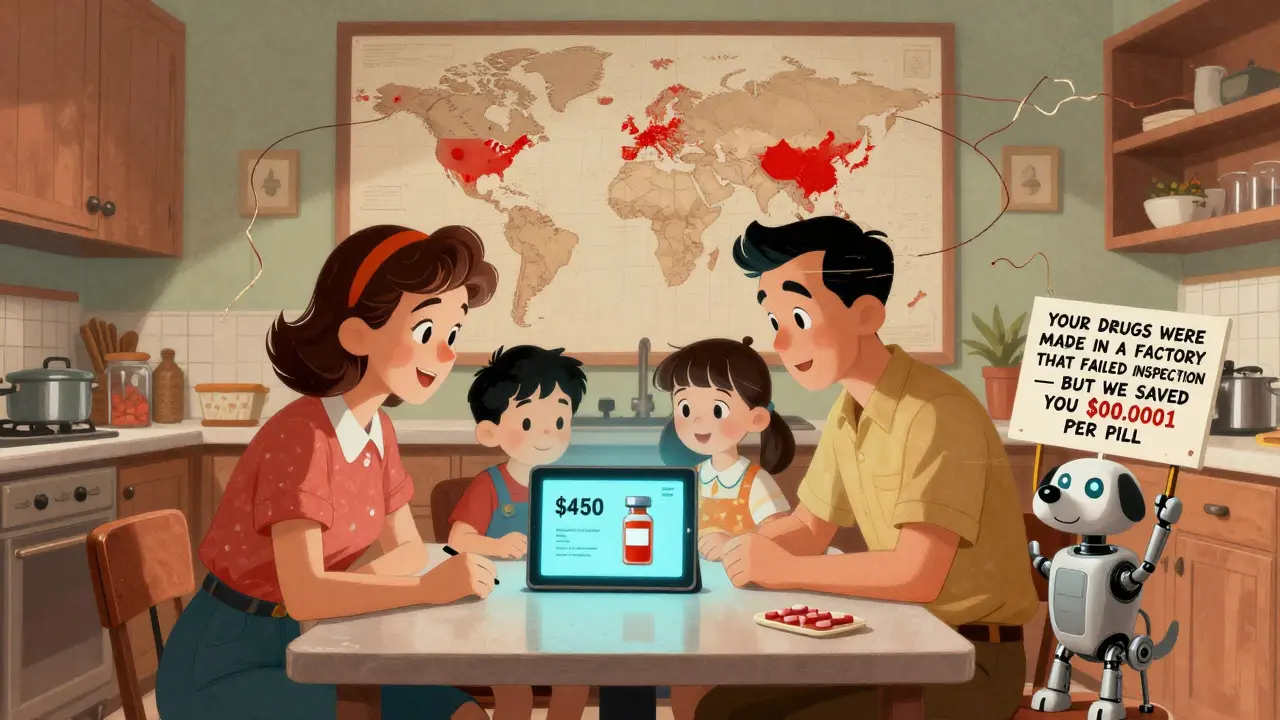
Generic drugs make up 90% of all prescriptions filled in the U.S., yet they account for only about 20% of total drug spending. That sounds like a win - until you see what’s happening behind the scenes. While branded drugs get big profits and steady supply chains, generics are caught in a race to the bottom. Manufacturers are forced to sell pills for pennies. Some products earn less than 5% profit per tablet. When the price drops below the cost of making it, companies stop producing. And when one company stops, there’s often no backup.In 2023, the FDA listed 278 active drug shortages - the highest number since tracking began in 2011. Nearly 70% of those were generics. Medications like levothyroxine, epinephrine, antibiotics, and even cancer drugs like cisplatin disappeared for months at a time. Patients had to switch brands, pay hundreds more per month, or go without. One Medicare recipient saw their heart medication jump from $10 to $450 a month when the generic ran out.
Where Are These Drugs Made?
Most people assume their pills are made in the U.S. They’re not. Over 70% of the active ingredients in U.S. drugs come from overseas. For antibiotics, it’s 97%. For antivirals, 92%. And for the top 100 most-used generic drugs, 83% have zero active ingredient production inside the United States.The bulk of this production happens in India and China. These countries can make drugs cheaply - but at a cost. In 2022, the FDA shut down production of cisplatin from Intas Pharmaceuticals in India after finding "enormous and systematic quality problems." That’s not an isolated case. FDA audits show that U.S.-based manufacturers maintain 95%+ accuracy in their production records. Some foreign facilities fall below 78%. That gap matters when you’re dealing with life-saving drugs.
Even worse, the supply chain is a global puzzle. One company makes the active ingredient in China. Another mixes it with fillers in India. A third coats the pill in Germany. Then it’s shipped to the U.S. for packaging. One hiccup - a factory fire, a regulatory inspection, or a political ban - and the whole chain breaks. When India halted exports of 26 essential medicines in early 2020, including acetaminophen, hospitals scrambled. Over 80% of the raw material for acetaminophen still comes from China. No backup. No buffer.
Why Can’t They Just Make More?
It’s not that manufacturers don’t want to. It’s that they can’t afford to.Building a single FDA-compliant drug manufacturing plant in the U.S. costs between $250 million and $500 million. It takes 3 to 5 years. In India or China, the same facility costs $50 million to $100 million and opens in half the time. Why would a company with 5% margins invest half a billion dollars when they can make the same pill for a fraction of the cost overseas?
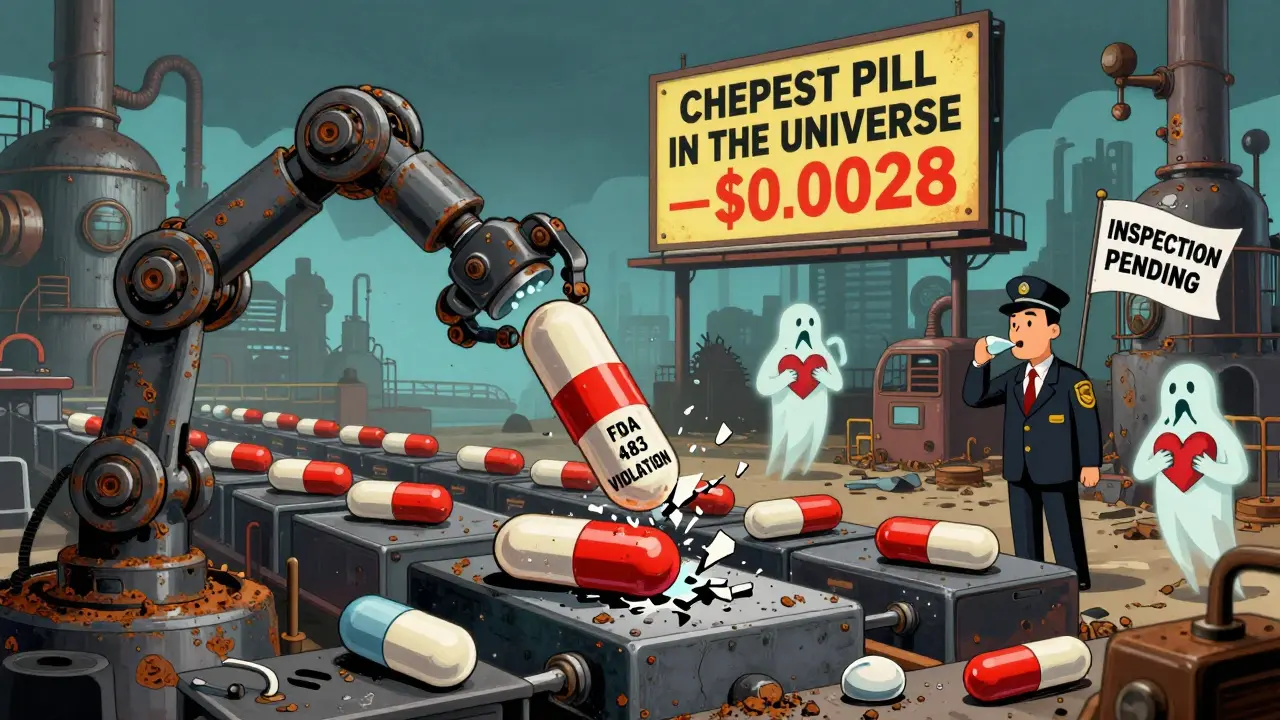
Even if they try, the rules are brutal. The FDA doesn’t give warnings - it gives inspections. If a facility gets flagged with a Form 483 (a list of violations), fixing it takes 12 to 18 months and costs around $1.7 million. Companies that fail inspections face fines averaging $2.3 million. The paperwork alone - keeping records for 5 to 7 years, documenting every batch - eats up resources. Many smaller manufacturers just quit.
And then there’s technology. Modern continuous manufacturing can produce drugs with better quality control, less waste, and fewer errors. But it requires massive upfront investment. Generic manufacturers, squeezed by price wars, can’t justify spending millions on equipment that won’t pay for itself for years. Meanwhile, branded drugmakers - with 70-80% margins - use these systems without blinking.
The Buyers Are the Problem
You’d think hospitals and pharmacies would want reliable supply. But their buying systems make shortages worse.Group purchasing organizations (GPOs) and pharmacy benefit managers (PBMs) negotiate contracts based on the lowest price per pill - often down to less than one-tenth of a cent. If Company A sells a 10mg tablet for $0.003, Company B has to undercut it to $0.0029. Then Company C comes in at $0.0028. Eventually, no one can profit. The winner isn’t the best manufacturer. It’s the one willing to lose money the longest.
When Akorn Pharmaceuticals went bankrupt in February 2023, it pulled over 100 drugs off the market overnight. No one had planned for that. No one had a backup. Why? Because no one paid enough to keep a second supplier alive. The system rewards the cheapest, not the most reliable.
Some hospitals are waking up. In 2023, 68% of health systems reported bypassing GPOs to sign direct contracts with manufacturers - just to ensure supply. But that’s still the minority. Most still chase the lowest bid.
What’s the Human Cost?
It’s not just about empty shelves. It’s about patients.One hospital pharmacist in Ohio told Reddit users they’d switched antibiotics for 17 different infections in six months because the generics weren’t available. Nurses had to monitor 89 patients switching from one brand of levothyroxine to another - each with different absorption rates. A 2023 study found that generics made in India were linked to 54% more serious adverse events - including hospitalizations and deaths - than those made in the U.S. Researchers say it’s correlation, not causation. But when you’re the patient on that drug, does it matter?
People on chronic medications are paying more. Families are skipping doses. Emergency rooms are seeing more complications from untreated conditions. And there’s no easy fix. The FDA can’t force companies to make drugs. They can only call and ask nicely.
Is There a Way Forward?
There are signs of change - but they’re slow.The FDA’s Emerging Technology Program has approved 12 new continuous manufacturing facilities since 2019. That’s progress. But those 12 plants make less than 3% of all generic drugs. The rest still rely on outdated batch systems and fragile global supply chains.
Congress is considering bills that would offer tax breaks for domestic API production and create strategic stockpiles of critical drugs. The Biden administration added $80 million to FDA inspection budgets in 2024 - but that’s only a 12% increase, while the number of foreign facilities needing inspection jumped 40%.
Industry analysts predict the number of U.S. generic manufacturers will drop from 127 in 2022 to 89 by 2027. That means fewer suppliers, less competition, and more vulnerability.
Some experts believe consolidation - fewer but stronger manufacturers - could stabilize the market. Others warn that without structural reform, we’re heading toward a healthcare crisis where basic medicines become luxury items.
The truth is simple: you can’t run a healthcare system on pennies. When you treat life-saving drugs like commodities, you get commodity outcomes - shortages, delays, and danger.
For now, patients and providers are left to patch together solutions - switching brands, paying more, waiting weeks. But the system isn’t broken because of bad luck. It’s broken because we chose to prioritize price over safety, speed over stability, and profit over people.
Why are generic drugs so much cheaper than brand-name drugs?
Generic drugs cost less because they don’t need to recoup billions spent on research and clinical trials. Once a brand-name drug’s patent expires, other companies can copy the formula. They only need to prove their version is bioequivalent - which costs about $2.6 million per application, compared to $2 billion+ for a new drug. That’s why generics can sell for 80-90% less.
Are generic drugs less effective or unsafe?
Legally, generics must be identical in dosage, strength, and effect to the brand-name version. But quality varies by manufacturer. FDA audits show U.S.-based plants have far fewer documentation errors and better compliance than some foreign facilities. There’s no evidence that generics are less effective - but there is growing concern about safety due to inconsistent manufacturing standards overseas, especially when quality controls are lax.
Why don’t U.S. companies make more active ingredients here?
It’s too expensive. Building a single FDA-approved API plant in the U.S. costs $250-500 million. In India or China, it’s $50-100 million. With generic drug prices driven down by group purchasing organizations, manufacturers can’t afford the investment. They’d lose money for years before breaking even - and even then, they’d still be competing against cheaper foreign producers.
What happens when a generic drug runs out?
Doctors switch patients to another generic version - if one exists. If not, they may have to use the brand-name drug, which can cost 10 to 50 times more. Patients often pay more out-of-pocket. In some cases, like with cancer or heart medications, alternatives aren’t available at all. Patients may go without treatment for weeks or months. Hospitals sometimes ration doses. These aren’t hypotheticals - they’re happening right now.
Can the government fix this?
The FDA can inspect and shut down unsafe facilities, but it can’t force companies to produce drugs. Congress has proposed tax incentives for domestic manufacturing and stockpiles of critical drugs, but funding is limited. The real fix requires changing how drugs are bought - moving away from lowest-price contracts to ones that reward reliability, quality, and supply chain resilience. Without that, shortages will keep getting worse.
How can I find out if my medication is in short supply?
Check the FDA’s Drug Shortages page, which lists all active shortages. You can also ask your pharmacist - they’re often the first to know when a drug is running low. If your medication is affected, don’t stop taking it. Talk to your doctor about alternatives. Some pharmacies can order from alternate suppliers, or you may qualify for patient assistance programs.
BETH VON KAUFFMANN
December 17, 2025 AT 19:07The FDA's inspection regime is a joke. They show up like clockwork, issue a Form 483, and then wait six months while the plant sits idle. Meanwhile, the same manufacturer in India gets a pass because they ‘cooperate’ by submitting a PowerPoint. This isn’t oversight-it’s theater. And we’re paying for the script.
Continuous manufacturing isn’t some futuristic fantasy-it’s been around since 2015. But nobody wants to invest in quality when the market rewards the lowest bidder. The real scandal? The same GPOs that drive prices into the ground are the ones lobbying for ‘cost containment.’ They’re not saving money-they’re exporting risk.
And don’t get me started on the ‘bioequivalence’ loophole. Two drugs can be ‘equivalent’ while differing in dissolution rates by 15%. That’s not a technicality-it’s a clinical gamble. Patients on levothyroxine aren’t lab rats. They’re people whose TSH levels swing because some factory in Hyderabad used a different filler.
We treat pharmaceuticals like toilet paper. We don’t care where it came from, as long as it’s cheap. But when the supply chain snaps, suddenly we’re all experts in supply chain logistics. Funny how that works.
Donna Packard
December 19, 2025 AT 18:46I just want to say thank you for writing this. My mom’s on a generic heart med that disappeared for three months last year. We had to switch brands twice. She got dizzy, her BP spiked, and no one could explain why. It wasn’t the drug-it was the manufacturing. I never knew how fragile this system was until it almost cost her her health.
People think ‘generic’ means ‘low quality.’ It doesn’t. It means ‘low price.’ And that’s the real problem.
Patrick A. Ck. Trip
December 20, 2025 AT 16:18It’s a shame really. The u.s. used to be a leader in pharma manufacturing. Now we’re dependent on overseas facilities with questionable quality control. I’ve read the fda reports. Some of the violations are staggering. And yet, we keep buying because it’s cheaper.
I think we need a national stockpile for critical generics. Not just for emergencies, but for routine supply. Like how we keep oil reserves. It’s not perfect, but it’s better than letting patients go without.
also, the cost of building a plant here is insane. maybe the government should co-fund with manufacturers? just a thought.
Sam Clark
December 21, 2025 AT 00:49The structural misalignment in this system is profound. The incentive architecture rewards price minimization over supply chain resilience, which is a classic case of market failure. When the unit economics of a product cannot support the regulatory and operational overhead required for safe production, rational actors will exit the market.
What we are witnessing is not a shortage of pharmaceuticals, but a shortage of viable economic models for generic drug manufacturing in the current regulatory and procurement environment.
Policy interventions must therefore target not only production capacity but the procurement mechanisms that determine profitability. Contractual frameworks that incorporate reliability metrics, not just unit cost, are essential.
Furthermore, the FDA’s inspection capacity must be expanded proportionally to the growth in foreign manufacturing sites. Currently, the ratio of inspectors to facilities is untenable.
This is not a technical problem. It is a policy failure.
Linda Caldwell
December 21, 2025 AT 03:44Anna Giakoumakatou
December 21, 2025 AT 20:27Oh wow. A 900-word essay on how capitalism failed us. Who knew? I thought it was just that we all forgot to pay attention until someone’s insulin disappeared.
Let me guess-the solution is to make everyone pay more? Brilliant. Because nothing says ‘healthcare for all’ like making essential drugs a luxury item again. At least when the Indian factory shut down, we got to watch the headlines scream ‘CRISIS’ while the same CEOs who pushed for offshoring took their bonuses.
It’s not broken. It’s working exactly as designed. Profit over people. Always.
CAROL MUTISO
December 22, 2025 AT 19:58Imagine if we treated antibiotics like we treat smartphones-where you upgrade every two years because the old one ‘doesn’t cut it.’ We’d never run out. But no, we treat life-saving drugs like disposable toilet paper and then act shocked when the roll snaps.
Here’s the uncomfortable truth: we outsourced not just manufacturing, but responsibility. We stopped caring about where the pill came from, as long as it was cheap. Now we’re reaping the consequences of collective apathy.
And don’t get me started on the GPOs. They’re the corporate equivalent of a teenager who buys the cheapest sneakers because they look cool, then blames the store when they fall apart in the rain.
It’s not about money. It’s about values. And right now, our values are in the dumpster with the expired levothyroxine.
Maybe we need a new word-not ‘generic’-but ‘sacred.’ Because if you’re going to sell something that keeps people alive, you damn well better make sure it’s made right.
Erik J
December 23, 2025 AT 19:58Is there data on how many of these shortages are due to deliberate underproduction rather than actual supply chain issues? I’ve heard whispers that some manufacturers intentionally limit output to drive up prices once the shortage hits. Not speculation-actual whistleblower reports from the 2010s.
If true, this isn’t a market failure. It’s collusion. And if the FDA can’t prove it, maybe they’re not looking hard enough.
Jessica Salgado
December 25, 2025 AT 10:16I work in a rural ER. Last month, we had to use a 15-year-old stock of epinephrine because the new batch hadn’t arrived. The vials were yellowing. We used them anyway.
My nurse cried after. Not because she was scared-she’s seen worse. But because she realized: we’re not just running low on medicine. We’re running out of trust.
And the worst part? The patients don’t even know. They just show up, get a new script, and go home thinking everything’s fine.
It’s not a shortage. It’s a slow-motion betrayal.