Warfarin and Generic Switching: INR Monitoring and Safety
 Aug, 3 2026
Is Your Blood Thinner Safe When You Switch Brands?
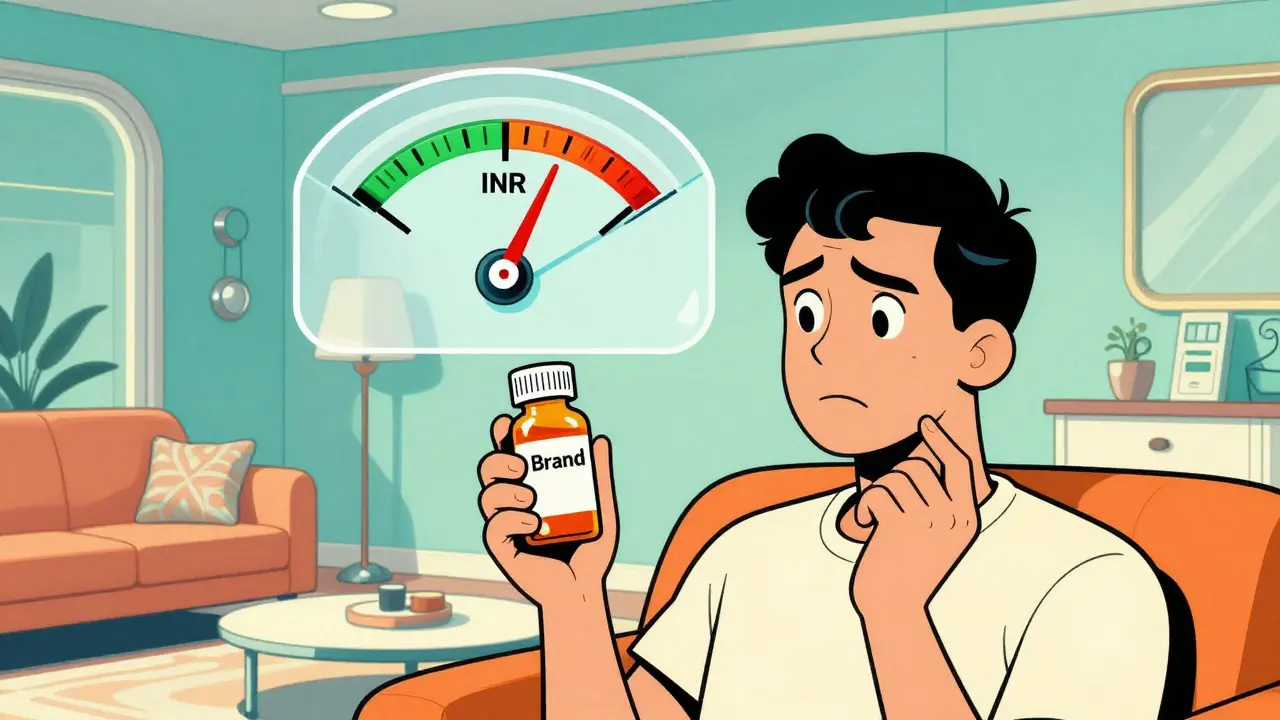
You take Warfarin is a vitamin K antagonist anticoagulant used to prevent blood clots. It requires precise dosing because its therapeutic window is narrow. every day to keep your heart safe from strokes or pulmonary embolisms. For years, you’ve been stable on a specific brand, maybe Coumadin is the original brand-name formulation of warfarin sodium developed by Bristol-Myers Squibb.. Then, one month, the pharmacy hands you a different bottle. The price dropped. The manufacturer changed. Suddenly, your International Normalized Ratio (INR) is a standardized measure of blood clotting time used to monitor warfarin therapy. goes haywire.
This scenario terrifies many patients. Warfarin is not like aspirin or ibuprofen. A tiny shift in dose can mean the difference between preventing a clot and causing a dangerous bleed. With over 90% of warfarin prescriptions now being generic versions, understanding how these switches affect your health is critical. This guide breaks down what happens when you switch from brand-name Coumadin to generic warfarin, or between different generic manufacturers, and exactly how to monitor your safety.
The Reality of Generic Equivalence
The U.S. Food and Drug Administration (FDA) sets strict rules for generic drugs. To be approved, a generic version must be "bioequivalent" to the brand name. This means it delivers the same amount of active ingredient into your bloodstream within a similar timeframe. Specifically, the area under the curve (AUC) and maximum concentration (Cmax) must fall within an 80% to 125% range compared to the reference drug.
For most medications, this margin is wide enough that patients notice no difference. But warfarin is tricky. Its Narrow Therapeutic Index (NTI) is a characteristic of drugs where small changes in dose lead to large changes in effect or toxicity. means that even slight variations can matter. Critics argue that the 80-125% standard might be too loose for a drug with such high stakes. However, extensive research tells a reassuring story. A systematic review published in PubMed analyzed 11 studies involving over 40,000 patients. The results showed no statistically significant differences in INR control after switching from Coumadin to generic warfarin. The mean difference in INR values was negligible, ranging from -0.05 to 0.12 units.
Another prospective study tracked 182 patients switching from Coumadin to a Barr Laboratories generic. They found no significant changes in INR control, frequency of monitoring, or rates of bleeding and clotting events. So, are generics safe? Yes. But "safe" doesn't always mean "identical response for every single individual." While population-level data shows equivalence, individual physiology can react differently to changes in inactive ingredients (fillers, dyes, binders) used by different manufacturers.
Why INR Fluctuations Happen During Switches
If generics are equivalent, why do some patients experience unstable INRs after a switch? The answer often lies in the complexity of warfarin metabolism. Your liver processes warfarin using enzymes called CYP2C9 and CYP3A4. These enzymes are sensitive to many factors:
- Dietary Vitamin K: Sudden changes in intake of leafy greens can swing your INR by 20-50%.
- Drug Interactions: Over 300 medications interact with warfarin. Starting a new antibiotic or stopping a supplement can alter your clotting time rapidly.
- Adherence Issues: Missing doses or taking them at inconsistent times creates variability.
- Manufacturing Variability: While rare, differences in how quickly the tablet dissolves (disintegration rate) due to different binders can slightly alter absorption speed.
When you switch manufacturers, you introduce a new variable. If your body was perfectly balanced with Brand A, the slight change in excipients in Brand B might cause a minor shift in absorption. For most people, this shift is undetectable. For others, especially those with genetic variations in CYP2C9 or VKORC1 genes, it might require a small dose adjustment. This isn't necessarily a failure of the generic; it's a reflection of human biological diversity.

Monitoring Protocols: What You Should Do
The key to safety during a generic switch is vigilance, not panic. Here is a practical protocol based on guidelines from the College of American Pathologists and the Cleveland Clinic Journal of Medicine:
- Initial Switch Phase (Weeks 1-2): If you are switching from Coumadin to generic, or from one generic manufacturer to another, check your INR more frequently. Aim for testing every 3-7 days until you have two consecutive readings within your target range.
- Target Ranges Matter: Know your goal. Most conditions (atrial fibrillation, DVT/PE) target an INR of 2.0-3.0. Mechanical heart valves may require 2.5-3.5 or higher. Ensure your lab knows your specific indication.
- Stabilization Phase: Once stable on the new formulation for at least two weeks, you can return to your regular monitoring schedule (typically every 4-6 weeks for stable patients).
- Document Everything: Keep a log of the manufacturer name and lot number if possible. If you notice bleeding or bruising, report it immediately. Note any dietary changes or new medications started around the time of the switch.
Dr. Jack Ansell, a leading expert in anticoagulation, notes that while generics are generally safe, "closer monitoring may be reasonable when switching brands, as variations in individual INR response may be seen." This cautious approach prevents adverse events without denying patients access to affordable medication.
Comparing Warfarin to DOACs: The Bigger Picture
It’s impossible to discuss warfarin today without mentioning Direct Oral Anticoagulants (DOACs) like apixaban, rivaroxaban, and dabigatran. These newer drugs don’t require routine INR monitoring and have fewer food interactions. They account for about 65% of new anticoagulant prescriptions.
| Feature | Generic Warfarin | DOACs (e.g., Eliquis, Xarelto) |
|---|---|---|
| Cost (Monthly) | $4 - $10 | $300 - $500 |
| Monitoring Required | Regular INR tests (12-18/year) | Periodic kidney function checks |
| Reversibility | Vitamin K, Fresh Frozen Plasma | Specific reversal agents (expensive) |
| Best For | Mechanical heart valves, severe renal impairment, cost-sensitive patients | Atrial fibrillation, DVT/PE in patients without mechanical valves |
| Food Interactions | High (Vitamin K consistency needed) | Low to None |
Despite the convenience of DOACs, warfarin remains essential. It is the only option for patients with mechanical heart valves and certain autoimmune conditions like antiphospholipid syndrome. Plus, the cost difference is massive. For Medicare beneficiaries and uninsured patients, generic warfarin is often the only viable long-term solution. Understanding how to manage it safely ensures these patients aren't left behind.

When to Worry About Bleeding Risks
Warfarin carries a black box warning for bleeding risks. In a study of nursing home residents, 720 adverse events occurred among 3,000 users, many deemed preventable. Be alert for these signs after a generic switch:
- Unusual bruising or petechiae (small red spots on skin)
- Nosebleeds that won't stop
- Blood in urine (pink, red, or brown) or stool (black, tarry)
- Prolonged bleeding from cuts
- Severe headaches or dizziness (signs of internal bleeding)
If your INR spikes above 4.5 without obvious cause, contact your provider. They may hold a dose or administer low-dose Vitamin K. Never adjust your dose yourself based on a single reading unless instructed by your healthcare team.
Frequently Asked Questions
Can I switch between different generic manufacturers of warfarin?
Yes, you can. The FDA considers all approved generic warfarin products therapeutically equivalent. However, because individual responses can vary slightly due to differences in inactive ingredients, it is recommended to monitor your INR more closely (every 3-7 days) for the first two weeks after switching manufacturers to ensure stability.
Is generic warfarin as effective as Coumadin?
Yes. Multiple large-scale studies involving tens of thousands of patients have shown no significant difference in clinical outcomes, INR control, or rates of bleeding and clotting events between Coumadin and generic warfarin. Both contain the same active ingredient, warfarin sodium, in the same dosage.
How often should I check my INR after switching to generic warfarin?
During the first 1-2 weeks after switching, check your INR every 3-7 days until you have two consecutive readings within your therapeutic range. Once stable, you can return to your usual monitoring schedule, which is typically every 4-6 weeks for stable patients.
Why does my INR fluctuate even if I take the same dose?
INR fluctuations can be caused by changes in diet (especially vitamin K intake), new medications, alcohol consumption, illness, or missed doses. Even consistent habits can have subtle variations that affect warfarin metabolism via liver enzymes like CYP2C9.
Should I stay on the same generic manufacturer forever?
It is ideal to stay with one manufacturer to minimize variables, but it is not strictly necessary. If you find your INR is consistently stable with a specific generic brand, ask your pharmacist to try to fill prescriptions from that same source. However, if supply issues arise, switching is safe provided you increase monitoring temporarily.
What is the target INR for most warfarin patients?
For most indications, such as atrial fibrillation and deep vein thrombosis (DVT), the target INR is 2.0 to 3.0. Patients with mechanical heart valves may require a higher target, typically 2.5 to 3.5, depending on the valve type and position.