Tyramine and MAOIs: The Complete Guide to Foods to Avoid
 Jun, 17 2026
MAOI Food Safety Checker
Not sure if that food is safe? Enter the name of a food below to see its approximate tyramine level and safety status.
- Try searching: Cheddar, Mozzarella, Salami, Chicken, Beer, Wine, Soy Sauce, Avocado.
- Categories covered: Cheeses, Meats, Beverages, Sauces, Fruits/Vegetables.
Note: Always consult your doctor or pharmacist before making dietary changes. Tyramine levels can vary by brand and preparation method.
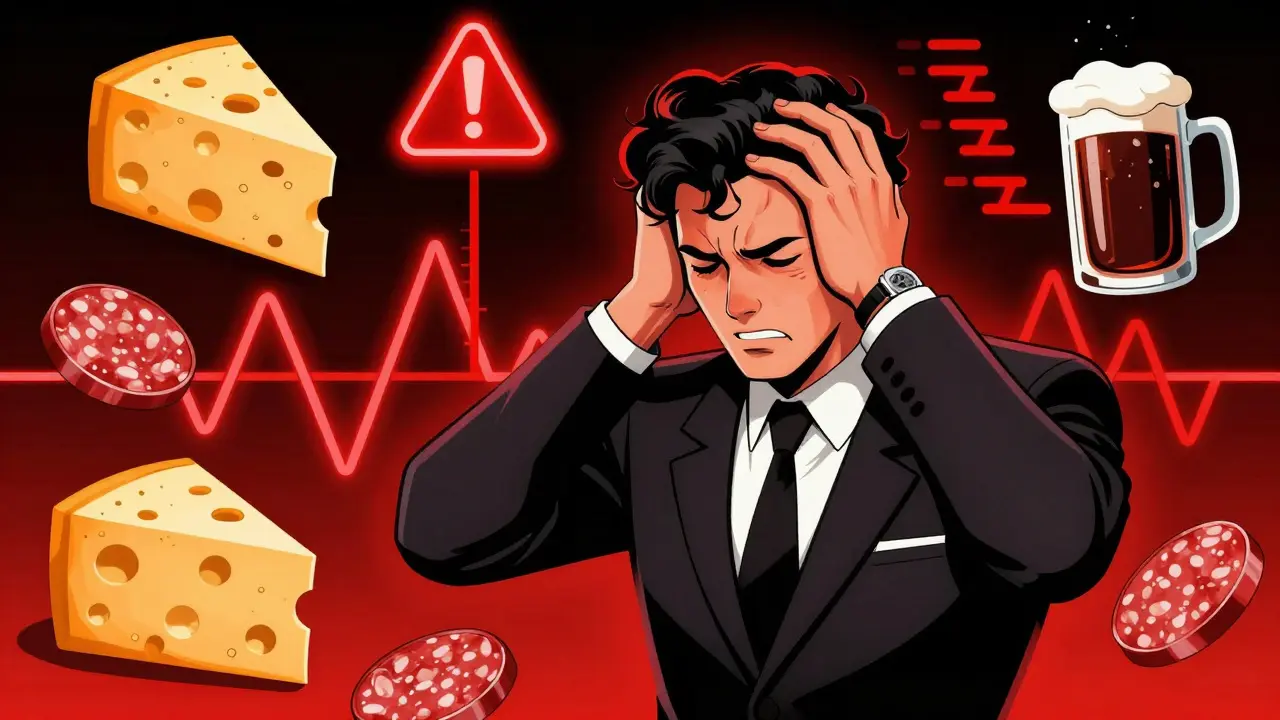
Imagine enjoying a slice of aged cheddar or a glass of Chianti, only to feel your heart race and your head pound within minutes. For most people, this is just indigestion. For someone taking certain antidepressants, it could be a medical emergency. This isn't fear-mongering; it's the reality of how Monoamine Oxidase Inhibitors (MAOIs) interact with tyramine, a naturally occurring amino acid found in many common foods.
If you are prescribed an MAOI, you might have heard whispers about strict dietary restrictions. Some patients avoid these medications entirely because they sound too complicated. Others dive in without understanding the risks, putting themselves in danger. The truth lies somewhere in the middle. With modern formulations and clear guidelines, living safely on an MAOI is manageable. You just need to know exactly what to look for on your plate.
How MAOIs Work and Why Tyramine Matters
To understand the risk, you first need to understand the mechanism. Monoamine Oxidase Inhibitors are a class of antidepressants that block the enzyme monoamine oxidase. Normally, this enzyme breaks down neurotransmitters like serotonin, norepinephrine, and dopamine. By inhibiting it, MAOIs keep these chemicals available in your brain longer, which helps alleviate depression symptoms.
However, this same enzyme also lives in your gut and liver. Its job there is to break down tyramine from the food you eat. When you take an irreversible MAOI, such as phenelzine or tranylcypromine, the drug permanently binds to these enzymes. Your body cannot process tyramine anymore. Instead of being broken down, tyramine enters your bloodstream. It forces your nerves to release stored norepinephrine, causing a sudden spike in blood pressure. This is known as a hypertensive crisis.
A hypertensive crisis can push blood pressure levels above 180/120 mmHg. Symptoms include severe headache, palpitations, sweating, and neck stiffness. In worst-case scenarios, it can lead to intracranial hemorrhage or stroke. The good news? This is rare when you follow the rules. Studies show that with proper education, fewer than 0.5% of patients experience these crises annually.
The High-Risk Food List: What to Avoid
You do not need to memorize every chemical compound in your grocery store. You just need to recognize patterns. Tyramine builds up in foods that are aged, fermented, cured, or spoiled. Fresh foods generally have low tyramine levels. Here is what you need to watch out for if you are on traditional oral MAOIs:
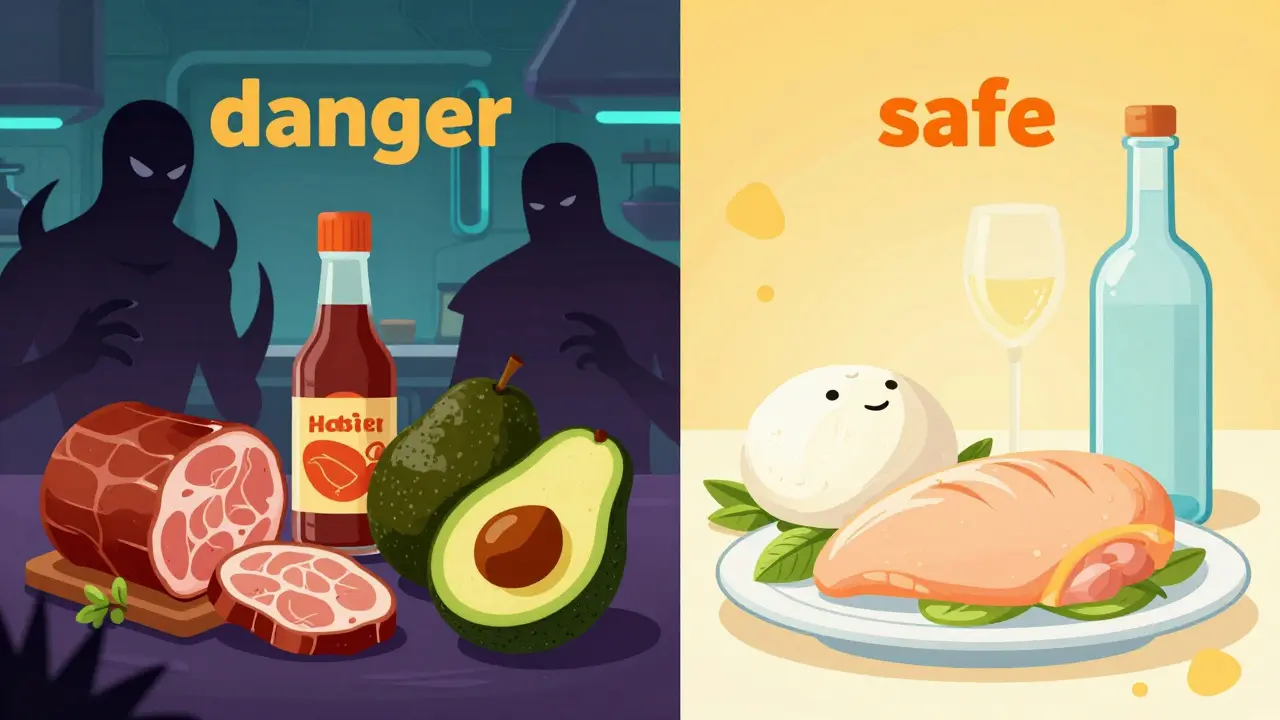
- Aged Cheeses: Avoid cheddar, Swiss, blue cheese, Gouda, and Parmesan. These can contain 50-400 mg of tyramine per 100g. Safe alternatives include fresh mozzarella, cream cheese, cottage cheese, and ricotta, which typically have less than 10 mg per 100g.
- Cured Meats: Salami, pepperoni, sausages, and summer sausage are high-risk. They often contain 50-100 mg per 100g. Stick to freshly cooked meats like chicken, turkey, beef, or pork that haven't been aged or smoked.
- Fermented Soy Products: Traditional soy sauce, miso paste, and tempeh are problematic. While modern commercial soy sauces have lower levels (around 30 mg/100ml) compared to older methods, it is safer to use coconut aminos or low-sodium soy sauce in very small amounts.
- Tap Beers and Certain Wines: Tap beers, especially stouts and ales, can contain 10-30 mg/100ml. Bottled beers are generally safer due to pasteurization. Red wines like Chianti and Barbera are higher in tyramine (10-20 mg/100ml). White wines and distilled spirits (vodka, gin, whiskey) are usually safe in moderation.
- Overripe Fruits and Vegetables: Avocados, bananas, and figs increase in tyramine as they ripen. An unripe avocado has negligible tyramine, but an overripe one can hit 10 mg/100g. Eat fruits when they are firm and fresh.
| Food Item | Approximate Tyramine Level | Safety Status on MAOIs |
|---|---|---|
| Aged Cheddar Cheese | 50-400 mg / 100g | Avoid |
| Fresh Mozzarella | <10 mg / 100g | Safe |
| Salami / Pepperoni | 50-100 mg / 100g | Avoid |
| Freshly Cooked Chicken | Negligible | Safe |
| Tap Beer (Stout/Ale) | 10-30 mg / 100ml | Avoid |
| Distilled Spirits (Vodka) | Negligible | Safe (Moderation) |
| Traditional Soy Sauce | 30-50 mg / 100ml | Use Caution/Avoid |
| Coconut Aminos | <5 mg / 100ml | Safe Alternative |
Not All MAOIs Are Created Equal
This is where many patients get confused. The strict diet applies primarily to irreversible non-selective MAOIs like phenelzine (Nardil), tranylcypromine (Parnate), and isocarboxazid (Marplan). These drugs bind permanently to the enzyme. Your body needs two to four weeks to regenerate new enzymes after you stop taking them. During this time, you must maintain the low-tyramine diet.
However, newer options exist. Selegiline patch (Emsam) is a transdermal delivery system that bypasses the gut. At doses of 6 mg/24 hours or lower, it selectively inhibits MAO-B in the brain while sparing MAO-A in the gut. This means you can eat normal foods without significant risk. If your doctor increases the dose to 9 mg or 12 mg, the dietary restrictions return because the drug begins affecting gut enzymes too.
Another option is moclobemide, a reversible inhibitor. Unlike irreversible MAOIs, moclobemide does not permanently bind to the enzyme. Tyramine can displace it, meaning the enzyme remains functional enough to handle moderate tyramine intake. This makes the diet much more flexible, though caution is still advised with very high-tyramine meals.
Dangerous Drug Interactions Beyond Food
Foods aren't the only thing that interacts with MAOIs. Certain medications can trigger similar hypertensive crises or even more dangerous conditions like serotonin syndrome. Always inform any healthcare provider-including dentists and specialists-that you are taking an MAOI.
Avoid over-the-counter decongestants containing pseudoephedrine or phenylephrine. These stimulate the sympathetic nervous system, compounding the effects of tyramine. Common cold medicines often hide these ingredients, so read labels carefully. Stick to antihistamines like loratadine or cetirizine for allergy relief instead.
Antibiotics like linezolid and methylene blue used during surgeries also act as MAOIs. Combining them with your antidepressant creates a double dose of inhibition, drastically increasing risk. Furthermore, switching between antidepressants requires a precise washout period. If you stop an SSRI to start an MAOI, wait at least two weeks. If you stop an MAOI to start an SSRI, wait two weeks for irreversible MAOIs or 24-48 hours for reversible ones. Skipping this window can lead to serotonin syndrome, a potentially fatal condition characterized by high fever, agitation, and muscle rigidity.
Practical Tips for Living with an MAOI Diet
Living with these restrictions doesn't mean eating bland food. It means being intentional. Here is how to make it easier:
- Carry an Alert Card: Keep a card in your wallet stating you are on an MAOI. This helps emergency responders treat you correctly if you have a reaction.
- Read Labels Every Time: Manufacturers change recipes. Look for words like "aged," "fermented," "cured," "smoked," or "pickled."
- Cook Fresh: Homemade meals give you control. Roast your own chicken breast instead of buying deli meat. Make your own marinades using fresh herbs and citrus instead of bottled soy-based sauces.
- Watch the Leftovers: Tyramine increases as food sits. Do not eat leftover fish or meat that has been in the fridge for more than a day or two. Freshly cooked and immediately frozen food is safe, but thawed and reheated leftovers pose a higher risk.
- Communicate with Restaurants: Call ahead. Ask if their burgers are made from fresh ground meat or pre-formed patties (which may contain preservatives). Ask if their salad dressings contain vinegar or wine.
When to Seek Help
If you accidentally consume a high-tyramine food, don't panic. Small amounts might not cause a reaction. Monitor yourself closely for the next few hours. If you experience a pounding headache, stiff neck, nausea, or rapid heartbeat, seek emergency care immediately. Tell the staff you are on an MAOI and suspect a tyramine reaction. They may administer medication like labetalol or nitroprusside to lower your blood pressure safely.
Remember, MAOIs are powerful tools for treatment-resistant depression. They work where other drugs fail. The dietary restrictions are a manageable trade-off for mental health stability. With knowledge and preparation, you can enjoy life-and your food-safely.
Can I eat fresh cheese while on MAOIs?
Yes, fresh cheeses like mozzarella, ricotta, cottage cheese, and cream cheese are generally safe. They contain very low levels of tyramine (less than 10 mg per 100g). Avoid aged cheeses like cheddar, Swiss, and blue cheese, which have high tyramine content.
How long do I need to follow the MAOI diet after stopping the medication?
For irreversible MAOIs like phenelzine or tranylcypromine, you must continue the low-tyramine diet for two to four weeks after your last dose. This allows your body to regenerate enough monoamine oxidase enzymes to process tyramine again. For reversible MAOIs like moclobemide, the restriction lasts only 24 to 48 hours.
Is alcohol safe with MAOIs?
Distilled spirits like vodka, gin, and whiskey are generally safe in moderation because they do not contain tyramine. However, tap beers, red wines (especially Chianti), and sherry are high in tyramine and should be avoided. Always consult your doctor before consuming alcohol, as it can also enhance the sedative effects of MAOIs.
What happens if I eat a high-tyramine food by accident?
Monitor your symptoms closely. If you develop a severe headache, rapid heartbeat, sweating, or stiff neck, seek emergency medical attention immediately. Inform the medical staff that you are taking an MAOI. Small accidental ingestions may not cause a reaction, but large amounts can trigger a hypertensive crisis.
Does the selegiline patch require a special diet?
At doses of 6 mg/24 hours or lower, the selegiline patch (Emsam) does not require strict dietary restrictions because it bypasses the gut and selectively inhibits MAO-B in the brain. However, at higher doses (9 mg or 12 mg), the standard low-tyramine diet is required to prevent interactions.
Can I take over-the-counter cold medicine with MAOIs?
No, you should avoid OTC decongestants containing pseudoephedrine or phenylephrine, as they can cause dangerous spikes in blood pressure when combined with MAOIs. Check labels carefully and ask your pharmacist for safe alternatives, such as simple antihistamines or saline sprays.
Are pickled vegetables safe to eat?
Most pickled vegetables, including sauerkraut, kimchi, and olives, are high in tyramine due to the fermentation process and should be avoided. Fresh vegetables are safe. If you want pickles, ensure they are preserved in vinegar without fermentation, but check with your doctor as some sources vary on safety.
Why do MAOIs cause fewer side effects than SSRIs for some people?
MAOIs affect multiple neurotransmitters (serotonin, norepinephrine, dopamine) rather than just serotonin. This broader action can be more effective for atypical depression or treatment-resistant cases. While they have stricter dietary rules, many patients report fewer sexual side effects and less emotional blunting compared to SSRIs.