Tremors and Shakiness from Prescription Drugs: Understanding and Managing
 Mar, 5 2026
Tremor Risk Assessment Calculator
Identify your risk of tremors from medications and get personalized recommendations based on the latest clinical evidence.
Medication Selection
Your Tremor Risk Assessment
Risk Level:
Recommended Actions
Ever felt your hands shake out of nowhere - not from caffeine, not from nerves - but right after starting a new prescription? You’re not alone. Drug-induced tremor is more common than most people realize, and it’s often mistaken for something more serious like Parkinson’s disease. The good news? In most cases, it’s completely reversible. The key is recognizing it early and knowing what to do next.
What Exactly Is a Drug-Induced Tremor?
A drug-induced tremor is an involuntary, rhythmic shaking caused by a medication. It’s not something you can control, even if you try. These tremors usually happen when you’re moving or holding a position - like reaching for a cup or writing - not when you’re resting. That’s one of the biggest clues that it’s not Parkinson’s, where shaking happens mostly when the hand is still.
The shaking typically lasts six to ten seconds per cycle and happens at a frequency of 4 to 12 times per second. It’s most common in the hands (85% of cases), but can also show up in the arms, head, voice, or even the trunk. If you notice tremors starting within hours of taking a new pill - or within a few weeks - that’s a major red flag.
Which Medications Are Most Likely to Cause Tremors?
Not all drugs cause tremors, but some are far more likely than others. Based on data from over 1,200 reported cases, the top offenders are:
- Antidepressants - especially SSRIs and SNRIs like paroxetine (Paxil), fluvoxamine (Luvox), and clomipramine (Anafranil). Tricyclics like amitriptyline carry even higher risk.
- Antipsychotics - both first-generation (like haloperidol) and second-generation (like risperidone). These can cause tremors in 5-10% of users, and sometimes full parkinsonism.
- Lithium - used for bipolar disorder. At levels above 0.8 mmol/L, tremors appear in nearly 19% of patients.
- Amiodarone - a heart medication with a 15% tremor incidence rate.
- Asthma inhalers - albuterol and similar bronchodilators can cause noticeable shaking, especially at higher doses.
Here’s a quick comparison of tremor risk between common alternatives:
| Medication | Tremor Incidence Rate | Lower-Risk Alternative | Alternative Tremor Rate |
|---|---|---|---|
| Paroxetine (Paxil) | 3.1% | Sertraline (Zoloft) | 1.8% |
| Fluvoxamine (Luvox) | 3.8% | Escitalopram (Lexapro) | 1.9% |
| Albuterol inhaler | High | Levalbuterol (Xopenex) | 37% lower |
| Haloperidol (first-gen antipsychotic) | 20-30% | Risperidone (second-gen) | 5-10% |
How Is It Different From Parkinson’s or Essential Tremor?
It’s easy to panic when your hands start shaking. But drug-induced tremors have clear differences from neurological conditions:
- Onset: Drug tremors appear shortly after starting (or increasing) a medication. Parkinson’s or essential tremor develops slowly over months or years.
- Timing: Drug tremors happen during movement or posture. Parkinson’s tremors occur at rest and improve when you move.
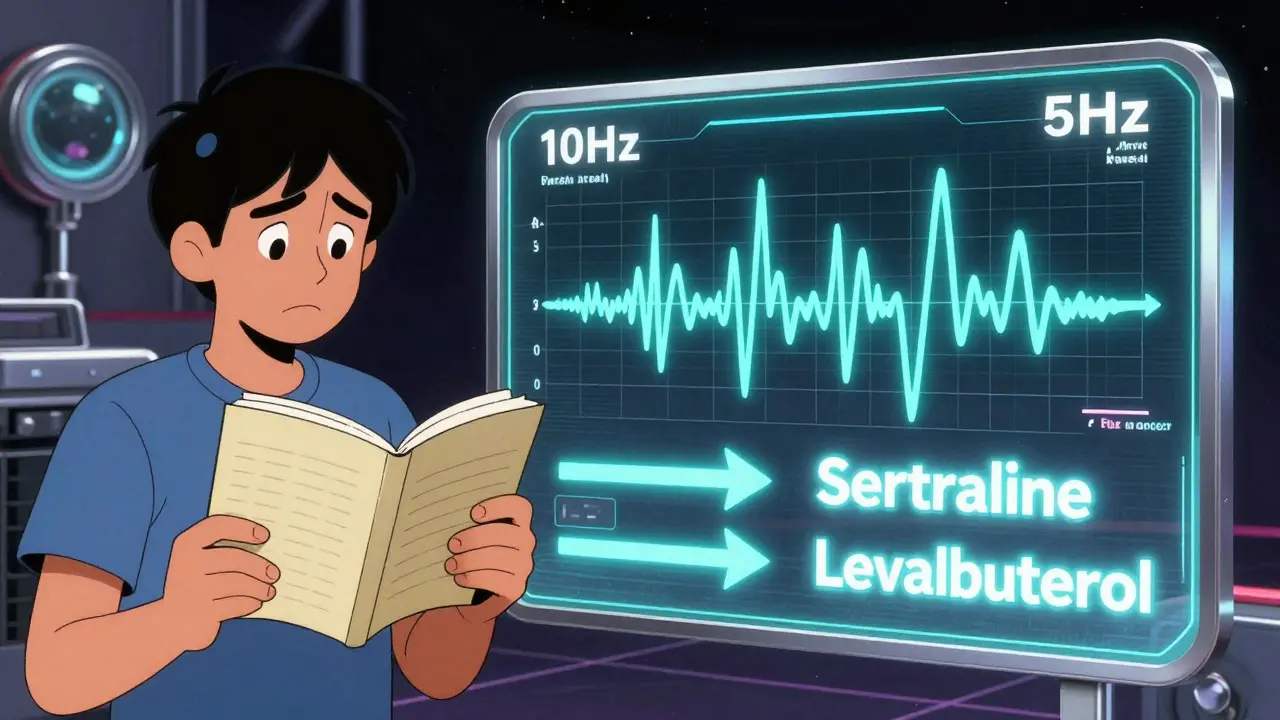
- Frequency: Drug-induced tremors are faster (6-12 Hz). Parkinson’s tremors are slower (4-6 Hz).
- Reversibility: This is the biggest difference. Stop the drug, and the tremor usually fades within weeks. Parkinson’s gets worse without treatment.
- Other symptoms: Drug tremors rarely come with stiffness, slowness, or balance issues - which are hallmarks of Parkinson’s.
One study found that 10% of people initially diagnosed with Parkinson’s were actually suffering from drug-induced parkinsonism. That’s why a careful medication review is critical before accepting a neurological diagnosis.
What Should You Do If You Notice Tremors?
If you suspect your medication is causing tremors, don’t panic - but don’t ignore it either. Here’s what to do:
- Track the timing. Did the shaking start within 72 hours of starting the drug? Or did it creep in over weeks? This helps doctors connect the dots.
- Don’t stop cold. Abruptly quitting certain drugs - especially SSRIs - can cause withdrawal tremors in 22% of cases. Always taper under medical supervision.
- Check your dose. Tremors from lithium, thyroid meds, or anticonvulsants often get worse as blood levels rise. A simple blood test can show if your dose is too high.
- Review all meds. Polypharmacy is a major risk. People taking five or more medications have a 34% chance of developing tremors - nearly eight times higher than those on one or two.
Doctors follow a clear protocol:
- If the drug isn’t essential - like an over-the-counter supplement or a non-critical antibiotic - stop it. 76% of patients see improvement within two weeks.
- If it’s necessary - like an antipsychotic or antidepressant - reduce the dose first. That works in 63% of cases.
- If tremors persist, add propranolol (a beta-blocker). A daily dose of 20-80 mg reduces severity in 58% of patients.
- Switch to a lower-risk alternative. For depression, sertraline or escitalopram are much safer than paroxetine or fluvoxamine.
When to Seek Emergency Help
Most drug tremors are harmless. But some are warning signs of something dangerous:
- Tremor + fever - Could be neuroleptic malignant syndrome (NMS), a life-threatening reaction to antipsychotics.
- Tremor + rapid heartbeat - Might indicate thyroid storm from too much levothyroxine.
- Tremor + confusion, high blood pressure, sweating - Could signal serotonin syndrome, especially with SSRIs or MAOIs.
If you have any of these symptoms, go to the ER. These aren’t side effects - they’re medical emergencies.

The Future: Personalized Medicine Is Coming
Research is moving fast. A 2024 study in Neurology found that people with a specific genetic variation (CYP2D6 poor metabolizer status) are 2.4 times more likely to develop tremors from antidepressants. This means, in the near future, doctors may test your genes before prescribing certain drugs.
Meanwhile, AI tools are being trained to predict tremor risk by scanning electronic health records. A pilot study at Mayo Clinic predicted high-risk patients with 82% accuracy - before symptoms even appeared.
These advances mean fewer people will suffer unnecessarily. But right now, the best tool is still awareness: know the drugs that cause tremors, track your symptoms, and speak up.
Final Takeaway
Drug-induced tremors aren’t rare. They’re common, often misunderstood, and almost always fixable. You don’t have to live with shaking hands just because a doctor prescribed a pill. With the right questions and the right care, you can get back to normal - sometimes in just a few weeks.
Keep a symptom journal. Note when the shaking started, what meds you’re on, and whether stress or caffeine makes it worse. Bring that to your doctor. You’re not overreacting - you’re being smart.
Can drug-induced tremors be permanent?
In the vast majority of cases - 70% to 90% - tremors fully resolve within weeks to months after stopping the medication. Permanent tremors are extremely rare and usually only occur if the drug caused lasting damage to the nervous system, which is uncommon. Early recognition and action make permanence unlikely.
Do all antidepressants cause tremors?
No. While some antidepressants like paroxetine and fluvoxamine have higher tremor rates (over 3%), others like sertraline and escitalopram have much lower rates (under 2%). Even within the SSRI class, risk varies widely. Switching to a lower-risk option is often more effective than stopping treatment entirely.
Can I just reduce my dose instead of stopping the drug?
Yes, and it’s often the first step. For essential medications like antipsychotics or lithium, doctors usually try lowering the dose before switching. Studies show this approach works in 63% of cases. But never adjust your dose without medical guidance - too little can make your condition worse, and too much can trigger other side effects.
Why do some people get tremors and others don’t?
It’s a mix of genetics, age, and how many other drugs you’re taking. Older adults are more sensitive. People taking five or more medications have a 34% tremor risk. And research now shows that certain gene variants - like CYP2D6 poor metabolizers - make tremors 2.4 times more likely. It’s not random; it’s predictable.
Should I avoid all medications that list tremors as a side effect?
No. Many of these drugs are life-saving or essential for managing serious conditions. The goal isn’t to avoid them - it’s to use them wisely. Work with your doctor to choose the lowest effective dose, monitor for early signs of tremor, and consider safer alternatives if available. Fear shouldn’t stop you from needed treatment.