Travel Safety: Managing Medications and Side Effects Away from Home
 Dec, 12 2025
Why Medication Safety Matters More Than You Think When You Travel
Half of all American adults take prescription meds regularly. Now imagine landing in Tokyo, Paris, or Bangkok with your pills in a ziplock bag - and suddenly you’re detained. That’s not a movie plot. In 2019, a Toyota executive spent 23 days in a Japanese jail because she brought a common U.S. painkiller that’s illegal there. No warning. No chance to explain. Just confiscated pills and a prison cell. This isn’t rare. The U.S. State Department logged over 1,200 cases like this in 2022 alone.
Traveling with medication isn’t about packing a pill organizer. It’s about understanding laws, temperatures, time zones, and security rules - all while your body depends on those pills to keep you alive or functional. If you’re flying with insulin, ADHD meds, anxiety drugs, or even over-the-counter decongestants, you’re playing with fire if you don’t plan ahead.
What You Can and Can’t Bring - The Real Rules
The TSA says you can bring all your meds on a plane. That’s true. But they also say they must be in original containers with pharmacy labels. No exceptions. No pill organizers. No bulk bottles. Not even if you’re taking the same dose for 30 days. If your insulin pen doesn’t have the pharmacy sticker on it, security can confiscate it - and you’ll be stuck without it at your destination.
Liquid meds? You can bring more than 3.4 ounces. But you have to tell them. At the checkpoint, pull out your liquids - insulin vials, liquid painkillers, seizure meds - and put them in a separate clear bag. Don’t wait until they ask. Say it upfront. TSA agents see hundreds of bags a day. If you’re calm and clear, they’ll help you. If you hide it? You risk delays, confiscation, or worse.
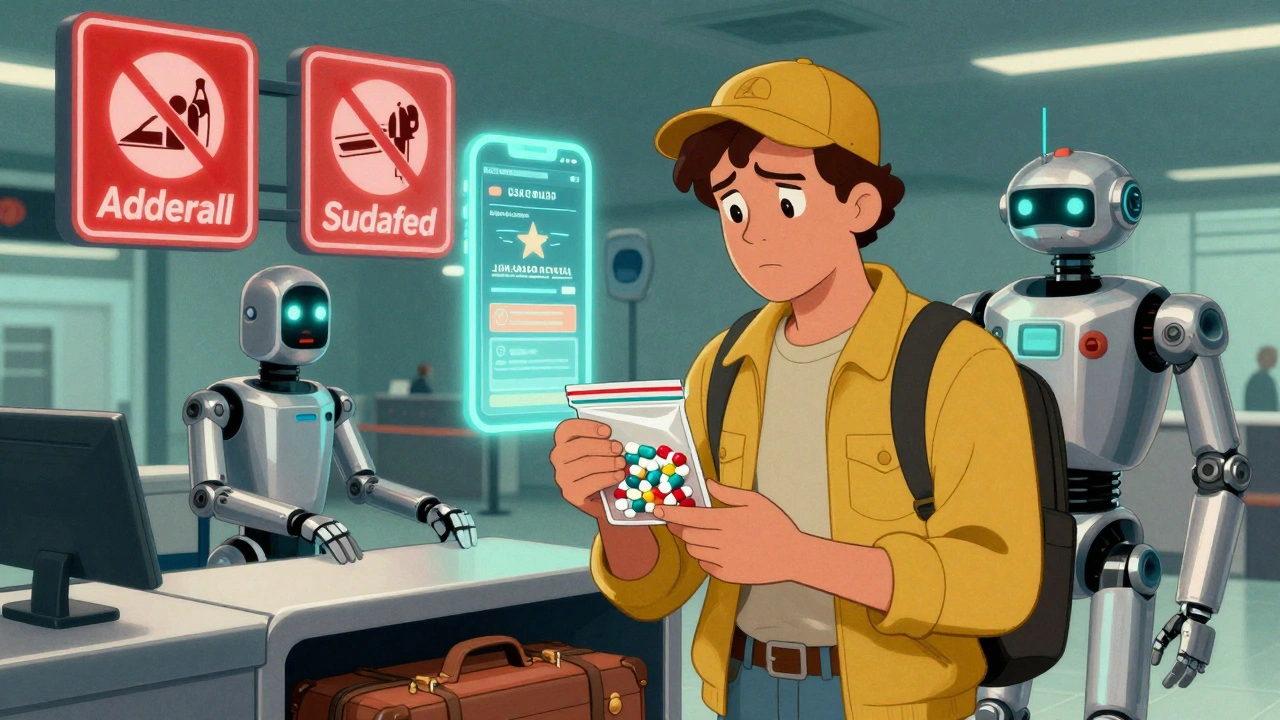
For international trips, the rules get wild. Over 67% of countries restrict at least one common U.S. medication. Adderall? Banned in Japan, South Korea, and the UAE. Sudafed? Illegal in the UK, Australia, and many European countries because of pseudoephedrine. Even melatonin is controlled in Germany and France. You can’t assume your meds are okay just because they’re sold at CVS.
How to Check If Your Meds Are Legal Abroad
Don’t Google it. Don’t ask your friend who went to Thailand last year. Go straight to the source: the U.S. embassy website for your destination. Every embassy has a section called “Traveler Information” or “Health and Safety.” There, you’ll find a list of banned or restricted medications.
Or use the U.S. State Department’s Medication Check Tool, launched in March 2023. Just type in your medication name - like “Lisinopril” or “Zoloft” - and it tells you if it’s allowed in 195 countries. It even flags if you need a doctor’s letter or if it’s classified as a controlled substance there.
Example: If you’re going to Singapore and take oxycodone for back pain, you’ll find it’s a Class A controlled drug. You need a letter from your doctor, a copy of your prescription, and you can only bring a 30-day supply. Miss one thing? You’re looking at jail time.
How Much to Pack - And Why You Need Extra
Bring enough for your entire trip - plus two weeks. That’s not a suggestion. That’s a rule from Northwestern University’s Global Safety Office and the CDC. Why? Flights get canceled. Visas get delayed. You might get sick and need to stay longer. Or your luggage gets lost.
And here’s the brutal truth: overseas pharmacies can’t refill your U.S. prescription. Not even if you have the bottle. Not even if you show them your doctor’s note. U.S. prescriptions aren’t valid abroad. If you run out? You’re out of luck.
Pro tip: Ask your pharmacy for a 90-day supply before you leave. Most insurance plans let you refill early - often 5 days ahead. Call them at least two weeks before departure. If they say no, ask your doctor to write a new prescription for a longer supply. It’s legal. It’s common. Do it.
Storing Your Meds: Heat, Cold, and Chaos
Insulin? Must stay between 36°F and 46°F. If it gets too hot - like in a checked bag left in the sun at the airport - it breaks down. You won’t feel it. But your blood sugar will spike. That’s dangerous.
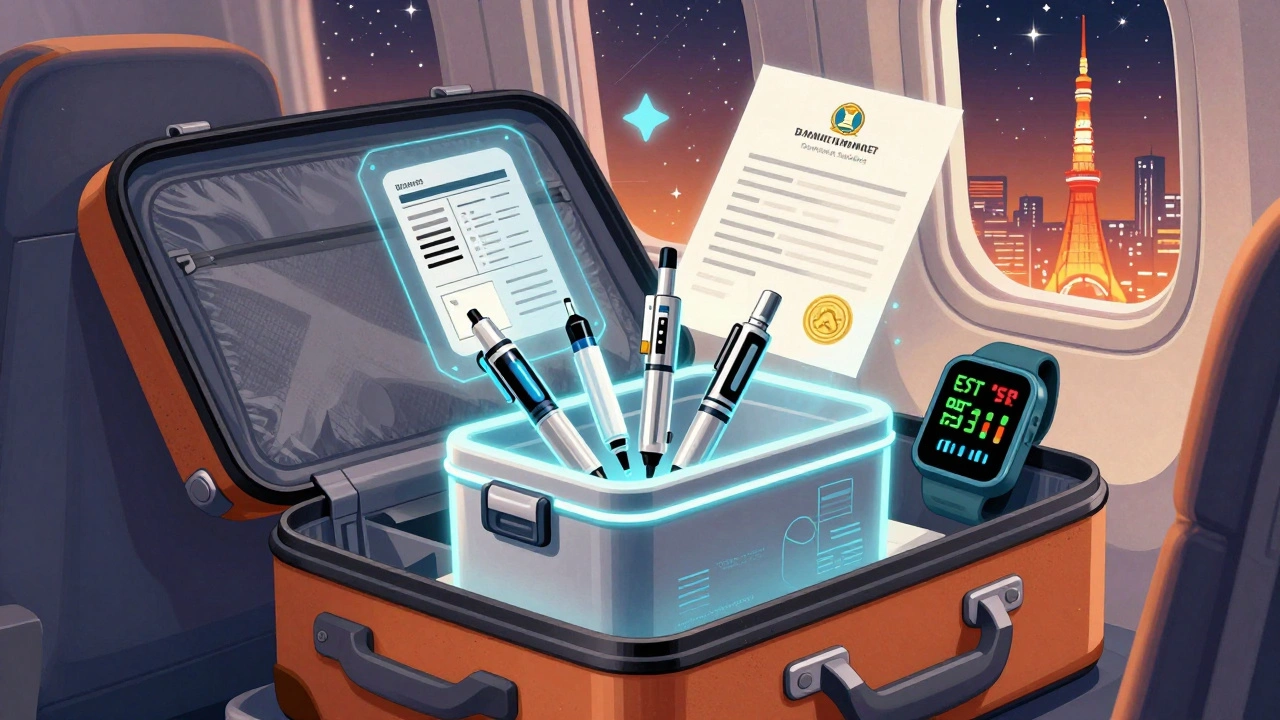
Most pills? Keep them under 86°F. That means no leaving them in your car in Florida or Thailand. Use a small insulated bag with a cooling pack. Pharmaceutical-grade ones last 48+ hours. You can buy them at any pharmacy for under $15.
For refrigerated meds like insulin, growth hormones, or certain antibiotics: carry them in your carry-on. Never check them. TSA allows coolers and ice packs as long as they’re not frozen solid. Use gel packs that are cool to the touch, not ice cubes. And label the bag: “Medication - Do Not Freeze.”
Time Zones, Doses, and Your Body’s Rhythm
When you cross time zones, your body doesn’t reset instantly. If you take a pill at 8 a.m. EST and land in London (5 hours ahead), do you take it at 8 a.m. local time? Or stick to your home schedule?
WebMD says: It’s usually fine to shift your dose by 1-2 hours earlier or later. But never double up. If you miss a dose, take it as soon as you remember - unless it’s close to your next one. Then skip it. Don’t make up for it.
For critical meds like blood thinners, seizure drugs, or heart meds? Talk to your doctor before you leave. They might adjust your schedule. For example, if you take warfarin daily at 7 p.m., your doctor might tell you to take it at 10 p.m. local time on day one, then shift back to 7 p.m. local over the next few days.
Set alarms on your phone - one for home time, one for destination time. Use apps like Medisafe or MyTherapy. They’ll remind you even if you’re in a different time zone.
Documents You Must Carry - Not Just Your Pills
You need more than pills. You need proof. Always carry:
- The original prescription bottle (with your name and pharmacy label)
- A copy of your prescription (printed or digital)
- A letter from your doctor on letterhead. It should say: your diagnosis, the medication name, dosage, why you need it, and that it’s for personal use. For controlled substances, this is mandatory.
- A translated version if you’re going to a non-English-speaking country. Get it done at a certified translation service. Don’t use Google Translate.
Why? In 2023, a Reddit user was denied entry to South Korea because they had ADHD meds but no doctor’s letter. They sat in customs for 12 hours. With the letter? They walked through in 15 minutes.
Carry these in your carry-on, in a clear folder. Keep them with your passport. If you’re questioned, you’re ready.
What to Do If Something Goes Wrong
You lose your meds? You get sick? Your pills are confiscated?
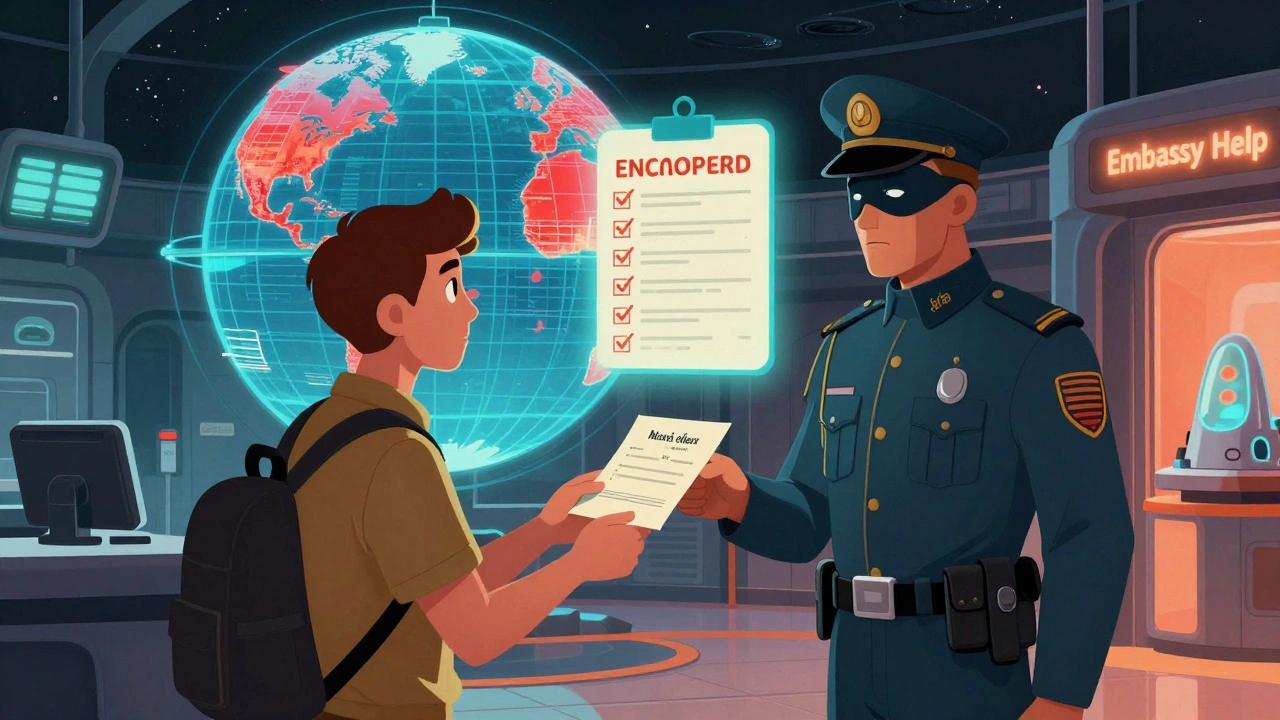
First: Stay calm. Don’t argue with customs. Don’t lie. If you’re detained, ask to speak to your country’s embassy. They can’t get you your meds, but they can help you find a local doctor, translate, or contact your family.
Second: Call your pharmacy back home. Ask if they can fax or email a prescription to a local pharmacy. Some international chains like Boots (UK) or Watsons (Asia) can fill U.S. prescriptions with proper documentation - but only if you have the doctor’s letter and original bottle.
Third: Use your travel insurance. Most policies cover emergency medication replacement. Keep the policy number in your phone. And always know the number for your embassy’s emergency line.
Real Stories - What Works and What Doesn’t
One traveler, u/HealthyTraveler99 on Reddit, brought Adderall to South Korea with a doctor’s letter and original bottle. Still got detained. Why? The letter didn’t mention the exact dosage. They fixed it by sending a new letter with numbers - and were cleared within hours.
Another, a nurse from Ohio, traveled to Italy with insulin. She used a cooling pack, carried her prescription in Italian, and told TSA agents upfront about her liquids. No issues. She says: “I didn’t just pack pills. I packed a plan.”
On the flip side: A couple brought Sudafed to Australia. They didn’t know it was banned. They got fined $1,000 and had to pay for a lawyer. Their trip was ruined.
Your Checklist - Do This Before You Leave
- Call your doctor 3-4 weeks before departure. Ask for extra supply and a letter.
- Call your pharmacy. Request early refill. Get 90-day supply if possible.
- Go to travel.state.gov and use the Medication Check Tool for every country you’ll visit.
- Print copies of prescriptions and doctor’s letters. Translate if needed.
- Buy a small insulated bag with a cooling pack if you have refrigerated meds.
- Set phone alarms for meds in both home and destination time zones.
- Keep all meds in your carry-on. Never check them.
- Put all documents in a clear folder next to your passport.
Final Thought: This Isn’t Just About Pills - It’s About Your Safety
Traveling with medication isn’t a nuisance. It’s a lifeline. One missed dose of blood pressure medicine can send you to the ER. One confiscated insulin pen can land you in the hospital. One wrong pill in the wrong country can land you in jail.
But if you plan - if you know the rules, carry the right papers, and pack smart - you’ll fly, explore, and return without a single scare. You’re not just a traveler. You’re someone who manages a health condition. And you deserve to move through the world safely.
Lara Tobin
December 13, 2025 AT 23:48Jamie Clark
December 15, 2025 AT 00:20Keasha Trawick
December 15, 2025 AT 02:00Bruno Janssen
December 15, 2025 AT 02:21Emma Sbarge
December 16, 2025 AT 21:09Deborah Andrich
December 18, 2025 AT 12:42Tommy Watson
December 19, 2025 AT 07:20Willie Onst
December 21, 2025 AT 06:55Casey Mellish
December 21, 2025 AT 23:15Tyrone Marshall
December 22, 2025 AT 14:50kevin moranga
December 23, 2025 AT 07:00Alvin Montanez
December 24, 2025 AT 04:35Michael Gardner
December 24, 2025 AT 13:16