Telehealth Medication Reviews: How to Prepare and What to Ask
 Jan, 8 2026
Medication Review Preparation Checklist
Ensure you're fully prepared for your telehealth medication review. A thorough review can reduce adverse drug events by up to 34.7% in older adults. Follow these steps to maximize your appointment.
Your Preparation Checklist
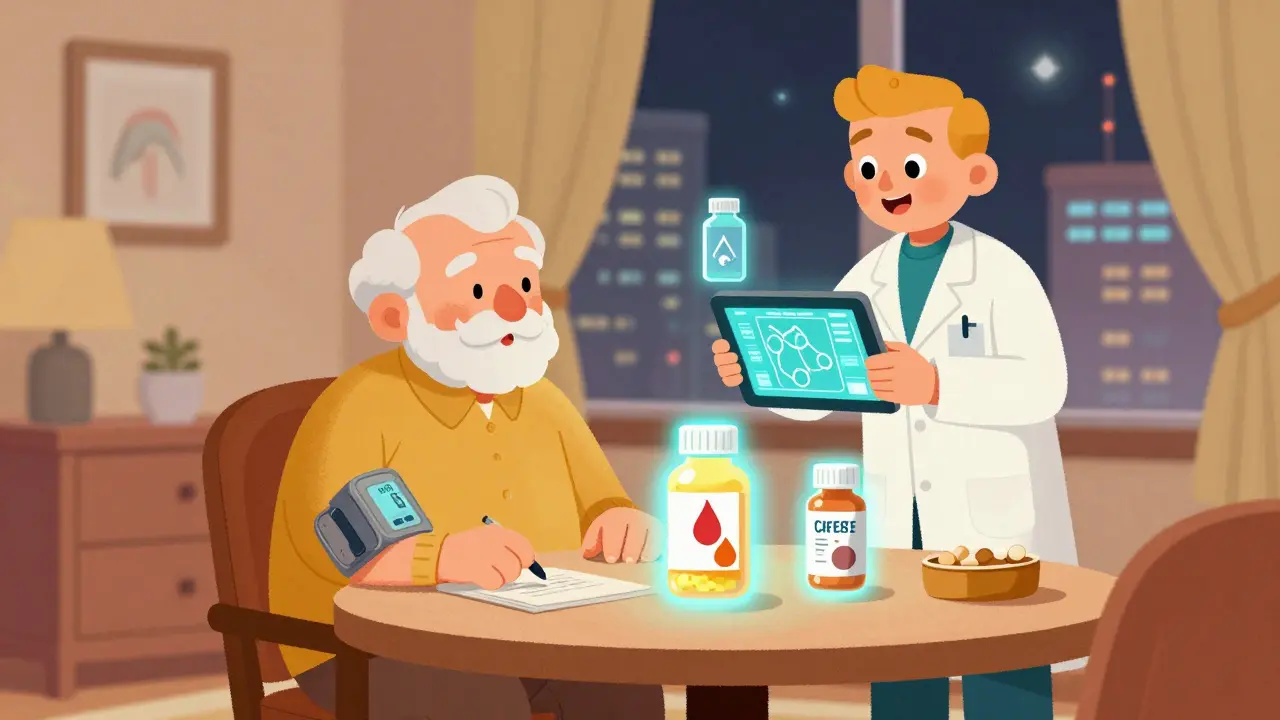
When you’re managing multiple medications, a telehealth medication review can be a game-changer. It’s not just a quick Zoom call-it’s a structured checkup designed to catch dangerous interactions, simplify your regimen, and make sure every pill you take is still necessary. But if you walk into that virtual appointment unprepared, you might miss the chance to fix something serious. Over 78% of U.S. healthcare systems now offer these reviews, and for good reason: studies show they reduce adverse drug events by up to 34.7% in older adults. Yet, patients who don’t come ready often walk away with more questions than answers. The difference between a helpful review and a wasted hour? Preparation.
What Exactly Is a Telehealth Medication Review?
A telehealth medication review is a virtual meeting with a pharmacist or clinician who specializes in medication safety. Unlike a regular doctor’s visit, this isn’t about diagnosing a new problem-it’s about looking at everything you’re taking, together, and asking: Is this still working? Is it safe? Could something be removed?
These reviews follow a clear process. First, your primary care provider or pharmacy refers you. Then, a trained pharmacist connects with you via a secure video platform like Doxy.me or Zoom for Healthcare. They pull up your full medication history from pharmacy records and your electronic health system-Epic, Cerner, or Meditech. Using clinical decision tools, they scan for interactions, duplicate prescriptions, outdated drugs, or doses that are too high or too low. Then they send clear recommendations back to your doctor. The whole thing usually takes 30 to 45 minutes.
It’s not magic. But it’s backed by data. A 2020 study found that patients in nursing homes who got telehealth reviews had 28.6% fewer dangerous drug reactions. Another study showed these reviews cut 30-day hospital readmissions by over 22%. For people with chronic conditions like high blood pressure or diabetes, effectiveness rates hit 84.7%.
How to Prepare: Gather Everything Before Your Call
Don’t rely on memory. Don’t hope your pharmacy has the full list. You need to bring your own. Here’s what to collect before your appointment:
- All prescription medications in their original bottles
- All over-the-counter drugs (pain relievers, sleep aids, heartburn meds)
- All vitamins, supplements, and herbal products (even if you think they’re harmless)
- A list of any medications you’ve stopped taking and why
- Your most recent lab results (kidney, liver, blood sugar, cholesterol)
- A written list of your symptoms-especially ones that started after you began a new med
Why does this matter? A 2023 study in the Journal of Telemedicine and Telecare found that patients who showed their actual meds during the call increased review accuracy by 37.4%. Pharmacists can’t spot a pill they can’t see. A bottle of melatonin labeled “5 mg” might actually contain 10 mg. A bottle of ibuprofen might be expired. These things matter.
Test your tech ahead of time. Make sure your camera works, your internet is stable (at least 1.5 Mbps upload/download), and you know how to share your screen if asked. If you’re not tech-savvy, ask a family member to help set up the call. The National Council on Aging found that seniors who got even 15 minutes of tech training were 68.2% more comfortable with the process.
What to Ask: The 5 Critical Questions
Don’t wait for the pharmacist to lead. You’re the expert on how your body feels. Ask these five questions-no exceptions.
- “How are you verifying my medication list against pharmacy records?” This is the most important one. Up to 43.2% of medication errors come from incomplete or outdated lists. Pharmacists have access to pharmacy databases, but they don’t always cross-check them. Make sure they pull your full history from multiple sources.
- “Which of my medications can I stop or reduce?” Many people take pills they no longer need. A 2022 study found that 21% of seniors were on at least one unnecessary drug. Ask for a clear reason why each one is still prescribed.
- “What are the side effects I should watch for, and what should I do if I notice them?” Don’t just get a list-get a plan. Know what’s normal and what’s dangerous. For example, dizziness from blood pressure meds might mean the dose is too high. Nausea from a new antibiotic might mean you need to switch.
- “How will you communicate your recommendations to my doctor?” Only 62.8% of telehealth services have a standardized way to send notes to primary care providers. If they say they’ll “just email it,” push for confirmation. Ask if your doctor has received the report within 48 hours.
- “How will you monitor me between appointments?” Virtual reviews have a blind spot: you’re alone between visits. Ask if they’ll follow up with a phone call, if you’ll get automated alerts for lab tests, or if you should schedule a check-in in 30 days.
These questions aren’t optional. They’re your safety net.
When Telehealth Reviews Fall Short
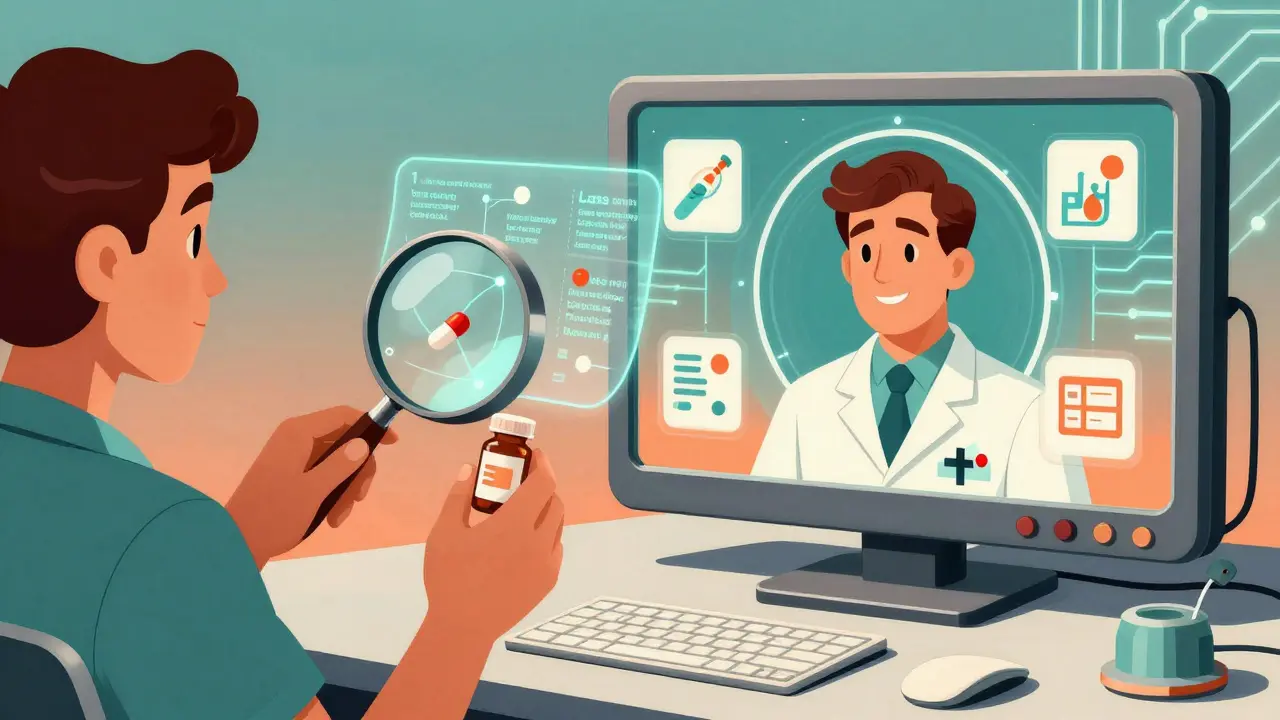
Telehealth is powerful-but it’s not perfect. There are cases where it can’t replace an in-person visit.
If you have multiple chronic conditions, confusion, mobility issues, or trouble swallowing pills, a pharmacist might miss signs of non-adherence. They can’t see if you’re shaking when you open a bottle. They can’t check for bruising from blood thinners. They can’t feel if your ankles are swollen.
Studies show telehealth reviews are only 58.4% effective for complex geriatric polypharmacy cases and 43.6% effective for psychiatric meds that need full mental status exams. If you’re on antidepressants, antipsychotics, or benzodiazepines, make sure your provider knows if you’re having mood swings, memory lapses, or thoughts of self-harm. If you’re unsure, ask for a hybrid visit: part video, part in-person.
Also, watch for tech problems. A frozen screen during a blood pressure check means lost data. If your connection drops, reschedule immediately. Don’t let a glitch become a safety gap.
What Happens After the Review?
The review doesn’t end when the call does. You should get a written summary-either by email or patient portal-within 24 to 48 hours. It should list:
- Drugs recommended to stop
- Drugs recommended to change (dose, frequency, brand)
- New medications prescribed
- Lab tests needed
- Follow-up plan
Review it carefully. If something doesn’t make sense, call your doctor or pharmacist. Don’t wait. You’re responsible for your own safety.
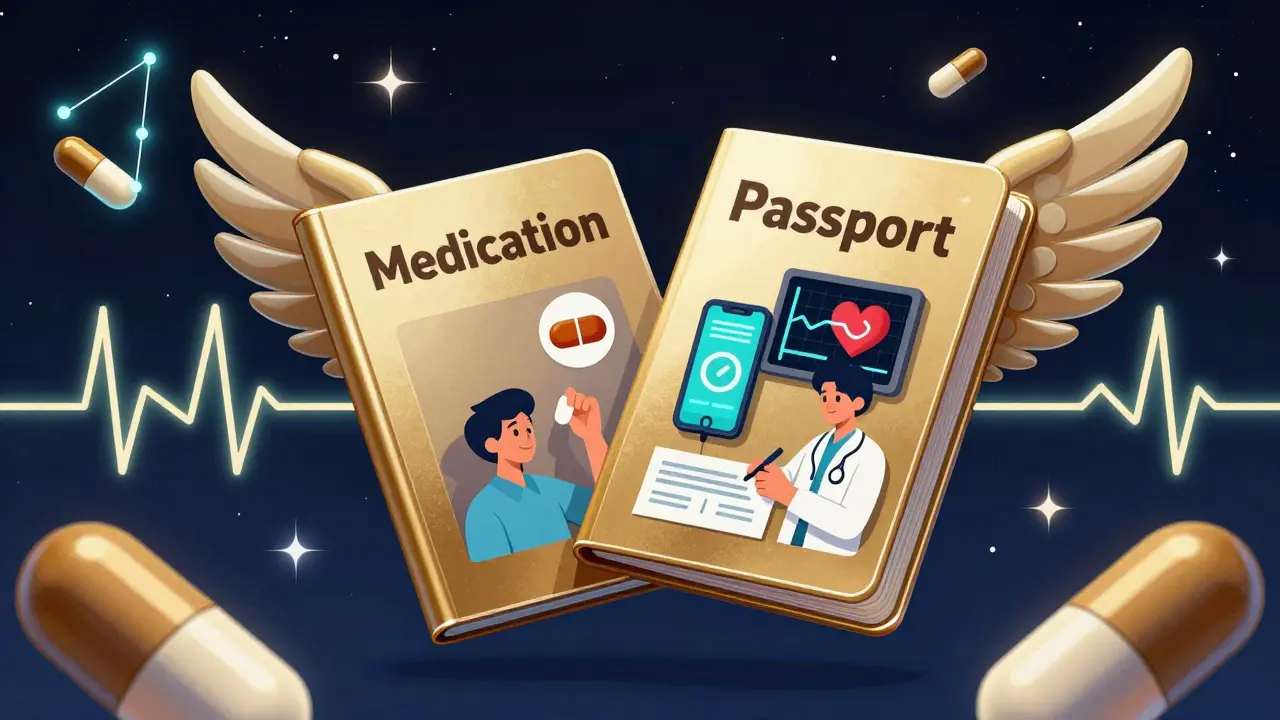
Some people get a new medication list printed out. Others get a digital version in their pharmacy app. Either way, keep it. Show it to every new provider you see. It’s your medication passport.
Insurance, Cost, and Access
Most insurance plans-including Medicare-cover telehealth medication reviews now. Since November 2024, CMS has two specific billing codes: G2225 for comprehensive reviews ($142.37) and G2226 for targeted reviews ($78.92). If you’re billed directly, ask if the service was coded correctly.
Some pharmacies offer free reviews as part of their care program. Others charge a copay. If you’re unsure, call your insurer and ask: “Do you cover telehealth medication therapy management under my plan?”
Access isn’t equal. People over 75 without digital skills are 32.7% less likely to participate. If you’re struggling, ask your local Area Agency on Aging or senior center-they often offer free tech help for telehealth appointments.
Final Thought: This Is Your Health
Medications are powerful. They can save your life-or hurt you. A telehealth medication review isn’t a formality. It’s a checkpoint. A chance to take control. You don’t need to be an expert. You just need to be ready.
Bring your bottles. Ask your questions. Follow up. That’s all it takes to turn a virtual appointment into a real safety win.
Do I need to be tech-savvy to do a telehealth medication review?
No. You just need a device with a camera and internet. Many people use smartphones or tablets. If you’re unsure, ask a family member, friend, or local senior center to help you set up the call ahead of time. Most telehealth platforms are designed to be simple-just click a link and join. Training can make the process 68% more comfortable for older adults.
Can a pharmacist change my medication without my doctor’s approval?
No. Pharmacists can recommend changes, but only your doctor can approve them. During the review, the pharmacist will send a written report with suggestions. Your doctor will review it and contact you if they agree. You should always be informed before any prescription is changed.
What if I’m taking supplements or herbal remedies?
You must tell the pharmacist. Many people think supplements are harmless, but they can interact dangerously with prescription drugs. For example, St. John’s Wort can reduce the effectiveness of blood thinners and antidepressants. Garlic supplements can increase bleeding risk. Even fish oil and vitamin E can interfere with medications. Bring all bottles-even the ones you’ve been meaning to ask about.
How often should I get a telehealth medication review?
At least once a year if you’re on three or more medications. If you’ve recently been hospitalized, had a major surgery, or changed doctors, get one right away. Seniors, people with chronic conditions, or those on high-risk drugs (like blood thinners or opioids) should consider reviews every 6 months.
Are telehealth medication reviews safe for controlled substances like opioids or benzodiazepines?
Yes, but with limits. As of January 2025, the DEA allows Schedule III to V controlled substances (like certain painkillers and anti-anxiety meds) to be managed entirely via telehealth under special registration. Schedule II drugs (like oxycodone or Adderall) require an initial in-person visit and follow-ups every three months. Always confirm your provider’s DEA status and state rules before starting.
Ian Cheung
January 10, 2026 AT 01:03I’ve been doing these telehealth med reviews for my mom and honestly it’s been a lifesaver-she was on seven pills she didn’t even need, and the pharmacist caught it in 20 minutes. No more driving to the clinic, no waiting room drama. Just her, her meds, and a calm voice saying ‘you can stop this one.’
It’s weird how simple it is when you stop overthinking it.
lisa Bajram
January 11, 2026 AT 20:39OMG YES-this post is FIRE!! 🔥
My grandma thought her ‘natural’ turmeric supplement was harmless… until the pharmacist showed her it was tanking her blood thinner. She cried. I cried. We both learned.
Bring. The. Bottles. Every. Single. One. Even the one labeled ‘Grandma’s Secret Remedy’ that’s been sitting in the sock drawer since 2017.
And if you’re on meds and can’t open a bottle? That’s a red flag. Not ‘oh I’m just getting old.’ That’s a safety issue.
Also-why do people still think ‘vitamins don’t interact’?? Bro, vitamin K is literally the reason your warfarin dose keeps changing.
STOP GUESSING. START SHOWING.
Also-tech help? Ask your local library. They’ll set you up with a tablet and a volunteer who’ll hold your hand through the whole thing. No shame. We all start somewhere.
Michael Marchio
January 11, 2026 AT 23:44Let’s be real-most of these telehealth reviews are just glorified phone calls with a pharmacist who’s paid by the minute and has zero incentive to actually dig deep. The system is designed to check boxes, not save lives. The data you cite? Sure, it sounds impressive-but it’s cherry-picked from controlled trials with highly motivated patients who showed up with labeled bottles and a printed list. The average elderly person? They show up with a shoebox full of expired pills and a vague memory of what ‘that blue one’ was for. And then they wonder why nothing changes.
And don’t get me started on the ‘pharmacist sends recommendations to your doctor’ fantasy-half the time, the doctor never sees it. The EMR doesn’t even flag it. It just vanishes into the void of bureaucratic indifference. You think this is a safety net? It’s a safety net with holes the size of your entire medication list.
Real change? Requires in-person assessment. Physical exam. Observation. Not a Zoom call where the pharmacist can’t see if you’re trembling when you open the bottle.
So yes, it’s nice. But don’t confuse convenience with competence.
Paul Bear
January 12, 2026 AT 13:24Per the 2023 Journal of Telemedicine and Telecare study referenced, the 37.4% increase in review accuracy was statistically significant (p < 0.001) when patients presented physical medication containers versus self-reported lists. This is because pill identification via visual inspection reduces misclassification bias-particularly relevant for polypharmacy patients with cognitive decline or low health literacy. Furthermore, the variance in pill strength (e.g., melatonin 5mg vs. 10mg) is a documented source of iatrogenic harm, as per the FDA’s 2022 Adverse Event Reporting System (AERS) dataset.
Additionally, the 68.2% comfort increase among seniors receiving tech training aligns with Bandura’s self-efficacy theory-structured, scaffolded digital literacy interventions significantly reduce anxiety-driven non-adherence.
However, the efficacy metrics cited for psychiatric medications (43.6%) are concerning, as telehealth lacks the capacity to assess non-verbal cues critical to evaluating medication-induced akathisia, tardive dyskinesia, or affective flattening. This is not a critique of telehealth per se, but an acknowledgment of its anatomical and perceptual limitations in complex neuropsychiatric contexts.
Bottom line: Telehealth is a powerful adjunct-but not a replacement-for comprehensive geriatric pharmacotherapy management.
Lisa Cozad
January 12, 2026 AT 21:39My mom got her first review last month. She was nervous as hell. But the pharmacist asked her to show him her pill organizer-and it turned out she’d been taking two different blood pressure pills at the same time because the labels looked similar.
They changed one. She’s had zero dizziness since.
It wasn’t magic. Just someone paying attention.
Don’t overcomplicate it. Just show up with your bottles.
Aurora Memo
January 13, 2026 AT 05:02I’m a caregiver for my dad with dementia. He can’t remember his meds. So I do the prep for him. I label everything in big print. I take pictures of the bottles. I make a spreadsheet with times and purposes.
And I still get anxious before the call.
But knowing that someone’s going to look at every single thing he’s taking? That’s the only thing that calms me down.
It’s not about being tech-savvy. It’s about being seen.
And if you’re lucky enough to have someone who cares enough to prepare for you-don’t let that go to waste.
Jake Nunez
January 13, 2026 AT 19:58My cousin in Texas got a review and they took her off a statin she’d been on for 15 years because her cholesterol was fine and her liver enzymes were spiking. She was shocked. Her doctor had never questioned it.
Turns out, the pharmacist noticed it in the pharmacy records and flagged it before the call even started.
That’s the power of this system.
Not every doctor listens. But pharmacists? They’re the ones who actually see the whole picture.
Don’t sleep on them.
Jay Amparo
January 14, 2026 AT 00:41I’m from India and we don’t have this system here-but I shared this with my aunt back home. She’s on 8 meds and doesn’t speak English. So I translated everything into Hindi and printed it out. She showed it to her local pharmacist-and he actually listened.
They stopped her unnecessary calcium pill and adjusted her diabetes med.
She’s walking better now.
It’s not about the tech. It’s about the courage to ask.
And to show the bottles.
Even if you’re in a village with no Zoom.
Just show the bottles.
Bradford Beardall
January 14, 2026 AT 05:48One thing no one talks about: what happens if your doctor ignores the pharmacist’s recommendations?
I had a review where they said to stop my gabapentin. My doctor said ‘nope, still taking it.’
So I asked the pharmacist to send a follow-up note. And then I called my doctor’s office and asked for a copy of the report.
They sent it. He changed it.
Don’t assume your doctor knows. Don’t assume they care.
Be the person who follows up.
Because your life is on the line.
And no one else is going to fight for it like you will.
Christine Milne
January 16, 2026 AT 00:37While the article presents a compelling narrative, it is fundamentally flawed in its implicit endorsement of decentralized, non-regulated pharmaceutical decision-making under the guise of patient empowerment. The reliance on patient-provided medication containers introduces significant potential for misrepresentation, tampering, or mislabeling-none of which are subject to forensic verification. Furthermore, the assertion that pharmacists can effectively assess polypharmacy risk via telehealth is empirically unsupported in the context of complex geriatric syndromes, particularly when cognitive impairment, sensory deficits, or functional decline are present. The cited statistics, while statistically significant, are derived from selection-biased cohorts and fail to account for attrition, non-compliance, or the absence of longitudinal follow-up. The promotion of this model as a universal standard disregards the foundational principles of clinical medicine, which require direct physical examination and contextual observation. One cannot diagnose medication toxicity via video call if the patient is unable to articulate symptoms or demonstrate physical signs. This is not innovation-it is institutionalized negligence dressed in digital packaging.