Sugar vs. Artificial Sweeteners: How They Affect Your Appetite and Cravings
 Jan, 10 2026
When you swap soda for a diet version, or sugar in your coffee for a packet of zero-calorie sweetener, you’re doing it to cut calories and lose weight. But what if that swap is secretly making you hungrier? It’s not just in your head. Science is showing that artificial sweeteners don’t always behave like sugar when it comes to your brain, your stomach, and your cravings.
Why Sugar Makes You Feel Full (Sometimes)
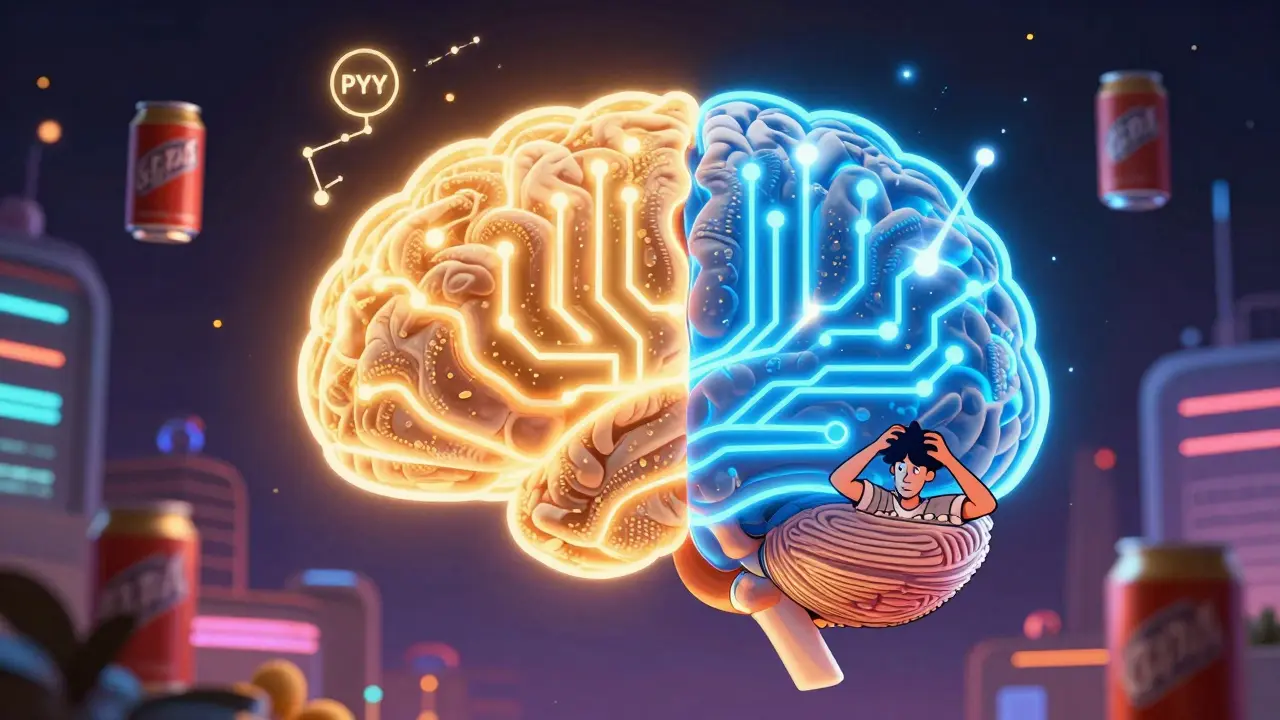
Sugar doesn’t just taste sweet-it tells your body you’ve taken in energy. When you eat sugar, your blood glucose rises. That triggers insulin release, which helps cells absorb glucose for fuel. It also signals your gut to release hormones like GLP-1 and PYY, which say to your brain: "Enough. You’re full. Stop eating." This system works pretty well-if you’re eating whole foods. But when you’re drinking a sugary soda or eating a candy bar, you’re getting a lot of sugar fast. That spike can lead to a crash later, leaving you craving more sugar to feel stable again. It’s a cycle: eat sugar → blood sugar spikes → insulin surges → blood sugar drops → hunger returns.Artificial Sweeteners Don’t Trigger the Same Signals
Artificial sweeteners like sucralose, aspartame, and acesulfame potassium are 200 to 600 times sweeter than sugar. But they don’t raise blood sugar. They don’t trigger insulin. And they don’t stimulate the same gut hormones that tell your brain you’ve eaten something with calories. A 2023 study from the University of Southern California found that people who drank a beverage with sucralose had 17% higher hunger ratings than those who drank the same beverage with sugar. Brain scans showed their hypothalamus-the area that controls hunger-was more active after consuming the sweetener. And here’s the kicker: women showed a 40% stronger brain response than men. That might explain why some women report stronger cravings after switching to diet drinks. It’s not just about hormones. Your brain expects sweetness to come with calories. When it doesn’t, your reward system gets confused. A 2016 study at the University of Sydney found that fruit flies exposed to sucralose for five days ate 30% more food afterward-even when given real sugar. Their brains had recalibrated: sweetness no longer meant energy, so they ate more to make up for the mismatch.But Some Studies Say Sweeteners Help
It’s not all bad news. A 2022 study from the University of Leeds, published in The Lancet eBioMedicine, found that when people replaced sugar with artificial sweeteners, they ate fewer calories overall. Blood sugar levels dropped 15%, insulin dropped 18%, and appetite ratings stayed the same or improved. The researchers concluded that sweeteners can be a useful tool for managing weight-especially for people with diabetes. And in real life, many people swear by them. A 2023 survey by the American Diabetes Association found 74% of people with type 2 diabetes felt better blood sugar control using artificial sweeteners. On Reddit’s r/loseit community, 68% of over 1,200 respondents said sweeteners helped reduce their cravings. So why the contradiction? It comes down to timing and context. Short-term studies (under 4 weeks) usually show sweeteners help cut calories. But long-term use (over 3 months) often shows the opposite. A 2024 study from the German Center for Diabetes Research found that after six months of daily sucralose use, participants had a 34% increase in activity in hunger centers of the brain. Their bodies started expecting sugar with every sweet taste-and when it didn’t come, they craved more.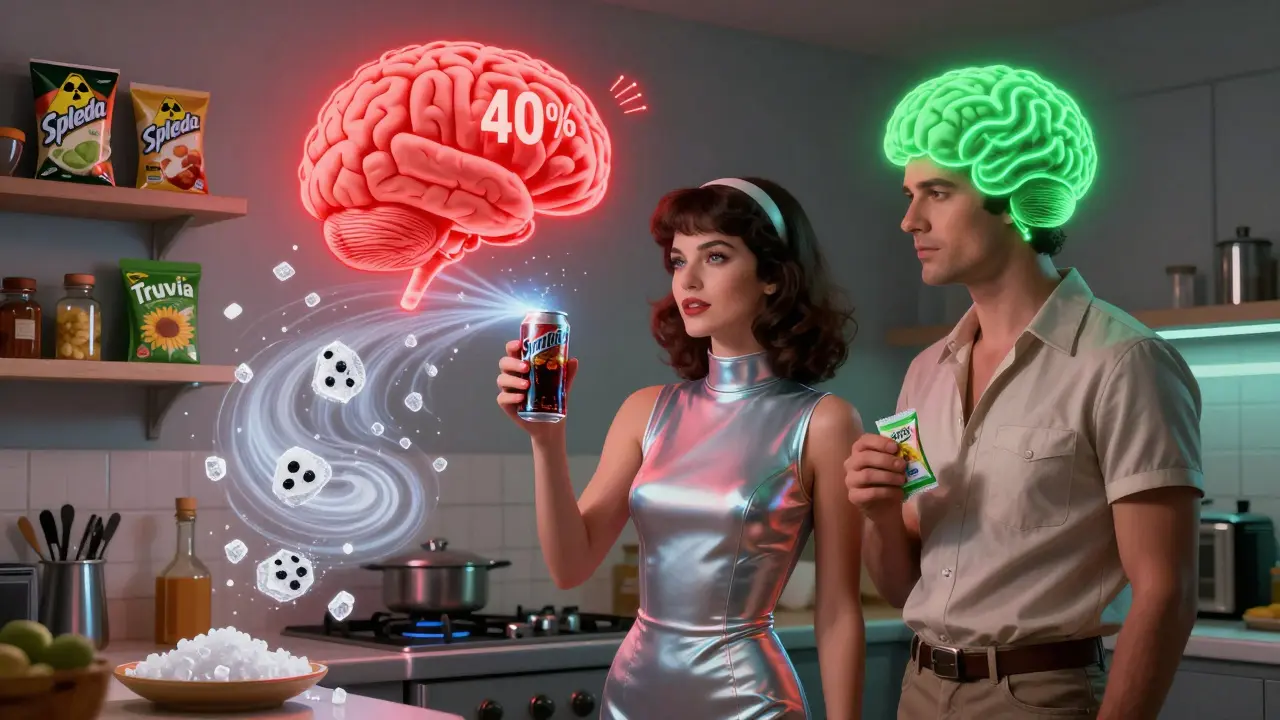
Not All Sweeteners Are the Same
You can’t treat all artificial sweeteners the same. They’re chemically different, and your body reacts differently to each. - Sucralose (Splenda): Most linked to increased hunger. Doesn’t trigger GLP-1. Strongest brain response in women. Found in diet sodas, gum, and low-sugar snacks. - Aspartame (Equal, NutraSweet): May increase appetite in men. Often used in diet sodas and sugar-free yogurt. Some people report headaches or brain fog, though studies haven’t confirmed this. - Acesulfame Potassium (Sunett, Sweet One): Frequently blended with sucralose in drinks. Linked to increased cravings in long-term users. - Stevia and Monk Fruit: Natural non-caloric sweeteners. Less studied, but user reports suggest fewer cravings. Truvia (stevia-based) has 4.2/5 stars on Amazon, with only 15% of negative reviews mentioning hunger issues-compared to 28% for Splenda. Registered dietitians are starting to recommend monk fruit or stevia over sucralose for people trying to manage cravings. They’re less intense, which may help your brain stay in sync with energy intake.How to Use Sweeteners Without Triggering Cravings
If you’re using artificial sweeteners to cut sugar, here’s how to avoid the trap:- Don’t drink diet soda all day. Constant sweet taste keeps your brain wired for sugar. Stick to one or two a day.
- Pair sweeteners with protein or fat. A 2021 study found that adding protein (like Greek yogurt or nuts) to a sweetened snack reduced hunger by 22%. The fat and protein slow digestion and trigger real satiety signals.
- Give yourself a 2-3 week reset. If you’ve been using sweeteners daily and feel hungrier, cut them out for a few weeks. Your taste buds will recalibrate. You’ll start noticing natural sweetness in fruit, yogurt, and even coffee.
- Choose less intense sweeteners. Monk fruit is 150x sweeter than sugar. Sucralose is 600x. The higher the intensity, the more your brain gets confused.
- Watch for hidden blends. Most diet sodas now use a mix of sucralose + acesulfame K. That combo might be worse than either one alone.

What the Experts Really Think
There’s no consensus. Some scientists say sweeteners are a lifesaver for weight loss. Others warn they rewire your brain to crave more sugar. Dr. Kirsten Berding, lead author of the 2023 USC brain scan study, says: "The differences in how people respond may explain why past research is so mixed. Some people’s brains are more sensitive to the mismatch between sweetness and calories." Professor Anne Raben from the University of Copenhagen, who led the 2022 Leeds trial, disagrees: "Sweeteners help people reduce sugar without increasing hunger. They’re a practical tool for weight management." Dr. Greg Neely, who studied the fruit fly brain recalibration, puts it bluntly: "When sweetness and energy don’t match, the brain learns to eat more to compensate." The truth? It depends on you.Your Body, Your Rules
If you’ve switched to diet drinks and feel hungrier, it’s not weakness. It’s biology. Your brain is trying to balance what it thinks it should be getting. Try this: For two weeks, replace your daily diet soda with sparkling water and a squeeze of lemon. Notice how your cravings change. If you feel less hungry, more in control, you’ve got your answer. If you still want sweetness, go for stevia or monk fruit in small amounts-paired with a handful of almonds or a spoon of peanut butter. That way, your brain gets both the sweet taste and the energy it expects. And if you’re still craving sugar? That’s normal. Sugar is addictive. But you’re not broken. You’re just responding to a system that’s been tricked.What’s Next?
Researchers are now launching big studies to figure out who benefits from sweeteners-and who doesn’t. The NIH-funded SWEET-2 study is tracking 10,000 people over five years. Early results show that after 18 months, people who drank sucralose daily had 19% lower GLP-1 responses than those who drank sugar. That means their fullness signals got weaker over time. The message is clear: Artificial sweeteners aren’t magic. They’re tools. And like any tool, they can help-or hurt-depending on how you use them. Don’t assume they’re safer just because they’re calorie-free. Your body doesn’t count calories the way a nutrition label does. It responds to signals. And if those signals are broken, you’ll keep eating-no matter how "diet" the food is.Do artificial sweeteners make you gain weight?
Some people do gain weight using artificial sweeteners, but not because the sweeteners themselves have calories. It’s because they can increase hunger and cravings, especially over time. Studies show that after several months of daily use, some people end up eating more to compensate for the mismatch between sweetness and energy. This is more common with sucralose and aspartame. But not everyone experiences this-some people lose weight using them. Individual biology, diet habits, and how often you use them matter a lot.
Is stevia better than sucralose for controlling cravings?
Yes, based on current evidence and user reports. Stevia and monk fruit are less intense than sucralose and don’t seem to trigger the same brain responses. A 2023 Amazon review analysis found only 15% of users of stevia-based products reported increased hunger, compared to 28% for sucralose. Studies also suggest stevia may have a milder effect on gut hormones. If you’re trying to reduce cravings, start with stevia or monk fruit instead of Splenda or diet sodas.
Can artificial sweeteners cause sugar cravings?
Yes, especially with long-term use. When your brain gets used to intense sweetness without calories, it starts to expect more. This is called "sweetness recalibration." A 2016 study showed fruit flies ate 30% more after being exposed to sucralose. In humans, 63% of daily users in a 2024 Healthline survey reported increased cravings after six months. Cutting back on sweeteners for 4-6 weeks often helps reset your taste preferences and reduce sugar urges.
Why do women seem to have stronger cravings with artificial sweeteners?
Brain imaging studies show women have stronger neural responses to artificial sweeteners than men. A 2023 USC study found that sucralose increased activity in hunger centers of the brain by 40% more in women than in men. This might be linked to hormonal differences or how female brains process reward signals. If you’re a woman and notice you get hungrier after diet drinks, you’re not alone-and it’s biologically plausible.
Should I avoid artificial sweeteners completely for weight loss?
Not necessarily. If you’re switching from sugary drinks to diet versions and eating fewer calories overall, sweeteners can help. But if you’re using them to justify eating more dessert or snacking on sweets, they’ll backfire. The key is moderation and context. Use them as a bridge-not a permanent replacement. Try cutting back after 2-3 weeks, and see how your body responds. Real food with natural sweetness (fruit, yogurt, cinnamon) is always the best long-term solution.
Jason Shriner
January 11, 2026 AT 06:28Sam Davies
January 12, 2026 AT 19:30Jennifer Littler
January 12, 2026 AT 22:23Alfred Schmidt
January 14, 2026 AT 07:39Priscilla Kraft
January 16, 2026 AT 03:14Christian Basel
January 17, 2026 AT 08:38Roshan Joy
January 18, 2026 AT 12:51Adewumi Gbotemi
January 19, 2026 AT 11:21Matthew Miller
January 21, 2026 AT 01:14Priya Patel
January 22, 2026 AT 03:51Sean Feng
January 22, 2026 AT 16:29Vincent Clarizio
January 24, 2026 AT 08:28Alex Smith
January 26, 2026 AT 02:33Michael Patterson
January 28, 2026 AT 00:39Madhav Malhotra
January 29, 2026 AT 17:11