Specialty Pharmacy and Generics: Key Practice Challenges and Opportunities
 Jan, 3 2026
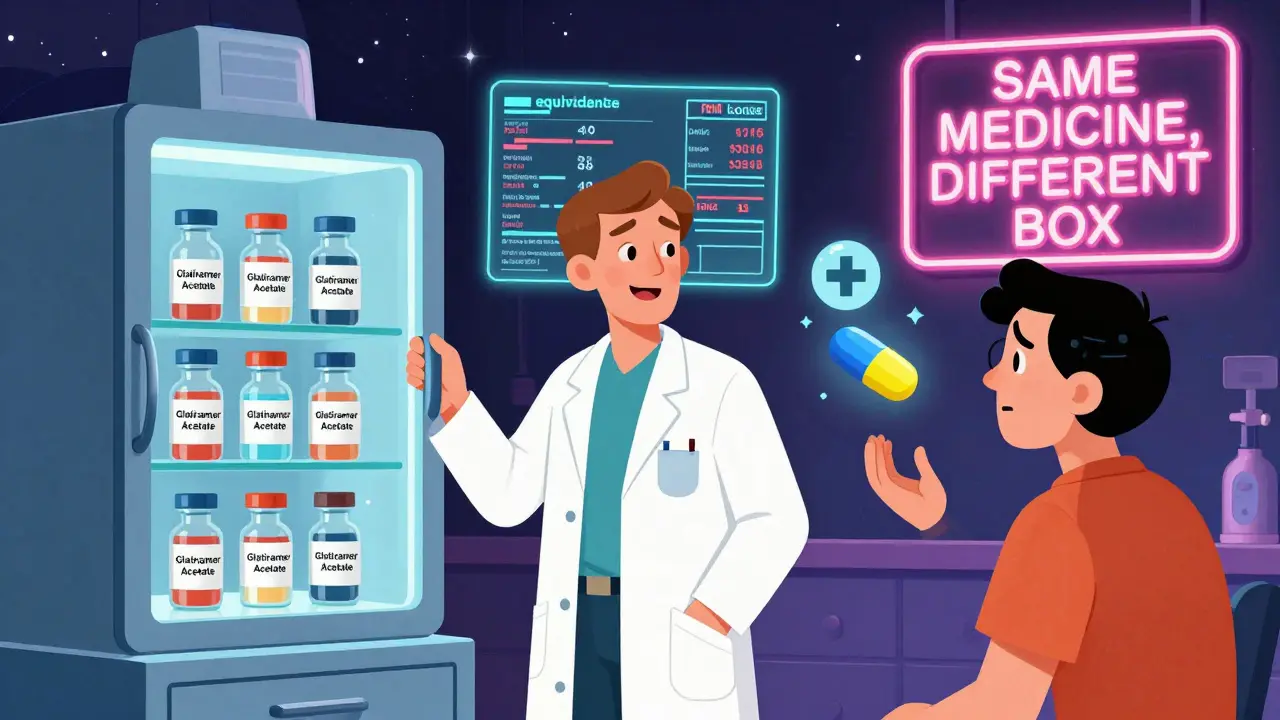
When a patient with multiple sclerosis switches from a $78,000-a-year brand-name drug to a generic version that costs $45,000, the savings are clear. But for the pharmacist handling that switch, the real work begins after the prescription is filled. Specialty pharmacy isn’t just about dispensing expensive drugs-it’s about managing complex care, navigating broken reimbursement systems, and calming patient fears when a pill looks different than it did last month.
What Makes Specialty Pharmacy Different?
Specialty pharmacy focuses on high-cost, high-complexity medications used for chronic, serious conditions like cancer, rheumatoid arthritis, hepatitis C, and multiple sclerosis. These aren’t your typical 30-day scripts. Many are biologics-large, delicate molecules made from living cells. They need refrigeration (2-8°C), special handling, and often require injections or infusions. Patients on these drugs need constant monitoring: blood tests, symptom tracking, and regular check-ins to catch side effects early. Unlike community pharmacies where 90% of prescriptions are generics, specialty pharmacies rarely see generic alternatives. That’s changing. As patents expire, more small-molecule generics and biosimilars are entering the market. But the rules don’t match what pharmacists learned in school. You can’t just swap a brand for a generic and call it done.Generics in Specialty Pharmacy: Not All Are Created Equal
The FDA says generics must be bioequivalent to the brand-name drug. That means they deliver the same active ingredient at the same rate and amount. But bioequivalence doesn’t guarantee identical patient experiences. Inactive ingredients-fillers, dyes, coatings-can vary. For most drugs, that’s fine. For narrow therapeutic index (NTI) drugs like levothyroxine or warfarin, even tiny differences in absorption can cause serious problems. Patients report side effects after switching between generic manufacturers. One Reddit user described sudden heart palpitations after switching from one generic levothyroxine to another. Another said their MS symptoms flared after a pharmacy changed their glatiramer acetate brand. Pharmacists hear these stories often. And while the science says the drugs are equivalent, the patient’s body doesn’t always agree. Specialty pharmacists now track which manufacturer’s generic a patient is on. If a patient stabilizes on one brand, switching to another-even if it’s FDA-approved-can trigger anxiety, non-adherence, or worse. Documentation is key: note the manufacturer, lot number, and patient response in the record. If a patient has a known allergy to a dye or filler, that’s a hard stop on substitution.The PBM Problem: When Savings Don’t Reach the Pharmacy
Pharmacy Benefit Managers (PBMs) control reimbursement and set rules for what gets paid. They push for higher generic dispensing ratios (GDR), sometimes penalizing specialty pharmacies for not meeting targets-even when no generic exists for the drug. Imagine being fined because you couldn’t substitute a drug that has no generic version. That’s real. And it’s happening. Many specialty pharmacies operate on razor-thin margins. PBMs reimburse below acquisition cost. Some pay $1,200 for a drug that costs $1,300 to buy. The pharmacy loses money on every script. Meanwhile, the PBM pockets rebates from manufacturers, often without passing savings to the patient or provider. The result? Pharmacists spend hours on prior authorizations, appeals, and paperwork just to get paid. Time that could be spent counseling patients goes to chasing reimbursements.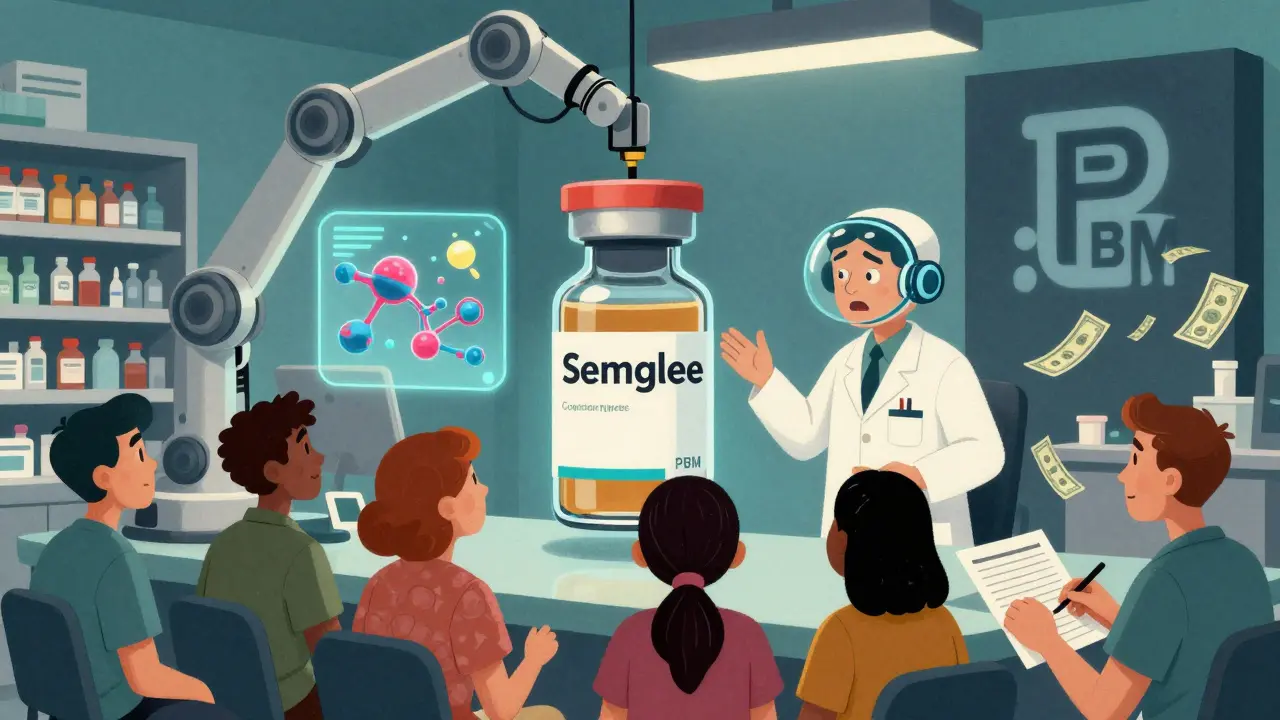
Biosimilars: The Next Frontier
Biosimilars are the generic version of biologics. They’re not exact copies-biologics are too complex for that-but they’re highly similar and have no clinically meaningful differences in safety or effectiveness. The FDA approved 35 biosimilars by the end of 2023, with more on the way. Humira biosimilars launched in 2023 after years of legal battles. Semglee, the first interchangeable biosimilar for insulin, hit the market in 2021. Interchangeable means a pharmacist can substitute it without the prescriber’s permission-just like a traditional generic. But in practice, it’s not that simple. PBMs often place biosimilars on high-cost tiers, making patients pay more out-of-pocket. Some patients refuse them because they think “biosimilar” means “inferior.” Specialty pharmacists are on the front lines of education. They explain that a biosimilar isn’t a knockoff-it’s a rigorously tested alternative. They help patients understand that switching to a biosimilar could cut costs by 30-50% without sacrificing outcomes. But that takes time, trust, and consistent messaging.How to Build a Smart Generic Strategy
If your specialty pharmacy is starting to handle generics or biosimilars, here’s what works:- Start with top therapeutic areas. Focus on drugs with the highest volume and most available generics-like glatiramer acetate, infliximab, or etanercept.
- Standardize your inventory. Limit the number of manufacturers you carry for each product. Too many SKUs create confusion and increase errors.
- Build substitution protocols. When can you switch? When should you avoid it? Document criteria: NTI drugs? Patient history? Allergies? Define it clearly and train your team.
- Partner with one reliable distributor. Sourcing generics from multiple suppliers adds administrative burden and supply chain risk. One trusted partner reduces errors and streamlines logistics.
- Track outcomes after substitution. Monitor adherence, lab values, and patient-reported symptoms for 30-60 days after a switch. If problems arise, document them and report to manufacturers and regulators.
Patient Counseling: The Most Important Step
A patient doesn’t care about FDA bioequivalence standards. They care that their pill changed color. That their injection pen looks different. That their co-pay went up-or down. Specialty pharmacists need to make counseling part of every generic or biosimilar switch. Don’t just hand them the script. Say:- “This is the same medicine, just made by a different company.”
- “It’s been tested to work just like your old one.”
- “If you feel anything different-more fatigue, new rash, unusual pain-call us right away.”
- “We’ll follow up with you in two weeks to see how you’re doing.”
The Road Ahead
The future of specialty pharmacy is tied to generics and biosimilars. As more biologics lose patent protection, cost savings will grow. The Congressional Budget Office estimates biosimilars could save the U.S. system $54 billion over the next decade. But savings won’t happen automatically. They require smart policies, fair reimbursement, and pharmacists who are empowered-not penalized-to make the right choices for patients. Right now, the system is broken. Pharmacists are caught between corporate cost-cutting and patient safety. But change is possible. By standardizing practices, demanding fair payment, and putting patients first, specialty pharmacies can turn this challenge into an opportunity-not just to save money, but to save lives.Can a specialty pharmacy substitute a generic for a brand-name biologic?
No, not directly. Biologics don’t have traditional generics. Instead, they have biosimilars, which are highly similar but not identical. Only FDA-approved interchangeable biosimilars can be substituted without prescriber approval-like Semglee for insulin. For non-interchangeable biosimilars, the prescriber must specifically write for the biosimilar. Pharmacists must verify the substitution rules based on the product and state laws.
Why do patients have side effects after switching to a generic?
While generics must be bioequivalent, they can contain different inactive ingredients-fillers, dyes, preservatives. For most drugs, this doesn’t matter. But for narrow therapeutic index (NTI) drugs like levothyroxine, warfarin, or certain epilepsy meds, even small changes in absorption can cause symptoms. Patients may report fatigue, tremors, or worsening of their condition. These reactions are rare but real, and pharmacists should monitor patients closely after a switch.
Are generics as safe as brand-name drugs in specialty pharmacy?
Yes, when properly regulated. The FDA requires generics to meet the same manufacturing standards as brand-name drugs. Facilities are inspected, and product quality is verified. However, quality can vary between manufacturers, especially with international suppliers. Specialty pharmacies should source generics from reputable distributors with transparent supply chains and avoid switching manufacturers unless necessary. Always document which manufacturer’s product a patient receives.
Why do PBMs penalize specialty pharmacies for low generic dispensing rates?
PBMs use Generic Dispensing Ratio (GDR) as a performance metric, often to pressure pharmacies into using cheaper drugs. But many specialty medications have no generic version-especially biologics. Penalizing pharmacies for not dispensing generics they can’t legally or clinically provide is misleading and financially harmful. Specialty pharmacies should push back, document why substitution isn’t possible, and advocate for fair metrics that reflect the complexity of their work.
How can specialty pharmacies improve patient adherence with generics?
Adherence improves when patients understand and trust the switch. Pharmacists should proactively counsel patients before substitution, explain why the change is happening, and follow up within 2-4 weeks. Use clear language: “This is the same medicine, just made differently.” Offer reminders, refill coordination, and access to nurse educators. Tracking outcomes-like lab results or symptom logs-helps prove the switch is working and reassures patients.
What’s the difference between a generic and a biosimilar?
Generics are chemically identical copies of small-molecule drugs, like metformin or lisinopril. Biosimilars are highly similar versions of complex biologic drugs, like Humira or Enbrel. Biologics are made from living cells, so biosimilars can’t be exact copies-only very close matches. They require more testing to prove similarity. Only interchangeable biosimilars can be substituted like generics; others require a prescriber’s order. The approval pathway for biosimilars is governed by the BPCIA of 2009.
Should a specialty pharmacy stock multiple manufacturers of the same generic?
Generally, no. Stocking multiple manufacturers increases complexity, inventory errors, and patient confusion. If a patient is stable on one manufacturer’s version, switching to another-even if FDA-approved-can trigger anxiety or side effects. Best practice: choose one preferred manufacturer per product, based on reliability, cost, and patient feedback. If a shortage occurs, notify the prescriber and patient before switching. Document all changes carefully.
Brendan F. Cochran
January 5, 2026 AT 04:16Let me get this straight-we’re paying $78k for a pill that’s basically the same as a $45k one, and the pharmacy gets screwed because some PBM is pocketing the difference? This isn’t healthcare, it’s corporate robbery with a side of bureaucracy. I’ve seen my cousin’s MS meds switch brands and she had panic attacks for weeks. No one cares until someone’s body rebels. Time to burn the whole system down.
jigisha Patel
January 7, 2026 AT 03:25It is imperative to note that bioequivalence, as defined by the FDA, pertains solely to pharmacokinetic parameters-namely, AUC and Cmax-and does not encompass pharmacodynamic variability, patient-reported outcomes, or psychosomatic responses to packaging, color, or pill size. The assumption that molecular equivalence equates to clinical equivalence is a fallacy rooted in reductionist pharmacology. Moreover, the variance in excipients across manufacturers-particularly in NTI drugs-can induce subclinical immune modulation, which is neither measured nor mandated in approval protocols. This is not anecdotal; it is systemic pharmacovigilance failure.
Mandy Kowitz
January 7, 2026 AT 06:51Oh wow, a 30k savings? And you're telling me the pharmacist has to babysit patients because they're scared their pill changed color? Like... did we forget that this is a capitalist system? Maybe if people stopped treating their meds like emotional support objects, we wouldn't need a whole department just to reassure them their generic isn't a government conspiracy.
Justin Lowans
January 7, 2026 AT 09:53This is one of the most thoughtful, nuanced breakdowns of specialty pharmacy I’ve read in years. The tension between cost-efficiency and patient-centered care isn’t just a policy issue-it’s a moral one. Pharmacists are the unsung heroes holding this broken system together with duct tape and empathy. We need to elevate their role, not penalize them for doing the right thing. Let’s advocate for reimbursement models that reward clinical expertise, not just volume. This isn’t just about pills-it’s about dignity in care.
Cassie Tynan
January 8, 2026 AT 15:56So we’ve got a system where the people who actually know how to handle these drugs are getting fined for not magically creating generics out of thin air… while the people who designed the system sit on yachts counting rebates? I’m not mad. I’m just disappointed. We built a machine that turns compassion into paperwork and then wonders why people stop taking their meds. Maybe we should stop pretending this is healthcare and start calling it what it is: a performance art show for shareholders.
Chris Cantey
January 9, 2026 AT 11:18The real tragedy isn’t the cost or the bureaucracy. It’s that we’ve reduced human beings to data points in a reimbursement algorithm. The body remembers. The mind remembers. The fear of the unknown-of the pill that looks different-isn’t irrational. It’s evolutionary. And we’ve stripped away the ritual of care, replaced it with checkboxes, and now wonder why people disengage. We didn’t fix the system. We just made it quieter.
Abhishek Mondal
January 9, 2026 AT 12:28...and yet, you neglect to address the fundamental epistemological flaw in the entire discourse: that bioequivalence, as a metric, is inherently reductionist, predicated upon a Cartesian dualism that separates pharmacological action from phenomenological experience... furthermore, the PBM model is not merely a regulatory failure-it is a structural manifestation of late-stage capitalist alienation, wherein the pharmacy becomes a node in a value-extraction chain, and the patient, a mere conduit for profit. Have you considered the ontological implications of substituting a biosimilar without prescriber consent? It is not merely a clinical act-it is an erasure of agency.
Oluwapelumi Yakubu
January 11, 2026 AT 02:28Man, this is deep. I’m from Nigeria, and we don’t even have this kind of infrastructure-our pharmacies just give you whatever’s in stock and pray. But I get what you’re saying: when your body’s already fighting something serious, the last thing you need is a pill that looks like a different color candy. I’ve seen people stop meds just because the bottle changed. You’re right-counseling isn’t extra, it’s the whole damn point. Keep talking. We need more voices like yours.
Siobhan Goggin
January 11, 2026 AT 05:48One sentence: This is why we need pharmacists to be part of the care team-not just the last stop on a conveyor belt.