Sleep and Weight: How Circadian Rhythm Affects Your Metabolism and Body Weight
 Feb, 5 2026
Why Your Body Weight Isn't Just About Calories
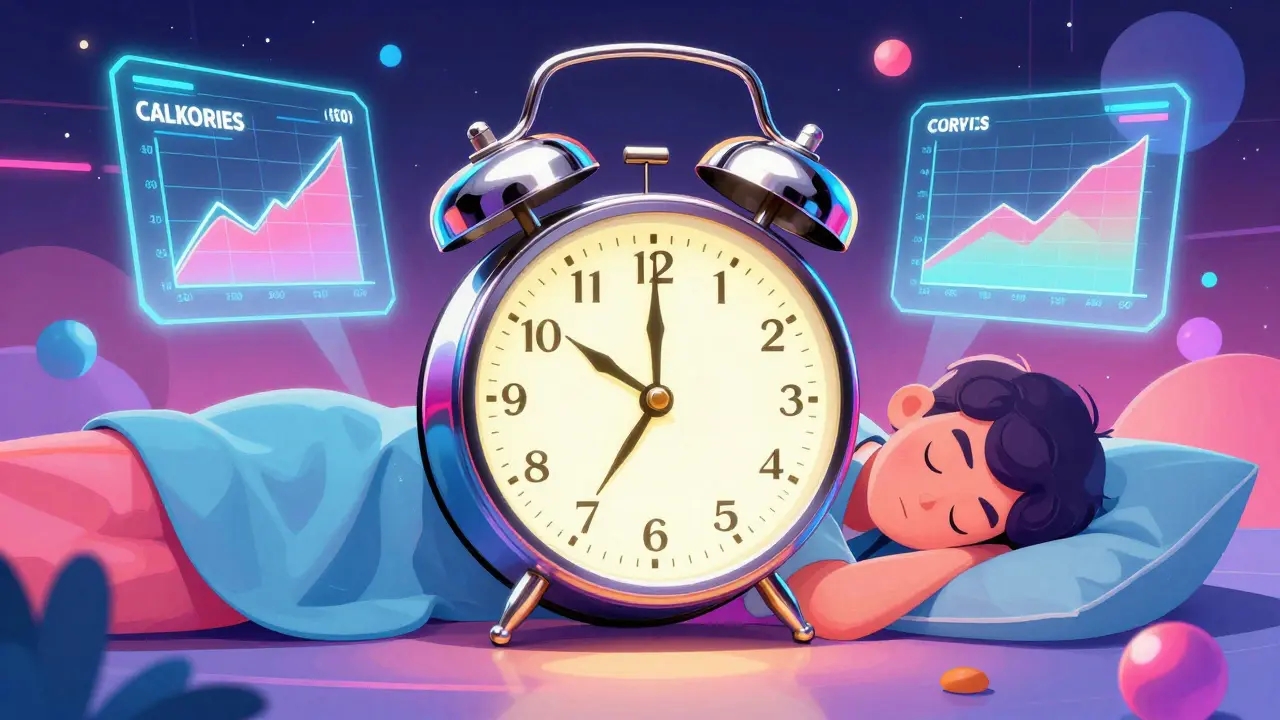
Ever wonder why you feel hungrier after a bad night's sleep? It's not just your imagination. Research shows sleep directly shapes your metabolism through your body's internal clock - the circadian rhythm the body's 24-hour biological clock regulating sleep, metabolism, and hormone release. A 2022 study in Nature Reviews Endocrinology found sleeping just 4 hours a night for a week causes you to eat 250+ extra calories daily while burning 100 fewer - a net gain of 150+ calories. That's enough to pack on 7.7 pounds in a year. Understanding the link between sleep and weight starts with this clock system.
How Your Body's Internal Clock Controls Metabolism
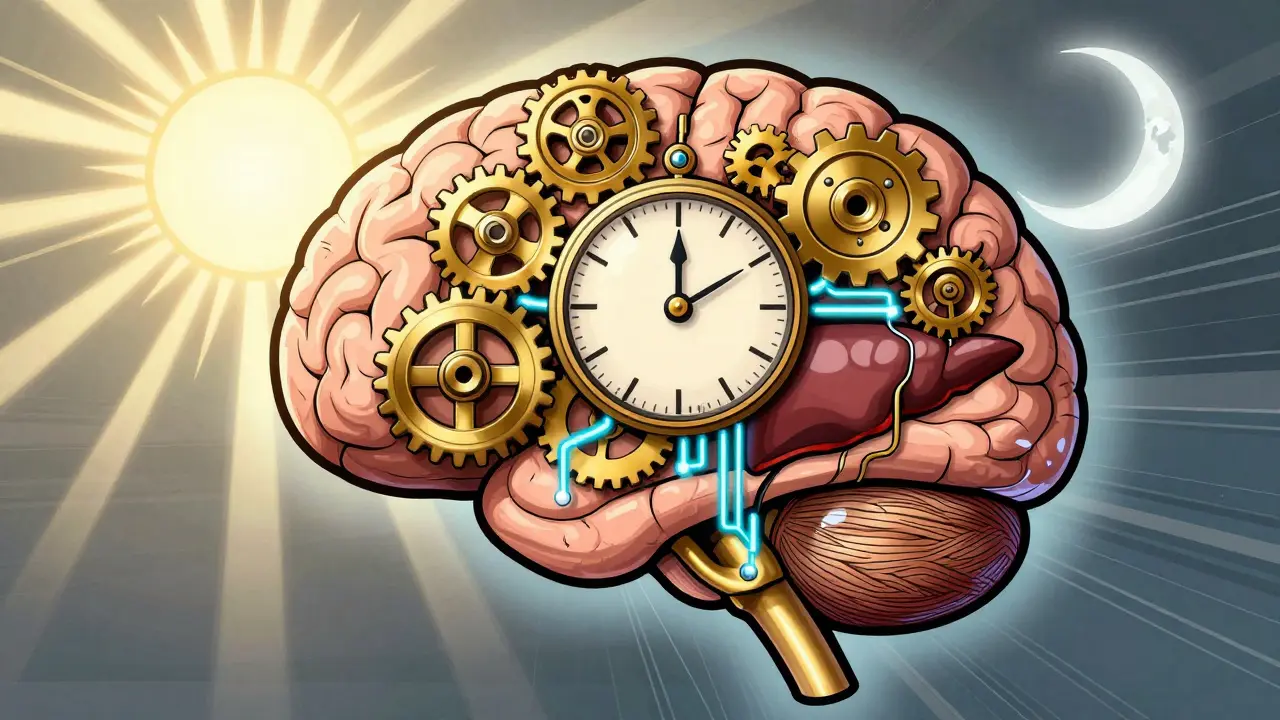
Your brain's suprachiasmatic nucleus (SCN) acts as the master clock, syncing with light and dark cycles to coordinate everything from your liver's glucose processing to your fat cells' activity. This system evolved to align physiological functions with daylight, but modern life often throws it out of sync. When your sleep-wake cycle clashes with your eating habits - like eating late at night - your body's metabolic processes go haywire. Studies show insulin sensitivity how effectively your body uses insulin to process glucose drops by 20-25% during biological night eating periods, making it harder to regulate blood sugar.
Shift Work: The Hidden Weight Gain Risk
With 20% of the global workforce in shift work, this isn't just a personal issue. A 2014 PNAS study tracked 14 healthy adults during simulated night shifts. Nightshift conditions reduced total daily energy expenditure by 3% (about 55 calories) despite identical food intake. Meanwhile, sleep restriction alone increased energy intake by over 250 calories daily without changing expenditure. On Reddit's r/ShiftWork subreddit, 78% of 1,245 surveyed members reported weight gain after starting shift work. One nurse with 12 years of night shifts said: "I gained 35 pounds in my first year despite eating the same foods - I simply couldn't stop snacking at 3 AM when my body wanted to be asleep."
Time-Restricted Eating: A Simple Fix for Your Clock
time-restricted eating limiting food intake to a specific daily window, usually 8-10 hours is one of the most effective ways to align your metabolism. Research from the Salk Institute found eating within an 8-10 hour daylight window typically produces 3-5% body weight reduction over 12 weeks in overweight adults. The key? Timing. A 2023 Nature Metabolism trial showed aligning meals with individual circadian phases (measured via melatonin onset) produced 24% greater weight loss than standard calorie restriction over six months. Morning types lose more with early windows (8 AM-6 PM), while evening types benefit from later windows (10 AM-8 PM).

Real-World Challenges and Solutions
Implementing circadian alignment isn't always easy. Social dining conflicts were reported by 68% of time-restricted eating users in a 2021 Nutrients journal study. Initial hunger pangs typically resolve within 7-10 days, but many struggle with consistency. Here's what works:
- Gradually narrow your eating window by 30 minutes each week
- Keep healthy snacks like Greek yogurt or nuts available for late-night cravings
- Use bright light exposure in the morning to reset your clock
- Dim lights after 8 PM to signal bedtime to your body
The Future of Circadian Weight Management
The global circadian rhythm management market hit $1.2 billion in 2022 and is projected to reach $2.8 billion by 2030. Major healthcare systems like Kaiser Permanente have reduced weight gain by 42% in night shift workers through strategic light exposure and meal timing protocols. Wearable tech is catching up too - Fitbit's 2024 Sleep Score Update now predicts 18% of weight change variability based on sleep patterns. The NIH's 2023-2027 Strategic Plan allocates $185 million specifically for circadian-metabolism research, focusing on personalized biomarkers. As one researcher noted, "Circadian-based interventions represent a sustainable, low-cost component of comprehensive obesity management with potential to reduce global obesity rates by 5-8% if implemented at scale."
Can I lose weight just by sleeping more?
Not exactly. Sleeping more alone won't cause weight loss, but poor sleep directly contributes to weight gain. A 2016 Sleep study found restricting sleep to 4 hours per night for four nights increased appetite by 22% and specifically boosted cravings for high-carb foods by 33%. Fixing sleep issues helps control hunger hormones like ghrelin and leptin, making it easier to maintain a healthy weight when combined with proper nutrition and activity.
Does eating late at night really cause weight gain?
Yes, but not because of calories alone. A 2014 PNAS study showed eating dinner after 8 PM reduced the thermic effect of feeding by 17% - meaning your body burns fewer calories digesting that meal. Late-night eating also disrupts insulin rhythms, causing more fat storage. This effect is independent of total calories; it's about timing. Your body processes food differently at night when your circadian rhythm expects rest.
How does shift work affect metabolism?
Shift work creates "circadian misalignment" - when your sleep-wake cycle clashes with your body's internal clock. This disrupts glucose metabolism and increases insulin resistance. A 2022 Nature Reviews Endocrinology study found night shift workers have 15-30% higher glucose intolerance during biological night eating periods. The International Labour Organization reports 20% of the global workforce is in shift work, creating widespread metabolic vulnerability beyond just calorie intake.
What's the best time to eat for weight loss?
For most people, eating within an 8-10 hour window during daylight hours works best. The Salk Institute's research shows a 7 AM-5 PM window produces consistent results. Morning types (early risers) benefit from earlier windows (8 AM-6 PM), while evening types (night owls) do better with later windows (10 AM-8 PM). The key is consistency - eating at the same times daily helps your body's clock stay synchronized.
Can wearable devices help with circadian alignment?
Yes. Fitbit's 2024 Sleep Score Update now includes circadian alignment metrics that predict 18% of weight change variability based on sleep patterns. Devices like Oura Ring track body temperature changes linked to circadian phases, while apps like Sleep Cycle analyze sleep stages to recommend optimal wake-up times. These tools help you identify when your body naturally wakes up and when melatonin rises, making it easier to align eating and sleeping with your internal clock.
Ashley Hutchins
February 7, 2026 AT 10:50I sleep 8 hours and eat only during daylight and my weight is perfect. People just dont care about their health they eat chips and candy all day. Its so easy to fix just stop eating at night. You should be ashamed. I've been doing this for years and everyone around me is struggling. They blame everything except their own choices. I've seen people gain weight from eating late night snacks. It's not rocket science. Just stop. Why is it so hard? The science is clear. Sleep deprivation messes with hunger hormones. You can't out eat a bad sleep schedule. I'm not saying it's easy but it's simple. Stop making excuses. Your body will thank you.
Amit Jain
February 7, 2026 AT 18:42I've been working nights for 10 years and I'm in great shape. People gain weight because they eat too much not sleep. You're just spreading misinformation. Stop blaming sleep.
Joey Gianvincenzi
February 9, 2026 AT 17:03While sleep is important for metabolism, it's not the only factor. Nutrition and physical activity also play significant roles. The article's focus on sleep alone is incomplete and misleading.
Sarah B
February 10, 2026 AT 19:23Sleep bad weight bad.
Mary Carroll Allen
February 11, 2026 AT 20:24OMG YES! I was a night shift worker and I gained 40 pounds. But when I started time-restricted eating at 8am-6pm I lost 25 in 3 months! My energy is through the roof. This is life changing. I CRIED when I saw the scale. THANK YOU for sharing this! 😭😭😭
Niel Amstrong Stein
February 13, 2026 AT 05:37Wow this is fascinating 😎. I never realized how much my sleep schedule affects my metabolism. I've been trying to eat within an 8 hour window and it's been amazing. So cool how science is catching up with what our bodies have been telling us all along. 🌞
Paula Sa
February 14, 2026 AT 16:23I really appreciate this information. It makes so much sense. I've been trying to adjust my eating times and I've noticed a difference already. It's nice to have science backing up what I've been feeling. Thanks for sharing!
Lakisha Sarbah
February 16, 2026 AT 03:51I've been following this advice for a few weeks and its been helpful. I used to eat late at night but now I stop at 7pm. My digestion is better and I feel more energized in the morning. Thanks for the tips! (typo: I meant 7pm but wrote 7pm) 😅
Ariel Edmisten
February 17, 2026 AT 04:36Time-restricted eating works. I tried it. Lost weight. Simple.