Skin Rashes and Medication-Induced Dermatitis: What Patients Should Know
 Dec, 21 2025
Drug Rash Assessment Tool
What to Know
This tool helps you assess if your rash might be medication-related and determine the urgency of care. Remember, this is not a substitute for medical advice. If you have any doubts or severe symptoms, seek immediate medical attention.
More than 1 in 20 people who take prescription or over-the-counter drugs develop a skin rash as a side effect. It’s not always an allergy. It’s not always serious. But it can be-and knowing the difference could save your life.
What Does a Drug Rash Actually Look Like?
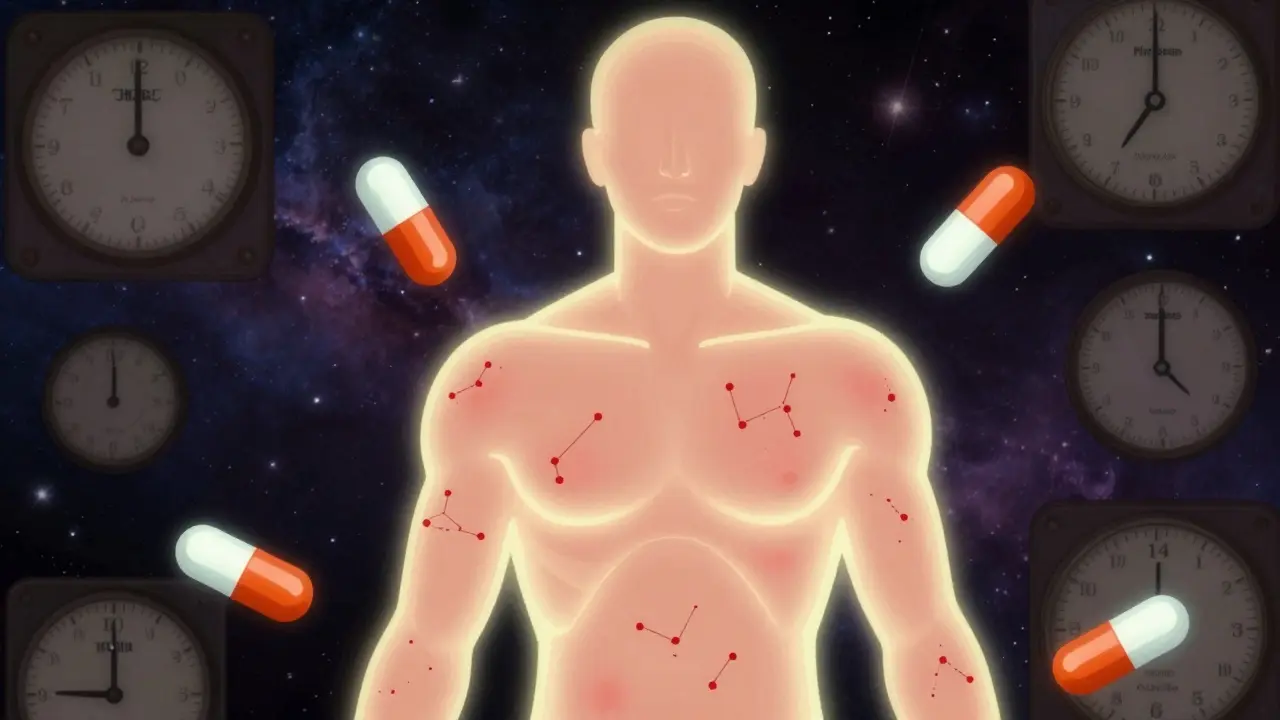
Drug rashes don’t look the same every time. The most common type is a morbilliform rash, which looks like small, red, flat spots or slightly raised bumps. These often start on your chest, back, or upper arms and spread slowly. Itching is common, but you might not feel sick otherwise. This rash usually shows up 4 to 14 days after you start a new medication-even if you’ve taken it before without issues.
Then there’s drug-induced urticaria, or hives. These are raised, red, itchy welts that come and go within hours. They can appear anywhere on the body and may be linked to antibiotics, NSAIDs like ibuprofen, or even some painkillers. Unlike the morbilliform rash, hives often show up faster-sometimes within an hour of taking the drug.
Another form is nummular dermatitis, which looks like coin-shaped, scaly patches. It’s often mistaken for eczema, but if you started a new medication around the same time, it might be drug-related. These patches can be dry and flaky or weepy and crusty. The good news? They usually clear up within 4 to 8 weeks after stopping the drug.
When a Rash Isn’t Just a Rash
Some drug rashes are warning signs of something much more dangerous. These are called severe cutaneous adverse reactions (SCARs), and they’re rare-but deadly. About 2% of all drug rashes fall into this category, but they cause 90% of drug-related skin deaths.
Stevens-Johnson Syndrome (SJS) and Toxic Epidermal Necrolysis (TEN) are the most feared. They start like a bad flu-fever, sore throat, burning eyes-then your skin begins to blister and peel. The top layer of skin detaches, much like a severe burn. SJS affects less than 10% of your body surface; TEN affects more than 30%. Mortality rates? 5-15% for SJS, up to 35% for TEN. If you notice blisters, mouth sores, or peeling skin, go to the ER now.
DRESS syndrome (Drug Reaction with Eosinophilia and Systemic Symptoms) is another hidden danger. It doesn’t just hit your skin. It can wreck your liver, kidneys, or lungs. You might get a rash, fever, swollen lymph nodes, and extreme fatigue. It usually shows up 2 to 6 weeks after starting the drug. Common culprits? Carbamazepine (for seizures), allopurinol (for gout), sulfonamide antibiotics, and some antivirals. Blood tests will show high eosinophils-a sign your immune system is going haywire.
AGEP (Acute Generalized Exanthematous Pustulosis) looks like tiny, non-infectious pus-filled bumps all over your body. It’s often triggered by antibiotics like penicillin or antifungals. It’s scary to see, but it’s usually not life-threatening and clears up in days after stopping the drug.
Which Medications Are Most Likely to Cause Rashes?
Not all drugs are equal when it comes to skin reactions. Some are notorious for causing trouble:
- Penicillin and related antibiotics - cause 10% of all drug rashes and 80% of severe allergic reactions.
- Sulfonamides (like Bactrim) - linked to 8% of rashes and high risk for DRESS and SJS.
- Anticonvulsants - carbamazepine, phenytoin, lamotrigine - responsible for 7% of rashes and carry the highest risk for SCARs, especially in people with certain genetic markers like HLA-B*1502.
- Allopurinol - used for gout - increases SCAR risk 580-fold in people of Han Chinese descent with HLA-B*5801.
- NSAIDs (ibuprofen, naproxen) - cause non-allergic reactions in up to 25% of cases, mimicking allergies without immune involvement.
- Chemotherapy drugs - often cause rashes as a direct toxic effect, not an allergy.
- Doxycycline, ciprofloxacin, hydrochlorothiazide - major triggers of photosensitivity rashes. You get a sunburn-like reaction even with minimal sun exposure.
Here’s the twist: you can develop a rash from a drug you’ve taken safely for years. Your immune system changes. Your body gets older. You start taking more pills. The risk of a reaction jumps from 5% if you take one or two medications to 35% if you take five or more.
How Do You Know It’s a Drug Reaction?
Timing is everything. If you started a new medication and then got a rash, it’s probably related. But here’s the catch: some rashes appear after you stop the drug. That’s because your immune system keeps reacting even after the drug is gone.
Immediate reactions (within an hour) usually mean IgE-mediated allergy-think anaphylaxis, hives, swelling. Delayed reactions (4-14 days) are T-cell mediated. That’s the bulk of drug rashes. They’re not true allergies in the classic sense, but your immune system still attacks the drug like a foreign invader.
Also, some rashes only happen when you’re in the sun. That’s photosensitivity. If you’re on doxycycline or hydrochlorothiazide and you get a bad sunburn after walking to your mailbox, that’s a clue.
And here’s something most people don’t know: you might have been sensitized without realizing it. Trace amounts of penicillin in meat or dairy, or even in some foods, can prime your immune system. Then, when you take a full dose later, your body goes into overdrive.
What Should You Do If You Get a Rash?
Don’t panic. But don’t ignore it either.
If it’s mild-just a few red spots, itchy but no fever, no blisters, no trouble breathing-you can wait until your next doctor’s visit. But don’t stop your medication on your own, especially if it’s for epilepsy, heart disease, or mental health. Stopping suddenly could be dangerous.
For mild rashes, try this:
- Take lukewarm showers with a gentle, fragrance-free cleanser.
- Apply a moisturizer within 3 minutes of getting out of the shower.
- Use over-the-counter 1% hydrocortisone cream twice a day on the rash.
- Take an antihistamine like cetirizine or loratadine to reduce itching.
If the rash is spreading fast, blistering, or you have fever, mouth sores, swollen eyes, or trouble breathing-go to the ER immediately. Don’t call your doctor first. Don’t wait until morning. These are emergencies.
For severe reactions like DRESS or SJS, treatment often means hospitalization. You might need IV steroids, supportive care, and a team of dermatologists, internists, and critical care specialists. There’s no one-size-fits-all treatment-doctors have to figure it out case by case.
How to Prevent Future Reactions
Once you’ve had a drug rash, you need to be smarter next time.
- Keep a written list of every drug you’ve had a reaction to, including the type of rash and when it happened.
- Share this list with every doctor, pharmacist, and ER provider you see.
- Ask your pharmacist: “Could this new drug interact with anything I’ve had a reaction to before?”
- If you’re prescribed an antibiotic and you’ve ever had a rash with penicillin, ask if a skin test is available. Modern penicillin allergy testing is 95% accurate.
- Be cautious with drugs if you have HIV, Epstein-Barr virus, or a weakened immune system-you’re 5 to 10 times more likely to get a bad reaction.
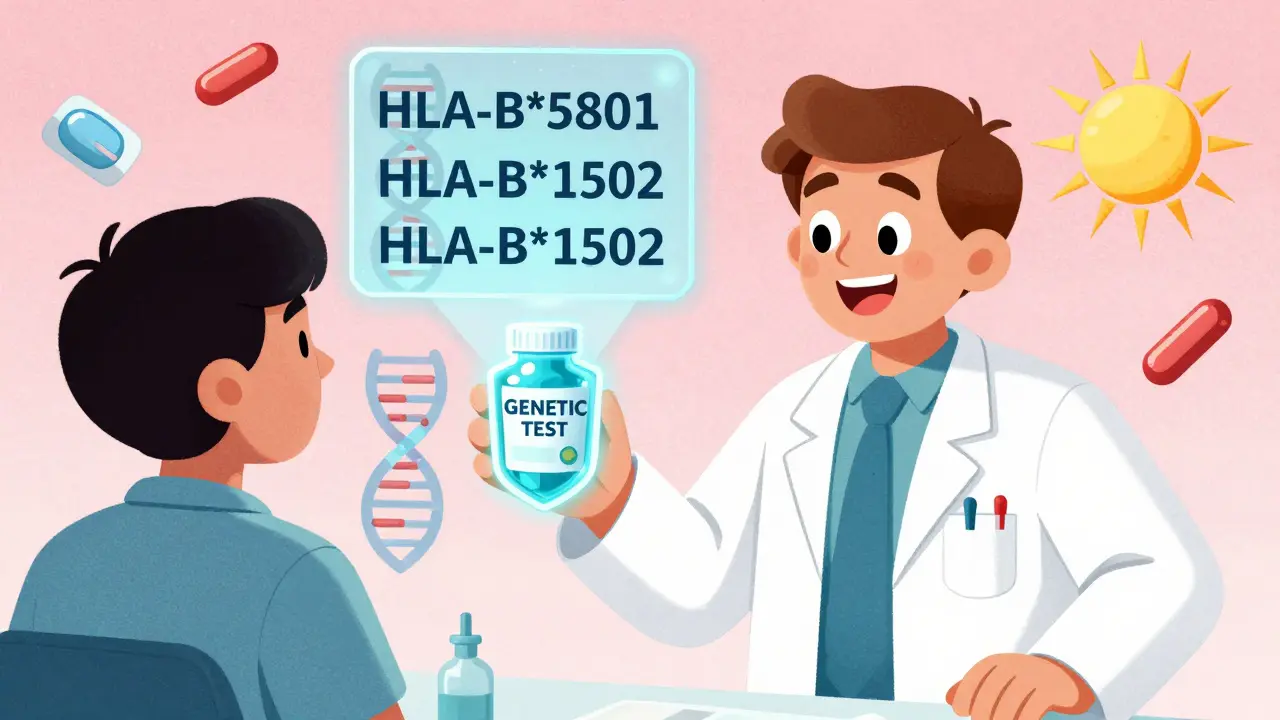
- If you’re of Southeast Asian or Han Chinese descent, ask your doctor about genetic testing before taking carbamazepine or allopurinol. A simple blood test can prevent a life-threatening reaction.
And remember: 90% of drug rashes go away within 1 to 2 weeks after stopping the medicine. You don’t need to live with it. You don’t need to suffer. But you do need to act wisely.
Common Myths About Drug Rashes
Myth: If I had a rash once, I’m allergic forever.
Reality: Many people labeled as “allergic to penicillin” aren’t. About 15% of those who report a past rash can safely take penicillin again after proper testing.
Myth: All rashes from drugs are allergies.
Reality: Most aren’t. Non-allergic reactions-like those from NSAIDs or contrast dye-happen without immune involvement. They’re toxic or inflammatory, not allergic.
Myth: Only new drugs cause rashes.
Reality: The longer you’re on a drug, the more likely you are to react. Your body changes. Your liver processes things differently. Your immune system gets tired.
Myth: If it’s not itchy, it’s not serious.
Reality: Some of the most dangerous rashes, like SJS, start with pain or burning-not itching.
What to Ask Your Doctor
If you’re worried about a rash, don’t just say, “I think this medicine is causing it.” Be specific:
- “When did I start this medication?”
- “What did the rash look like?”
- “Did I have a fever or other symptoms?”
- “Could this be a drug reaction, and if so, which one?”
- “Is there a safer alternative?”
- “Should I get tested for this?”
Doctors can’t read your mind. But they can help you if you give them the right clues.
Drug rashes are common. Most are harmless. But a few are silent killers. Knowing the signs, the triggers, and the right response isn’t just helpful-it’s essential.
Can a drug rash appear days after stopping the medication?
Yes. Some drug rashes, especially T-cell mediated ones like morbilliform or DRESS, can appear or even worsen after you stop the medication. This happens because your immune system continues reacting to the drug even after it’s cleared from your body. It’s not uncommon for a rash to peak 1-2 days after discontinuation.
Is a drug rash always an allergy?
No. Only about 15-20% of drug rashes are true IgE-mediated allergies. Most are non-allergic reactions-caused by direct toxicity, inflammation, or immune system activation without antibodies. For example, NSAIDs can cause rashes without involving the immune system at all. This is why skin tests don’t work for all drug reactions.
Can I get a drug rash from over-the-counter medicines?
Absolutely. Common OTC drugs like ibuprofen, naproxen, and even some topical creams or antiseptics can cause rashes. In fact, NSAIDs are among the top causes of non-allergic drug reactions. Don’t assume that just because a drug is sold without a prescription, it’s safe for your skin.
How long does a drug rash last?
Mild rashes usually fade within 1-2 weeks after stopping the drug. Hives often clear in 24-48 hours. Nummular rashes take 4-8 weeks. Severe reactions like DRESS or SJS can take weeks to months to fully heal, especially if organs are involved. Healing doesn’t mean you’re out of the woods-some people develop long-term skin sensitivity or scarring.
Should I avoid all antibiotics if I had a rash once?
Not necessarily. Many people are incorrectly labeled as penicillin-allergic based on a childhood rash. Modern penicillin skin testing is 95% accurate and can safely identify who can still use the drug. Avoiding penicillin unnecessarily can lead to using broader-spectrum antibiotics, which increases risk for resistant infections. Talk to an allergist if you’re unsure.
Can I take the same drug again if the rash was mild?
Never. Even if the rash was mild, re-exposure can trigger a much more severe reaction the second time. The immune system remembers. What was a small rash once could become life-threatening the next. Always assume the drug caused the reaction and avoid it unless a specialist confirms it’s safe.
Are there genetic tests to predict drug rashes?
Yes-for specific drugs and populations. If you’re of Southeast Asian descent, testing for HLA-B*1502 before taking carbamazepine can prevent SJS. If you’re Han Chinese, HLA-B*5801 testing before allopurinol can prevent DRESS. These tests are simple blood tests and are now recommended by major medical guidelines before prescribing these drugs in high-risk groups.
Chris Buchanan
December 22, 2025 AT 11:15So let me get this straight - I’ve been taking ibuprofen since college and now I’m a walking time bomb? 😅 My skin’s basically a landmine field waiting for the next Advil. At this point, I think my body just hates me and is using rashes as passive-aggressive revenge.
Also, why does every single drug come with a ‘you might die’ fine print? I didn’t sign up for a medical thriller when I took that cough syrup.
TL;DR: If I break out after a Tylenol, I’m blaming the pharmaceutical industry and my own bad life choices.
Also, can we get a ‘Drug Rash Roulette’ app? Spin the wheel, get a new rash. Free T-shirt included.
Wilton Holliday
December 23, 2025 AT 18:53Big thanks for breaking this down so clearly 🙏
I had a rash last year after starting metoprolol - thought it was just dry skin. Turns out it was morbilliform. Took 3 weeks to fade after stopping. Never realized how many meds can do this.
My mom’s on allopurinol and she’s Indian descent - I’m sending her this post. HLA-B*5801 testing should be standard. Why isn’t it?
Also, the part about ‘you can react after years’? That’s wild. My body’s like a traitor who remembers every slight. 😅
Raja P
December 25, 2025 AT 17:23Man, this is so helpful. I’m from India and my uncle got DRESS from allopurinol - almost lost his liver. We didn’t know anything about HLA testing back then.
Now I tell everyone: if you’re taking anything for gout or seizures, ask for the gene test. It’s cheap, fast, and could save your life.
Also, don’t ignore a rash just because it’s ‘not itchy.’ My cousin had SJS and it started with just a sore throat. By the time he went to the hospital, it was too late.
Thanks for sharing. This needs to be everywhere.
Joseph Manuel
December 27, 2025 AT 00:37While the article presents a clinically relevant overview, it lacks critical nuance regarding the epidemiological weighting of SCARs. The 2% figure cited for severe reactions is misleading without context of baseline exposure rates. Furthermore, the conflation of non-allergic inflammatory reactions with IgE-mediated hypersensitivity undermines the precision required in pharmacovigilance reporting. The recommendation for genetic screening, while beneficial in specific populations, cannot be generalized without cost-benefit analysis in low-resource settings. This piece risks fostering therapeutic nihilism among patients who may discontinue essential medications based on incomplete risk perception.
Harsh Khandelwal
December 27, 2025 AT 02:37Okay but who’s really behind this? Big Pharma wants us scared of every pill so we keep buying new ones. They don’t want you to know the truth - rashes are just a cover-up for toxins in the meds. They pump fillers and dyes into everything.
And don’t get me started on the ‘HLA test’ - that’s just a way to sell more blood tests. You think they care if you live or die? Nah. They just want you to keep buying.
My cousin took penicillin for 10 years and never broke out. Then one day - boom. Rash. Coincidence? I think not. They’ve been poisoning us since the 50s. Check the CDC’s secret documents.
Also, why do all the doctors sound like robots? They’re paid by the pharma giants. Wake up, sheeple.
Andy Grace
December 28, 2025 AT 15:19Just wanted to say this was really well written. I’ve had a couple of weird rashes over the years - one after doxycycline, one after a flu shot. Never connected them until now.
Photosensitivity is such a sneaky one. I thought I was just bad at sunscreen. Turns out I was just unlucky with meds.
Thanks for the clarity. I’m going to print this out and keep it in my pill organizer. Better safe than sorry.
Delilah Rose
December 28, 2025 AT 23:57Okay, I’ve been thinking about this a lot since I read this, and honestly, I think the biggest issue isn’t even the rashes themselves - it’s how little we’re taught about our own bodies in general. Like, we’re just handed prescriptions and told ‘take this’ without ever being told what our immune system even does, or how it can flip out after years of calm. I mean, think about it - we get annual checkups for our teeth, our cholesterol, our eyes - but nobody ever says, ‘Hey, your skin is an organ too, and it’s screaming at you sometimes.’ And the fact that you can develop a reaction to something you’ve taken for a decade? That’s terrifying, but also kind of beautiful in a way - it means our bodies are alive, changing, reacting, adapting. It’s not just ‘bad medicine,’ it’s our biology evolving in real time, and we’re just not trained to listen. We treat our skin like wallpaper, not a living, breathing, hypersensitive map of everything we’ve ever ingested. And maybe if we stopped treating it like an inconvenience and started treating it like a messenger, we’d catch more of these things before they turn into emergencies. Also, I’m going to start keeping a rash journal. I think I had one after that one antibiotic in 2017. Was that it? I need to know.
Spencer Garcia
December 30, 2025 AT 03:47Key takeaway: Don’t stop meds without talking to your doctor. But do report every rash - even if it seems small.
Genetic testing for allopurinol/carbamazepine? Do it if you’re at risk. Simple blood test. Big payoff.
Abby Polhill
January 1, 2026 AT 03:15So… we’re basically living in a pharmacological minefield where every pill is a potential trigger and our immune system is the detonator? 🤯
And the kicker? The system doesn’t even warn us until after the explosion. I mean, why isn’t every Rx accompanied by a ‘this might turn your skin into a Jackson Pollock painting’ disclaimer?
Also, the photosensitivity thing with hydrochlorothiazide? That’s why I look like a lobster after 5 minutes outside. Not ‘bad skin’ - just bad meds. Thanks for validating my sunburn trauma.
Bret Freeman
January 1, 2026 AT 19:20THIS IS A SCAM. I’ve been saying this for years. Big Pharma doesn’t want you to know that rashes are just their way of testing your body’s weakness. They’re not accidents - they’re deliberate. They know some people will react, and they don’t care. They’ll just push another drug. Look at the lawsuits. Look at the deaths. They make billions while you suffer.
And don’t tell me ‘it’s rare.’ RARE doesn’t mean ‘not me.’ It means ‘not yet.’
My sister got SJS from a simple antibiotic. She spent 6 weeks in the ICU. They didn’t even test her for HLA. Why? Because it costs money. And money > lives.
Stop taking pills. Eat turmeric. Drink lemon water. Your body doesn’t need synthetic chemicals. This is all corporate greed dressed up as medicine.
Lindsey Kidd
January 2, 2026 AT 12:10Thank you for this!! 🙌
I had a nummular rash after starting lisinopril - thought it was eczema. Took me 3 months to figure it out. Now I know!
Also, the part about ‘you can react after years’? YES. I took amoxicillin 3 times before and was fine. Then boom - rash on the 4th. My body was like, ‘Nah, I’m done.’ 😅
Sharing this with my whole family. We’re all on meds now. Time to get smart 💪❤️
Austin LeBlanc
January 3, 2026 AT 11:29So you’re telling me I should’ve known my rash from ibuprofen was dangerous? How was I supposed to know? I didn’t go to med school. You act like everyone’s got a dermatology degree. Most people don’t even know what ‘eosinophil’ means.
And why are you blaming the patient? Why isn’t the doctor asking, ‘Did you start anything new?’ Why is it always the patient’s job to connect the dots?
Doctors are lazy. They hand out scripts like candy. And then when you get sick, they act like it’s your fault for not reading the 87-page insert.
Also, why is this article so long? No one reads this. People just Google ‘rash after pill’ and panic. You’re not helping. You’re overwhelming.
niharika hardikar
January 4, 2026 AT 16:07While the article presents a comprehensive review of drug-induced cutaneous reactions, it fails to adequately address the medico-legal implications of misdiagnosis in primary care settings. The absence of standardized diagnostic algorithms for distinguishing morbilliform rashes from early SJS/TEN constitutes a significant gap in clinical practice. Furthermore, the recommendation to pursue genetic testing without clear pathways for access in non-academic settings may exacerbate healthcare disparities. The assertion that 90% of rashes resolve within two weeks lacks supporting longitudinal data from diverse populations, particularly in low-income regions where follow-up is inconsistent. This narrative risks fostering complacency among clinicians who may defer critical evaluation under the assumption of benign etiology.
Rachel Cericola
January 6, 2026 AT 05:17I’m a nurse and I’ve seen too many patients come in with DRESS and SJS because they waited too long. Please - if you’re on carbamazepine, allopurinol, or any anticonvulsant and you get a fever + rash, GO TO THE ER. Don’t wait for your appointment. Don’t call your doctor first. Don’t Google it for an hour. Just go.
And if you’re a provider: if your patient has a rash and is on one of those high-risk meds, don’t say ‘it’s probably just an allergy.’ Run labs. Check eosinophils. Order a skin biopsy. It could save their life.
Also, if you’re of Southeast Asian descent and your doctor prescribes allopurinol - ask for the HLA-B*5801 test. It’s a simple blood draw. It takes 3 days. It costs less than a Starbucks run. Don’t let them dismiss you because ‘it’s rare.’ It’s rare - but it’s also deadly. And it’s preventable.
Stop normalizing rashes. Your skin is not just ‘annoying.’ It’s your body screaming. Listen.