Save Money on OTC Medications: Store Brands Are Just as Effective as Name Brands
 Dec, 4 2025
Every month, millions of Canadians spend hundreds of dollars on over-the-counter (OTC) medications-pain relievers, allergy pills, antacids, cough syrups-without realizing they’re paying up to 85% more than they need to. The reason? They’re choosing name brands like Advil, Tylenol, and Claritin because they assume they work better. But here’s the truth: store brand OTC medications contain the exact same active ingredients, at the same strength, in the same form, as their name-brand cousins. And they’re approved by the same agency-the FDA-that checks every single drug before it hits the shelf.
What Makes a Store Brand the Same as a Name Brand?
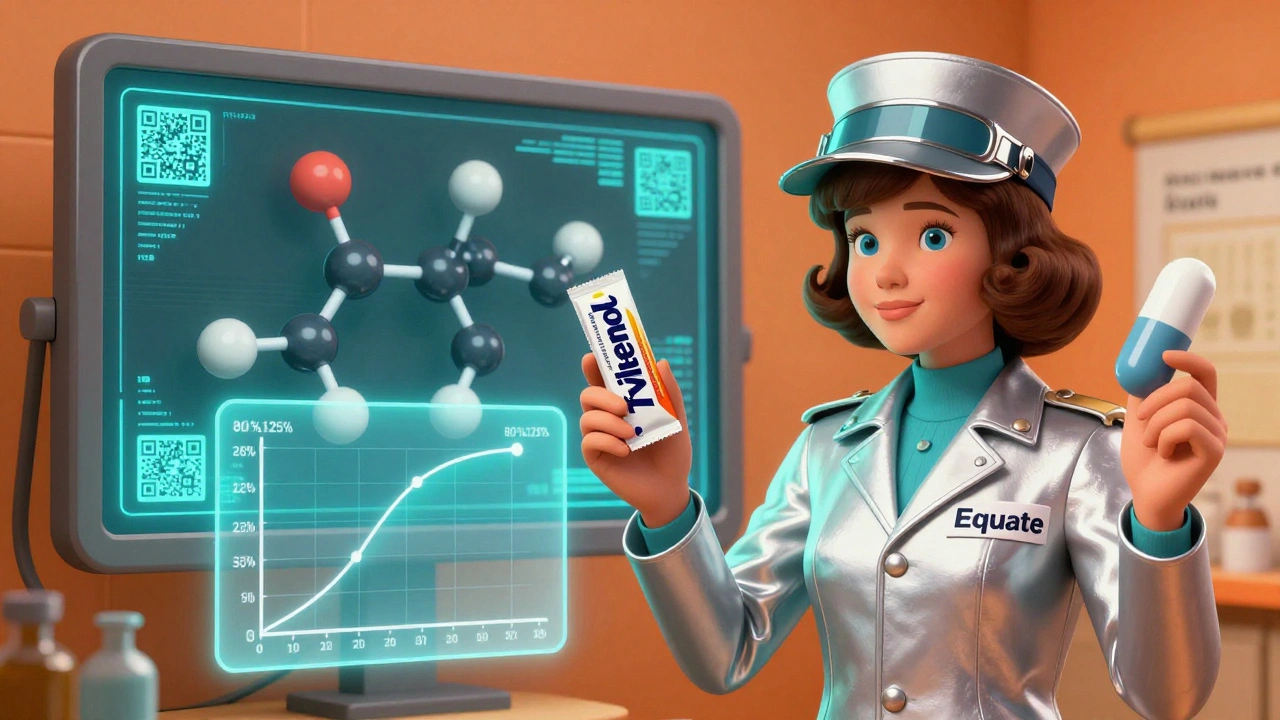
Store brands-like Walmart’s Equate, CVS Health, Target’s Up & Up, or Shoppers Drug Mart’s Equate-are not knockoffs. They’re not "weaker" versions. They’re exact chemical matches. The FDA requires that every generic or store brand OTC medication prove it delivers the same amount of active ingredient into your bloodstream at the same speed as the brand-name version. This is called bioequivalence. The acceptable range? Between 80% and 125% of the brand-name drug’s absorption rate. In real-world terms, that’s a difference of less than 3.5% on average, according to a 2021 study from the National Center for Biotechnology Information. That’s less than the variation you’d get from taking your pill with food versus on an empty stomach.
The only differences? The color, shape, flavor, and the inactive ingredients-things like dyes, fillers, or binders. These don’t affect how the medicine works. They’re there for branding, texture, or shelf life. But if you’re allergic to red dye #40 or corn starch, you might react to one version and not the other. That’s rare, but it happens. Still, the active ingredient-ibuprofen, acetaminophen, loratadine-is identical. So if you’re treating a headache, fever, or runny nose, you’re getting the same relief.
How Much Money Can You Actually Save?
Let’s break it down with real prices from Vancouver pharmacies in late 2025:
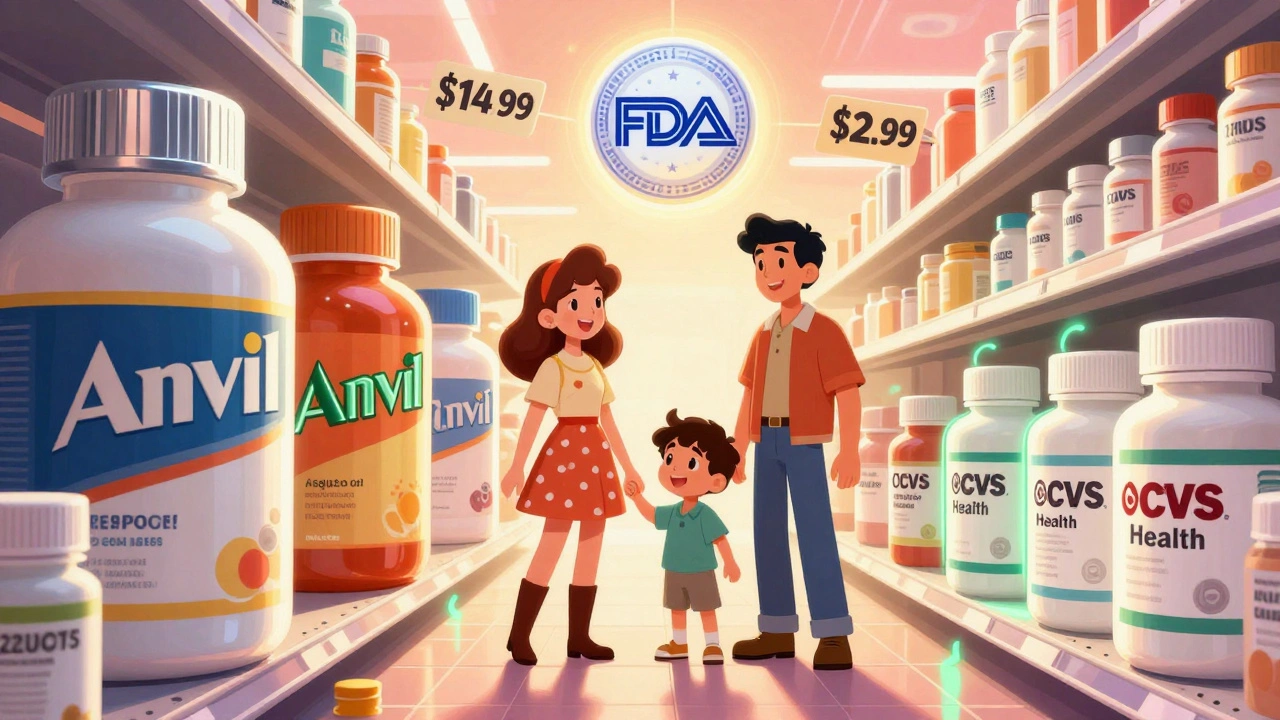
- Advil (ibuprofen 200mg, 100 tablets): $14.99
- CVS Health Ibuprofen (same strength, same amount): $2.99
That’s 80% cheaper. Same pills. Same effect.
- Tylenol (acetaminophen 500mg, 100 tablets): $12.49
- Walmart Equate Acetaminophen: $2.49
For allergy sufferers:
- Claritin (loratadine 10mg, 30 tablets): $22.99
- Shoppers Drug Mart Generic Loratadine: $4.99
And for cough syrup:
- Robitussin (dextromethorphan 10mg/5mL, 100mL): $11.99
- Target Up & Up Cough Relief: $3.49
That’s not a small savings. That’s hundreds of dollars a year for families who use these regularly. If you take pain relievers twice a week, you’re spending over $100 a year on brand names. Switch to store brands, and you’re spending under $20. That’s enough to cover a month’s worth of groceries.
What Do Pharmacists and Doctors Really Think?
Here’s something most people don’t know: 89% of pharmacists and 82% of doctors use store brand OTC medications for themselves and their families, according to a 2021 University of Chicago study. That’s not a coincidence. These are the people who know how drugs work. They’ve seen the data. They’ve read the FDA reports. They’ve counseled patients on side effects. And they choose the cheaper option.
Dr. Eric D’Agostino, a pharmacist at Brown University Health, says it plainly: "Generic medications are just as safe and effective as branded medications and will most likely cost less money out of pocket." And he’s not alone. A 2023 Pharmacy Times survey found that 92% of pharmacists feel confident recommending store brands to patients.
Even Amazon reviews tell the story. In 15 top-selling OTC categories, store brands averaged 4.3 stars. Name brands? 4.4. The difference is statistically meaningless. The same 12% of people gave both 1-star reviews-mostly because the medicine didn’t work for them, not because it was "generic."
When Should You Stick With Name Brands?
There are very few cases where you might need to stick with the name brand. The biggest one? If you’ve had a reaction to a store brand. That’s usually because of an inactive ingredient-like a dye, flavor, or preservative-not the medicine itself. For example, some people find the mint flavor in generic cough syrup too strong, or the tablet size harder to swallow. If you’ve tried a store brand and felt worse, or noticed a rash, or the medicine just didn’t seem to help, switch back. But don’t assume it’s because it’s "generic." Try another store brand first. Different retailers use different fillers.
Also, avoid store brands if you’re treating a condition that requires extreme precision-like thyroid medication or seizure drugs. But those are prescription-only. For OTC stuff? No exceptions. Ibuprofen, acetaminophen, antihistamines, antacids-they’re all safe as generics.
How to Pick the Right Store Brand
Don’t just grab the cheapest one off the shelf. Look at the Drug Facts label. That’s the small box on the back of every OTC package. The first thing listed? The active ingredient. That’s what matters. Compare that to your name-brand bottle. Is it the same? Same amount? Same form? (Tablet, liquid, caplet?) If yes, you’re good.
For example:
- Name brand: Advil - Active ingredient: ibuprofen 200mg
- Store brand: CVS Health Ibuprofen - Active ingredient: ibuprofen 200mg
Done. Same medicine. Same dose. Same effect.
Pro tip: Don’t mix store brands with name brands. If you’re taking CVS ibuprofen and reach for Tylenol for a headache, you might accidentally double up on acetaminophen. About 23% of people unintentionally overdose on acetaminophen because they don’t check labels. Always read the active ingredients-even if you think you know what’s in it.
Why Do Name Brands Cost So Much?
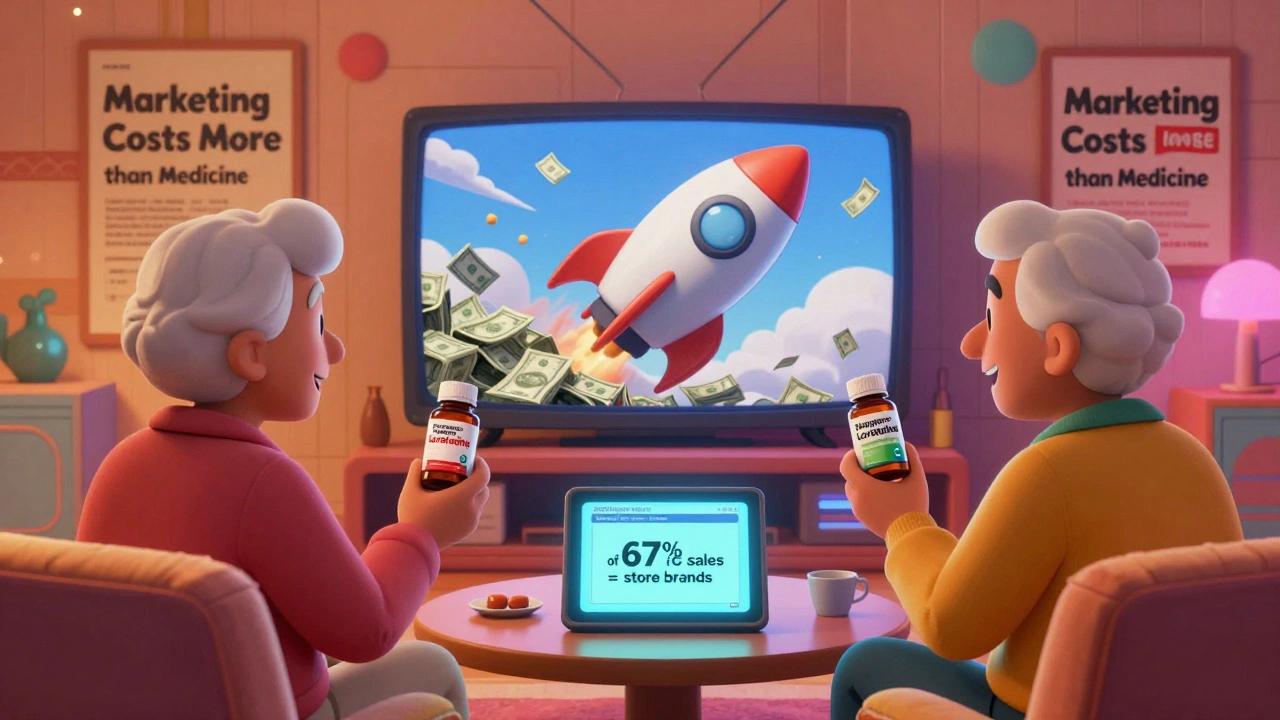
It’s not because they’re better. It’s because they spent millions on advertising, celebrity endorsements, fancy packaging, and TV commercials. The actual cost to make a bottle of ibuprofen? Less than 10 cents. The rest is marketing. Store brands skip the ads. They don’t pay for fancy logos or jingles. They just make the medicine and sell it at cost.
And it’s working. In 2023, store brands made up 67% of all OTC medication units sold in North America. That’s two out of every three bottles bought. But because name brands charge more, they still hold 58% of the total revenue. That’s the gap. People are buying more generics, but name brands are still pulling in more cash because of perception.
What’s Changing in 2025?
Store brands are getting better. Retailers are investing in formulation improvements. CVS now puts QR codes on their store-brand packaging that link to full ingredient lists and manufacturing info. Walgreens launched a free pharmacist consultation line just for store brand questions. Walmart’s Equate line now has over 1,200 OTC products-from nasal sprays to sleep aids. These aren’t afterthoughts anymore. They’re serious products backed by real science and real quality control.
The FDA inspects generic drug factories just as often as name-brand ones-around 3,500 inspections a year. The same rules apply. The same standards. The same oversight. There’s no secret back door for generics.
Final Thought: You’re Not Losing Out-You’re Winning
Choosing a store brand isn’t about cutting corners. It’s about being smart. It’s about using your money where it matters-on rent, food, family, not on marketing hype. The science is clear. The data is solid. The experts agree. And millions of people are already doing it.
Next time you need pain relief, try the store brand. Read the label. Compare the active ingredient. If it matches, you’re getting the same medicine for a fraction of the price. And if it works? You just saved yourself $100 this year. That’s a win.
Are store brand OTC medications really as effective as name brands?
Yes. Store brand OTC medications must meet the same FDA standards as name brands. They contain the same active ingredient, in the same strength and form, and must prove they work the same way in your body. The FDA requires bioequivalence-meaning they deliver the same amount of medicine into your bloodstream at the same speed. Studies show the difference in absorption is less than 3.5%, which is negligible.
Why do store brands cost so much less?
Store brands don’t spend money on advertising, celebrity endorsements, or flashy packaging. Name brands invest millions in marketing to build brand loyalty. The actual cost to produce a bottle of ibuprofen or acetaminophen is under 10 cents. The rest of the price covers marketing and profit margins. Store brands cut those costs and pass the savings to you.
Can store brands cause side effects name brands don’t?
Rarely. Side effects from store brands are almost always due to inactive ingredients-like dyes, flavors, or fillers-not the active medicine. If you’re allergic to red dye #40 or corn starch, you might react to one brand and not another. But if you’ve never had a reaction to a name brand, you’re unlikely to have one with a store brand. If you do react, try a different store brand. The active ingredient is still the same.
Should I switch to store brands if I’ve always used name brands?
Absolutely-if you’re using them for common issues like headaches, fever, allergies, or heartburn. There’s no medical reason to stick with name brands for these. Start with one product, like ibuprofen or loratadine. Compare the active ingredient on the Drug Facts label. If it matches, you’re safe to switch. Most people can’t tell the difference. And you’ll save hundreds a year.
Is it safe to buy store brand OTC medications from any retailer?
Yes. Major retailers like Walmart, Target, CVS, Walgreens, and Shoppers Drug Mart follow the same FDA regulations. Their store brands are manufactured in facilities inspected by the FDA just like name-brand factories. The only difference is the label. Look for the active ingredient and match it to the name brand. If it’s identical, it’s safe.
Do pharmacists recommend store brands?
Yes. A 2023 survey by Pharmacy Times found that 92% of pharmacists feel confident recommending store brands to patients. And 89% of pharmacists and 82% of doctors use store brand OTC medications for themselves and their families, according to a University of Chicago study. They know the science. They’ve seen the data. They trust generics.
Norene Fulwiler
December 5, 2025 AT 18:37I switched to store-brand ibuprofen last year after my mom showed me the label-same active ingredient, 80% cheaper. I used to feel guilty, like I was cheating myself, but now I just feel smart. My headaches don’t care if it’s in a fancy box or a plain one. Also, my wallet is crying happy tears.
PS: My pharmacist even gave me a high-five when I asked if Equate was okay. No joke.
Carole Nkosi
December 6, 2025 AT 08:39You people are so naive. The FDA doesn’t protect you-it protects Big Pharma’s profits. Store brands are made in the same factories, sure, but they’re the rejects. The ones the name brands didn’t want because the batch was slightly off. They test for bioequivalence? Yeah, right. The margin of error is wide enough to fit a whole damn conspiracy. You think your $3 pill is the same? Wake up. They’re using cheaper fillers that leach into your liver over time. I’ve seen the documents.
Jennifer Patrician
December 6, 2025 AT 11:32Okay but what if the store brand is made in China? I read somewhere that 80% of all OTC meds are manufactured there and the FDA doesn’t even inspect those plants properly. Also, my cousin’s neighbor’s dog got sick after taking CVS ibuprofen. Coincidence? I think not. This is a slow poison campaign to make us dependent on cheap junk while the elites sip their organic turmeric lattes. #WakeUpAmerica
Ali Bradshaw
December 7, 2025 AT 09:59I used to buy name brands out of habit. Then I tried the Walmart Equate for my allergies-same active ingredient, same results, saved $18. I started doing this for everything: antacids, sleep aids, even cough syrup. Honestly? It’s kind of empowering. Like I’m not being played by marketing. I just read the label, match the active ingredient, and move on. No drama. No guilt. Just science and savings.
Also, my kid’s pediatrician uses store brands. If it’s good enough for her, it’s good enough for me.
an mo
December 9, 2025 AT 08:42Let’s deconstruct this neoliberal mythos of cost-efficiency. The commodification of pharmaceuticals under the guise of consumer autonomy is a textbook case of market-driven epistemic violence. The FDA’s bioequivalence thresholds are statistically permissive, allowing for a 25% variance in absorption kinetics-this is not equivalence, it’s regulatory arbitrage. Furthermore, the inactive ingredients-polysorbates, lactose, FD&C dyes-are not inert; they trigger subclinical inflammatory cascades in genetically susceptible populations. You’re not saving money-you’re externalizing your biological risk onto the public health infrastructure. And don’t get me started on the supply chain fragility.
Annie Grajewski
December 10, 2025 AT 00:32lol i thought i was the only one who figured this out. i’ve been buying target up & up for years. my mom thought i was crazy. then she tried it for her migraines and was like ‘wait… this is the same??’ yep. same pill. same results. same headache gone. just no $12 price tag. also i once took a name brand by accident and it tasted weird. like… why does it taste like regret?
Jimmy Jude
December 10, 2025 AT 13:15People are so desperate to feel smart they’ll swallow anything labeled ‘generic.’ You think you’re saving money? You’re just buying into a system designed to make you feel like a bargain hunter while the real winners-pharma CEOs and retail chains-laugh all the way to the bank. This isn’t empowerment. It’s emotional manipulation wrapped in a Drug Facts label. You think you’re winning? You’re just the product.
Mark Ziegenbein
December 12, 2025 AT 08:11It’s fascinating how the cultural narrative around generics has been weaponized to promote a false economy of trust. The underlying assumption-that identical active ingredients equate to identical physiological outcomes-is a reductionist fallacy. The pharmacokinetic profile of a drug is not determined solely by its active moiety but by the synergistic interaction between excipients, dissolution rate, gastric transit time, and bioavailability modifiers. Store brands often use fillers that alter gastric solubility profiles, leading to delayed peak plasma concentration. In chronic users, this can result in subtherapeutic trough levels despite apparent equivalence on paper. The FDA’s 80–125% bioequivalence window is a legal fiction, not a biological guarantee. And yet, we are told to trust it because ‘everyone else does.’
Rupa DasGupta
December 13, 2025 AT 13:24OMG I tried the Shoppers Drug Mart one last week and my allergy got worse 😭 I was so mad!! I thought it was the same but maybe it wasn’t?? I cried for 20 mins. Now I’m scared to buy anything generic again. I just want to feel safe 😭😭😭
Harry Nguyen
December 14, 2025 AT 02:39China makes the pills. The FDA’s inspections are a joke. You think your $3 pill is safe? That’s taxpayer money funding a global supply chain controlled by foreign regimes who don’t give a damn about your kids. We’re importing medicine from countries that don’t even have clean water. This isn’t frugality-it’s national betrayal. Name brands are made in the USA. Pay the extra $10. It’s your duty.