Pneumonia Types: Bacterial, Viral, and Fungal Lung Infections Explained
 May, 21 2026
You take a deep breath, but instead of feeling refreshed, your chest tightens. A cough rattles in your throat, and suddenly you’re wondering if it’s just a bad cold or something more serious like pneumonia. It is easy to dismiss early symptoms as fatigue or a lingering flu, but understanding what is actually attacking your lungs can mean the difference between resting at home and ending up in the hospital.
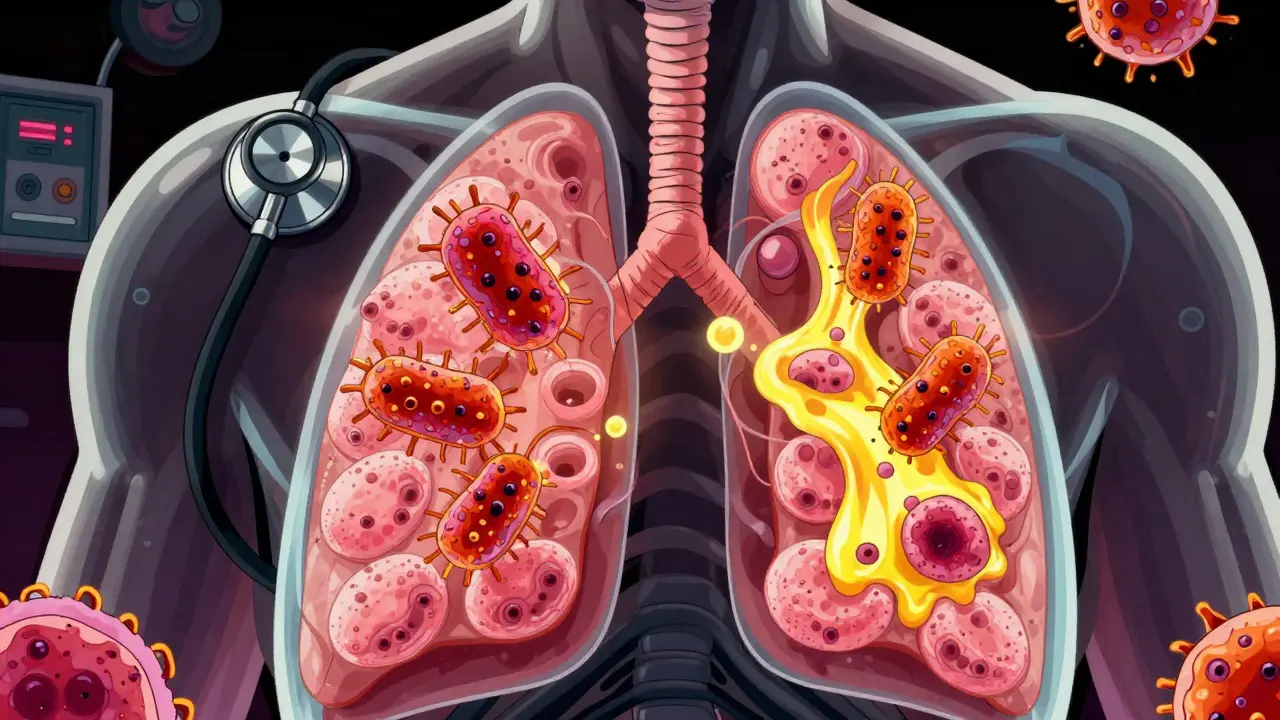
Pneumonia is not a single disease with one cause. It is an inflammation of the air sacs in your lungs, known as alveoli, which fill with fluid or pus. The culprit behind this infection determines how sick you get, how long you stay sick, and most importantly, how doctors treat you. Misdiagnosing the type of pneumonia leads to ineffective treatments-like taking antibiotics for a virus that won’t respond to them.
Why Identifying the Pneumonia Type Matters
The reason we categorize pneumonia into bacterial, viral, and fungal lung infections is practical: each requires a completely different medical approach. According to data from the Centers for Disease Control and Prevention (CDC), about 50% of community-acquired pneumonia cases are bacterial, roughly 33% are viral, and less than 5% are fungal. These numbers matter because using the wrong medication doesn't just fail to help; it can make things worse by contributing to antimicrobial resistance.
If you have a bacterial infection, you need antibiotics to kill the invading organisms. If it is viral, antibiotics do nothing, and you need supportive care or specific antivirals. If it is fungal, you require powerful antifungal drugs, often reserved for people with weakened immune systems. Getting this right quickly reduces hospital stays and prevents complications.
Bacterial Pneumonia: The Sudden Onset
Bacterial pneumonia tends to strike fast and hard. One minute you might feel fine, and the next, you are running a high fever and struggling to breathe. The most common offender is Streptococcus pneumoniae, a bacterium responsible for over 12% of severe cases in young children and a significant portion of adult cases worldwide. Other bacteria like Haemophilus influenzae, Staphylococcus aureus, and Legionella pneumophila (which causes Legionnaires' disease) also play roles.
Here is how to spot the signs:
- Sudden High Fever: Temperatures can spike rapidly, reaching 104°F to 105°F (40°C to 40.5°C).
- Productive Cough: You will likely cough up thick sputum that is yellow, green, or even bloody.
- Sharp Chest Pain: This pain often worsens when you breathe deeply or cough, known as pleuritic pain.
- Rapid Heart Rate: Your heart beats faster as your body struggles to get oxygen.
- Cyanosis: In severe cases, lips or fingernails may turn bluish due to low oxygen levels.
When a doctor listens to your lungs with a stethoscope, they might hear abnormal sounds or silence on one side. A chest X-ray typically shows a white, condensed area called lobar consolidation, indicating that one part of the lung is filled with fluid. Treatment usually involves antibiotics like penicillin or macrolides. For example, the pneumococcal vaccine series given to infants has reduced bacterial pneumonia rates by 60-70%, showing that prevention is highly effective against these specific pathogens.
Viral Pneumonia: The Gradual Creep
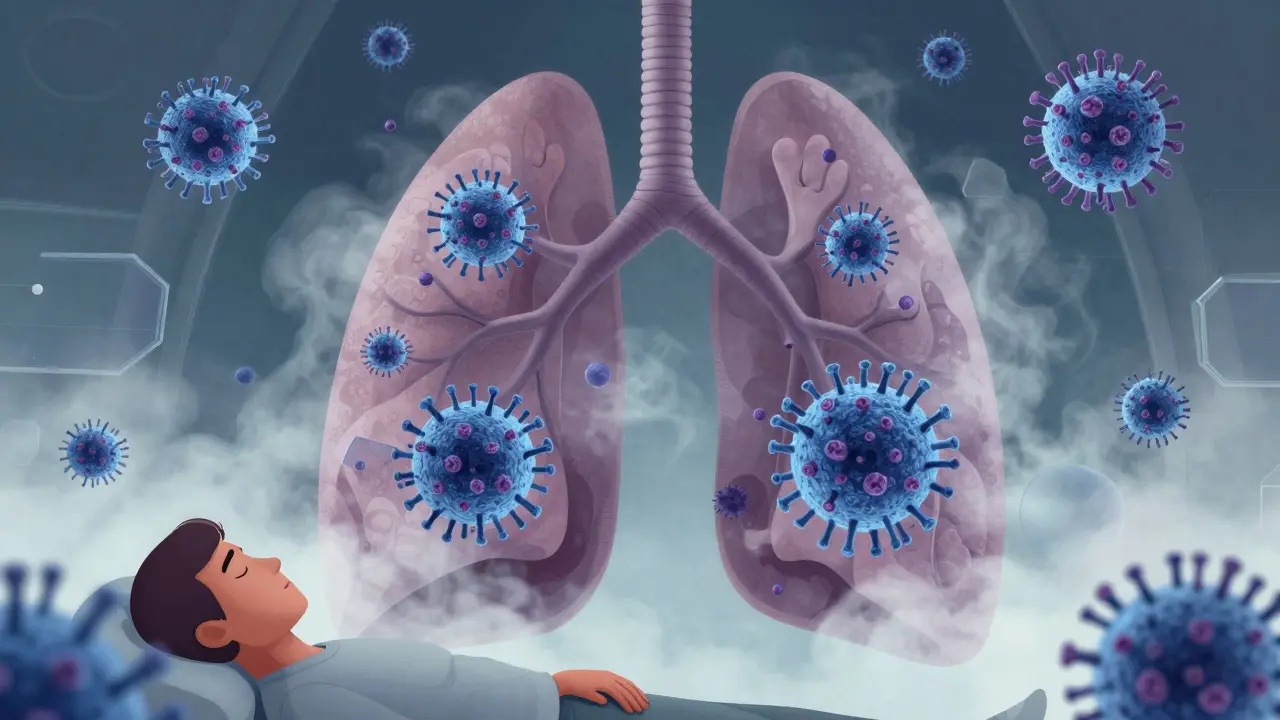
In contrast to the sudden shock of bacterial pneumonia, viral pneumonia often starts slowly. It frequently begins as a common cold or the flu, with congestion and a dry cough, before moving deeper into the lungs over three to five days. Viruses like Influenza A and B, Respiratory Syncytial Virus (RSV), and SARS-CoV-2 (the virus causing COVID-19) are the main drivers here.
The symptoms are distinctively different:
- Gradual Progression: Symptoms worsen over several days rather than hitting all at once.
- Dry Cough: Unlike bacterial pneumonia, the cough is often dry and hacking, though it may produce some mucus later.
- Systemic Symptoms: Muscle aches, headaches, weakness, and general fatigue are prominent.
- Moderate Fever: Fevers are present but often lower grade, ranging from 100°F to 102°F.
A key diagnostic clue is found in chest X-rays. Instead of a single consolidated patch, viral pneumonia shows diffuse interstitial infiltrates, meaning the inflammation is spread out across both lungs. Physical exams often reveal abnormal breathing sounds in both lung fields simultaneously.
Crucially, viral pneumonia does not respond to antibiotics. Taking them provides no benefit and contributes to the growing crisis of antibiotic resistance. However, there is a dangerous twist: viral infections can damage lung tissue, making it easier for bacteria to invade. About 25-30% of severe influenza cases develop secondary bacterial pneumonia, often caused by Streptococcus pneumoniae or Staphylococcus aureus. This is why monitoring a "recovery" from the flu is vital-if you feel better then suddenly crash with a high fever, you may have developed a secondary bacterial infection.
Fungal Pneumonia: The Silent Threat
Fungal pneumonia is rare in healthy individuals, accounting for less than 5% of cases. It primarily affects people with compromised immune systems, such as those with HIV/AIDS, organ transplant recipients, or patients undergoing chemotherapy. The fungi involved include Coccidioides (causing Valley fever), Histoplasma capsulatum (causing histoplasmosis), and Blastomyces dermatitidis.
These infections are environmental. You inhale spores from soil contaminated with bird or bat droppings. Farmers, landscapers, and construction workers in endemic areas face significantly higher risks. For instance, farmers working around droppings have a 3.5 times higher risk of exposure compared to the general population.
Diagnosis is tricky because fungal pneumonia mimics bacterial and viral forms. Symptoms include fever, chills, cough with phlegm, and sometimes gastrointestinal issues like nausea. Because standard antibiotics and antivirals do not work, treatment requires specific antifungal medications like amphotericin B or azoles. Early detection is critical, especially for immunocompromised patients, where mortality rates can reach 10-15%.
Comparing the Three Types
To help you understand the differences clearly, here is a comparison of the primary characteristics of each pneumonia type.
| Feature | Bacterial Pneumonia | Viral Pneumonia | Fungal Pneumonia |
|---|---|---|---|
| Onset | Sudden and rapid | Gradual over days | Variable, often slow |
| Common Pathogens | Streptococcus pneumoniae, Haemophilus influenzae | Influenza, RSV, SARS-CoV-2 | Coccidioides, Histoplasma, Blastomyces |
| Cough Type | Productive (yellow/green/bloody sputum) | Dry, hacking | Productive or dry |
| X-Ray Appearance | Lobar consolidation (one area) | Diffuse interstitial infiltrates (both lungs) | Varies, often nodular |
| Treatment | Antibiotics | Supportive care, Antivirals | Antifungals |
| High-Risk Groups | Children, Elderly, Smokers | Infants, Elderly, Immunocompromised | Immunocompromised, Outdoor Workers |

Prevention and Risk Reduction
While you cannot control every pathogen in the air, you can significantly lower your risk through targeted prevention strategies.
Vaccination is your best defense. The pneumococcal vaccine reduces bacterial pneumonia rates by 60-70% in children. Adults over 65 and those with chronic conditions should ensure they are up to date, although utilization remains stagnant at only 68% for this age group. Annual influenza vaccination reduces the risk of pneumonia by 40-60% during seasons with well-matched vaccines. Additionally, COVID-19 vaccination has been shown to reduce pneumonia risk by 90% in the months following inoculation.
Environmental awareness matters. If you live in or travel to areas endemic for fungal diseases like Valley fever (common in the southwestern United States), wearing N95 masks when disturbing soil can prevent inhalation of spores. Quitting smoking is also crucial; current smokers have a 2.3 times higher risk of developing pneumonia because smoking damages the cilia-the tiny hair-like structures that clear mucus and debris from your lungs.
When to Seek Medical Help
Do not wait until you are gasping for air. Seek immediate medical attention if you experience:
- Difficulty breathing or shortness of breath that persists.
- Chest pain that worsens with breathing.
- A fever that spikes above 102°F (39°C) or returns after initially improving.
- Confusion or extreme lethargy, especially in older adults.
- Bluish tint to lips or fingertips.
Modern diagnostics, such as PCR-based multiplex panels, can now identify over 20 respiratory pathogens from a single sample with 95% sensitivity. This allows doctors to pinpoint whether your infection is bacterial, viral, or fungal much faster than in the past, ensuring you get the right treatment sooner.
Can you have both bacterial and viral pneumonia at the same time?
Yes, this is known as mixed pneumonia. It often occurs when a viral infection weakens the lungs, allowing bacteria to invade shortly after. This combination is particularly dangerous and requires treatment for both types of pathogens.
How long does it take to recover from pneumonia?
Recovery varies by type and severity. Bacterial pneumonia often improves within a few days of starting antibiotics, but full energy return can take weeks. Viral pneumonia may last longer, with fatigue persisting for several weeks. Fungal pneumonia recovery depends heavily on the patient's immune status and can take months.
Is pneumonia contagious?
The germs that cause pneumonia (bacteria, viruses, fungi) are contagious, but the resulting pneumonia itself is not always directly transmitted. For example, someone might catch the flu virus from you, but they may only develop a cold while you develop pneumonia due to other risk factors.
What are the biggest risk factors for getting pneumonia?
Key risk factors include being under 2 years old or over 65, having chronic conditions like COPD, diabetes, or heart disease, smoking, and having a weakened immune system. Hospitalization or recent surgery also increases risk.
Can antibiotics cure viral pneumonia?
No, antibiotics only kill bacteria. They have no effect on viruses. Using antibiotics for viral pneumonia is ineffective and contributes to antibiotic resistance. Treatment focuses on rest, hydration, and sometimes antiviral medications.