Pain and Sleep: How to Break the Insomnia-Pain Cycle
 Jan, 26 2026
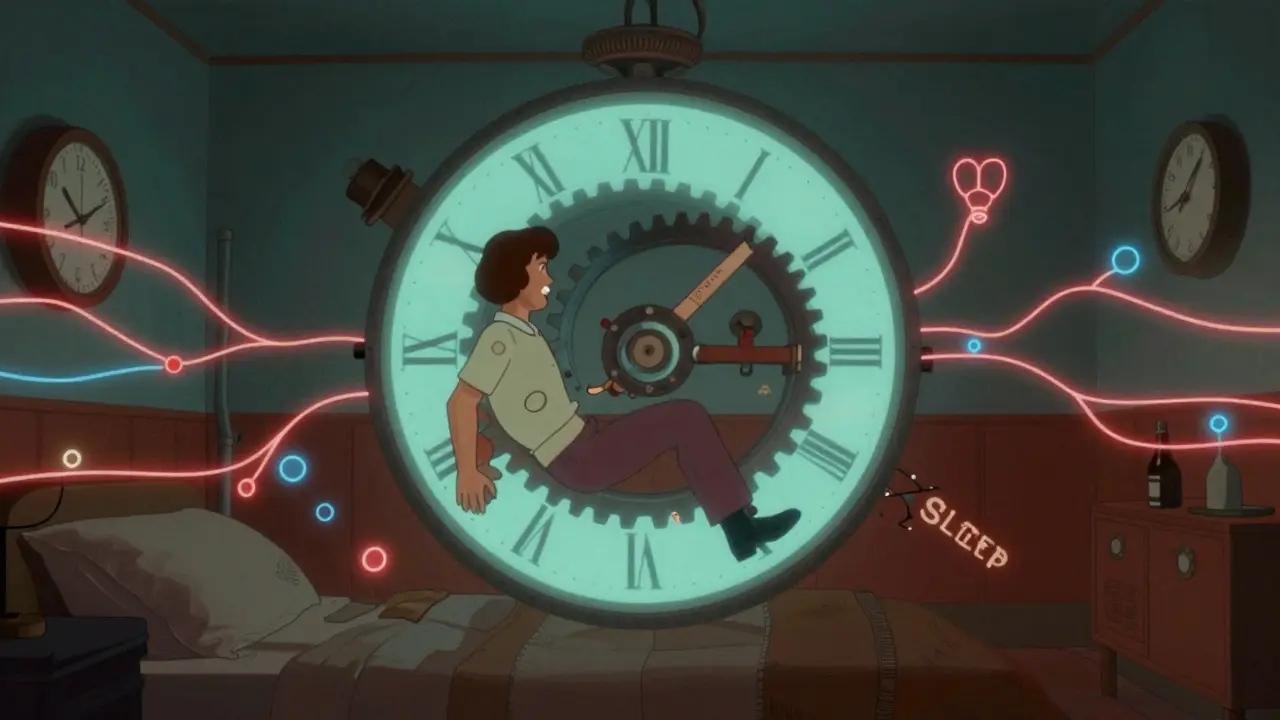
When you’re in chronic pain, falling asleep isn’t just hard-it feels impossible. And when you finally do drift off, you wake up exhausted, achy, and worse than before. This isn’t bad luck. It’s a cycle. Pain keeps you awake. Lack of sleep makes the pain sharper. And before you know it, you’re stuck in a loop that feels impossible to escape.
How Pain and Sleep Trap Each Other
Chronic pain doesn’t just annoy your body-it rewires how your brain processes sleep. Studies show that people with ongoing pain lose 45 to 60 minutes of sleep every night. They take 25 to 30 minutes longer to fall asleep. And once they do sleep, they wake up 40 to 50% more often than people without pain. That’s not just tossing and turning. That’s a broken sleep architecture.
But here’s the twist: it’s not just pain hurting your sleep. Your sleep loss is making the pain worse. When you’re sleep-deprived, your brain’s natural painkillers-like endogenous opioids-drop by 30 to 40%. At the same time, your body pumps out more inflammatory chemicals like IL-6, which heighten pain signals. It’s like turning up the volume on your pain receptors while turning down the mute button.
Research from Harvard and the University of Arizona shows this isn’t just theory. In controlled studies, healthy people who were kept awake for one night reported pain levels they’d never felt before-just from sleep loss alone. No injury. No illness. Just no sleep. That’s why 56% of people with chronic sleep problems develop chronic pain within five years, even if they had no pain before.
The Brain’s Broken Thermostat
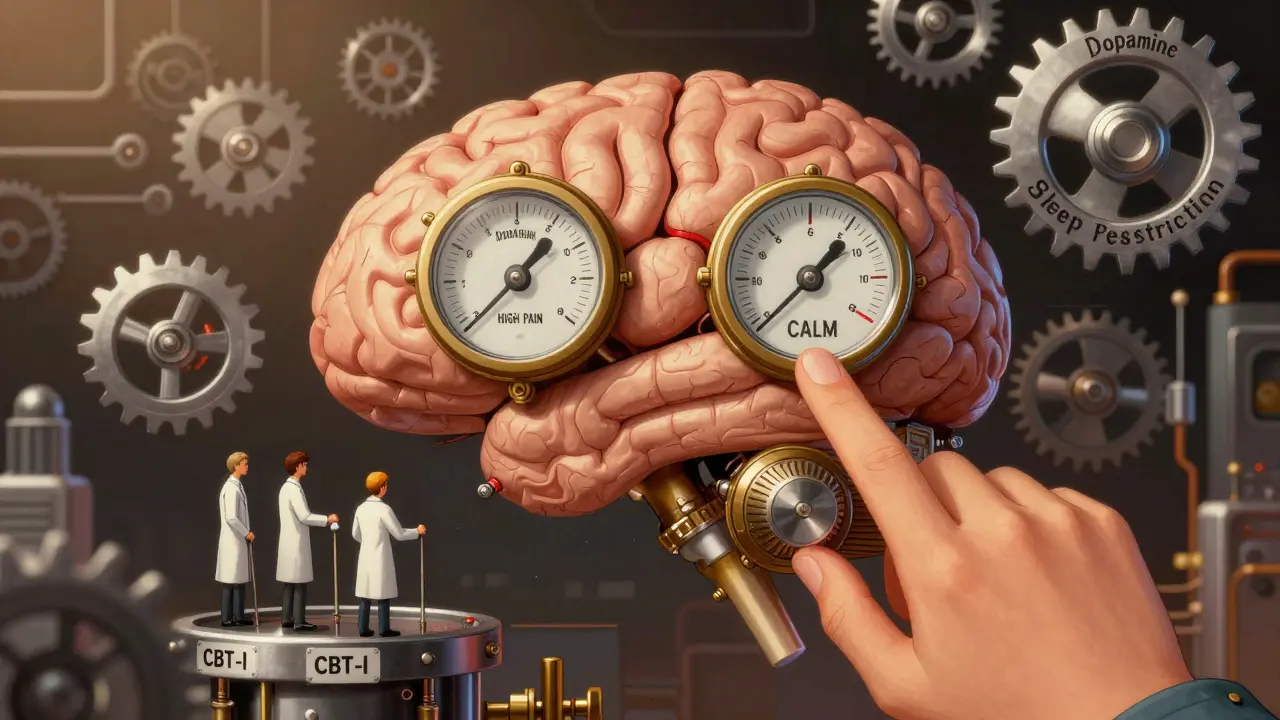
Think of your brain like a thermostat for pain. Normally, it keeps things balanced-turning pain down when you’re rested, turning it up when you’re hurt. But when sleep is gone, that thermostat gets stuck. The part of your brain that normally dampens pain signals stops working right. Meanwhile, the alarm system that screams "danger!" becomes hypersensitive.
Scientists at Massachusetts General Hospital found that sleep loss affects the same brain circuits that control both sleep and pain. Dopamine, a chemical tied to mood, movement, and pain control, drops by 20 to 30% after just one night of poor sleep. That’s why people with fibromyalgia or arthritis often say, "After four bad nights, my pain jumps from a 4 to an 8." It’s not in their head. It’s in their biology.
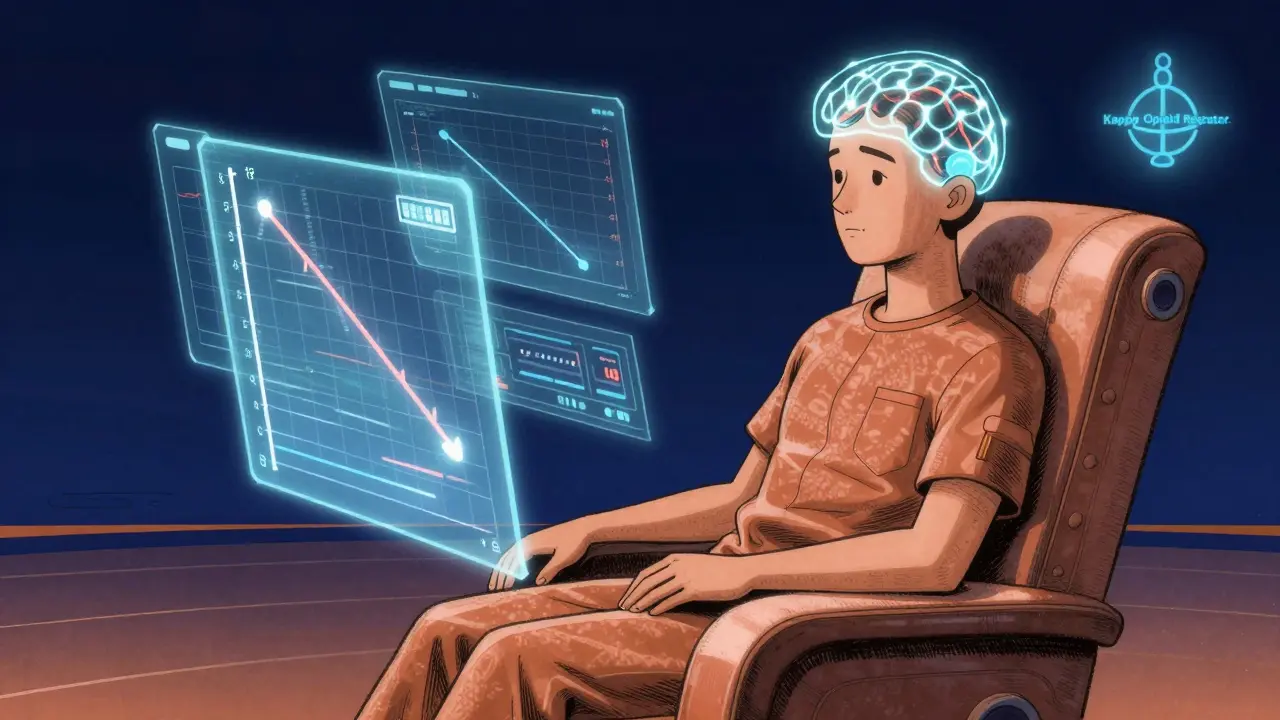
Even more telling: kappa opioid receptors, which help regulate pain and sleep, are directly linked to this cycle. When researchers targeted these receptors in animal models, sleep quality improved by 40 to 60%. That’s why new drugs aimed at these receptors are now in phase 3 trials-with early results showing 25 to 30% less pain and better sleep in people with neuropathic pain.
Why Pain Medications Often Make It Worse
Many people reach for over-the-counter sleep aids when pain keeps them up. Melatonin, diphenhydramine, even CBD oils. But here’s the problem: most of these don’t fix the root issue. They just mask it.
The Arthritis Foundation surveyed 4,200 chronic pain patients. Seventy-two percent tried OTC sleep aids. Only 35% got lasting relief. And 42% said they woke up groggy the next day-so groggy that their pain felt even worse. That’s not helping. That’s adding fuel to the fire.
Even prescription painkillers can backfire. Opioids disrupt deep sleep stages. NSAIDs can cause nighttime awakenings due to stomach irritation or frequent urination. Sleep-disturbing analgesics are a hidden trap. You take them to feel better. But they keep you from resting well. And without rest, your body can’t heal.
The Only Treatment That Actually Breaks the Cycle
There’s one treatment that’s been proven over and over again to break this cycle: Cognitive Behavioral Therapy for Insomnia (CBT-I).
It’s not a pill. It’s not a gadget. It’s a structured 8- to 10-week program that teaches your brain how to sleep again. And it works-even when pain is still there.
Studies show CBT-I improves sleep efficiency by 12 to 15 percentage points. It cuts the time it takes to fall asleep by 25 to 30 minutes. It reduces nighttime awakenings by 35 to 40 minutes. And here’s the kicker: it reduces pain intensity by 30 to 40%.
Why? Because CBT-I doesn’t just fix sleep habits. It rewires the brain’s response to pain. It teaches you to stop fighting sleep. To stop dreading bedtime. To stop catastrophizing every ache. It helps you build a new relationship with rest.
Patients who use CBT-I report feeling more in control. They sleep better. They move better. They feel less anxious. And their pain? It doesn’t vanish. But it becomes manageable. One patient in Vancouver, who’d been in pain for 12 years, told her therapist: "I didn’t know sleep could make me feel like myself again."
What CBT-I Actually Looks Like
CBT-I isn’t magic. It’s practical. Here’s what it usually includes:
- Sleep restriction: You limit time in bed to match how much you’re actually sleeping. If you’re only sleeping 5 hours, you’re only allowed 5 hours in bed-even if you’re lying there awake. This builds sleep pressure so you fall asleep faster.
- Stimulus control: Your bed is only for sleep and sex. No scrolling, no watching TV, no lying there worrying. If you’re not asleep in 20 minutes, you get up and do something quiet until you feel sleepy.
- Cognitive restructuring: You learn to challenge thoughts like, "I’ll never sleep," or "If I don’t sleep, my pain will explode." These thoughts keep your brain in fight-or-flight mode.
- Sleep hygiene: Not just "avoid caffeine." It’s about consistency: same bedtime, same wake time-even on weekends. Cool, dark room. No screens 90 minutes before bed.
Most people see results within 4 weeks. By week 8, 65 to 75% of chronic pain patients no longer meet the criteria for insomnia. And their pain? It drops. Not because the injury healed. But because their brain stopped screaming.
Why Most Clinics Still Fail
Here’s the ugly truth: most pain clinics don’t screen for sleep problems. A 2018 survey showed only 35% of clinics asked about sleep. By 2023, that number jumped to 92%. But asking is not the same as treating.
Patients who get pain-only care report satisfaction scores of 3.2 out of 5. Those who get integrated care-pain + sleep therapy-score 4.7. Why? Because sleep isn’t a side effect. It’s part of the diagnosis.
Too many doctors still think: "Fix the pain, and sleep will follow." But the science says the opposite: "Fix the sleep, and pain becomes easier to manage."
How to Start Breaking the Cycle Today
You don’t need to wait for a specialist. You can start now:
- Keep a sleep and pain diary for 14 days. Write down: what time you got in bed, how long it took to fall asleep, how many times you woke up, total sleep time, and your pain level on a scale of 1 to 10 the next morning.
- Use the Insomnia Severity Index (ISI). If your score is above 15, you have clinically significant insomnia. That means you need more than a sleep mask.
- Try a digital CBT-I program like Sleepio or SHUTi. They’re not perfect, but they work for 60 to 65% of chronic pain patients.
- Ask your doctor for a referral to a sleep psychologist. Not a sleep doctor. A psychologist trained in CBT-I. That’s the key.
- Stop using OTC sleep aids long-term. They’re a Band-Aid on a broken bone.
The goal isn’t to eliminate pain. It’s to stop letting pain steal your sleep-and your life.
The Future Is Integrated
Scientists are now looking at genetics to predict who responds best to CBT-I versus new drugs targeting kappa opioid receptors. They’ve found 12 gene variants linked to both pain sensitivity and sleep regulation. In five years, you might get a blood test that tells you whether CBT-I or a new medication is your best shot.
For now, the best tool you have is already here. It doesn’t cost a fortune. It doesn’t come in a pill bottle. It’s a quiet, consistent effort to reclaim your sleep. And when you do, your pain won’t disappear. But it will lose its power.
Can poor sleep cause chronic pain even if I never had it before?
Yes. Research shows people with chronic sleep problems have a 56% higher risk of developing chronic pain within five years, even without prior injury or illness. Sleep loss lowers your pain threshold and triggers inflammation, making your nervous system more sensitive over time.
Is CBT-I effective for people with severe pain like fibromyalgia or arthritis?
Yes. Studies show CBT-I reduces pain intensity by 30 to 40% in patients with fibromyalgia, osteoarthritis, and lower back pain-not by eliminating the source of pain, but by improving sleep quality, reducing stress, and resetting how the brain processes pain signals.
Why don’t doctors always talk about sleep when treating chronic pain?
Historically, sleep was seen as a side effect, not a core issue. But guidelines changed in 2023: 92% of pain clinics now screen for insomnia. The gap remains in treatment access-many clinics don’t have sleep psychologists on staff. You may need to ask for a referral or seek out a specialist.
Do sleep medications help with pain-related insomnia?
Most over-the-counter and prescription sleep aids offer short-term relief but don’t fix the underlying cycle. Some, like opioids and NSAIDs, can worsen sleep quality. CBT-I is the only treatment proven to break the loop long-term without side effects.
How long does it take to see results from CBT-I when you have chronic pain?
Most people notice better sleep within 2 to 4 weeks. Pain reduction usually follows by week 6. By week 8, 65 to 75% of chronic pain patients no longer meet criteria for insomnia, and many report pain levels dropping by 30% or more.
Can I do CBT-I on my own, or do I need a therapist?
You can start with digital programs like Sleepio or SHUTi, which have 60 to 65% effectiveness in chronic pain patients. But working with a certified CBT-I therapist leads to higher success rates-especially if anxiety, depression, or trauma are involved. A therapist can tailor the program to your pain triggers.
If you’re tired of being caught between pain and sleeplessness, remember: you’re not broken. Your body is stuck in a loop. And loops can be broken-with the right tools, patience, and support.
Patrick Merrell
January 26, 2026 AT 16:18Let me be clear: if you're still taking melatonin for pain-related insomnia, you're not treating the problem-you're just pretending to sleep while your nervous system burns down around you. CBT-I isn't optional. It's the only thing that actually rewires the damn thing. I've seen people go from crying in bed at 3 a.m. to sleeping 7 hours straight in 6 weeks. No magic. Just science. Stop wasting money on gummies.
Aurelie L.
January 27, 2026 AT 08:28I tried CBT-I. It made me cry every night for two weeks. Then I slept like a baby. Pain didn’t vanish. But I stopped hating my body.
Joanna Domżalska
January 28, 2026 AT 15:39So let me get this straight-you’re saying sleep fixes pain? Not the other way around? That’s like saying if you stop eating, your broken leg will heal. This is just neuro-babble dressed up as a solution. What about the actual injury? The torn ligament? The herniated disc? No one talks about those.
Faisal Mohamed
January 30, 2026 AT 01:54Neuroplasticity is the key variable here. The thalamocortical dysrhythmia model, coupled with downregulation of mu-opioid receptor sensitivity, creates a feedforward loop of central sensitization. CBT-I doesn’t just ‘teach sleep hygiene’-it resets the salience network’s hyperactivity in the anterior cingulate and insula. That’s why pain perception drops independently of nociceptive input. The literature is overwhelming. If your clinician doesn’t mention the default mode network, they’re still operating in the 90s.
Josh josh
January 31, 2026 AT 00:00bro i was in so much pain i couldnt even stand up and i tried everything then i did sleepio for 3 weeks and now i sleep 7 hours and my pain is like half what it was i swear to god this is real
bella nash
February 1, 2026 AT 21:31It is imperative to acknowledge that the bidirectional relationship between nociceptive input and sleep architecture is not merely correlational but causally interdependent. The literature supports the proposition that cognitive behavioral intervention for insomnia constitutes the most empirically validated modality for the attenuation of pain perception in the context of chronic somatic dysfunction. A structured, protocol-driven approach is indispensable.
Curtis Younker
February 2, 2026 AT 11:16Y’all need to hear this: you are not broken. I was in so much pain I couldn’t hug my kids without wincing. I tried everything-meds, acupuncture, ice packs, heating pads, even that weird vibrating mat. Nothing worked. Then I did CBT-I. Not because I wanted to. Because my wife made me. And guess what? After four weeks, I slept through the night. Not because the pain disappeared. But because I stopped fighting it. I stopped dreading bedtime. I stopped telling myself I’d never feel normal again. And slowly? I did. I’m not cured. But I’m living. And that’s more than I’ve felt in 10 years. If you’re reading this and you’re still stuck? Just start the diary. Just write down one night. One night. That’s all you need to begin.
Shawn Raja
February 3, 2026 AT 20:14Oh wow. Another ‘sleep fixes everything’ miracle cure. Next they’ll tell us to hug a tree and our arthritis will vanish. I’ve got a herniated disc and a knee that sounds like a bag of marbles. You think CBT-I is gonna fix that? Nah. What’s next? Positive affirmations and a yoga mat? Look, I get it. People want simple answers. But chronic pain isn’t a bad habit. It’s biology. And if your doctor’s not talking about MRIs, injections, or surgery-you’re being sold a dream. CBT-I might help you sleep better. But it won’t unbreak your spine.