Myofascial Pain Syndrome: Understanding Trigger Points and Effective Release Techniques
 Jun, 4 2026
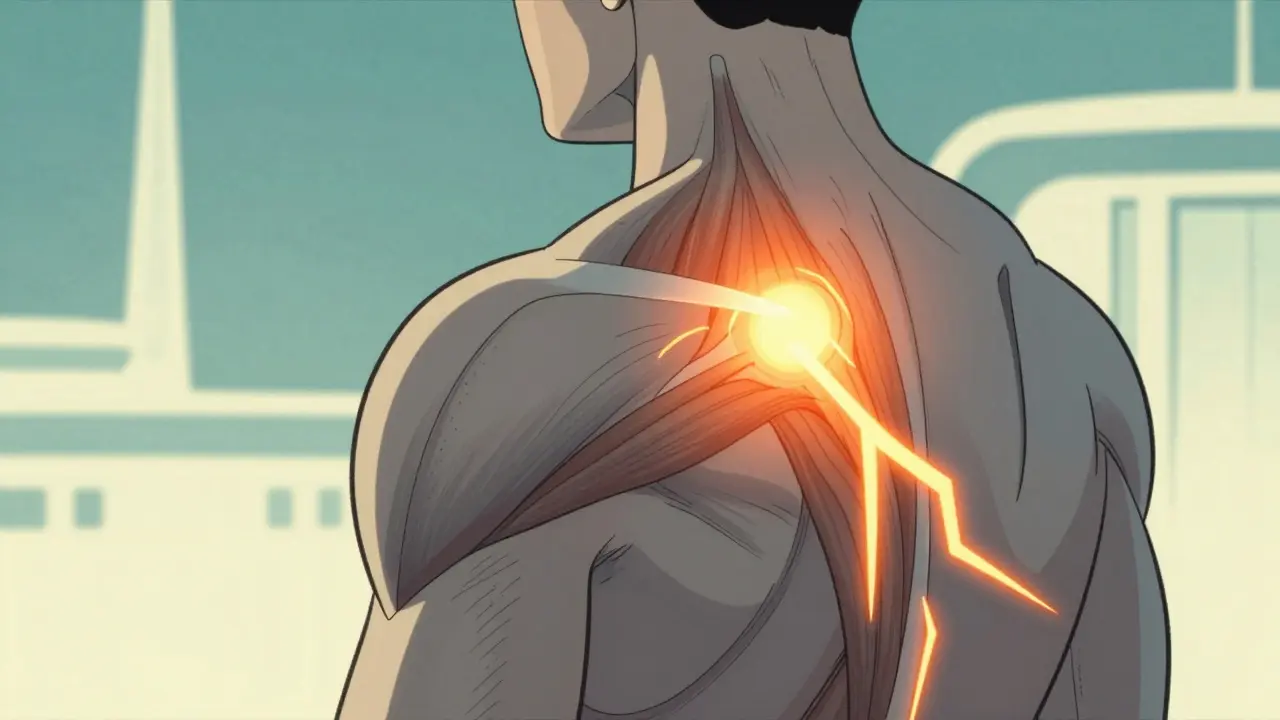
That deep, nagging ache in your shoulder or the tension headache that won't quit might not be a nerve issue at all. It could be myofascial pain syndrome, a condition defined by hyperirritable spots in skeletal muscle known as trigger points. These knots are more than just tight muscles; they are biochemical storms of inflammation and sustained contraction that refer pain to other parts of your body, often mimicking heart attacks, herniated discs, or arthritis.
If you have been told your MRI looks fine but you still hurt, this is where the mystery usually lies. Myofascial pain syndrome (MPS) affects an estimated 30-85% of patients visiting pain clinics. It is one of the most common yet misunderstood causes of chronic musculoskeletal pain. The good news? Unlike structural damage, these trigger points can be released, allowing your muscles to return to normal function.
What Exactly Is a Trigger Point?
To understand MPS, you first need to understand the culprit: the myofascial trigger point. First systematically described by Dr. Janet Travell and Dr. David Simons in their seminal 1983 text, Myofascial Pain and Dysfunction: The Trigger Point Manual, these are discrete, focal, hyperirritable spots located within a taut band of skeletal muscle.
Think of a trigger point as a tiny, stuck knot in a rope. When you pull on the rope, the knot doesn't slide through; it creates resistance and friction. In your body, this knot is a cluster of muscle fibers that have contracted and forgotten how to relax. They measure between 2-10 mm in diameter and sit right at the motor endplate zone-the spot where nerves meet muscle.
There are two main types:
- Active Trigger Points: These cause spontaneous pain even when you aren't touching them. They also produce referred pain, meaning pressing on a knot in your shoulder might send pain down your arm or into your jaw.
- Latent Trigger Points: These don't hurt until you press on them. However, they still weaken the muscle and limit its range of motion, acting like a hidden brake on your movement.
The chemistry inside these knots is drastically different from healthy muscle tissue. Research shows concentrations of acetylcholine (the neurotransmitter that tells muscles to contract) are 10-100 times higher than normal. Meanwhile, the pH level drops to about 4.3-highly acidic compared to the neutral 7.0 of healthy muscle. This acidic environment starves the tissue of oxygen (ischemia) and bathes nearby nerves in sensitizing substances, keeping the pain signal turned on.
MPS vs. Fibromyalgia: Knowing the Difference
It is easy to confuse myofascial pain syndrome with fibromyalgia because both involve widespread discomfort. However, they are distinct conditions requiring different approaches.
Fibromyalgia is a central nervous system disorder characterized by widespread, symmetrical pain and fatigue. It involves "tender points"-specific locations on the body that are sensitive to pressure but do not refer pain elsewhere. In contrast, MPS is localized to specific muscles. A trigger point in your upper trapezius might refer pain to your temple, causing a headache, but it won't make your knees hurt.
Here is a quick breakdown of the differences:
| Feature | Myofascial Pain Syndrome (MPS) | Fibromyalgia |
|---|---|---|
| Pain Pattern | Regional, asymmetric, referred pain | Widespread, symmetric, no referral |
| Physical Finding | Taut bands with trigger points | Tender points without taut bands |
| Response to Pressure | Local twitch response (muscle jumps) | Pain only, no twitch |
| Primary Cause | Muscle overload, trauma, posture | Central sensitization, genetic factors |
Understanding this distinction is crucial because treating MPS with fibromyalgia protocols (like gentle aerobic exercise) might not address the mechanical knot, while treating fibromyalgia with aggressive trigger point release might overwhelm a sensitive nervous system.

Common Causes and Risk Factors
You don't have to lift a heavy box to develop trigger points. While acute trauma like a whiplash injury or a fall is a common starter, many cases stem from subtle, repetitive stressors.
Posture is perhaps the biggest silent contributor. Forward head posture-common among desk workers and smartphone users-increases the prevalence of trigger points in the trapezius and levator scapulae muscles by 3-5 times. Holding your head forward places up to 60 pounds of strain on your neck muscles instead of the normal 10-12 pounds. Over time, these muscles shorten and tighten, forming knots.
Other significant risk factors include:
- Structural Imbalances: Leg length discrepancies greater than 1 cm increase MPS risk by 40% due to pelvic tilting and compensatory muscle tension.
- Vitamin D Deficiency: Serum levels below 20 ng/mL correlate with a 60% higher incidence of MPS. Vitamin D is essential for muscle function and repair.
- Hypothyroidism: Present in 15-25% of chronic MPS cases, as slow metabolism affects muscle recovery and hydration.
- Emotional Stress: Anxiety and depression lead to subconscious muscle guarding, particularly in the jaw (temporalis) and shoulders.
Effective Trigger Point Release Techniques
The goal of treatment is to break the cycle of pain-spasm-pain. This requires mechanically disrupting the taut band and restoring blood flow to wash away the acidic metabolites. Here are the most evidence-based techniques.
Ischemic Compression
This is the foundation of self-care and manual therapy. You apply sustained, direct pressure to the trigger point until the pain subsides, typically for 30-90 seconds. The pressure temporarily cuts off blood flow (ischemia). When you release the pressure, fresh, oxygenated blood rushes back in, flushing out the inflammatory chemicals. Studies show this method has a 60-75% short-term efficacy rate. For home use, a tennis ball or lacrosse ball against a wall works wonders for large muscles like the glutes or back.
Dry Needling
Trigger Point Injections
Also known as wet needling, this technique uses a needle to inject a local anesthetic like lidocaine (0.5-1%) into the trigger point. The injection helps relax the muscle immediately, providing 70-85% immediate pain reduction. Effects typically last 2-8 weeks. While highly effective, recent Cochrane Reviews note that there is no significant difference in long-term outcomes between lidocaine injections and dry needling, making dry needling a preferred non-pharmacological option.
Spray-and-Stretch
This older technique uses a vapocoolant spray (like ethyl chloride) applied over the referred pain zone to numb the skin and reduce muscle guarding. Immediately after spraying, the practitioner stretches the muscle. The cold distracts the pain receptors, allowing for a deeper stretch than would otherwise be possible. It shows 50-65% effectiveness in cervical (neck) MPS cases.
Instrument-Assisted Soft Tissue Mobilization (IASTM)
Often called "Guasha," IASTM uses specialized tools to scrape along the muscle fascia. This creates controlled micro-trauma that stimulates the body's healing response and breaks up scar tissue. Efficacy rates range from 55-70%, making it a strong adjunct to other therapies.

Building a Home Management Protocol
Professional treatments are powerful, but recurrence rates are high-40-60% of patients report symptoms returning within six months if they don't maintain their progress. Consistency at home is key.
- Self-Compression Daily: Spend 15-20 minutes daily using foam rollers or massage balls on identified trigger points. Focus on holding pressure on tender spots rather than rolling quickly.
- Heat Therapy: Apply heat (40-45°C) for 15 minutes before stretching. Heat increases tissue elasticity and blood flow, making muscles more pliable and less resistant to release.
- Posture Correction: Perform chin tucks and scapular retractions. Aim for 3 sets of 10 repetitions, twice daily. This strengthens the weak opposing muscles that keep your posture aligned.
- Ergonomic Adjustments: Raise your computer monitor to eye level. Ensure your keyboard allows your elbows to rest at 90 degrees. Small changes prevent the constant low-level overload that forms new knots.
Compliance with these home protocols is often low (45-60% at six weeks), so start small. Pick one technique and master it before adding another. Tracking your pain levels on a Visual Analog Scale (VAS) can help you see progress, even when it feels slow.
When to Seek Professional Help
If your pain persists despite consistent home care, or if you experience numbness, tingling, or weakness in your limbs, see a healthcare provider. These symptoms may indicate nerve compression (radiculopathy) rather than simple MPS. Approximately 30% of patients initially diagnosed with radiculopathy actually have MPS with referred pain patterns mimicking nerve issues, so accurate diagnosis is vital.
Look for practitioners trained in myofascial therapy. Physical therapists, osteopaths, and chiropractors with specific certification in trigger point therapy or dry needling are ideal. The learning curve for accurate trigger point identification averages 6-12 months of supervised practice, so ensure your provider has adequate training.
How long does it take for trigger points to go away?
With consistent treatment, active trigger points can often be deactivated in 1-3 sessions. However, complete resolution depends on addressing underlying causes like posture and stress. Without maintenance, 40-60% of patients experience recurrence within six months.
Can trigger points cause dizziness?
Yes. Trigger points in the suboccipital muscles at the base of the skull can refer pain to the eyes and cause vertigo-like sensations. Releasing these points often alleviates associated dizziness and headaches.
Is dry needling painful?
You may feel a brief sharp sensation upon insertion, followed by a dull ache or cramping as the local twitch response occurs. Most patients find the relief afterward outweighs the temporary discomfort. Post-treatment soreness is common for 24-48 hours.
Does vitamin D deficiency cause myofascial pain?
Vitamin D deficiency is strongly correlated with MPS. Low serum levels (below 20 ng/mL) are linked to a 60% higher incidence of trigger points. Supplementing to achieve optimal levels can support muscle health and improve treatment outcomes.
What is the best exercise for myofascial pain?
Gentle stretching and strengthening of opposing muscle groups are best. Avoid high-impact activities that aggravate the area. Focus on postural exercises like chin tucks and scapular retractions to correct imbalances that contribute to trigger point formation.