MedWatch: How to Report Medication Problems and Side Effects to the FDA
 Feb, 2 2026
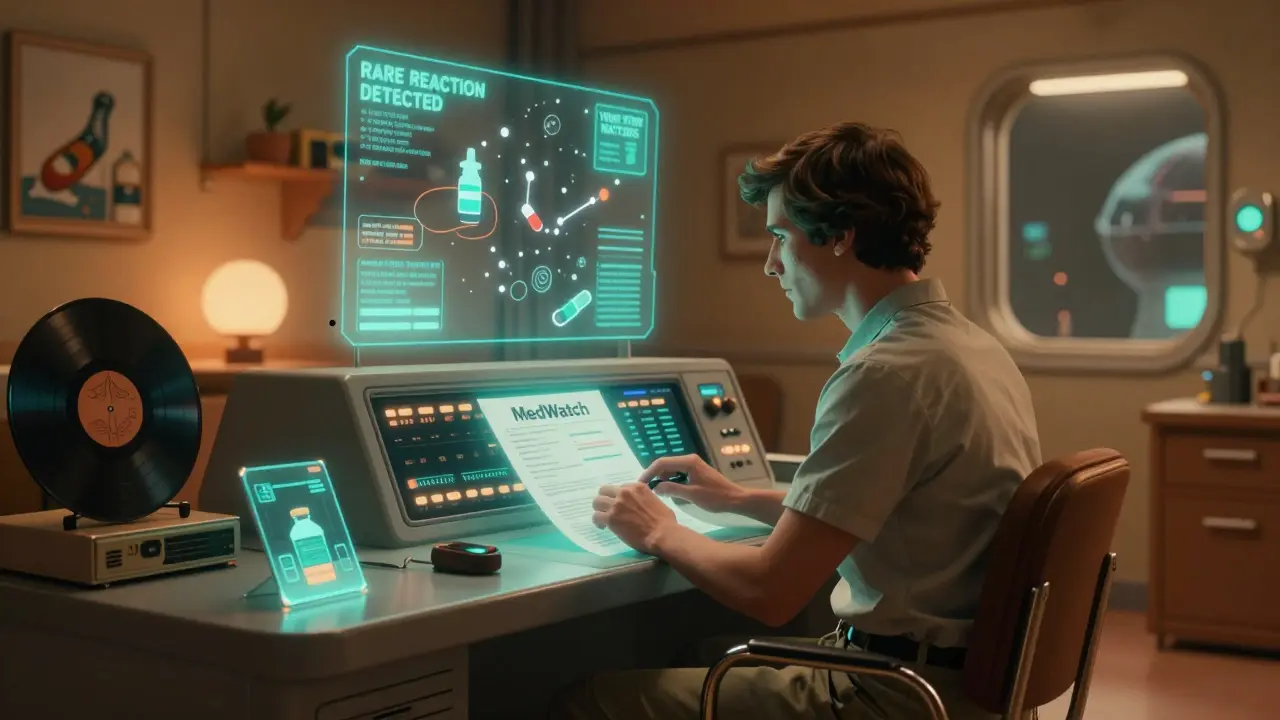
Every year, millions of people take prescription drugs, over-the-counter medicines, and dietary supplements without issue. But for some, a medication can cause a serious reaction-something the doctor never warned about, something that doesn’t show up in the clinical trial data. That’s where MedWatch comes in. It’s not a hotline for emergencies. It’s not a customer service line. It’s the U.S. Food and Drug Administration’s official system for collecting reports about dangerous side effects, product failures, and用药错误. And if you’ve ever wondered whether your experience with a bad reaction mattered, the answer is yes-your report could help prevent someone else from getting hurt.
What Exactly Is MedWatch?
MedWatch is the FDA’s safety reporting program, launched in 1993 to track problems with medical products after they’ve reached the market. Think of it like a national early-warning system. Drugs and devices go through rigorous testing before approval, but rare side effects often don’t show up until thousands or even millions of people are using them. That’s when MedWatch steps in. It collects reports from doctors, nurses, pharmacists, patients, and manufacturers to spot patterns that might signal a hidden danger.
It covers more than just pills. MedWatch tracks prescription and OTC drugs, biologics (like vaccines and gene therapies), medical devices (including glucose monitors and pacemakers), dietary supplements, cosmetics, and even infant formula. The system doesn’t just collect data-it turns it into action. In 2021 alone, MedWatch reports helped lead to 18 label changes, 7 public safety alerts, and 3 product withdrawals.
Who Can Report and How?
You don’t need to be a doctor to report. Anyone can file a MedWatch report: patients, family members, caregivers, or healthcare providers. The process is free, confidential, and available 24/7 online, by phone, mail, or fax.
There are two main forms:
- Form FDA 3500 - For healthcare professionals. This form asks for detailed clinical info like lab results, medical history, and timing of the event.
- Form FDA 3500B - For patients and consumers. It’s simpler, written in plain language, and now available in Spanish too.
Manufacturers, distributors, and importers are legally required to report serious events within 15 days. But voluntary reports from the public are just as important. In fact, some of the most critical safety discoveries came from patient reports.
For example, in 2007, reports of heart attacks in people taking the diabetes drug rosiglitazone led to new warnings and restrictions. Those reports didn’t come from clinical trials-they came from real people who noticed something wrong and spoke up.
What Counts as a Reportable Event?
You don’t have to be sure it’s the medication’s fault. If you suspect a connection, report it. The FDA doesn’t need proof-they need clues. The key is whether the event is serious. The FDA defines serious events as those that:
- Result in death
- Require hospitalization
- Cause permanent disability
- Lead to a birth defect
- Are life-threatening
- Require medical or surgical intervention to prevent one of the above
Even if the reaction seems minor-like a rash that lasted weeks or dizziness that made you fall-it’s worth reporting if it disrupted your life. Common side effects like nausea or headaches usually aren’t reportable unless they’re unusually severe or persistent.
One common mistake people make: thinking they need to prove causation. You don’t. You just need to describe what happened, when, and what you were taking. The FDA’s team of pharmacologists and epidemiologists will analyze whether the event is likely related.
What Information Do You Need to Report?
Don’t wait until you have every detail. Even partial reports help. But the more accurate the info, the more useful it is. Here’s what to gather before you start:
- The name of the drug, supplement, or device (including brand and generic names)
- When you started and stopped taking it
- When the reaction started and how long it lasted
- A clear description of the problem (e.g., “severe chest pain 3 hours after taking pill”)
- Your age and gender (optional but helpful)
- Any other medications or supplements you were taking
- Any relevant medical history (e.g., kidney disease, allergies)
- Whether you saw a doctor or went to the ER
For healthcare providers: include lab values, diagnosis codes, and treatment given. For patients: just describe your experience in your own words. The form doesn’t require your name, but including it helps the FDA follow up if they need more info. Your identity is protected by law.

How Long Does It Take? Is It Hard?
Most people finish the online form in 15 to 20 minutes. The FDA’s updated MedWatch portal (launched in January 2023) guides you step-by-step with clear language and real-time checks to prevent mistakes. You can save your progress and come back later.
Many users report the process is easier than they expected. A 2022 survey by the National Consumers League found that 85% of people who used MedWatch rated the experience as “moderately to very easy”-once they found the right form. The biggest hurdle? Knowing it exists. About 78% of Americans had never heard of MedWatch before using it.
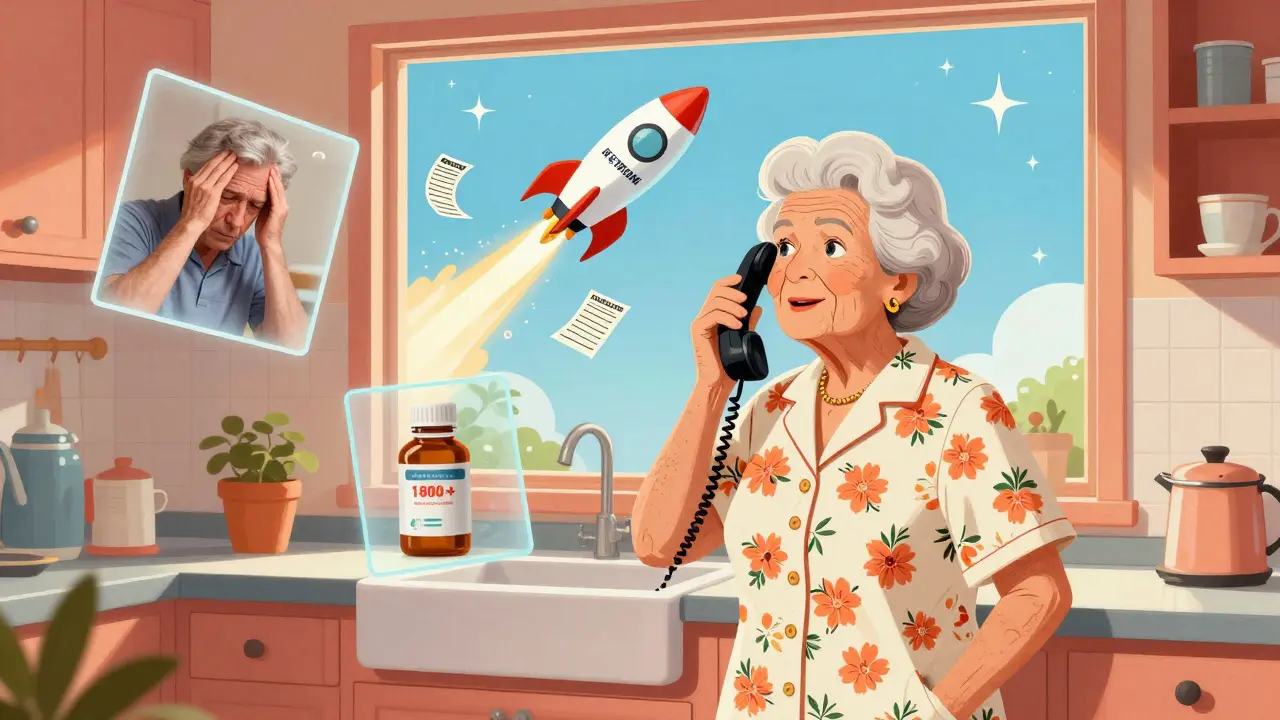
If you’re not comfortable online, call 1-800-FDA-1088. The helpline answers calls in under 3 minutes on average. You can also download printable forms from the FDA website and mail or fax them. No postage is needed for mailed forms.
What Happens After You Submit?
Here’s the hard truth: you won’t get a personal reply. The FDA doesn’t have the staff to respond to each of the 1.4 million reports they get annually. That doesn’t mean your report disappeared.
Your report goes into a massive database, where analysts look for clusters-like ten other people reporting the same rare side effect from the same drug. If a pattern emerges, the FDA may issue a safety alert, update the drug label, require new warnings, or even pull the product off the market.
Some users on Reddit and other forums complain about the lack of feedback. One doctor wrote: “I reported a severe allergic reaction to a new biologic. Took three follow-up emails just to get confirmation it was received.” That’s frustrating, but it’s the reality of a system designed for scale, not personal service.
Still, your report matters. In 2021, a patient report led to a warning about a popular weight-loss supplement that caused liver damage. Without that report, the FDA might not have acted until someone died.
Why Isn’t Everyone Reporting?
Studies estimate that only 1% to 10% of serious adverse events are reported to MedWatch. Why so low? Several reasons:
- Most people don’t know about it.
- They think it’s the doctor’s job.
- They assume the side effect is normal.
- They’re too busy or discouraged by the process.
Healthcare professionals report more often than patients, but even among doctors, rates vary. Oncologists report at a 78% rate. Primary care doctors? Only 42%. That’s a gap. Because primary care providers see the most patients-and the most side effects.
The FDA admits the system has flaws. About 30% of reports are incomplete or contain inaccurate info. That’s why they’re working with health IT companies to build direct reporting into electronic health records by 2025. In the meantime, your report fills a critical gap.
How MedWatch Compares to Other Systems
The U.S. isn’t alone in monitoring drug safety. Europe has EudraVigilance, Canada has the Canada Vigilance Program, and Japan has its own system. But MedWatch is unique in two ways:
- It accepts reports from the public, not just professionals.
- It combines voluntary reports with mandatory manufacturer reporting.
That dual approach gives the FDA a fuller picture. In Europe, only doctors and pharmacists can report. In the U.S., a parent who notices their child developing unexplained seizures after a new vaccine can file a report. That kind of insight is invaluable.
MedWatch receives about 1.4 million reports a year-more than any other national system. But because the U.S. population is smaller than the EU’s, the reporting rate per capita is actually higher. That’s partly because of public awareness campaigns and easier access.
What’s Next for MedWatch?
The FDA is modernizing MedWatch fast. In 2023, they launched an updated website with mobile-friendly design and AI tools to help sort high-priority reports faster. A pilot project reduced initial review time by 35%. By 2025, they plan to let certified health apps and EHR systems send reports automatically.
They’re also working with the CDC and other agencies to link MedWatch data with vaccine safety systems and electronic health records from 300 million patients through the Sentinel Initiative. This blend of passive reporting and active data mining is the future of drug safety.
One major change coming: by 2026, all reports must use standardized medical terms (SNOMED CT) to improve data quality. That means clearer descriptions and better analysis. But for now, plain language still works.
Your Report Could Save a Life
MedWatch isn’t perfect. It’s slow, it’s silent, and it doesn’t give you feedback. But it’s the only system in the country that lets you directly help protect others from dangerous drugs.
Think about it: if you’ve had a bad reaction, you’re not alone. Someone else might be taking the same drug right now, wondering if their symptoms are normal. Your report could be the one that tips the scale.
It doesn’t take much. Ten minutes. One form. One story. That’s all it takes to turn your experience into public safety.
Visit fda.gov/MedWatch to report today. Or call 1-800-FDA-1088. No judgment. No cost. Just the chance to make a difference.
Do I need a doctor’s note to report a side effect to MedWatch?
No. You don’t need any medical documentation or a doctor’s signature. Patients and caregivers can report directly using Form FDA 3500B. The FDA only needs your description of what happened, when, and what you were taking. Your report doesn’t need to be confirmed by a professional to be valuable.
Can I report a side effect from a supplement or over-the-counter drug?
Yes. MedWatch covers all FDA-regulated products, including dietary supplements, herbal products, and OTC medicines like pain relievers, cold remedies, and antacids. If you believe a supplement caused a serious reaction-like liver damage, heart palpitations, or a severe allergic reaction-report it. Many dangerous supplements never go through clinical trials, so patient reports are often the only warning the FDA gets.
Is MedWatch only for U.S. residents?
MedWatch accepts reports from anyone, anywhere in the world, as long as the product was sold or used in the United States. If you’re a Canadian, Mexican, or international visitor who took a U.S.-approved drug and had a serious reaction, your report still counts. The FDA tracks all products distributed in the U.S., regardless of where the patient lives.
What if I’m not sure if the medication caused the problem?
Report it anyway. The FDA doesn’t expect you to prove causation. Their job is to look for patterns. If five other people report the same rare symptom after taking the same drug, that’s a red flag. Even if you think it’s a coincidence, your report could be the missing piece in a larger safety puzzle.
Will reporting a side effect get me in trouble or affect my medical care?
No. Reporting to MedWatch is completely confidential and protected by federal law. Your name and personal information are not shared with drug manufacturers or insurers. Your healthcare provider won’t be notified unless you choose to tell them. Reporting a side effect is a responsible, legal action-and it’s encouraged by medical professionals.
How long does it take for the FDA to act on a report?
There’s no set timeline. Some reports lead to action within weeks if they’re part of a clear pattern. Others sit in the database for months or years until enough similar reports pile up. The FDA prioritizes reports that suggest life-threatening risks, especially if they involve new drugs or high-risk populations. Don’t expect a quick response-but know that your report is being analyzed and added to the safety record.
Meenal Khurana
February 2, 2026 AT 17:39Jamillah Rodriguez
February 3, 2026 AT 01:37Susheel Sharma
February 4, 2026 AT 01:57Janice Williams
February 4, 2026 AT 04:48Roshan Gudhe
February 4, 2026 AT 22:20Rachel Kipps
February 6, 2026 AT 15:45caroline hernandez
February 8, 2026 AT 02:48Joseph Cooksey
February 9, 2026 AT 19:25Jesse Naidoo
February 10, 2026 AT 06:02Sherman Lee
February 12, 2026 AT 01:27