Medications That Cause Frequent Urination: Side Effects, Bladder Risks & Management
 Jul, 15 2026
Medication & Bladder Impact Checker
Analysis Results
Detailed Breakdown
Recommended Action Plan
Do you find yourself rushing to the bathroom more often than usual? If your trips to the restroom have increased suddenly, it might not be a new infection or a sign of aging. It could be the medicine in your cabinet. Many common prescriptions interfere with how your bladder works, causing frequent urination and that sudden, hard-to-ignore urge to go. This is known as medication-induced lower urinary tract symptoms (LUTS), and it affects millions of people who assume their bladder issues are just part of getting older.
The American Urological Association notes that LUTS affect about 33% of adults over 40. However, a significant chunk of these cases-estimated at 15-20% based on research published in *BMC Geriatrics*-are directly tied to medications. When drugs disrupt the delicate balance of bladder muscles, nerve signals, or kidney function, the result is often urgent, uncomfortable, and disruptive. Understanding which pills cause this can help you take control back from the clock and the toilet.
Why Medications Mess With Your Bladder
Your bladder isn't just a passive bag; it's a complex muscle system. The detrusor muscle squeezes to push urine out, while the sphincter stays tight to hold it in. Nerves coordinate this dance perfectly under normal conditions. Medications can interrupt this process in three main ways:
- Increasing urine volume: Some drugs tell your kidneys to flush out more water and salt, filling the bladder faster than usual.
- Weakening bladder muscles: Certain meds relax the detrusor muscle too much, making it harder for the bladder to contract fully or causing it to spasm unpredictably.
- Blocking nerve signals: Anticholinergic effects can confuse the nerves that tell your brain when the bladder is full, leading to either retention (holding too much) or urgency (feeling like you need to go right now).
These mechanisms explain why two people on the same drug might have different experiences, but also why specific classes of drugs are notorious culprits.
Diuretics: The Most Common Culprit
If you take "water pills" for high blood pressure or heart failure, you already know the drill. Diuretics are designed to remove excess fluid from your body by increasing urine production. According to 2022 FDA prescription data, hydrochlorothiazide, furosemide (Lasix), and spironolactone (Aldactone) are among the most prescribed. While this is exactly what they are supposed to do, the timing and intensity can wreak havoc on your daily routine.
A clinical review by BuzzRx in 2023 found that diuretics can increase urine volume by 20-50% within just two hours of taking them. This rapid fill stretches the bladder wall, triggering those urgent signals. The Cleveland Clinic reports that 65% of patients on diuretics experience increased daytime frequency, and 40% suffer from nocturia-waking up at night to pee. High doses make it worse; a 2021 study in the *Journal of Urology* showed that 28% of patients on high-dose furosemide (80mg daily) needed adult incontinence products due to urgency, compared to only 8% on lower doses.
| Medication Name | Type | Primary Mechanism | Onset of Effect |
|---|---|---|---|
| Furosemide (Lasix) | Loop Diuretic | Inhibits sodium reabsorption in the loop of Henle | Within 30-60 minutes |
| Hydrochlorothiazide | Thiazide Diuretic | Affects distal convoluted tubule | Within 2 hours |
| Spironolactone (Aldactone) | Potassium-Sparing | Blocks aldosterone receptors | Within 2-4 hours |
Blood Pressure Meds Beyond Diuretics
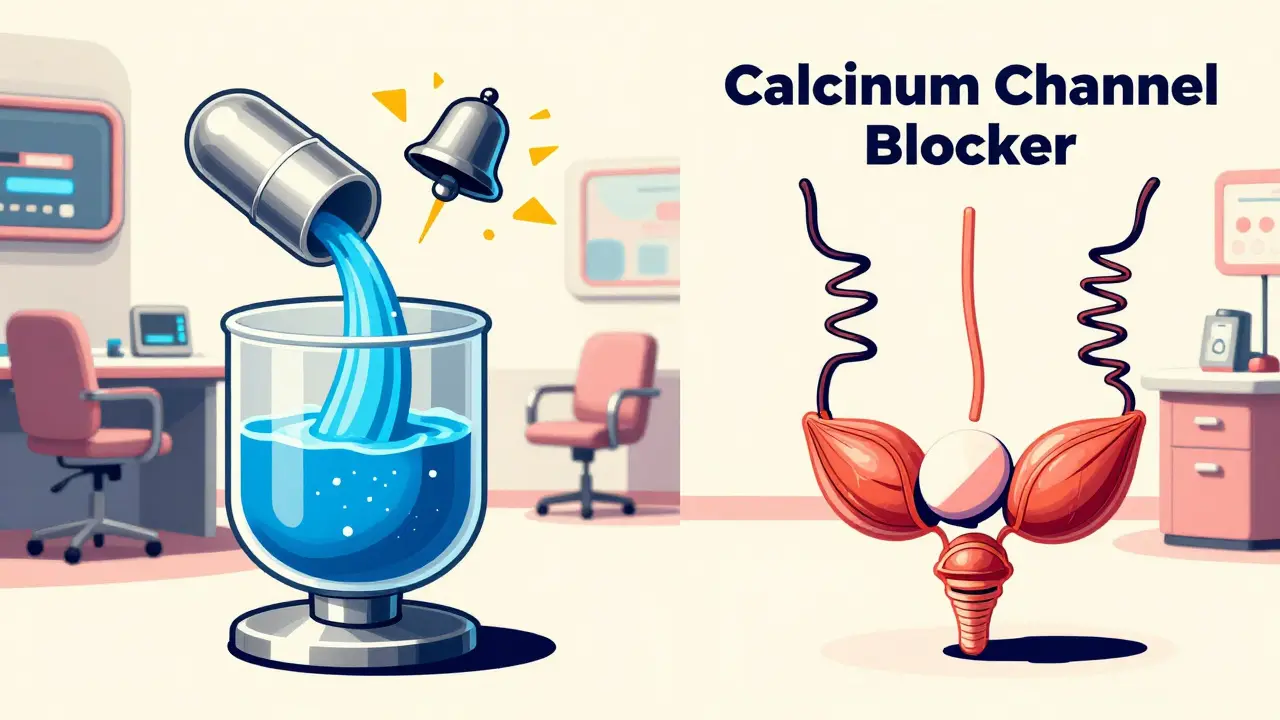
It’s not just water pills. Calcium channel blockers, another staple for hypertension, are surprisingly linked to bladder issues. Drugs like amlodipine, nifedipine, diltiazem, and verapamil work by relaxing blood vessels, but they also affect smooth muscle contraction elsewhere-including the bladder.
A 2019 meta-analysis in the *Journal of Hypertension* found that patients taking nifedipine experienced nearly two extra nighttime voids per night compared to placebo. Verapamil shows the strongest association, with a 42% increased risk of nocturia according to data cited in *BMC Geriatrics*. These drugs impair the bladder’s ability to contract effectively, meaning you might feel the urge frequently but struggle to empty completely, or simply wake up because your body is shifting fluid balance differently during sleep.
ACE inhibitors and ARBs (like captopril) contribute indirectly. They often cause a dry cough. Coughing increases abdominal pressure, which can lead to stress incontinence-the leakage that happens when you sneeze, laugh, or cough. Cleveland Clinic data indicates captopril has a 15% incidence rate for this specific issue.
Mental Health Medications and Bladder Control
Psychotropic medications are powerful tools for managing mood and anxiety, but their side effect profiles often include urological complaints. Antidepressants such as venlafaxine (Effexor), escitalopram (Lexapro), and fluoxetine (Prozac) can worsen overactive bladder symptoms in about 22% of patients, according to a 2017 study. The mechanism varies: some increase serotonin levels that stimulate bladder contractions, while others have anticholinergic properties that slow down bladder emptying.
Lithium, a mood stabilizer used for bipolar disorder, presents a unique challenge. A 2018 study of 873 patients found that 9% discontinued lithium due to urinary complications. Long-term use can lead to nephrogenic diabetes insipidus in about 1% of users. This condition prevents the kidneys from concentrating urine, resulting in polyuria-producing excessive amounts of dilute urine, sometimes exceeding 3 liters a day. For someone on lithium, this isn't just an inconvenience; it's a major quality-of-life disruptor, with 68% of respondents on PatientsLikeMe reporting moderate to severe disruption to daily activities.
Antipsychotics like clozapine, risperidone, and olanzapine also play a role. A 2021 review identified urinary symptoms in 12-18% of users, primarily due to anticholinergic effects that leave the bladder feeling "full" but unable to signal correctly or empty efficiently.
Allergy Meds and Prostate Treatments
Older-generation antihistamines like diphenhydramine (Benadryl) and chlorpheniramine are famous for making you sleepy, but they also relax the bladder muscle. Harvard Health reports this causes urinary retention in 5-7% of users. Paradoxically, holding too much urine can lead to overflow incontinence, where small amounts leak out constantly because the bladder is overfilled.
For men, alpha-blockers like tamsulosin (Flomax) are standard for benign prostatic hyperplasia (BPH). While they improve flow, Alliance Urology’s 2023 clinical review notes they cause retrograde ejaculation in 25-30% of male patients. Though not strictly a "frequency" issue, it changes the urinary experience significantly and can cause confusion about whether ejaculation occurred.

How to Manage Medication-Induced Urgency
You don’t necessarily have to stop taking your life-saving medications. Instead, you can manage the side effects through strategic adjustments. The Mayo Clinic’s 2023 algorithm suggests a four-step approach:
- Confirm the link: Did symptoms start within 2-8 weeks of starting the new med?
- Rule out other causes: Get a urinalysis and post-void residual measurement to ensure there’s no infection or blockage.
- Adjust timing and behavior: Shift dosing times and practice bladder training.
- Consider alternatives: If symptoms persist after 4 weeks, ask your doctor about dose reduction or switching agents.
Timing is everything. BuzzRx advises taking diuretics before 2 PM. This simple shift can reduce nighttime urination episodes by 60%. If you’re on multiple doses, split them early in the day rather than evening.
Retrain your bladder. The Cleveland Clinic recommends bladder retraining techniques, which show 70% effectiveness after 6-8 weeks. This involves scheduled voiding-going to the bathroom at set intervals regardless of urge-and gradually extending the time between visits. Combine this with pelvic floor exercises (Kegels), and Alliance Urology reports a 55% reduction in incontinence episodes compared to medication adjustment alone.
Stay hydrated, but strategically. Don’t dehydrate yourself to avoid peeing; concentrated urine irritates the bladder lining, worsening urgency. Drink most of your fluids earlier in the day and taper off 2-3 hours before bedtime.
When to Talk to Your Doctor
Don’t ignore new urinary symptoms. A survey on Reddit’s r/Urology community found that 42% of participants had to advocate for themselves before doctors considered medication side effects as the cause. Be proactive. Keep a bladder diary for a few days, noting when you take meds, when you drink, and when you void. Bring this log to your appointment.
If you experience pain, blood in urine, fever, or complete inability to urinate, seek immediate care. These are signs of infection or obstruction, not just side effects. For chronic urgency, remember that genetic factors may play a role; ongoing NIDDK research suggests polymorphisms in the CHRM3 gene may increase susceptibility to anticholinergic effects by 3.2-fold. You aren't imagining it, and you aren't alone.
Can I stop taking my medication if it causes frequent urination?
Never stop prescribed medication without consulting your healthcare provider. Abruptly stopping drugs like antidepressants, blood pressure meds, or lithium can be dangerous. Instead, discuss your symptoms so your doctor can adjust the dosage, change the timing, or switch to an alternative with fewer bladder side effects.
Which time of day should I take diuretics to avoid waking up at night?
Take diuretics before 2 PM. Clinical data suggests this timing reduces nighttime urination episodes by approximately 60%. If you take multiple doses, ensure the last dose is taken several hours before bedtime to allow your body to process the excess fluid while you are awake.
Does drinking less water help with medication-induced urgency?
No, reducing water intake can actually worsen urgency. Concentrated urine irritates the bladder lining, making the urge to go more intense. Instead, focus on front-loading your hydration earlier in the day and limiting fluids 2-3 hours before sleep.
Are calcium channel blockers safe for people with overactive bladder?
Calcium channel blockers can exacerbate overactive bladder symptoms and nocturia in 15-25% of users. If you already have bladder issues, discuss alternative blood pressure medications with your doctor, as drugs like verapamil and nifedipine are strongly associated with increased nighttime voiding.
How long does it take for bladder side effects to go away after changing meds?
Symptoms typically begin to improve within 2-4 weeks after adjusting or discontinuing the offending medication. However, if structural changes or nerve adaptations have occurred, it may take longer. Behavioral strategies like bladder training can speed up recovery and provide relief during the transition period.