Managing Medication Allergies and Finding Safe Alternatives
 Feb, 12 2026
When you hear the word "allergy," you probably think of pollen, peanuts, or pet dander. But medication allergies are just as real-and just as dangerous. A drug allergy isn’t just a stomach upset or a rash. It’s your immune system going into overdrive, treating a harmless medicine like a deadly invader. And if you’ve been told you’re allergic to penicillin, you might be carrying around a label that’s doing more harm than good.
What Really Counts as a Drug Allergy?
Not every bad reaction to a pill is an allergy. Many people confuse side effects with true allergies. Nausea? That’s a side effect. A rash after taking amoxicillin? Could be. But if you break out in hives, your throat swells, or you feel like you’re going to pass out, that’s an IgE-mediated allergic reaction-the kind that triggers anaphylaxis. The CDC estimates that only about 10% of people who say they’re allergic to penicillin actually are. That’s because most reactions from childhood-like a mild rash after taking amoxicillin for an ear infection-aren’t true allergies. They’re just the body’s way of reacting to something unfamiliar. And here’s the kicker: up to 80% of people outgrow their penicillin allergy within 10 years. But here’s where things get dangerous. If your doctor doesn’t know the difference, they’ll avoid penicillin altogether. And that means you’ll likely get a broader-spectrum antibiotic like clindamycin or vancomycin. These drugs cost more, cause more side effects, and increase your risk of deadly infections like C. diff. In fact, patients with mislabeled penicillin allergies have a 26% higher chance of getting C. diff. That’s not a small risk-it’s life-altering.How to Know If You’re Really Allergic
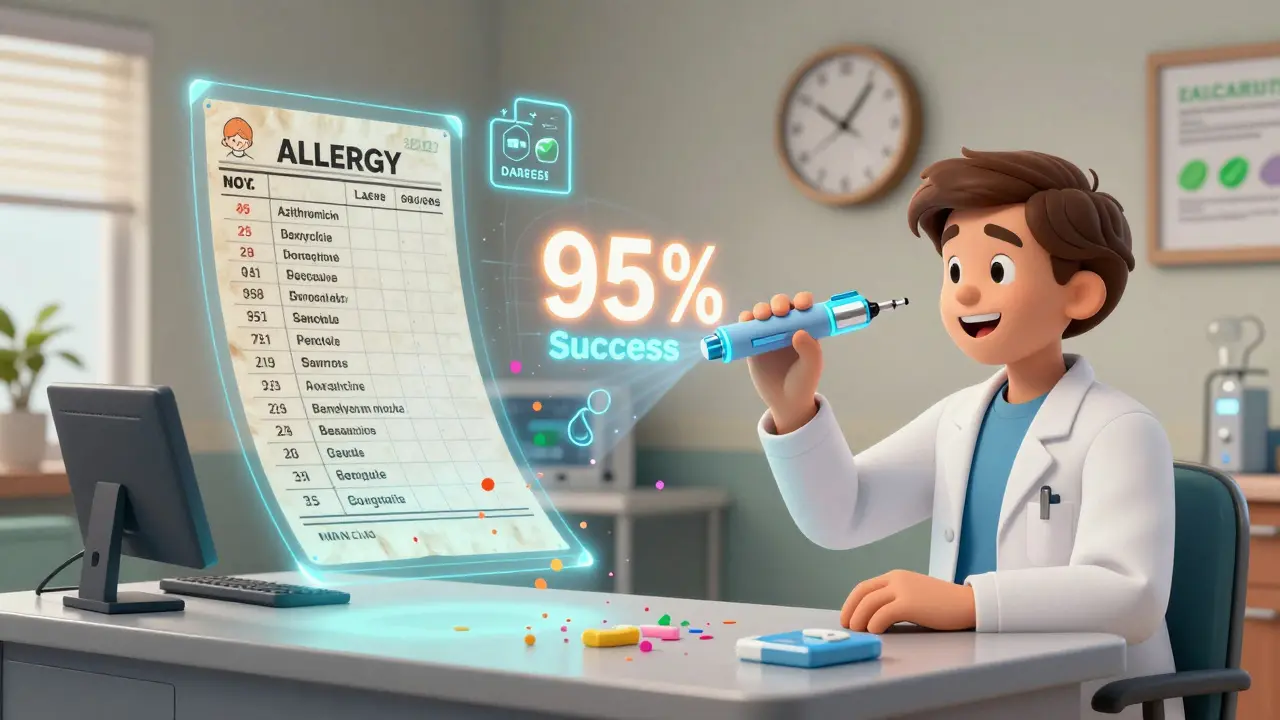
The only way to find out is through testing. Skin testing is the gold standard. It’s quick, safe, and accurate. A tiny amount of the drug-like benzylpenicilloyl polylysine-is injected under the skin. If you’re truly allergic, a red bump will appear within 15 minutes. If not? You’re cleared. For penicillin, the test includes both major and minor determinants. These aren’t just random chemicals-they’re the exact parts of the drug that trigger immune reactions. A negative test means you can likely take penicillin again. And if the skin test is negative, doctors often do an oral challenge: you take a small dose under supervision. Studies show 95% of people who go through this process have no reaction. Don’t wait for a crisis. If you were told you were allergic to penicillin as a kid, get tested. It’s not a big ordeal. Most allergists can do it in one office visit. And if you’ve never been tested, you’re probably one of the 90% who can safely take penicillin now.What If You’re Truly Allergic?
If skin testing confirms a real allergy, you need alternatives. But not all alternatives are equal. Here’s what works-and what doesn’t.- Macrolides (azithromycin, clarithromycin): Good for respiratory infections, but can cause stomach upset and may interact with heart medications. A 5-day course of azithromycin costs around $26.
- Fluoroquinolones (levofloxacin, moxifloxacin): Effective for urinary and sinus infections, but linked to tendon damage and nerve problems. Used only when no other option exists.
- Tetracyclines (doxycycline): Great for acne, Lyme disease, and some pneumonia. Safe for most adults, but not for kids under 8 or pregnant women.
- Vancomycin or clindamycin: Often used as "backup" drugs. More expensive. Higher risk of C. diff. Avoid unless absolutely necessary.
Desensitization: When You Need Penicillin But Can’t Take It
Desensitization isn’t a cure. It’s a temporary reset. You’re given tiny, increasing doses of the drug over several hours, under constant monitoring. Your immune system learns not to react. It’s not for everyone. If you had anaphylaxis in the last 10 years, it’s too risky to try in an outpatient clinic. But for people with life-threatening infections-like endocarditis, meningitis, or syphilis in pregnancy-it’s the only way forward. Hospitals with dedicated allergy services have done this successfully for decades. It’s not experimental. It’s standard care.Why Your Allergy Label Might Be Wrong
Health records are messy. A childhood rash from 20 years ago? Still in your file. A nurse wrote "allergic to penicillin" on a chart in 2007? It’s still there-even if you’ve taken it three times since without issue. A 2021 study found that 43% of patients had inconsistent or missing allergy info when switching doctors or hospitals. That’s not a glitch. It’s the system. And it’s putting you at risk. That’s why carrying a wallet card matters. Write down:- The exact drug name (e.g., amoxicillin, not just "penicillin")
- What happened (e.g., "hives and swelling 2 hours after taking 500mg")
- The date
- What you were treated for
- Any test results or clearance from an allergist
What’s Changing in 2026
The CDC updated its guidelines in 2022, making skin testing more accessible in primary care. The American Academy of Allergy, Asthma & Immunology launched "Choose Penicillin" in 2023. Twelve hospitals saw a 65% drop in unnecessary antibiotic use after adopting the program. By 2027, half of all penicillin allergy evaluations will happen in your family doctor’s office-not a specialist clinic. That’s huge. It means you won’t need a referral. You’ll walk in, get tested, and walk out with answers. And the cost savings? The CDC estimates that fixing mislabeled allergies saves $1.2 billion a year in the U.S. alone. That’s not just money. That’s fewer hospital stays. Fewer C. diff cases. Fewer people dying from avoidable infections.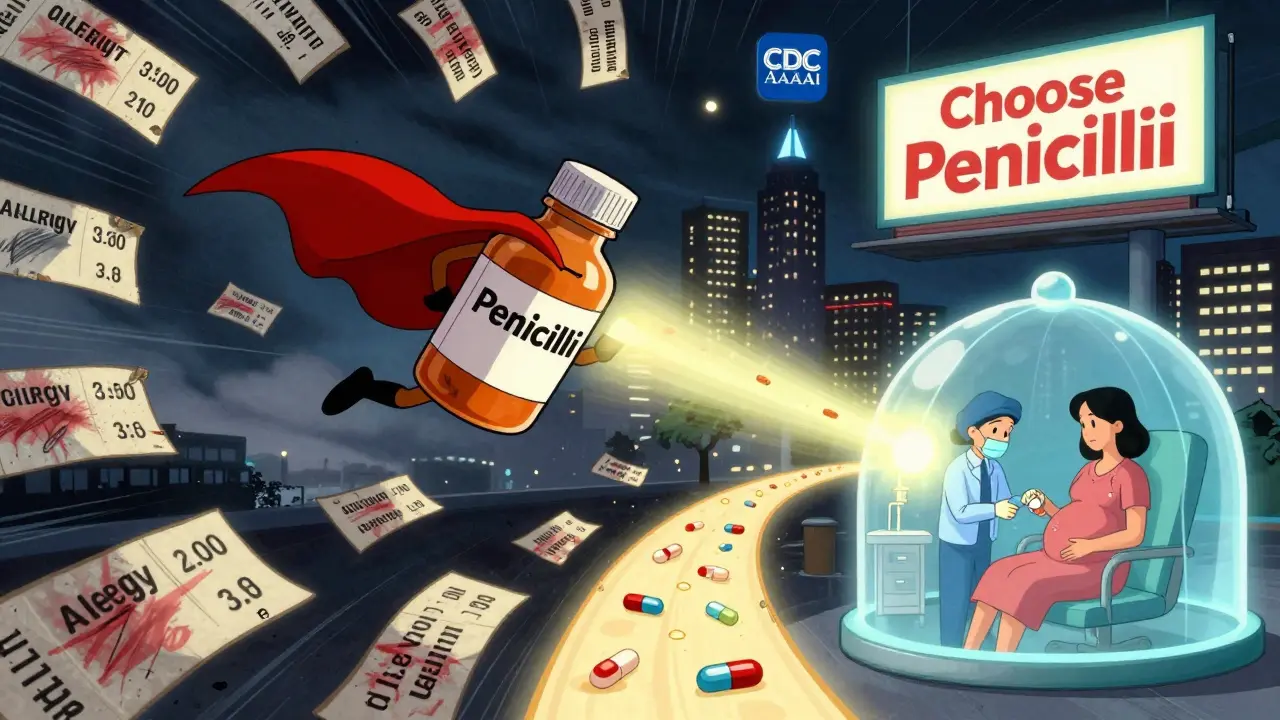
What You Can Do Today
If you’ve been told you’re allergic to penicillin:- Check your records. Do they say "rash"? Or "anaphylaxis"? The difference matters.
- Call your allergist. If you don’t have one, use the AAAAI’s "Find an Allergist" tool. There are over 6,500 board-certified allergists in the U.S.
- Ask about skin testing. It’s covered by most insurance.
- If you’re cleared, get the result in writing. Update your electronic health record.
- Carry a wallet card. Or save it in your phone.
When to Seek Help Immediately
If you’ve ever had:- Swelling of the lips, tongue, or throat
- Difficulty breathing
- Dizziness or passing out
- Severe rash with blistering
What Not to Do
- Don’t avoid penicillin without testing.
- Don’t assume a rash = allergy.
- Don’t rely on old charts.
- Don’t let a nurse or pharmacist guess.
- Don’t take "alternative" antibiotics just because your chart says "allergic." Ask why.
Can you outgrow a penicillin allergy?
Yes. Studies show up to 80% of people who had a penicillin allergy as a child lose it over time. Even if you had a serious reaction decades ago, you may still be able to take penicillin safely after proper testing. The immune system changes. What was dangerous at 7 might not be at 35.
Is a rash always a sign of a drug allergy?
No. Only about 10% of reported penicillin "allergies" are true IgE-mediated reactions. Many rashes are viral in origin, especially if they appear after taking antibiotics for a viral infection like a cold or flu. A simple rash without itching, swelling, or trouble breathing is rarely a true allergy. But it still needs evaluation.
Are there safe antibiotics for people with penicillin allergies?
Yes. Macrolides like azithromycin, tetracyclines like doxycycline, and fluoroquinolones like levofloxacin are common alternatives. But they’re not always better. They’re often more expensive, have more side effects, and increase the risk of antibiotic resistance. Penicillin is still the gold standard when safe to use.
Can I get tested for a penicillin allergy at my regular doctor’s office?
More and more, yes. As of 2026, many primary care clinics offer penicillin skin testing, especially for low-risk patients. You may not need a specialist referral. Ask your doctor if they can do the test or refer you to a nearby allergist. The CDC now recommends testing even in outpatient settings for patients with mild past reactions.
Why does my allergy info keep showing up even after I was cleared?
Electronic health records don’t always update automatically. A note from 2012 saying "allergic to penicillin" can stay in the system for years-even after you’ve been tested and cleared. You must proactively request that your allergist send your test results to your primary care provider and pharmacy. Bring written proof to every appointment.
Is drug allergy testing covered by insurance?
Most insurance plans, including Medicare and Medicaid, cover penicillin allergy testing when ordered by a provider. Skin testing typically costs $150-$300 out-of-pocket if not covered. That’s far less than the cost of a week of clindamycin or a hospital stay for C. diff. Testing is one of the best investments in your future health.
Jonathan Noe
February 12, 2026 AT 21:07Man, I had a rash after amoxicillin at 12 and never thought twice about it. Fast forward 18 years, I get pneumonia, my doc prescribes penicillin, I panic. Turned out I was one of the 90% who outgrew it. Skin test took 20 minutes, no reaction. Now I’m saving cash and avoiding clindamycin’s gut murder. Why don’t more people know this? It’s insane.
My mom still thinks I’m allergic. I had to print the results and tape them to her fridge. She still says ‘but what if?’ Like I’m some kind of medical gamble.
Jim Johnson
February 14, 2026 AT 01:05Y’all need to stop treating penicillin like it’s poison. I’m a nurse and I’ve seen way too many people get stuck on vancomycin because someone wrote ‘allergic’ in 2003. One lady got C. diff twice because of it. She’s now on probiotics 2x a day. Don’t be that person. Get tested. It’s free with insurance. Literally one appointment. Your future self will high-five you.
andres az
February 15, 2026 AT 03:26Let me guess - Big Pharma pushed this ‘outgrow your allergy’ narrative to sell more antibiotics. You think they want you to use $2 penicillin when they can push $800 fluoroquinolones? No way. The CDC’s ‘guidelines’? Written by consultants who got paid by Gilead. Skin testing? It’s a gateway to more testing. More billing. More profit.
My cousin got a rash after amoxicillin. Now he’s on a 10-year drug regimen. Coincidence? I think not. They don’t want you healthy. They want you dependent.
Stephon Devereux
February 15, 2026 AT 22:05Think about it - your immune system isn’t a static thing. It’s a living, learning network. A rash at 7 doesn’t mean your T-cells are permanently scarred. They adapt. They forget. We treat allergies like permanent verdicts, but biology doesn’t work that way.
It’s not just about penicillin. It’s about how we treat health as a static label instead of a dynamic process. We’re terrified of change. We cling to old charts like they’re sacred texts. But your body? It’s always updating. You just have to listen.
Testing isn’t medical. It’s philosophical. It’s about trusting evolution over bureaucracy.
Neha Motiwala
February 16, 2026 AT 13:21I had a rash after penicillin at age 5, and now at 32 I’m terrified to even walk into a pharmacy. What if they lie? What if the test is fake? What if the allergist is paid by Pfizer? I read online that some labs use saline instead of the real allergen to make people think they’re not allergic. I have nightmares about this. My doctor says I’m fine, but I don’t trust anyone anymore. I carry an EpiPen everywhere. Even to Starbucks.
athmaja biju
February 17, 2026 AT 13:27In India we don’t have this luxury. We don’t even have allergists in most cities. People take penicillin without testing because they can’t afford to wait. And guess what? Most survive. You Americans overthink everything. A rash? Take antihistamine. Done. Why do you need a 300-dollar test? We use cefixime, azithromycin, doxycycline - they work. Stop over-medicalizing. Your health is not a spreadsheet.
Robert Petersen
February 17, 2026 AT 14:08I had no idea this was a thing. My dad’s chart says ‘penicillin allergy’ since 1992. We called his allergist last week. Test came back negative. He’s been avoiding amoxicillin for 30 years. Now he’s taking it for his sinus infection. No drama. No hives. Just… relief.
It’s wild how much fear is built on outdated notes. I’m telling everyone I know. This isn’t just about antibiotics - it’s about rethinking how we treat medical history. Don’t let a 30-year-old scribble dictate your health.
Craig Staszak
February 17, 2026 AT 23:26My GP did the skin test last month. Took 15 minutes. Felt like a tiny mosquito bite. No reaction. Now I’m on penicillin for the first time since I was 9. Feels weird. Like I’ve been denied something I never knew I was missing.
Also, my pharmacy still flags me as allergic. Had to call them. Had to email my doctor. Had to send them the PDF. It’s like fighting bureaucracy with a spoon. But worth it. Saved $180 on antibiotics this week.
alex clo
February 19, 2026 AT 05:31While the premise of this post is scientifically sound, it is imperative to acknowledge the heterogeneity of allergic responses. Not all IgE-mediated reactions are identical in clinical presentation, and the predictive value of skin testing varies across populations. Furthermore, cross-reactivity with cephalosporins, though low, must be considered in patients with severe anaphylactic histories. A one-size-fits-all recommendation for testing may inadvertently overlook nuanced clinical contexts.
Alyssa Williams
February 20, 2026 AT 14:32OMG I just got tested last week. I thought I was allergic because I got a rash after penicillin when I was 8. Turns out it was a virus. I’m so mad I wasted 20 years avoiding the best antibiotic. My last UTI cost me $200 on azithromycin. This time? $12. I’m telling all my friends. You’re probably not allergic either. Go get tested. Seriously. Do it. Now.
Joanne Tan
February 22, 2026 AT 13:48My mom is 72. She had a rash after penicillin in 1968. She’s been on clindamycin for every infection since. We got her tested. Negative. She cried. Said she felt like a kid again. Now she’s on penicillin for her pneumonia. She says it’s like magic. I’m getting tested too. Why didn’t anyone tell us this was a thing?
Annie Joyce
February 23, 2026 AT 09:07Penicillin is the OG antibiotic. The OG. The OG that doesn’t turn your gut into a warzone. I used to think ‘allergy’ meant ‘permanent life sentence.’ Turns out it’s more like a typo in an old Word doc. I got tested after reading this. Zero reaction. Now I’m the person who says ‘no, just give me the penicillin’ at the pharmacy. I feel like a rebel. And my stomach is thanking me.
Rob Turner
February 25, 2026 AT 05:14My grandfather had anaphylaxis to penicillin in 1952. He died in 1990. My dad got the same label. I got it too. We all lived with it. But now I’m 34. I got tested. Negative. I feel like I’ve been living under a lie. Not just medically - emotionally. Like I’ve been carrying a ghost. This isn’t just about antibiotics. It’s about unlearning fear. I’m telling my kids: your body isn’t a prison. It’s a conversation.
Kristin Jarecki
February 27, 2026 AT 01:11It is imperative that patients be advised that while skin testing demonstrates high negative predictive value for penicillin, it does not eliminate the possibility of non-IgE-mediated reactions. Furthermore, the long-term durability of desensitization remains an area of ongoing investigation. Clinical decision-making must remain individualized and informed by comprehensive patient history, not population-level statistics.