Managing Gout Attacks: Uric Acid, Triggers, and Treatment Strategies
 Apr, 27 2026
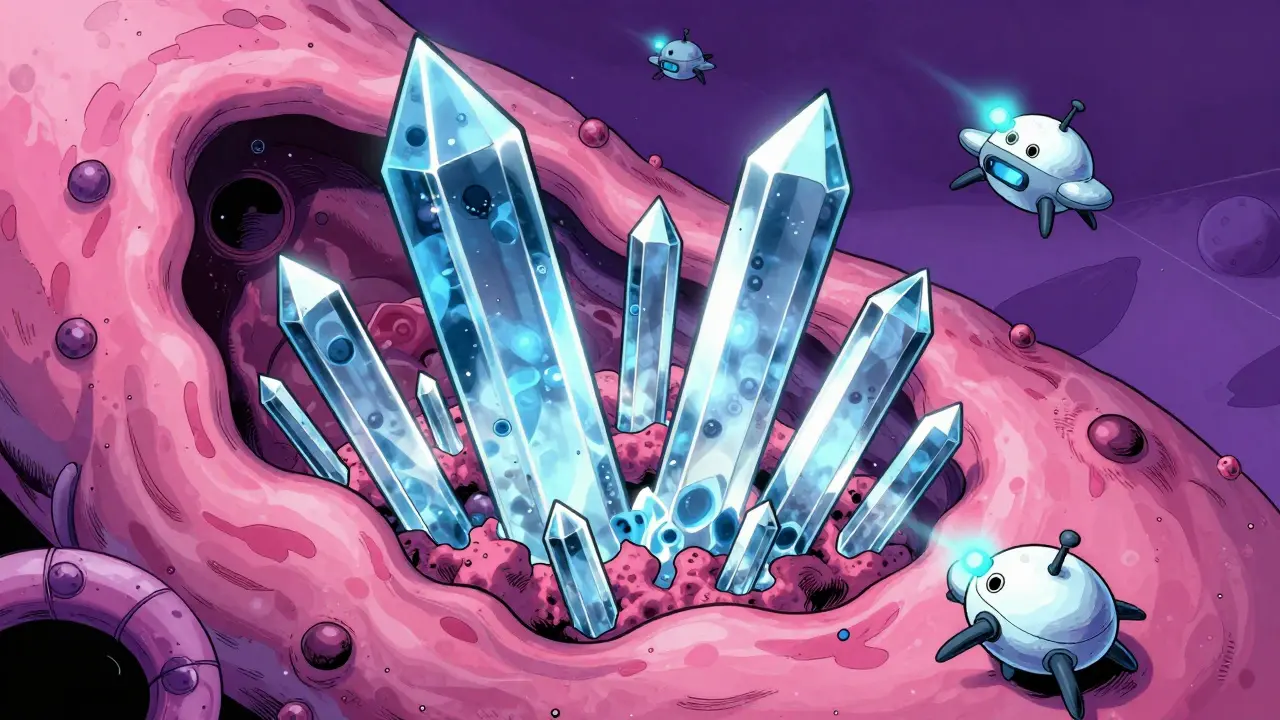
At the center of the struggle is gout attacks is a painful form of inflammatory arthritis caused by the deposition of monosodium urate (MSU) crystals in the joints. This happens because of hyperuricemia, which is just a medical term for having too much uric acid in your blood. To be specific, when your serum levels hit 6.8 mg/dL, the acid reaches a saturation point. Once it crosses that line, it starts forming sharp, needle-like crystals that embed themselves in your joint tissues. Your immune system sees these crystals as foreign invaders and attacks them, leading to the redness, heat, and excruciating pain you feel during a flare.
Why Your Body Produces Too Much Uric Acid
Why does this happen to some people and not others? It usually comes down to how your kidneys handle waste. About 90% of gout cases happen because the kidneys aren't exporting uric acid efficiently. This is often a genetic lottery; genes like SLC2A9 and ABCG2 play a huge role in how your body reabsorbs urate. Only about 10% of people actually overproduce uric acid, often due to high-purine diets or rare metabolic disorders.It's also an evolutionary quirk. Most mammals have an enzyme called uricase that breaks uric acid down into a soluble substance called allantoin. Humans and great apes lost this enzyme over time, making us uniquely susceptible to these crystal deposits. When you combine this genetic predisposition with certain lifestyle factors-like chronic alcohol use or the use of thiazide diuretics-your risk of an attack skyrockets.
Identifying the Common Triggers
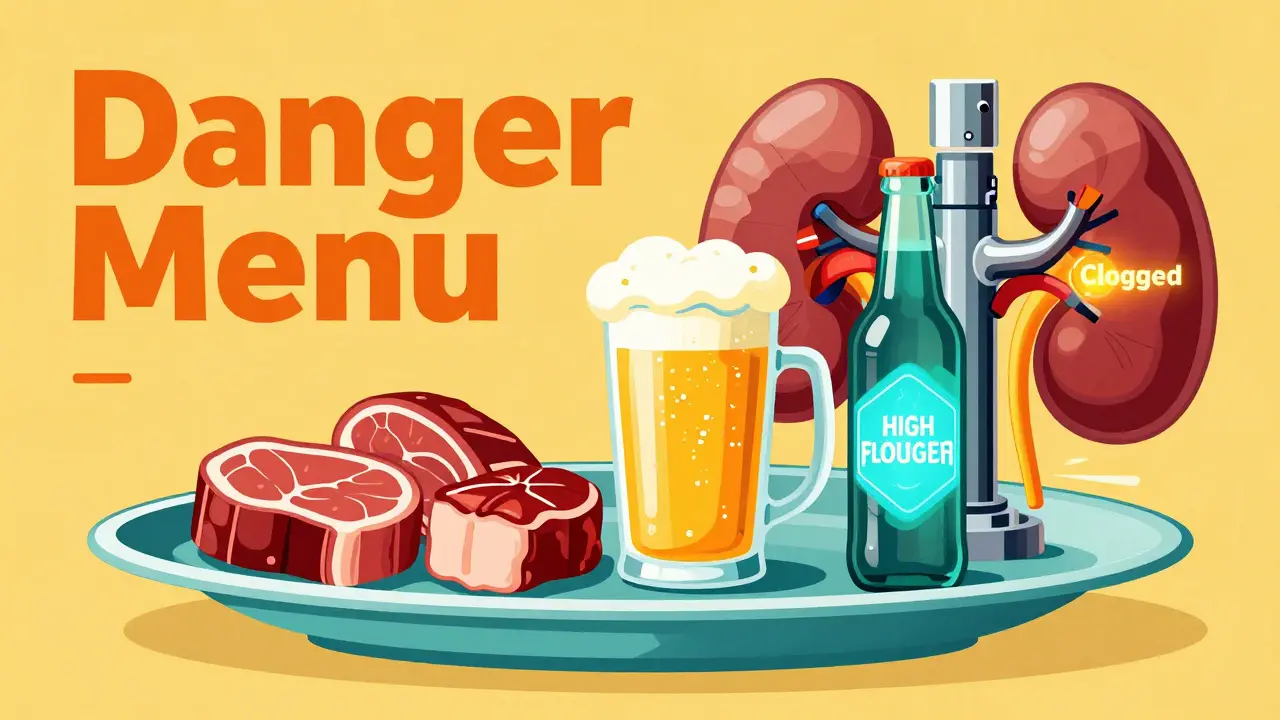
Knowing what sets off a flare can be the difference between a normal week and a week spent on the couch. Triggers generally fall into two categories: dietary spikes and physical disruptions.Dietary triggers are the most well-known. Purine-rich foods, such as organ meats (liver, kidneys) and certain shellfish, provide the raw materials for uric acid. Alcohol is a double whammy: it increases production and slows down excretion. Beer is particularly dangerous because it contains high levels of purines. Even fructose-sweetened sodas can trigger attacks by depleting ATP and boosting uric acid production by up to 30%.
Physical triggers are less obvious but just as dangerous. Dehydration is a major culprit; if you drink less than 1.5 liters of water a day, your uric acid concentration spikes. Minor joint injuries or even sudden changes in your medication can "shake loose" crystals from walled-off deposits called tophi, sending them into the joint space and triggering an immediate inflammatory response.
| Trigger Type | Specific Example | Estimated Risk/Impact | Mechanism |
|---|---|---|---|
| Alcohol | Beer (12oz daily) | 49% increase in risk | High purine content + inhibited excretion |
| Sugar | High-fructose corn syrup | 20-30% increase in production | ATP depletion in the liver |
| Dairy | Low-fat milk/yogurt | 43% decrease in risk | Uric acid excretion support |
| Medication | Thiazide Diuretics | 30-50% increase in risk | Reduced renal clearance of urate |
Short-Term Relief vs. Long-Term Control
One of the biggest mistakes people make is treating gout as a one-time event. There is a massive difference between stopping a fire (acute treatment) and removing the fuel (long-term management).When you're in the middle of an attack, you need anti-inflammatories. Doctors typically recommend NSAIDs like indomethacin, or colchicine, which is specifically effective for gout if taken early. For those who can't take NSAIDs due to kidney issues, corticosteroids like prednisone are the go-to. These drugs don't lower your uric acid; they just stop the pain and swelling.
To actually stop the attacks from coming back, you need urate-lowering therapy (ULT). The gold standard is allopurinol. It works by blocking the production of uric acid. The goal is to keep your serum levels below 6 mg/dL. If you have severe tophi (visible crystal lumps under the skin), the target is even lower-around 5 mg/dL. Over time, this low blood level actually "dissolves" the crystals already in your joints, potentially eliminating attacks entirely.
The Paradox of the First Dose
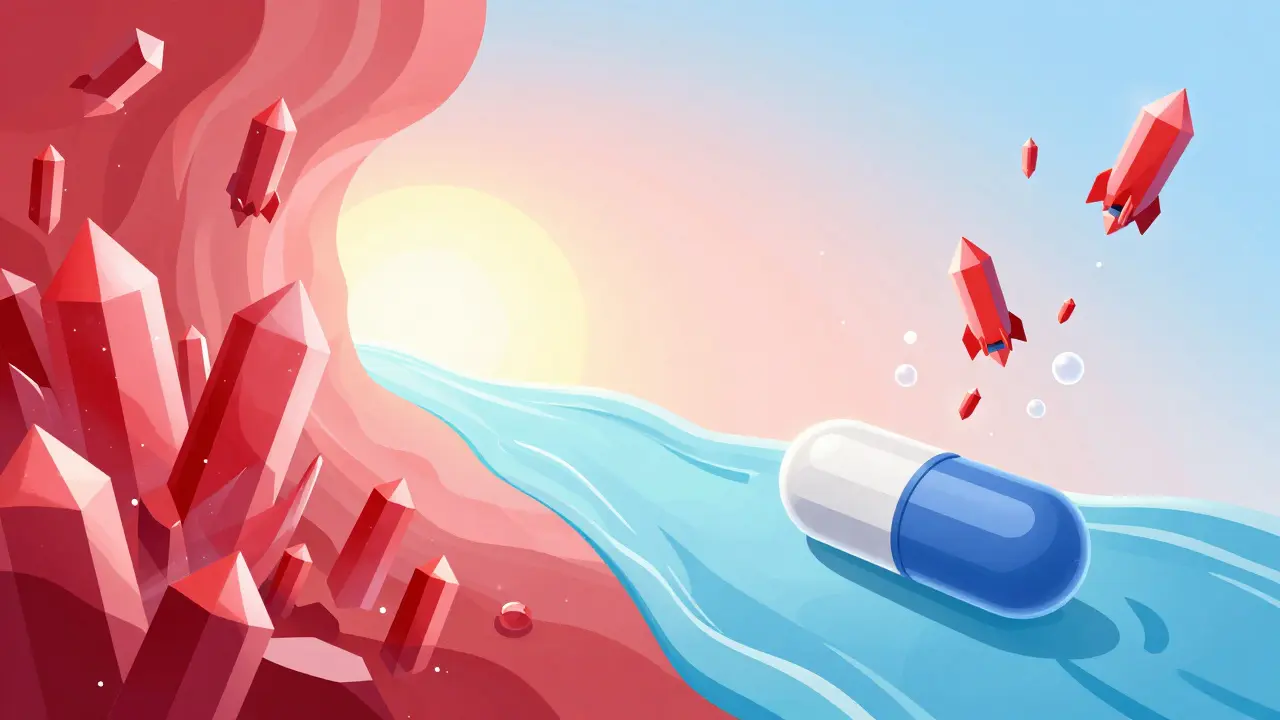
Here is the part that confuses most patients: starting your long-term medication can actually trigger a new attack. It sounds counterintuitive, but any rapid shift in uric acid levels-even a decrease-can destabilize the crystals in your joints. As they shift or partially dissolve, they can leak into the joint space and spark a flare.Because of this, doctors usually prescribe a "preventative" dose of low-dose colchicine for the first six months of allopurinol treatment. This covers you while your body adjusts to the new, lower uric acid levels. If you stop your ULT because you feel better, your levels will rebound within a few weeks, and the cycle begins all over again. Consistency is the only way to achieve permanent remission.
Daily Habits for Gout Prevention
While medication does the heavy lifting, your daily habits determine how hard those medications have to work. Start by hydrating aggressively; aim for more than 2 liters of water daily to keep your kidneys flushing out urate.Focus on a "gout-friendly" diet. Instead of just cutting out steak, add in more low-fat dairy. Research shows that milk and yogurt can actually help the body excrete uric acid more effectively. Be mindful of "hidden" purines in seafood and organ meats, and swap sugary sodas for sparkling water or tea.
Keep a flare log. Note what you ate or did 24-48 hours before an attack. Did you have a few beers on Friday? Were you dehydrated after a long hike? Identifying your personal patterns makes the condition much easier to control.
Can I stop taking allopurinol once the pain is gone?
No. Allopurinol is not a painkiller; it is a preventative medication. Stopping it causes uric acid levels to rebound quickly, which often triggers a severe attack. It is a lifelong management strategy to keep crystals from forming.
Does drinking water really help with gout?
Yes. Dehydration concentrates uric acid in the blood and reduces the amount of urate your kidneys can flush out. Drinking at least 2 liters of water daily helps maintain a lower concentration of uric acid and prevents crystals from precipitating.
What is the difference between an NSAID and Allopurinol?
NSAIDs (like ibuprofen or indomethacin) treat the inflammation and pain of an active attack but do nothing to lower uric acid. Allopurinol lowers the production of uric acid to prevent future attacks but does not treat the pain of a current flare.
Are there any dairy products that trigger gout?
Generally, no. In fact, low-fat dairy products are associated with a lower risk of gout attacks because they help the body excrete uric acid more efficiently.
How long does it take for tophi to disappear?
It takes time and consistency. When serum uric acid is kept below 5 mg/dL for about 12 months, roughly 70% of patients see their tophi resolve completely as the body slowly reabsorbs the stored crystals.
Jean Robert
April 27, 2026 AT 20:24It's really heartening to see a breakdown like this because so many people feel totally isolated when they're dealing with that kind of pain, and I just want to remind everyone that staying consistent with your water intake and your meds can truly turn things around, even if it feels like a slow climb at first, but you've got this and your body can definitely heal with a little patience and a lot of kindness toward yourself!
Timothy Brown
April 29, 2026 AT 01:38People just love eating organ meats and then act shocked when their toes explode. Just stop eating the junk and maybe you won't need a pill for the rest of your life.
prince king
April 29, 2026 AT 02:01The idea that we lost the uricase enzyme is just wild to think about! 🧬 It's like our bodies are just slightly unfinished versions of what they should be. I've found that keeping a food diary really helps me stay in tune with my own chemistry. Total game changer! ✨😊
Amber McCallum
April 29, 2026 AT 04:21Your body is just telling you that you're out of balance. If you just listened to the earth and stopped poisoning yourself with soda, you wouldn't be in this mess. It's all about energy.
Sharon Mathew
April 30, 2026 AT 14:51Oh please, as if drinking two liters of water is some magic cure-all! I've tried the water route and it does absolutely nothing for my flares, it's just an exhausting chore that makes me run to the bathroom every five minutes while I'm still in agony!
Nigel Gosling
May 1, 2026 AT 21:08The sheer audacity of the modern medical complex to prescribe a drug that actually triggers the very symptom it's meant to prevent is nothing short of a tragedy. We are merely pawns in a pharmaceutical game, trading one misery for another while we pretend this is "management". It's an absolute farce that we've forgotten how to truly heal without these chemical crutches that leave us more broken than before. I find it profoundly disturbing that the "gold standard" is a lifelong dependency on allopurinol. Truly a dark age for human wellness.
Justin Crice
May 3, 2026 AT 18:48The correlation between ATP depletion in the liver and the subsequent upregulation of uric acid production is a fascinating metabolic pathway. One wonders if the efficacy of allopurinol varies significantly based on the specific genetic polymorphism of the SLC2A9 transporter in different populations.
Jarrett Jensen
May 5, 2026 AT 17:05Pedantic.