Major Depressive Disorder: Antidepressants and Psychotherapy Options That Work
 Dec, 1 2025
More than 1 in 6 U.S. adults experience major depressive disorder (MDD) every year. That’s not rare. It’s not weak. It’s a medical condition - one that responds well to treatment, but only if you know what actually works. Many people start with a pill, hoping it will fix everything. Others go straight to talk therapy, afraid of side effects. The truth? Neither approach alone is always enough. The best outcomes come from combining the right medication with the right therapy - and knowing which one fits you.
What Major Depressive Disorder Really Feels Like
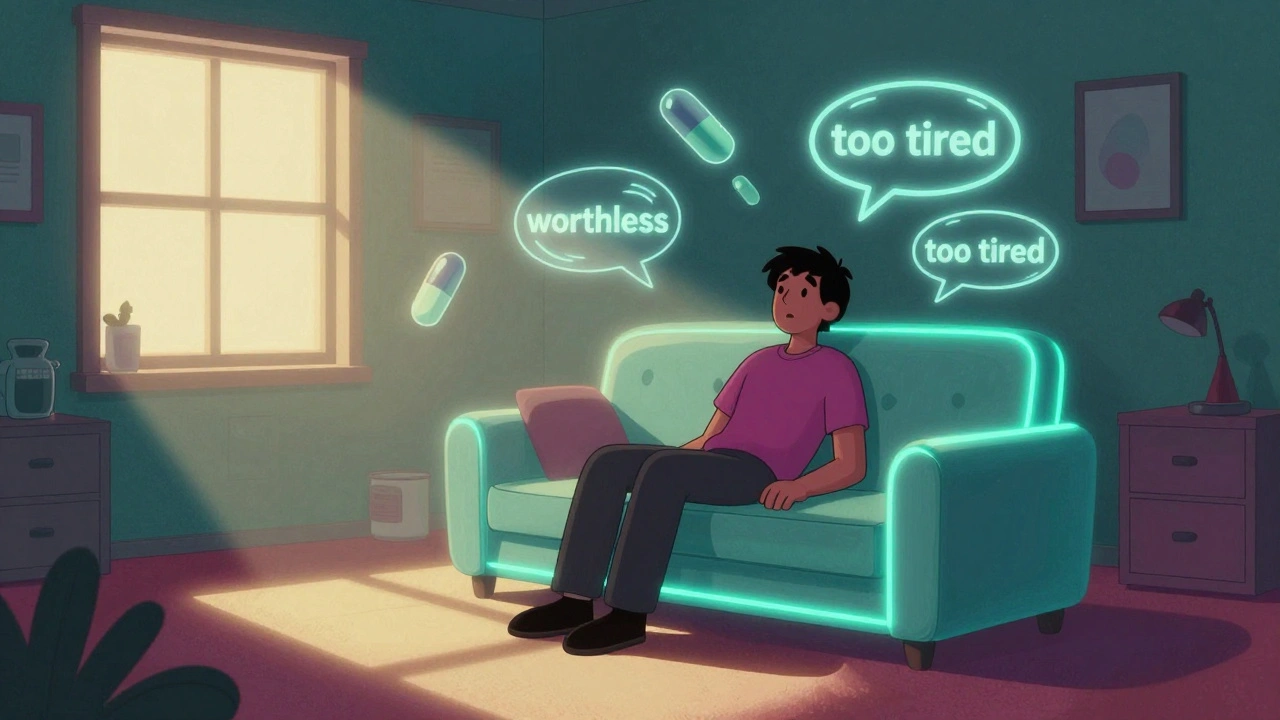
Major Depressive Disorder isn’t just feeling sad. It’s waking up exhausted, even after eight hours of sleep. It’s losing interest in coffee, music, or hanging out with friends - things you used to love. It’s the weight that makes getting out of bed feel like climbing a mountain. Symptoms last at least two weeks, often longer, and they don’t just go away on their own. According to the National Alliance on Mental Illness (NAMI), 15.5% of U.S. adults live with MDD each year. That’s millions of people struggling silently, often thinking they should just "snap out of it." The cause? It’s rarely one thing. Genetics, brain chemistry, life stress, chronic illness, or even no obvious trigger at all can lead to MDD. That’s why treatment has to be personal. There’s no single cure, but there are proven paths forward.Antidepressants: What Actually Works
When doctors recommend medication, they usually start with second-generation antidepressants. These are safer and better tolerated than older ones. The most common are SSRIs - Selective Serotonin Reuptake Inhibitors - like escitalopram, paroxetine, and sertraline. They work by increasing serotonin, a brain chemical linked to mood. SNRIs, like venlafaxine, target both serotonin and norepinephrine, and are often used for more severe cases.Studies show that at eight weeks, about 60-70% of people see at least a 50% drop in symptoms with the right antidepressant. But here’s the catch: it takes time. Most people feel a little worse before they feel better. Nausea, insomnia, or feeling emotionally flat are common in the first few weeks. Sexual side effects and weight gain can happen too - and they’re real enough that many people quit. But switching medications or adjusting the dose often helps. Don’t give up after two weeks. Wait at least six to eight.
Some antidepressants stand out in effectiveness. Mirtazapine and amitriptyline have shown strong results in clinical trials, though amitriptyline carries more risk of side effects. For people who don’t respond to two or three tries, Electroconvulsive Therapy (ECT) is an option. It’s not scary like movies show. You’re under anesthesia, a brief electric current is applied, and you wake up with no memory of the procedure. For severe, treatment-resistant depression, ECT works in up to 80% of cases.
Psychotherapy: The Talking Cure That Changes Your Brain
Psychotherapy isn’t just venting. It’s structured, evidence-based work that rewires how you think and react. The gold standard? Cognitive Behavioral Therapy (CBT). CBT helps you spot negative thought patterns - like "I’m worthless" or "Nothing will ever get better" - and replace them with more realistic ones. It’s not about positive thinking. It’s about accurate thinking. Studies show CBT is as effective as antidepressants for mild to moderate depression.Another powerful option is Interpersonal Therapy (IPT). It focuses on your relationships - grief, conflict, life transitions - and how they feed depression. If you’ve lost someone, been betrayed, or feel isolated, IPT helps you rebuild connections. Behavioral Activation, a simpler form of CBT, is great for people who are too drained to think clearly. It’s about scheduling small, enjoyable activities - a walk, calling a friend, listening to a song - to break the cycle of withdrawal.
For those who prefer tech, Computerized CBT (CCBT) delivers therapy through apps or websites. It’s helpful if you live far from a therapist, have mobility issues, or feel uncomfortable in person. But it’s not a replacement for human connection. The therapeutic alliance - the trust between you and your therapist - matters. One Reddit user wrote: "CBT taught me skills I still use five years later." That’s the long-term value.
Combination Therapy: Why It’s the Best Bet
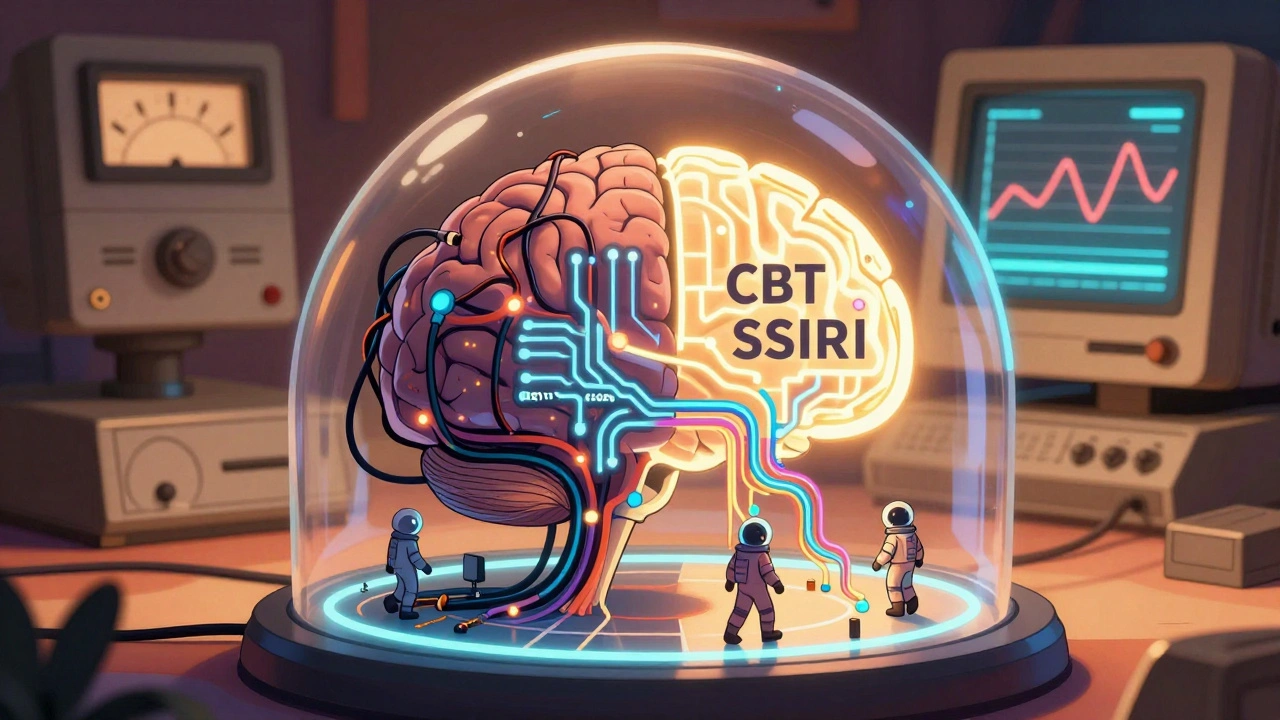
Here’s the most important thing to know: when you combine antidepressants with CBT or IPT, you get better results than either alone. A 2025 study in Nature confirmed this. For moderate to severe depression, combination therapy leads to higher remission rates, faster improvement, and lower relapse risk.Why? Medication helps lift the weight enough so you can actually do the work of therapy. Therapy gives you tools so you don’t fall back into the same patterns after stopping meds. Think of it like this: antidepressants are the oxygen mask. Therapy is the training to swim on your own.
For mild depression, therapy alone or even "active monitoring" - regular check-ins with your doctor - can be enough. But if your PHQ-9 score is 16 or higher (a clinical measure of severity), guidelines from NICE and the American Academy of Family Physicians strongly recommend starting both medication and therapy together.
Choosing What’s Right for You
There’s no one-size-fits-all. Your choice depends on:- How severe your symptoms are - Severe? Start with both meds and therapy.
- Your past experience - Did an SSRI help before? Maybe try it again.
- Your lifestyle - Can you commit to weekly sessions? Or do you need something flexible like CCBT?
- Your side effect tolerance - If you’re worried about weight gain or sex drive, your doctor can pick alternatives like bupropion, which is less likely to cause those issues.
- Access and cost - Therapy can take weeks to get into. Telehealth and online programs help, but insurance coverage varies. Check with your provider.
Many people worry about "needing" medication forever. That’s not true. Most people stay on antidepressants for 6-12 months after they start feeling better. Then, under a doctor’s care, they slowly taper off - if they want to. Therapy skills, though, last a lifetime.
Barriers and Real-World Challenges
The biggest problem isn’t lack of options - it’s access. Waiting lists for therapy can be months long. In rural areas, there might be no therapist within 50 miles. Insurance often covers meds better than therapy. Some people can’t afford copays. Others feel ashamed to ask for help.Telehealth has changed that. You can now see a therapist on your phone. Apps like Woebot or Moodfit offer CBT exercises daily. But they’re supplements, not replacements. The Mayo Clinic warns: "Don’t use apps instead of seeing your doctor or therapist." Cost is another hurdle. The NAMI HelpLine (800-950-6264) gets hundreds of calls a day from people asking, "How do I pay for this?" Many states now offer free or low-cost mental health services. Community health centers often have sliding scale fees. Don’t let money stop you from asking.

What to Expect in the First Few Weeks
Starting treatment is hard. You might feel more anxious at first. That’s normal. Here’s what usually happens:- Week 1-2: Side effects peak. You might feel nauseous, jittery, or emotionally numb. Don’t panic. This usually fades.
- Week 3-4: Sleep might improve. Appetite returns. You might feel a tiny bit more energy.
- Week 5-8: This is when real change kicks in. Thoughts start shifting. You might cry less. You might laugh again.
- Week 12+: If you’re doing therapy, you’ll start noticing patterns - how you react to stress, what triggers your low mood. That’s progress.
Keep track. Use a mood journal. Write down how you feel each day. Bring it to your appointments. It helps your doctor see what’s working.
When to Call for Help
If you’re having thoughts of self-harm or suicide, don’t wait. Call 988 - the Suicide & Crisis Lifeline. It’s free, confidential, and available 24/7. You don’t have to be in crisis to call. If you’re overwhelmed, just need to talk, or feel like no one understands - call anyway.Also, if after eight weeks of treatment you feel no improvement - tell your doctor. There are other options. You haven’t failed. The system just hasn’t found the right fit yet.
Can antidepressants make depression worse?
In rare cases, especially in the first few weeks, antidepressants can increase anxiety or suicidal thoughts - particularly in people under 25. That’s why doctors monitor closely during the early phase. If you feel worse, not better, after starting medication, contact your provider immediately. Never stop cold turkey. Tapering under medical supervision is essential.
Is therapy really effective if I don’t feel like talking?
Yes. You don’t need to be chatty to benefit. Therapists use techniques like Behavioral Activation to help you take small actions - even when you feel nothing. Homework isn’t about talking; it’s about doing. Walk around the block. Eat a meal. Call one person. Those tiny steps rebuild your nervous system over time. You don’t have to feel motivated to start - action creates motivation.
How long does CBT take to work?
Most people see noticeable improvement after 8-12 weekly sessions. A full course usually lasts 12-20 sessions. It’s not magic - it’s practice. Like learning an instrument, you get better with repetition. The skills you learn - identifying distorted thoughts, challenging negative beliefs - become automatic over time. That’s why CBT has lasting effects even after therapy ends.
Are natural remedies like St. John’s Wort or omega-3s effective?
Some studies show mild benefit for St. John’s Wort in minor depression, but it interacts dangerously with many medications, including birth control and blood thinners. Omega-3s may help slightly as a supplement, but they’re not a treatment for major depression. Don’t replace proven therapies with supplements. Talk to your doctor before trying anything herbal - they can be risky.
What if I can’t afford therapy or meds?
You’re not alone. Many community health centers offer sliding scale fees based on income. Online platforms like Open Path Collective connect people with therapists charging $30-60 per session. Some pharmaceutical companies offer free or discounted meds through patient assistance programs. And 988, NAMI’s HelpLine (800-950-6264), and local mental health departments can help you find low-cost options. Help exists - you just have to ask.
What Comes Next
Recovery isn’t linear. Some days are good. Some are hard. That’s normal. The goal isn’t to never feel sad again. It’s to build a life where sadness doesn’t control you. Whether you choose meds, therapy, or both - you’re taking back power. You’re not broken. You’re healing.If you’re reading this and thinking, "I should try this," start today. Talk to your doctor. Call 988. Reach out to NAMI. You don’t have to do it alone. Millions have walked this path. And they made it through - because they didn’t wait for perfect. They started with one step.
Walker Alvey
December 2, 2025 AT 05:38Souvik Datta
December 2, 2025 AT 23:40Jack Arscott
December 3, 2025 AT 20:50Matt Dean
December 4, 2025 AT 07:37Dennis Jesuyon Balogun
December 6, 2025 AT 06:29Grant Hurley
December 7, 2025 AT 06:16Shannon Gabrielle
December 7, 2025 AT 18:04ANN JACOBS
December 8, 2025 AT 05:38Nnaemeka Kingsley
December 9, 2025 AT 22:40Kshitij Shah
December 11, 2025 AT 07:23Kay Lam
December 11, 2025 AT 18:43Adrian Barnes
December 13, 2025 AT 11:17James Steele
December 15, 2025 AT 03:33soorya Raju
December 16, 2025 AT 23:50Lucinda Bresnehan
December 17, 2025 AT 13:28