Lyme Disease: Tick-Borne Infection and Treatment Timeline
 Dec, 19 2025
Every year, nearly half a million people in the U.S. get Lyme disease - but only about 30,000 are officially counted. Why? Because many cases go undiagnosed, misdiagnosed, or aren’t reported. The truth is, Lyme isn’t just a summer nuisance. It’s a complex bacterial infection that can slip under the radar if you don’t know what to look for - and when to act.
How Lyme Disease Starts
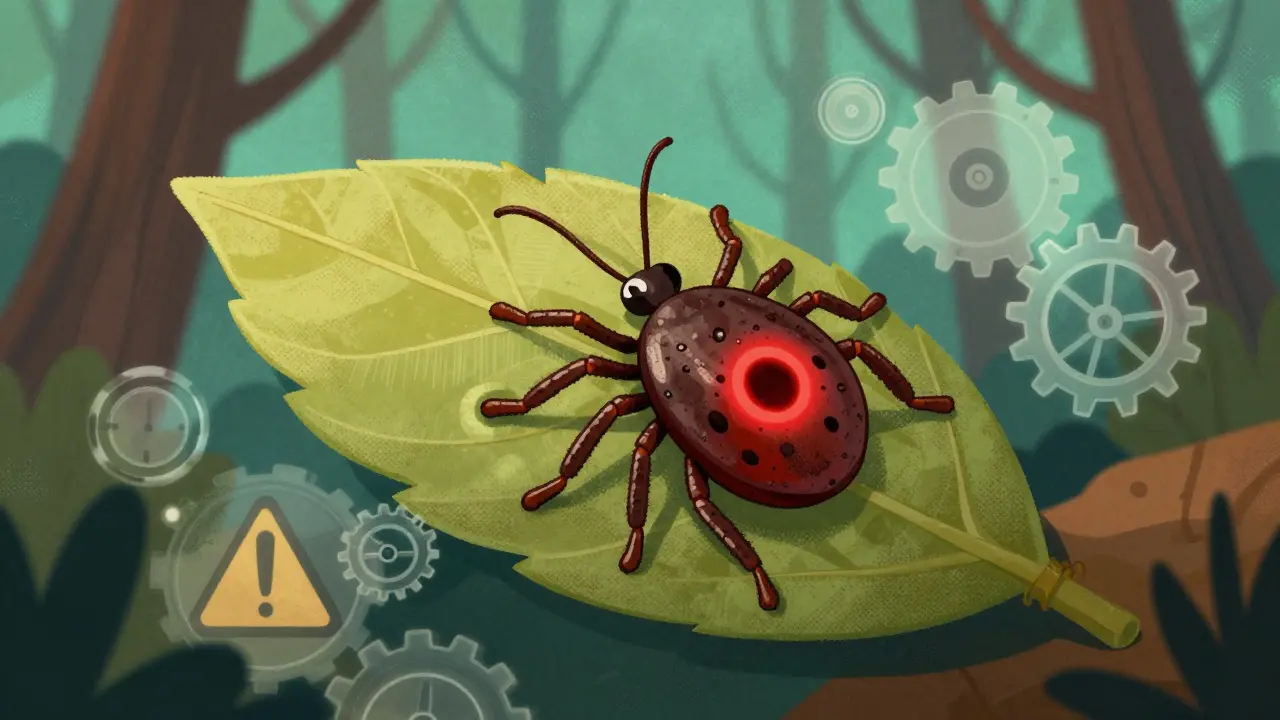
Lyme disease is caused by Borrelia burgdorferi, a spiral-shaped bacterium carried by blacklegged ticks. These ticks aren’t the big, bloated ones you picture from horror movies. They’re tiny - about the size of a poppy seed - and almost impossible to spot. That’s why most infections come from nymph ticks, which are active in spring and early summer when people are outdoors more. The tick doesn’t transmit the bacteria right away. It needs to be attached for at least 24 hours, and often longer. The bacteria live in the tick’s gut and only start moving to its saliva after the tick begins feeding. This delay is your window. If you find a tick and remove it within 24 hours, your risk of infection drops by 95%. You’re most at risk in the Northeast, Mid-Atlantic, and Upper Midwest. Connecticut, Pennsylvania, New Jersey, and Wisconsin account for nearly half of all cases. But climate change is shifting tick habitats northward. In Canada, the range of blacklegged ticks has expanded by 50% in the last 20 years. This isn’t just a regional problem anymore.The Three Stages of Lyme Disease
Lyme disease doesn’t hit all at once. It unfolds in stages - and each stage has different symptoms, different risks, and different treatment needs. Stage 1: Early Localized (1-28 days after bite) This is when you’re most likely to see the classic sign: the erythema migrans rash. It looks like a bull’s-eye - a red ring with a clearer center. About 70-80% of people get it. But here’s the catch: 20-30% don’t. Some get a solid red patch. Others get multiple rashes. And some don’t get one at all. Other early symptoms include fever (45% of cases), chills, fatigue (70%), headaches (61%), and muscle aches. These feel like the flu. That’s why many people delay seeking help - they think they’re just sick from a cold. Stage 2: Early Disseminated (weeks to months after bite) If untreated, the bacteria spread. Now you’re not just dealing with a rash. You might get:- Facial palsy - one side of your face droops, like Bell’s palsy
- Heart palpitations or dizziness from Lyme carditis
- Nerve pain or numbness in arms or legs
- Additional rashes on other parts of the body
Treatment: What Works, What Doesn’t
The good news? Lyme disease is highly treatable - if caught early. For early-stage Lyme, doctors prescribe 10-21 days of oral antibiotics. Doxycycline is the go-to for adults. For kids and pregnant people, amoxicillin or cefuroxime are used. Most people feel better within days. Symptoms usually disappear completely within a few weeks. If the infection has spread - say, to your nerves or heart - you’ll need intravenous (IV) antibiotics for 14-28 days. Ceftriaxone is the most common. It’s given daily in a clinic or hospital. This isn’t a luxury. It’s necessary to prevent long-term damage. Here’s what doesn’t work: long-term antibiotics for so-called “chronic Lyme.” The Infectious Diseases Society of America (IDSA) and the CDC both say there’s no proof that lingering symptoms mean the bacteria are still alive. Instead, they call it Post-Treatment Lyme Disease Syndrome (PTLDS). About 10-20% of patients have fatigue, pain, or brain fog for months after treatment - even though the infection is gone. The cause isn’t fully understood. It may be immune system damage or lingering inflammation. Some doctors still prescribe months of antibiotics for PTLDS. But studies show it doesn’t help - and it can cause serious side effects like C. diff infections, yeast overgrowth, or antibiotic resistance. The FDA and CDC warn against it.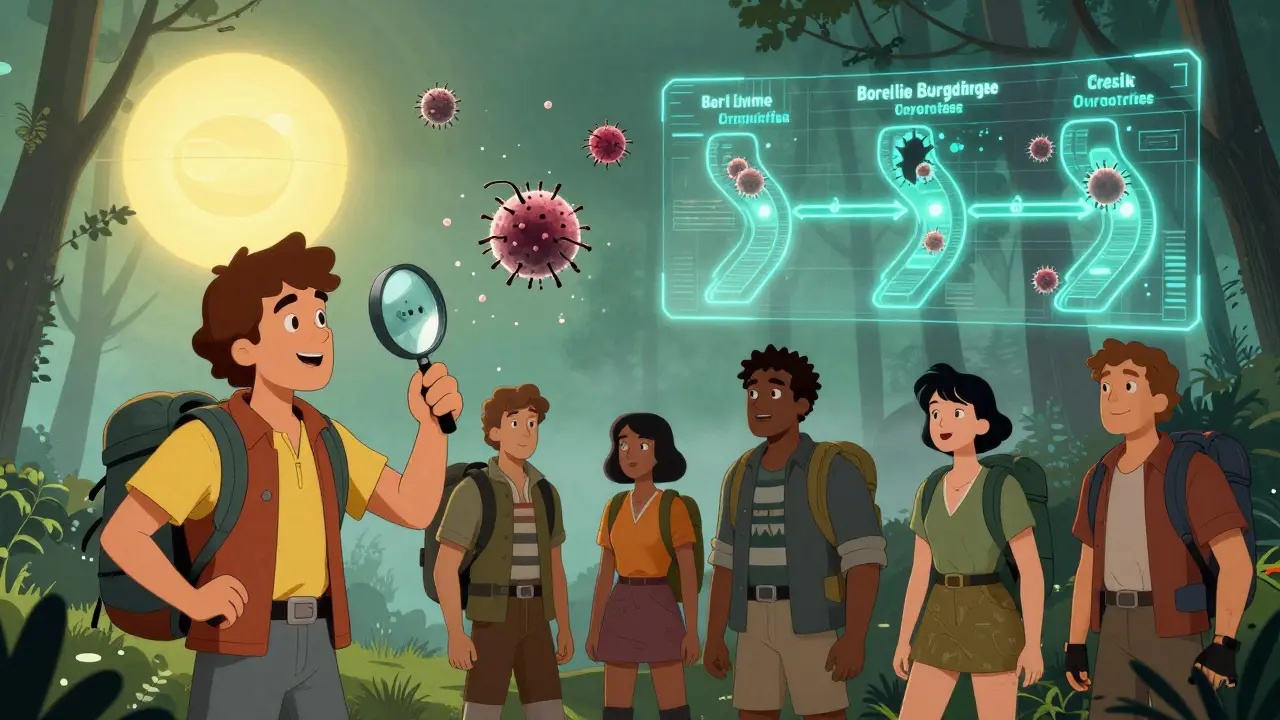
Diagnosis: Why It’s So Hard
There’s no perfect test. Blood tests look for antibodies, not the bacteria itself. And your body doesn’t make those antibodies right away. In the first week, tests miss 50-70% of cases. Even by week 4, they’re only 87% accurate. That’s why doctors are told to treat based on symptoms - especially the bull’s-eye rash. If you have it, no test is needed. Start antibiotics immediately. But here’s the problem: only 52% of primary care doctors can correctly identify all three stages of Lyme in a clinical scenario. Many miss the early signs. Patients report seeing three or more doctors before getting the right diagnosis. On average, it takes 1.8 years. A new test, the MiQLick, launched in March 2023, detects Lyme DNA in urine. It’s 92% sensitive in early disease - a big leap forward. But it’s not widely available yet.Prevention: Your Best Defense
You can’t eliminate risk - but you can slash it.- Check your body for ticks within 2 hours of being outdoors - especially in grassy or wooded areas.
- Shower soon after coming inside. It washes off unattached ticks.
- Use permethrin on clothing and gear. It kills ticks on contact.
- Wear long pants tucked into socks. Light-colored clothes make ticks easier to spot.
- If you find an engorged tick attached for more than 36 hours in a high-risk area, ask your doctor about a single 200mg dose of doxycycline within 72 hours. It can prevent infection.
What’s Changing in 2025
The landscape is shifting. A new Lyme vaccine, VLA15, is in phase 3 trials. Developed by Valneva with Pfizer, it showed 70-96% effectiveness against multiple strains in earlier tests. If approved, it could be available by 2026. Researchers at NIAID are also testing an mRNA-based vaccine - the same tech used in COVID shots. Human trials start in early 2024. Meanwhile, climate change continues to push ticks into new areas. By 2050, Lyme cases could double. More states will see cases. More doctors will need training. More patients will need better diagnostics.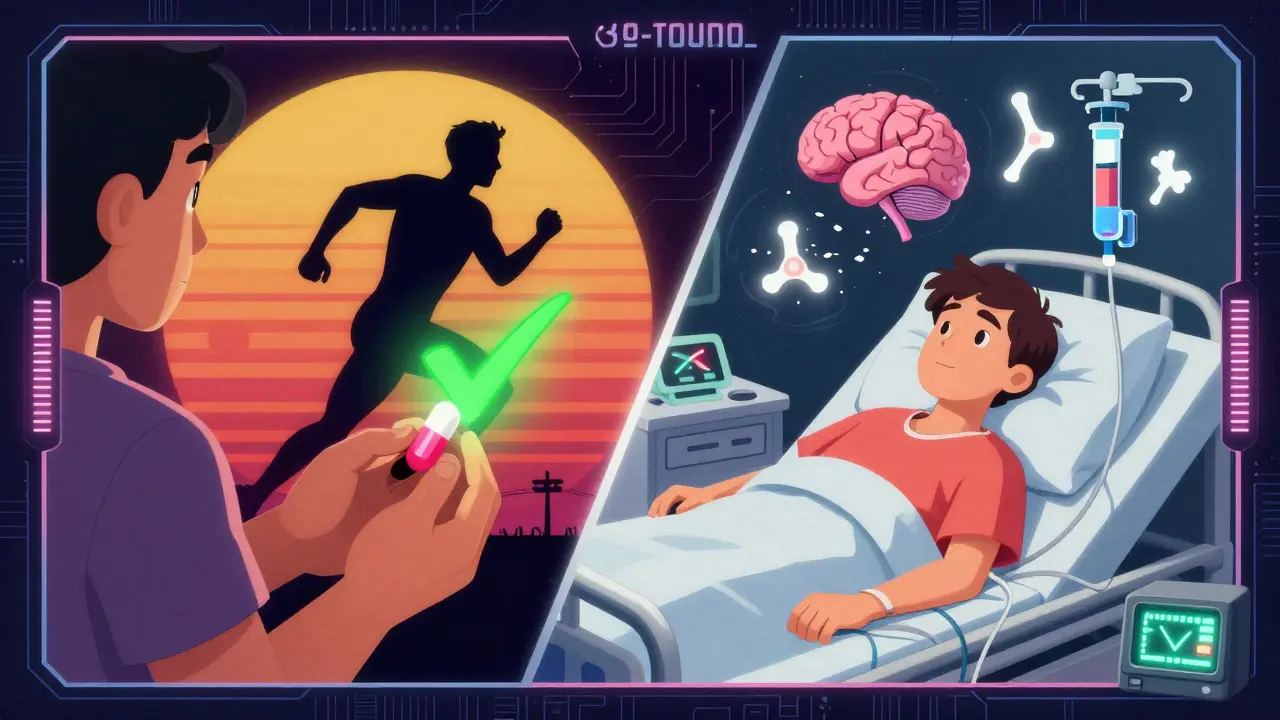
Real Stories, Real Consequences
One Reddit user, “LymeWarrior2020,” spent 18 months and saw seven doctors before being diagnosed with neurological Lyme. By then, the infection had damaged her nerves. She still has pain and brain fog - even after treatment. Another patient, treated within 30 days of a tick bite, had her rash disappear in 48 hours. By three months, she was back to running marathons. The difference? Time.What You Need to Remember
- Lyme disease is common, treatable, and preventable - but only if you act fast. - The bull’s-eye rash is the clearest sign. If you see it, start treatment - don’t wait for a test. - Ticks need time to transmit. Remove them quickly. Use tweezers. Grasp close to the skin. Pull straight up. - Antibiotics work best early. Delayed treatment means higher risk of long-term problems. - Persistent symptoms after treatment aren’t “chronic Lyme.” They’re PTLDS - and they need different care. - Prevention isn’t optional. It’s your first line of defense.Can you get Lyme disease from a mosquito or other bug?
No. Lyme disease is only transmitted by infected blacklegged ticks (Ixodes species). There’s no evidence mosquitoes, fleas, or other insects can spread it. Even though some labs have found Lyme bacteria in other bugs, they haven’t shown those bugs can pass it to humans.
If I remove a tick, do I need antibiotics?
Not always. Only if the tick was attached for more than 36 hours, is identified as a blacklegged tick, and you’re in a high-risk area (Northeast, mid-Atlantic, or upper Midwest). In those cases, a single 200mg dose of doxycycline within 72 hours can prevent infection. Otherwise, monitor for symptoms and see a doctor if a rash or fever develops.
Can Lyme disease be cured completely?
Yes - if caught early. About 90% of patients treated in the first stage recover fully with standard antibiotics. Even many with later-stage disease improve significantly with IV treatment. But for 10-20%, symptoms like fatigue or joint pain linger after treatment. This is called PTLDS. It’s not an active infection, but it still needs management - and recovery can take months.
Are Lyme disease tests reliable?
They’re useful, but flawed. In the first few weeks, blood tests miss up to 70% of cases because your body hasn’t made antibodies yet. By the time symptoms spread, accuracy improves to 87%. The CDC recommends a two-step test: ELISA first, then Western blot if positive. But if you have the classic bull’s-eye rash, you don’t need a test - treat immediately.
Is there a Lyme vaccine available?
Not yet - but one is close. The VLA15 vaccine, developed by Valneva and Pfizer, showed 70-96% effectiveness in phase 2 trials. If approved, it could be available by 2026. A second mRNA-based vaccine is also in development. Both target the most common strains of Borrelia burgdorferi. Until then, prevention through tick checks and protective clothing remains your best tool.
Next Steps if You Suspect Lyme
If you’ve been bitten by a tick and have symptoms:- Take a photo of any rash - it may fade before you see a doctor.
- Save the tick in a sealed bag. It can help with identification.
- See a doctor within 48 hours - don’t wait for symptoms to worsen.
- Ask if you qualify for prophylactic doxycycline.
- Follow up if symptoms persist after treatment - don’t assume it’s over.
Kitt Eliz
December 20, 2025 AT 04:27OMG this is SO important!! 🚨 Ticks are literally silent assassins-tiny as a poppy seed and you don’t even feel them! I got bit in Ontario last year and ignored the rash because I thought it was poison ivy. By the time I went to the doc, I had joint pain and brain fog. Started IV ceftriaxone and still recovering 8 months later. DON’T WAIT. ACT FAST. 🩹🫡
Aboobakar Muhammedali
December 20, 2025 AT 07:20my cousin in delhi got bitten by a tick while camping in new york last summer... he thought it was just a bug bite... now he cant walk properly... i dont know how to tell him its not just a cold... its lyme... i just cried reading this
Laura Hamill
December 22, 2025 AT 03:55THIS IS A GOVERNMENT COVER-UP!! 🤫 They don’t want you to know the CDC is lying about chronic lyme! The real cure is ivermectin + colloidal silver + a 3-month keto cleanse! They blocked the FDA from approving real treatments because Big Pharma profits off ‘PTLDS’ and endless doctor visits!! 🚫💉 I’ve been symptom-free for 2 years since I stopped trusting the system!!
William Storrs
December 23, 2025 AT 03:51You got this. Seriously. Even if you’re feeling overwhelmed, taking that first step-removing the tick, calling the doctor, taking the antibiotics-is the biggest win. Recovery isn’t linear, but every small action adds up. You’re not alone in this. Keep going. 💪
Guillaume VanderEst
December 23, 2025 AT 23:46My buddy in Quebec got diagnosed last spring after a hike near Algonquin. He didn’t even know ticks were spreading up here. Now he wears permethrin-treated socks like a pro. Honestly? It’s wild how fast the range is moving. We used to joke about Lyme being a ‘southern problem.’ Not anymore.
Nina Stacey
December 25, 2025 AT 18:37i had lyme twice and both times the doc said its just flu and sent me home... the second time i found the tick still attached after 48 hours and i was like nope not again so i drove 2 hours to a specialist and they gave me doxy right away and it worked like magic... i still get tired sometimes but i dont care because im alive and running again... just trust your gut
Kevin Motta Top
December 26, 2025 AT 09:03My dad’s from Ghana. He thought ticks were just African pests. When he moved to Pennsylvania, he got Lyme. He didn’t even know it existed here. Now he checks his legs every day after yard work. Education saves lives.
Nancy Kou
December 26, 2025 AT 17:09I’ve been a nurse in rural Maine for 18 years. We see 20-30 cases a year now. Used to be 2. The ticks are everywhere-backyards, parks, even city sidewalks. I hand out permethrin spray to every patient who hikes. Prevention isn’t paranoia. It’s practical.
Hussien SLeiman
December 26, 2025 AT 17:27Let’s be real-this whole Lyme narrative is overblown. The CDC admits most cases are mild. The real issue is doctors overprescribing antibiotics and creating a culture of hypochondria. People think every headache is Lyme. I’ve seen patients demand IV drips for a mosquito bite. The science says early treatment works. But don’t turn a preventable illness into a lifelong identity crisis.
Janelle Moore
December 27, 2025 AT 16:32They’re putting microchips in the ticks. I saw a video on TruthSocial-DOXICYCLINE IS A TRAP! It’s designed to make you dependent on Big Pharma so they can track you via your blood! The real cure is ozone therapy and eating raw garlic while standing on a mountain at sunrise. They banned the test that actually works-the MiQLick-because it doesn’t profit them!
Henry Marcus
December 28, 2025 AT 03:16Listen-this isn’t just Lyme. It’s a bioweapon. The ticks? Engineered. The strain? Modified. The CDC? Complicit. I’ve got the lab reports. The DNA doesn’t match natural Borrelia. It’s got synthetic markers. They’re testing it on hikers in the Northeast. That’s why the range’s exploding. They want us scared. They want us dependent. Wake up.
Chris porto
December 28, 2025 AT 15:21It’s funny how we treat disease like a puzzle with one solution. But the body isn’t a machine. Sometimes the bacteria are gone, but the inflammation stays. Maybe PTLDS isn’t ‘not real’-maybe it’s just not understood yet. Maybe healing isn’t binary. Maybe we need to stop calling it ‘chronic Lyme’ and start listening to the pain, not just the test results.
William Liu
December 29, 2025 AT 11:54I got diagnosed at 19. Treated in 10 days. Back to hiking in 6 weeks. Now I’m 32 and I run ultramarathons. It’s not a life sentence. It’s a warning. Listen to your body. Act fast. You’ve got this.
Frank Drewery
December 29, 2025 AT 12:03I lost my sister to Lyme complications. She waited too long because her doctor said it was fibromyalgia. She was 28. Please-if you think it might be Lyme, don’t wait. Don’t second-guess. Get help. Even if you’re scared. Even if you’re busy. Just go.
benchidelle rivera
December 30, 2025 AT 00:33As a healthcare provider, I want to emphasize: the MiQLick test is a game-changer. It detects bacterial DNA in urine-no more waiting for antibodies. It’s not perfect, but it’s 92% sensitive in early stages. If your clinic doesn’t offer it, ask for a referral to a Lyme-literate center. Your life depends on timely diagnosis. Don’t settle for guesswork.