Illegible Handwriting on Prescriptions: Patient Safety Solutions
 Mar, 26 2026
The Hidden Danger in Doctor’s Notes
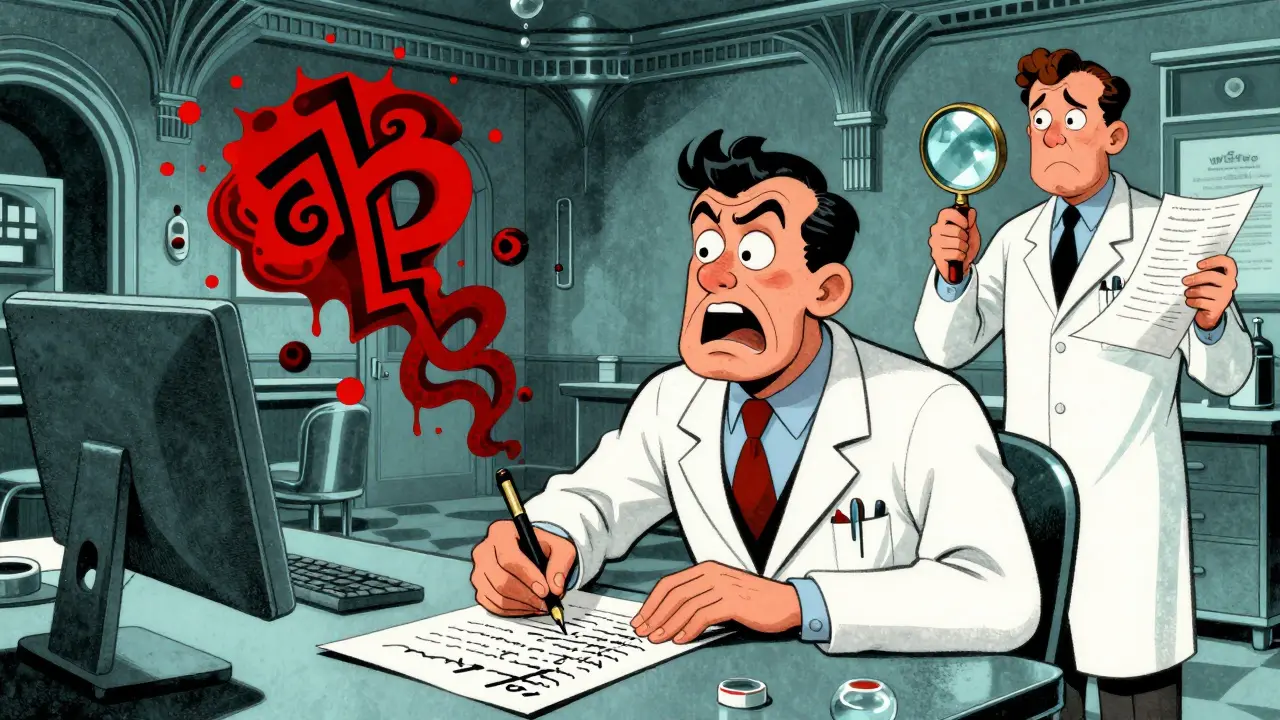
You might think your doctor’s scrawl is just annoying until it becomes life-threatening. Imagine walking into a pharmacy, handing over a note that looks like ancient hieroglyphics. Illegible handwriting on prescriptions is Poorly written medical orders, a persistent issue that leads to serious mistakes. According to data from the Institute of Medicine, medical errors cause between 44,000 and 98,000 preventable deaths every year in the United States alone. Even scarier, estimates suggest around 7,000 of those deaths are directly tied to unreadable notes. This isn’t just an old problem; it remains a critical vulnerability in modern healthcare despite having digital tools available.
When a physician writes a prescription by hand, they are under immense pressure. They often have minutes per patient while multitasking during exams. This rush creates a fertile ground for error. Common mistakes include missing initials, wrong dosages, incorrect frequencies, or confusing similar-sounding drug names. A study published in the MMS Journal in 2022 highlighted that 92% of medical students and doctors made errors on prescriptions, averaging two mistakes per person. These aren’t theoretical risks. In a UK hospital study, only 24% of operative notes were rated as excellent for clarity. That means nearly four out of five documents required guessing games.
Why Clear Communication Matters More Than Ever
Think about the chain of events when a pharmacist receives a bad script. They can’t just guess what the dose is. It could mean the difference between a cure and harm. Unreadable orders force the pharmacy team to call the provider’s office to clarify. Veradigm reports that these clarification calls happen about 150 million times annually across the U.S. Each call takes valuable time away from both the prescriber and the pharmacist. For patients, this delay means waiting longer for their medication, potentially suffering symptoms longer than necessary.
Beyond delays, there is the risk of Adverse Drug Events (ADEs) is Harmful incidents caused by medication use. The Institute of Medicine estimates 1.5 million preventable adverse drug events happen yearly in America. While not all are caused by handwriting, a significant portion stems from misinterpretation. Dr. Cheryl Reifsnyder from Veradigm notes that unclear prescriptions result in treatment delays, unnecessary tests, and inappropriate doses. These outcomes lead to physical discomfort, financial waste, and sometimes fatal complications.
How Electronic Prescribing Fixes the Problem
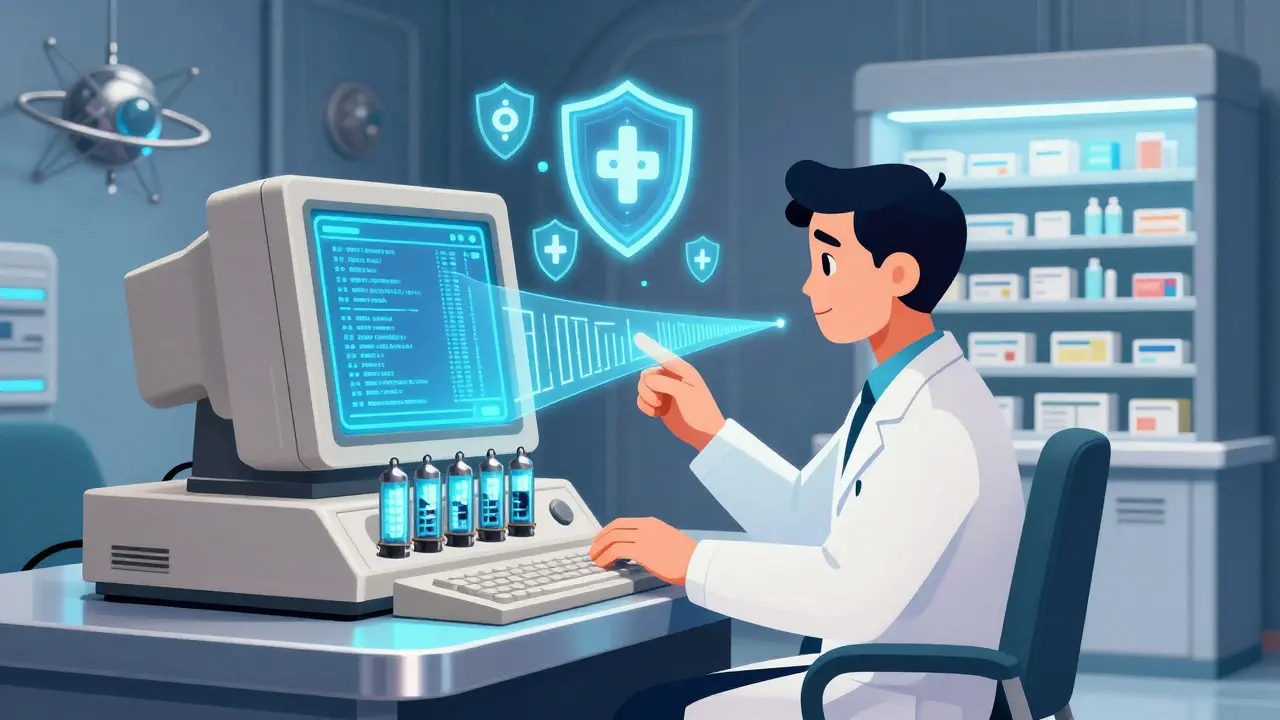
If handwriting is the risk, technology is the remedy. Electronic Prescribing is A digital system for sending prescription information directly from provider to pharmacy that eliminates the legibility barrier. Instead of paper, the doctor clicks buttons to select medications, dosages, and schedules from verified lists. Research from JMIR in 2025 showed that electronic prescriptions achieved an 80.8% accuracy rate for safety criteria. Compare that to handwritten ones, which sat at a dismal 8.5%. Even when doctors typed manually without templates, accuracy jumped to 56%.
The shift started gaining momentum in 2003. By 2019, roughly 80% of office-based providers in the United States had adopted this method. This represents a massive cultural change in medicine. Systems reduce errors of illegibility by up to 97%. This drop is dramatic. When a doctor selects a drug from a dropdown menu, they can’t accidentally write “hydrocodone” instead of “hydrochlorothiazide” because the name appears exactly as entered. The computer checks for allergies and interactions automatically, adding another layer of safety that pen and ink simply cannot provide.
Comparing Handwriting vs. Digital Orders
To understand why the industry moved toward digital, we have to look at the direct differences. You can see the performance gap clearly when you put them side-by-side.
| Feature | Handwritten Prescription | Electronic Prescription |
|---|---|---|
| Legibility Rate | ~24% Rated Excellent | 100% Legible |
| Safety Compliance | 8.5% | 80.8% |
| Clarification Calls | Frequent (150M/year) | Rare/Negligible |
| Error Reduction | N/A | Up to 97% reduction |
| Implementation Cost | $0 upfront | $15k-$25k per provider |
As you can see, the upfront cost of Electronic Health Record (EHR) systems is Software platforms used to manage patient health records digitally adds up. We are talking $15,000 to $25,000 per provider for full integration plus staff training. Despite this price tag, the savings from avoided errors outweigh the initial investment. The Agency for Healthcare Research and Quality states preventable medical errors cost the U.S. healthcare system about $20 billion annually. Investing in technology saves money in the long run.
Potential Pitfalls of Digital Transition
Switching to digital isn’t perfect. Some experts warn that electronic systems introduce new challenges. Researchers Osmani et al. noted workflow disruptions can occur. Doctors might face “alert fatigue,” where the system warns them about so many potential issues that they start ignoring important alerts. This happens when a clinician overrides safety warnings too frequently. There is also the concern of reliability. If servers go down, traditional workflows might halt completely compared to pen and paper. However, these issues are manageable with proper design. Training helps mitigate fatigue, and backup protocols handle downtime. The consensus remains that the risks of digital systems are far lower than the risks of deciphering cursive script. Leape and Berwick declared handwritten notes a “dinosaur long overdue for extinction” back in 2000. As of 2026, the evidence supports their prediction even more strongly.
What to Do If You Must Write by Hand
In some remote areas or emergency situations, a computer might not be available. If you are a provider who still uses paper, follow strict guidelines to stay safe. First, print your letters. Avoid cursive writing entirely. Second, never use dangerous abbreviations. The Joint Commission maintains A healthcare accreditation organization setting safety standards a specific “Do Not Use” list for abbreviations like “QD” or “U” which cause confusion. Third, always include the patient’s full name, the drug name, the exact dosage, the frequency, the route, and your signature.
A study by Sendlhofer et al. suggested using checklists to self-assess legibility. Nurses spend about 12.7 minutes per illegible prescription trying to clear it up. By taking care to write clearly initially, you save your colleagues hours of work and protect your patients from delay. Even small improvements in handwriting quality can prevent significant harm before full digitization is possible.
The Future of Medication Ordering
We are moving toward near-complete elimination of paper scripts in developed nations. Emerging technologies like artificial intelligence offer transitional solutions for places lacking infrastructure. Early studies show AI can interpret common medication names with 85-92% accuracy. This could bridge the gap for clinics needing digital features but starting with paper. Regulatory bodies like CMS continue emphasizing meaningful use criteria for electronic health records. Experts predict handwritten prescriptions will become rare globally by 2030. The trajectory is clear: patient safety demands precision, and technology provides that precision better than human handwriting ever could.
Frequently Asked Questions
How many deaths are caused by illegible handwriting?
Estimates attribute approximately 7,000 deaths annually to poor handwriting and prescription filling errors specifically, according to the Institute of Medicine.
Is e-prescribing legal everywhere?
Electronic prescribing is legal and standard practice in the US, supported by laws like the Medicare Improvements for Patients and Providers Act of 2008.
Do handwritten prescriptions save time for doctors?
Many believe so, but research shows doctors waste more time later answering clarification calls than they saved by writing quickly.
Can pharmacists ask for a new prescription if handwriting is unclear?
Yes, pharmacists legally must verify all orders. If handwriting is unclear, they are required to contact the prescriber before dispensing medication.
What is the safest way to prescribe medication today?
Using e-prescribing software is the safest method, offering 80.8% compliance with safety criteria compared to less than 10% for handwritten notes.
Austin Oguche
March 27, 2026 AT 08:59It is fascinating how technology solves human error yet we cling to old methods. The transition requires patience from everyone involved in healthcare. We must respect the effort behind digitization efforts globally. It takes time to retrain staff properly.
tyler lamarre
March 28, 2026 AT 06:15You sound like you read a press release instead of reality reports. They claim accuracy improves but alert fatigue kills actual care quality often. Nobody talks about the real downside of these systems honestly today. Most people ignore the workflow disruption completely.
Rohan Kumar
March 30, 2026 AT 04:23Honestly i dont trust machines with my life anymore 🙄. Why does every system break when you need it most. They promise efficiency then deliver downtime chaos 🤦♂️. Security is always a joke nowadays. My doctor probably cant use the computer either. It feels like they sold us snake oil for safety 🚩.
Monique Ball
March 31, 2026 AT 01:23I completely understand your hesitation about new technologies because it can feel scary sometimes 😢! But think about how much safer we become when computers check our work for us every single day ❤️. We know that safety is the most important thing for patients and families alike everywhere. The data supports this view strongly so we should trust the process more often please 💕. Remember that progress always takes courage and faith in the people designing tools for good. We want the best outcomes for our loved ones receiving medicine daily. Every small step forward means fewer mistakes made in the pharmacy line later. So let us celebrate the reduction in errors together instead of focusing on fear 🌟. Thank you for sharing your thoughts even if you feel worried right now. Stay strong and keep believing in better solutions for us all! 🙏. Technology evolves quickly and adapts to our needs over time. We see improvements happening faster than ever before. Doctors gain back their time instead of chasing clarification calls. Patients get their meds sooner rather than waiting longer. Health systems save money in the long run too.
Sabrina Herciu
April 1, 2026 AT 20:33The statistics presented in the context are quite significant regarding patient safety outcomes. Medical errors cause substantial harm annually across the nation. We must acknowledge the scale of the problem clearly today. Electronic records offer a robust solution path. Implementation is key to success. Training staff is essential.
Jeannette Kwiatkowski Kwiatkowski
April 3, 2026 AT 20:28stats are cool but ignore the human element entirely. Doctors are not machines programmed for compliance. Cost is hidden deep in the billing codes nobody sees. Just another way to track every move you make in clinic.
Debra Brigman
April 5, 2026 AT 13:22The pen dances upon the page while the mind races toward clarity. Ink bleeds through the paper just as errors bleed into our lives quietly. It is a tragedy of modern convenience we face daily. Writing is art lost to the binary hum of servers.
Tony Yorke
April 6, 2026 AT 08:00Exactly right about the metaphysical implications
gina macabuhay
April 8, 2026 AT 04:01This is negligence at its finest. Doctors choose laziness over patient safety constantly in offices. They prioritize speed over lives without remorse shown publicly. It is unacceptable behavior from licensed professionals today. You expect better standards from those holding medical licenses. Shame on the industry leaders.
Poppy Jackson
April 8, 2026 AT 15:54Oh my gosh this is such a huge issue we need to tackle now urgently. I am feeling very hopeful about the future despite current struggles. Everyone deserves safe care regardless of where they live. We can do better together if we try harder.