IBS-Mixed: A Practical Guide to Managing Alternating Constipation and Diarrhea
 Aug, 12 2026
One day you’re stuck in the bathroom for hours, unable to go. The next day, you can’t get there fast enough. If this sounds familiar, you aren’t just dealing with a simple stomach bug or bad food choice. You might be living with IBS-Mixed, also known as IBS-M. It is a specific subtype of Irritable Bowel Syndrome characterized by alternating episodes of constipation and diarrhea.
This condition is frustrating because standard advice often fails. Laxatives help the constipation but trigger the diarrhea. Anti-diarrheals stop the runs but lock up your bowels. According to the American College of Gastroenterology (ACG), about 10-15% of the global population has IBS, and roughly 20-25% of those cases are IBS-M. That’s a huge number of people trying to navigate a digestive system that seems to have its own unpredictable mind.
What Exactly Is IBS-M?
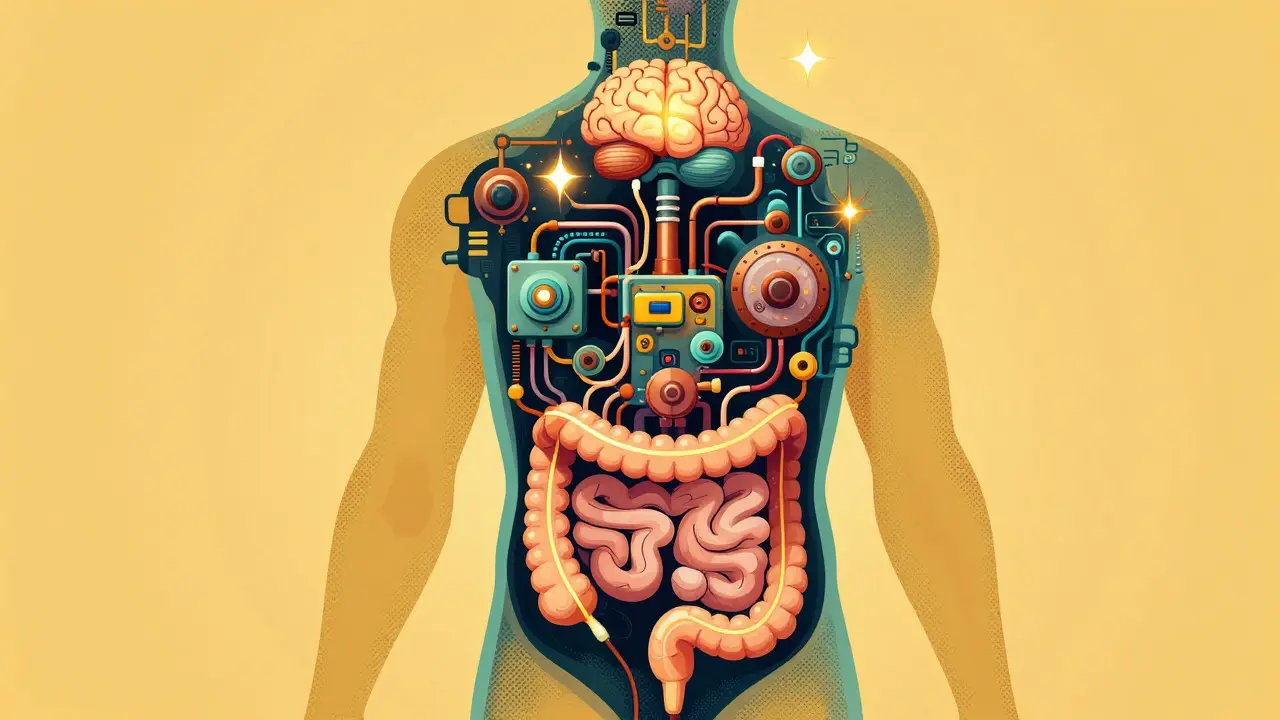
To understand IBS-M, you first need to know what it isn’t. It is not Inflammatory Bowel Disease (IBD) like Crohn’s disease or ulcerative colitis. In IBD, there is visible inflammation or damage to the intestinal lining. In IBS-M, your gut looks normal under a microscope. The problem lies in how your brain and gut talk to each other.
Irritable Bowel Syndrome is a functional gastrointestinal disorder involving visceral hypersensitivity and altered gut motility without structural damage. For IBS-M specifically, doctors use the Rome IV criteria for diagnosis. This means you must experience abdominal pain at least one day per week for the last three months, linked to changes in stool frequency or form. Crucially, you must have both hard/lumpy stools (Bristol Stool Scale types 1-2) and loose/watery stools (types 6-7) in at least 25% of your bowel movements.
The core issue is dysregulation. Your gut muscles may contract too slowly, causing constipation, then overcompensate with rapid contractions, causing diarrhea. Add in visceral hypersensitivity-where your nerves feel normal gas or movement as painful-and you have a recipe for significant discomfort.
Why IBS-M Is Harder to Treat Than Other Types
If you’ve tried treatments for IBS-C (constipation-predominant) or IBS-D (diarrhea-predominant), you know they target one direction. IBS-M requires a balancing act. A 2018 study in Clinical Gastroenterology and Hepatology highlighted this challenge: medications like linaclotide helped 48% of IBS-C patients but only 22% of IBS-M patients. Similarly, eluxadoline helped 38% of IBS-D patients but only 19% of IBS-M patients.
Why the lower success rate? Because treating one symptom often worsens the other. Taking a laxative to relieve constipation can precipitate a diarrhea flare. Taking an anti-diarrheal to calm urgent runs can lead to severe impaction days later. This complexity drives up costs, too. A 2022 analysis found annual medical costs for IBS-M patients were 18% higher than for IBS-C, largely due to frequent doctor visits and medication adjustments.
Dietary Strategies: Beyond Just "Eat Fiber"
General advice to "eat more fiber" can backfire in IBS-M. Insoluble fiber (like wheat bran) adds bulk but can irritate sensitive guts. Soluble fiber (like psyllium husk) absorbs water and can help regulate both constipation and diarrhea, but even this needs careful dosing.
The most evidence-backed dietary approach is the Low FODMAP Diet, which is an elimination diet that restricts fermentable oligosaccharides, disaccharides, monosaccharides, and polyols. These are short-chain carbohydrates that some people struggle to absorb, leading to fermentation, gas, and bloating in the colon.
- Phase 1: Elimination (2-6 weeks): Cut out high-FODMAP foods like garlic, onions, wheat, certain fruits (apples, pears), and legumes.
- Phase 2: Reintroduction (8-12 weeks): Systematically add back food groups to identify specific triggers.
- Phase 3: Personalization: Create a long-term diet that avoids only your specific triggers.
A 2021 randomized controlled trial published in Gastroenterology showed that while the low FODMAP diet helps 70-75% of IBS-D patients, it helps 50-60% of IBS-M patients. It’s still effective, but less universally so. Many users on Reddit’s r/IBS community report significant improvement within 4-6 weeks of strict adherence, but note that "dietary restriction fatigue" sets in for many after six months. Working with a registered dietitian specializing in GI disorders is highly recommended to ensure nutritional adequacy during this process.
Medication Management: The Balancing Act
Since no single drug cures IBS-M, treatment focuses on symptom control. Experts often recommend having two medications on hand-one for each extreme-and switching based on your current symptoms.
| Symptom Target | Medication Type | Example Drug | Key Consideration |
|---|---|---|---|
| Constipation | Osmotic Laxative | Polyethylene Glycol (MiraLAX) | Draws water into the bowel; start with low dose to avoid triggering diarrhea. |
| Diarrhea | Anti-motility Agent | Loperamide (Imodium) | Slows gut movement; use sparingly to prevent rebound constipation. |
| Pain/Bloating | Antispasmodic | Dicyclomine (Bentyl) | Relaxes gut muscles; effective for cramping regardless of stool type. |
| Pain/Nerve Sensitivity | Antidepressant (TCAs/SSRIs) | Amitriptyline, Citalopram | Used in low doses to modulate gut-brain signaling; TCAs slow transit, SSRIs speed it up. |
Antidepressants might sound counterintuitive, but they are a cornerstone of IBS-M treatment. A Cochrane review of 15 studies found that antidepressants provided significant benefit for abdominal pain and global symptom improvement. Tricyclic antidepressants (TCAs) like amitriptyline tend to slow gut motility (helping diarrhea-predominant phases), while SSRIs can speed it up (helping constipation-predominant phases). Your doctor will choose based on your dominant symptom profile and mental health needs.
Peppermint oil, particularly enteric-coated capsules like IBgard, is another popular option. User reviews indicate a 4.2/5 star rating, with 68% reporting reduced pain. However, 22% experienced heartburn, so try it cautiously if you have reflux.
The Gut-Brain Connection: Stress and Psychology
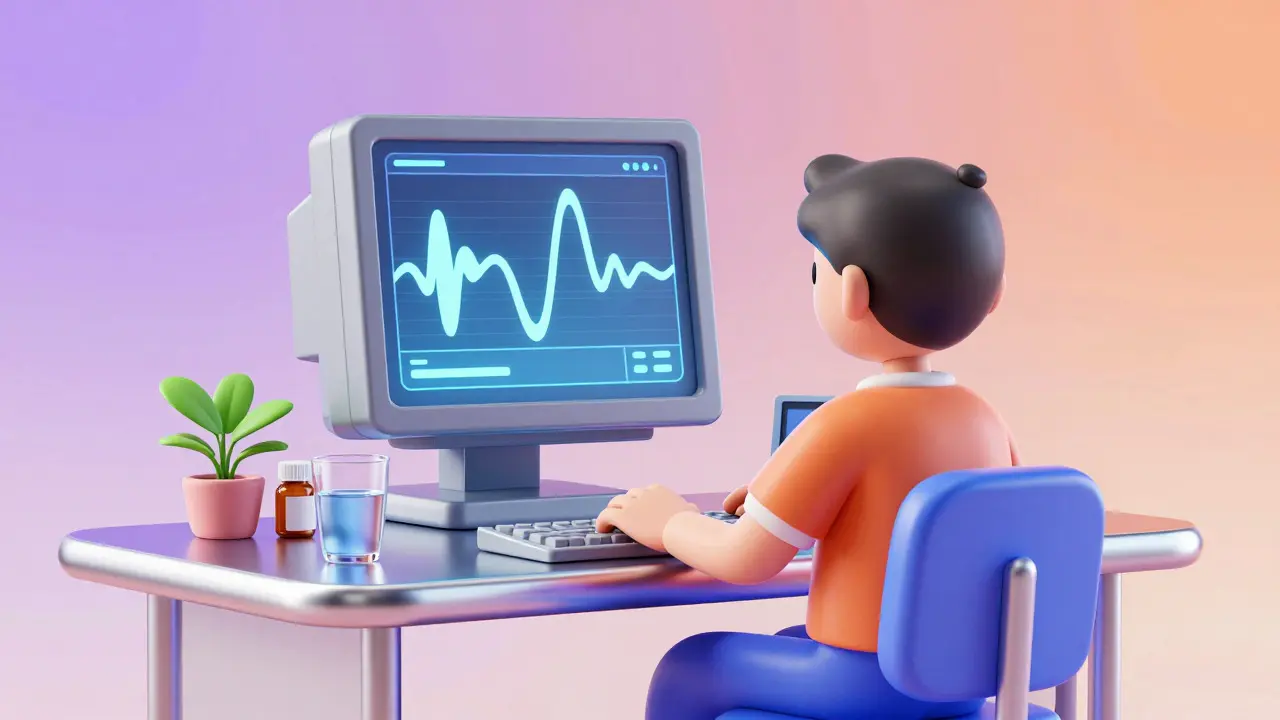
You can’t ignore the brain when treating the gut. A 2019 study found that 68% of IBS-M patients report symptom worsening with stress. The vagus nerve connects your brain and gut directly. When you’re stressed, anxious, or depressed, your gut’s sensitivity increases, and motility becomes erratic.
Cognitive Behavioral Therapy (CBT) is a psychological treatment that helps change negative thought patterns and behaviors related to health anxiety. The American Gastroenterological Association strongly recommends CBT for moderate to severe IBS-M. Trials show it reduces symptom severity scores by 40-50%, compared to 15-20% with education alone. It doesn’t mean your symptoms are "in your head." It means your brain’s interpretation of gut signals is amplified, and CBT helps recalibrate that response.
Other techniques include gut-directed hypnotherapy and mindfulness meditation. Dr. Lin Chang of UCLA notes that relying solely on pills without addressing psychological factors often leads to suboptimal outcomes. Incorporating daily stress-reduction practices is not optional fluff; it’s clinical therapy.
Practical Steps to Take Today
Managing IBS-M is a marathon, not a sprint. Here is a realistic action plan:
- Track Everything: Use a structured app like Cara Care or a detailed paper diary. Log food, stress levels, sleep, and bowel movements using the Bristol Stool Scale. A 2022 study found patients using tracking apps saw 35% greater improvement than those using paper diaries.
- Rule Out Other Conditions: Ensure your doctor has checked for celiac disease, inflammatory markers (CRP), and blood counts before finalizing an IBS-M diagnosis. The average time to correct diagnosis is 6-7 years, so advocate for yourself.
- Start Low Dose: Whether it’s fiber, peppermint oil, or medication, start with the lowest possible dose. Increase slowly. Your gut is sensitive; shock therapy rarely works.
- Hydrate Strategically: Drink water consistently throughout the day. Dehydration worsens constipation, while chugging large amounts at once can trigger diarrhea.
- Seek Professional Guidance: A gastroenterologist for medical management and a registered dietitian for the low FODMAP diet. Self-guided elimination diets often lead to unnecessary restrictions and nutrient deficiencies.
Remember, improvement takes time. The learning curve for effective self-management averages 3-6 months. Be patient with your body. You are not broken; your system is just overly sensitive and reactive. With the right combination of diet, medication, and stress management, you can regain control and significantly improve your quality of life.
Can IBS-M turn into cancer or IBD?
No. IBS-M does not increase your risk of colon cancer or inflammatory bowel disease (IBD). It is a functional disorder, meaning the structure of your gut is healthy, but its function is disrupted. However, new or changing symptoms should always be evaluated by a doctor to rule out other conditions.
What foods should I avoid with IBS-M?
Common triggers include high-FODMAP foods like garlic, onions, wheat, apples, pears, beans, and dairy (if lactose intolerant). High-fat foods, caffeine, and alcohol are also frequent culprits. Since triggers vary by person, a systematic elimination diet like low FODMAP helps identify your specific sensitivities.
How long does it take to see results from treatment?
Most patients see some improvement within 4-6 weeks of starting a consistent regimen, including dietary changes and medication. Full mastery of self-management, where you can predict and control symptoms effectively, typically takes 3-6 months of tracking and adjustment.
Is probiotics helpful for IBS-M?
Evidence is mixed. Some strains like Bifidobacterium infantis 35624 show modest benefit for bloating and pain, but results vary widely between individuals. Probiotics are not a first-line treatment but may be worth trying under guidance if other methods fail. Avoid multi-strain supplements initially as they can worsen bloating.
Why do doctors prescribe antidepressants for IBS?
In low doses, antidepressants don't treat depression in this context. They work on the nerve endings in your gut to reduce pain signals and regulate motility. TCAs (like amitriptyline) slow down the gut, helping diarrhea, while SSRIs (like citalopram) can speed it up, helping constipation. They address the brain-gut axis directly.