How to Use QR Codes and Digital Prescription Label Tools for Safer Medication Management
 Jan, 29 2026
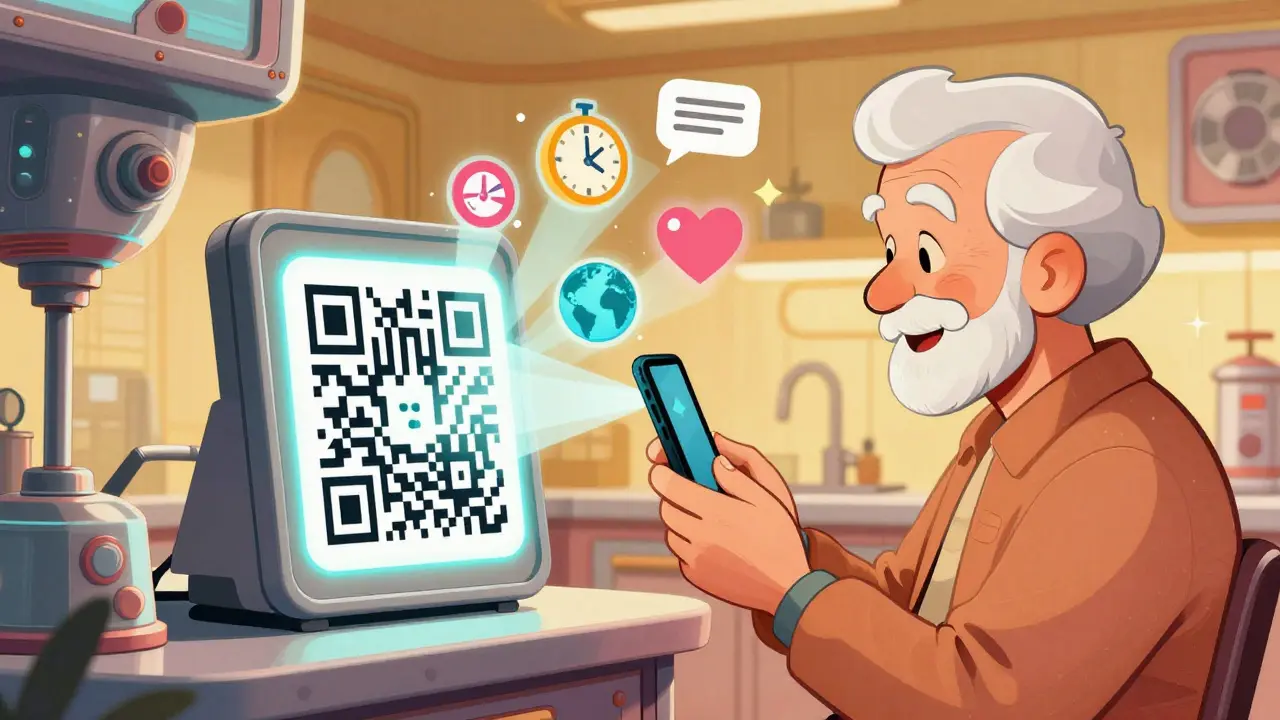
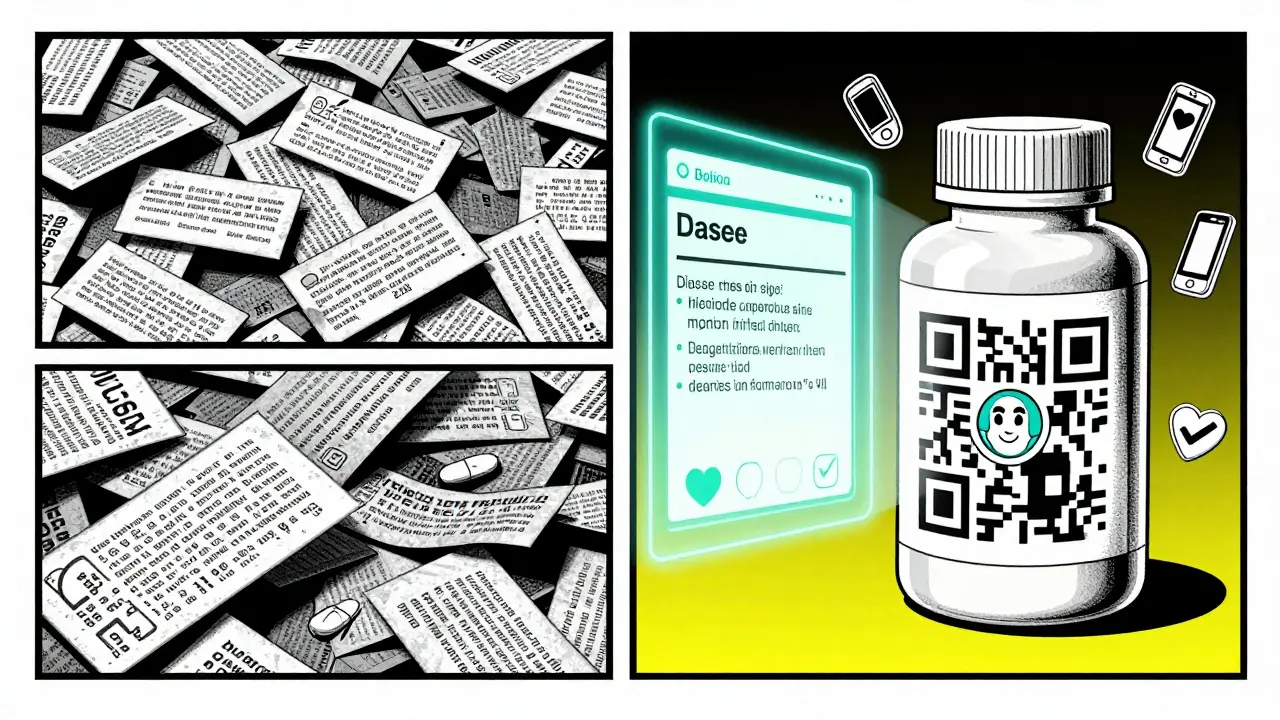
Every year, millions of people miss doses, take the wrong amount, or mix dangerous drug combinations - not because they’re careless, but because the information on their pill bottles is too small, outdated, or hard to understand. That’s where QR codes and digital prescription label tools come in. They turn a simple label into a gateway to real-time, personalized medication guidance. No more squinting at tiny print. No more calling the pharmacy for clarification. Just scan, and you get exactly what you need - in your language, on your phone, when you need it.
Why QR Codes on Prescription Labels Matter
QR codes on medication packaging aren’t just a tech trend - they’re a safety upgrade. In 2023, a Freyr Solutions study found that pharmacies using QR codes saw a 43% drop in medication errors. That’s not a guess. That’s real data from real clinics. Why? Because the static text on a bottle can’t change. But a QR code can. If a drug gets a new warning, the link updates instantly. If a patient speaks Spanish, the landing page switches languages automatically. If someone forgets how to take their pill, they can watch a 30-second video instead of reading a 10-page insert.
It’s not just about convenience. Regulatory agencies are pushing for it. Singapore launched its e-labeling pilot in April 2024, requiring QR codes to link to full safety info on all pharmacy-only medications. The European Medicines Agency endorsed the same approach in 2023. Even the FDA, which moved slowly for years, now supports electronic labeling as a valid alternative to paper inserts.
Static vs. Dynamic QR Codes - What’s the Difference?
Not all QR codes are created equal. There are two types: static and dynamic. Static ones are like a printed sign - once made, they can’t be changed. If the URL breaks or the info becomes outdated, the code is useless. That’s why only 12% of pharmaceutical companies use them.
Dynamic QR codes? They’re the industry standard. They make up 88% of all medical QR implementations. Why? Because you can edit the destination link after printing. Need to update dosing instructions? Change the landing page. Want to track how many people scan it? Get analytics. Test two versions of your message? Run an A/B test. All without reprinting a single label.
Dynamic codes also let you control access. You can set them to expire after 30 days, block scans from outside the country, or require a login for sensitive info. For a pharmacy, that’s not just smart - it’s necessary.
How to Design a QR Code That Actually Works
A QR code that won’t scan is worse than no code at all. It frustrates patients and undermines trust. Here’s what works:
- Size matters. Use at least a 1.5-inch square code. Smaller than that, and it won’t scan on curved pill bottles or in low light.
- Contrast is key. Black on white is best. Avoid red on green, or light gray on cream. The contrast ratio must be at least 70%.
- Leave breathing room. Add a 4-module quiet zone - that’s a clear border around the code, no text or graphics touching it.
- Placement is everything. Don’t put it on a fold, seam, or corner. Put it flat on the side of the bottle or box where it’s easy to hold steady.
Test it. Not just once. Test it in real conditions: under fluorescent lights, on glossy packaging, at a 45-degree angle, from 10 feet away. The ISO/IEC 18004:2015 standard says you need to validate across 12+ real-world scenarios. Skip this, and you’re gambling with patient safety.
What Should the Landing Page Show?
The QR code is just the door. What’s behind it matters more. A good landing page includes:
- Generic and brand name of the drug
- Exact dosage and frequency (e.g., “Take 1 tablet by mouth every morning with food”)
- Why you’re taking it (indication)
- What to avoid (contraindications, like “Do not use if you have kidney disease”)
- Common side effects and when to call a doctor
- Drug interactions (e.g., “Avoid alcohol” or “May reduce effectiveness of birth control”)
- Overdose instructions
- Storage tips
- Link to a video demo or audio version
According to Singapore’s Health Sciences Authority, all of this must match the approved patient information leaflet - 100% consistency. No shortcuts. No vague language. If the patient scans the code and finds something different from what’s written on the bottle, they’ll lose trust - and that’s dangerous.
Integrating With Pharmacy Systems
QR codes don’t work in isolation. They need to talk to the rest of the system. The best implementations connect to:
- Pharmacy management software via NCPDP SCRIPT standards - so when a patient scans, the system logs it and flags missed refills.
- EHR systems using HL7 FHIR APIs - so the doctor sees if the patient accessed the info, and can follow up.
- Patient portals with OAuth 2.0 login - so only the patient or caregiver can see personal health data.
Clappia’s platform, for example, links QR scans to inventory logs. If a patient scans a code for a high-risk medication, the system automatically checks if the dose was dispensed correctly. In one ICU, this cut IV preparation errors by 41%.
Training Staff and Educating Patients
Technology doesn’t fix problems if people don’t know how to use it. Pharmacists need training - about 4.7 hours per person, according to Clappia’s manual. That includes:
- How to generate and test QR codes
- How to explain them to patients
- What to do when a code doesn’t scan
- How to access analytics to spot trends
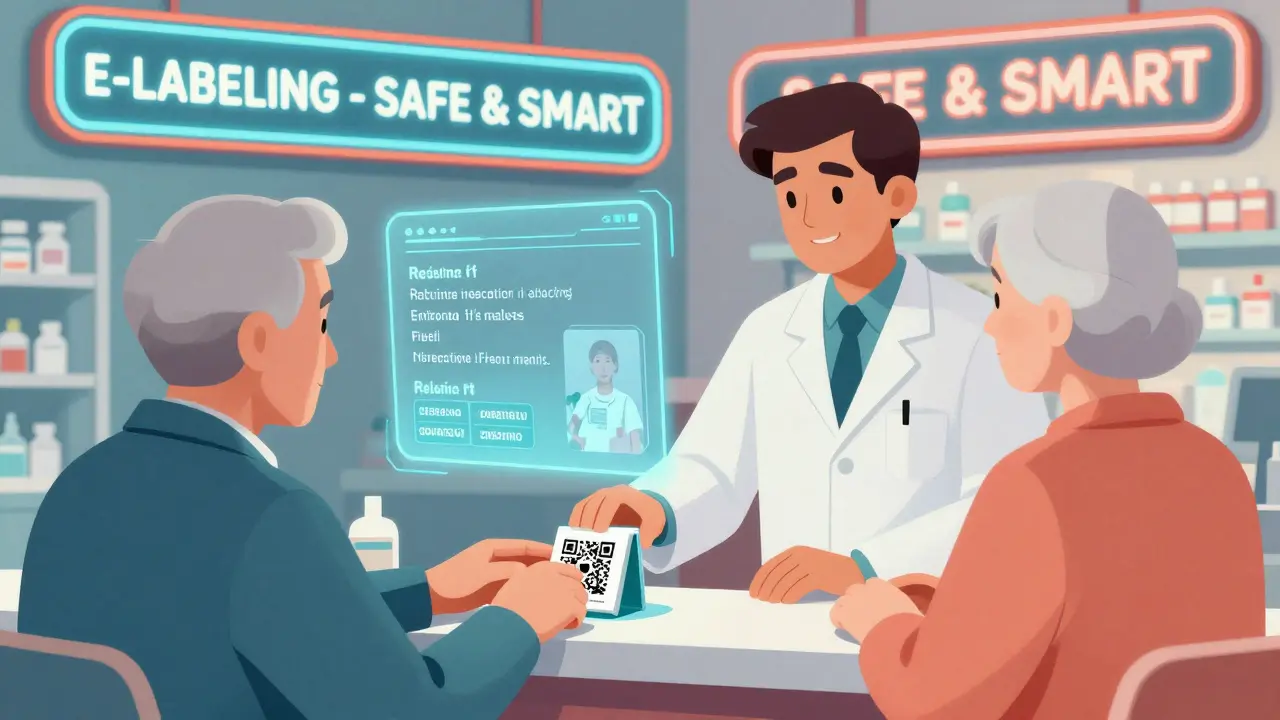
Patients need education too. Don’t just slap a code on a bottle and assume they’ll figure it out. Include a simple card: “Scan this code with your phone camera to get video instructions, safety tips, and refill reminders.” Some pharmacies even offer free scanning help at the counter - especially for older adults. A 2023 study showed 38% of patients over 65 need help scanning. That’s not tech failure - it’s design failure if you don’t plan for it.
Real Results from Real Pharmacies
At Saint Francis Hospital, they mailed QR code postcards to diabetes patients with links to meal-planning videos and glucose logs. Engagement? 83%. At DosePacker, a company that makes blister packs with QR codes on each dose, heart failure patients improved adherence from 62% to 89% in 90 days.
One community pharmacy in Vancouver reported a 63% drop in patient callback calls after adding QR codes to medication bags. That’s not just saving time - it’s reducing anxiety. Patients aren’t left wondering if they’re taking their meds right.
Limitations and How to Fix Them
QR codes aren’t perfect. They need a smartphone and internet. In rural areas, 23% of patients struggle with connectivity. That’s why every QR system needs a fallback: a toll-free number, a printed summary on the label, or a staff-assisted scanning station.
Some patients - especially those with visual impairments - can’t scan at all. That’s why the Access Board recommends pairing QR codes with audio devices or voice-enabled apps. The goal isn’t to replace human help - it’s to enhance it.
And yes, QR codes can’t be smaller than 1.5 inches. If you’re labeling a tiny vial, that’s a problem. But here’s the fix: use a larger label, or put the code on the outer carton. Don’t sacrifice function for size.
The Future Is Already Here
By 2026, the EU plans to make QR codes mandatory on all prescription labels. The FDA is already tying them to Universal Device Identifiers (UDIs) for medical devices. AI is being added too - Freyr Solutions just launched QR landing pages that check for drug interactions in real time. If you’re on blood thinners and try to refill an NSAID, the page warns you before you even click “confirm.”
Dynamic multilingual content is rolling out next. Scan the code in Toronto? You get English. Scan it in Montreal? You get French. Scan it in Vancouver? You get Mandarin if your phone’s language setting is Chinese. It’s not sci-fi - it’s live in pilot programs right now.
But here’s the bottom line: QR codes won’t fix broken systems. They’ll amplify them. If your pharmacy has poor training, bad data, or no patient support, a QR code will just make those problems more visible. But if you use them right - with clear content, reliable tech, and real human backup - you’re not just keeping patients safe. You’re giving them control.
Can QR codes replace printed medication instructions?
No. Regulatory agencies like the FDA and Singapore’s HSA require that critical safety information - such as dosage, contraindications, and warnings - must still appear on the physical label. QR codes supplement, not replace, printed info. They provide deeper details, videos, and updates, but the label must remain readable without a phone.
Do patients need to download an app to scan QR codes on prescriptions?
No. Modern smartphones - even budget models from 2018 onward - have built-in QR scanners in the camera app. No app download is needed. Just open the camera, point it at the code, and tap the notification that pops up. If the phone doesn’t recognize it automatically, a free scanner app like Google Lens or QR Code Reader works fine.
Are QR codes secure? Can someone hack the link?
The QR code itself is just a pointer - it doesn’t store data. The security lies in the landing page. Reputable systems use HTTPS encryption, require authentication for sensitive info, and block unauthorized access. Dynamic codes can be set to expire or restrict scans to specific regions. Always use trusted platforms like Clappia or Freyr Solutions that follow healthcare data standards (HIPAA, GDPR).
How much does it cost to implement QR codes on prescriptions?
It’s extremely low-cost. A dynamic QR code adds about $0.0003 per unit to printing costs. Compare that to RFID tags, which cost $0.08 to $0.50 each. Most of the expense comes from software setup, staff training, and content creation - not the code itself. For a pharmacy, the return on investment comes quickly through fewer errors, fewer calls, and higher patient adherence.
What if a patient doesn’t have a smartphone?
Every QR code system must have a backup. This could be a toll-free number patients can call for verbal instructions, printed summaries on the label, or staff-assisted scanning at the pharmacy counter. Some pharmacies even offer free loaner devices or tablets at the pickup window. The goal is accessibility - not exclusion.
Can QR codes help with medication refill reminders?
Yes. Dynamic QR codes can link to systems that track refills and send automated reminders via text or email when a prescription is due. Some platforms even sync with calendar apps. One study showed patients who received refill alerts via QR-linked systems were 28% more likely to take their meds on time.
Holly Robin
January 31, 2026 AT 05:21soooo... you're telling me the government and big pharma are now putting QR codes on pills so they can TRACK EVERY SINGLE SCAN? lol no thanks. next they'll be collecting your IP address, your phone model, what time you took your meds, and then selling it to insurers so they can raise your premiums. this isn't safety-it's surveillance with a side of ibuprofen. and don't even get me started on how they'll 'update' the info... what if they change the dosage to make you sicker? you think they care? they just want your data. and your trust. and your wallet.
KATHRYN JOHNSON
February 1, 2026 AT 21:25The regulatory framework for pharmaceutical labeling is unequivocally established. The introduction of dynamic QR codes without mandatory adherence to FDA-approved language, formatting, and accessibility standards constitutes a breach of public health protocol. This innovation, however technologically appealing, must be subjected to rigorous validation under 21 CFR Part 11. Failure to comply is not merely negligent-it is unlawful.
Kelly Weinhold
February 3, 2026 AT 15:39Okay I just want to say this is SO cool and I’m so excited for this! Like imagine your grandma can just scan the pill bottle and hear a sweet voice say ‘take this after breakfast, hun’ in Spanish or English or whatever she needs? And if she forgets, she gets a little text reminder? And if she doesn’t have a phone? The pharmacy has a tablet waiting for her at the counter? That’s not tech-that’s love. I wish my pharmacy did this. I’m telling my mom to ask for it next time she picks up her blood pressure meds. We’ve all been there-staring at that tiny print, panicking, calling the pharmacy at 8pm. This fixes that. It’s simple, it’s smart, and it’s human. Let’s make this standard everywhere. ❤️
Kimberly Reker
February 4, 2026 AT 11:52Really appreciate this breakdown. I work in community health and we’ve started piloting QR codes on high-risk meds like warfarin and insulin. The feedback has been overwhelmingly positive-even people who say they ‘don’t do tech’ say they feel safer knowing they can scan and get a video demo. The key is training staff to introduce it casually: ‘Just point your camera at the code, it’ll pop up on your screen.’ No app needed. And we always have a printed backup. Small thing, big impact. Also, the 1.5-inch size rule? Non-negotiable. We had one batch printed too small-patients couldn’t scan it even with glasses. Lesson learned.
Eliana Botelho
February 6, 2026 AT 04:40Wait hold up. You say dynamic QR codes are ‘industry standard’ because they can be updated? That’s literally the problem. Who’s updating them? Pharmacies? Big Pharma? The FDA? What if they change the warning because the drug got pulled? Or because they want to hide a side effect? And you say they can ‘block scans from outside the country’-so what, if I’m visiting my sister in Mexico and I scan my pill? Do I get nothing? Do I get a message saying ‘you’re not authorized to know this’? This isn’t safety-it’s gatekeeping dressed up as innovation. And why is no one talking about how many people don’t have smartphones or data plans? This system excludes the very people who need it most. It’s not progress-it’s privilege with a barcode.
Rob Webber
February 6, 2026 AT 05:42Let me get this straight. You’re telling me we’re replacing legible, permanent, FDA-mandated text with a digital link that requires a smartphone, a working camera, an internet connection, and zero fear of corporate manipulation? And you call this ‘safety’? This is a disaster waiting to happen. What happens when the server goes down? When the link expires? When the code gets corrupted by heat or moisture? When a kid scans it and gets a video of a 70-year-old woman taking pills and thinks it’s a game? This isn’t innovation-it’s laziness. The answer isn’t QR codes. The answer is bigger font. Clearer language. More staff. More time. Not tech magic that fails when you need it most.
calanha nevin
February 7, 2026 AT 10:28Implementation requires alignment with HIPAA and NCPDP SCRIPT standards. Landing pages must mirror approved labeling content verbatim. Dynamic QR codes must support authentication via OAuth 2.0 for sensitive data. Testing must comply with ISO/IEC 18004:2015 across 12 real-world conditions including low light, curved surfaces, and motion blur. Failure to validate results in liability exposure. Training pharmacists for 4.7 hours is the minimum. Patient education materials must be included with every dispensed prescription. Accessibility accommodations including audio options and staff-assisted scanning are not optional. This is not a feature. It is a standard of care.
Lisa McCluskey
February 8, 2026 AT 01:19Just wanted to add that the Vancouver pharmacy example is spot on. We saw a similar drop in calls after we added QR codes. But the real win? Patients started asking better questions. They’d say ‘I scanned it and it said to avoid grapefruit-my old bottle didn’t mention that.’ That’s the power. Not the tech. The clarity. The transparency. The code just gives people the chance to understand. And that’s everything.