How to Spot Fake Generic Drugs: Packaging, Labeling, and Verification Guide
 Jul, 8 2026
Imagine picking up a prescription for your daily blood pressure medication. The box looks right. The pills look right. But what if they are empty starch? Or worse, filled with an incorrect chemical that could stop your heart? This is not a movie plot; it is a terrifying reality for millions of people worldwide. Counterfeit medicines are not just a problem in developing nations-they infiltrate supply chains globally, posing severe risks including treatment failure, antibiotic resistance, and even death.
When it comes to generic drugs, the risk feels higher because these medications are often less expensive and produced by a wider variety of manufacturers. You might assume that because a drug is approved as "generic," it is automatically safe. While generics must meet strict bioequivalence standards, the journey from factory to pharmacy is where things can go wrong. Verifying the authenticity of generic medicines requires looking beyond the brand name and understanding the physical and digital safeguards built into their packaging and labeling.
The Anatomy of Secure Packaging
To protect consumers, pharmaceutical companies layer their packaging with three types of security features: overt, covert, and track-and-trace. Understanding these layers helps you spot discrepancies before you take the first pill.
Overt features are designed for immediate visual inspection without any tools. Think of these as the "front door" security. Common examples include color-shift inks (Optically Variable Ink) that change hue when tilted-like the green-to-blue shift on certain Pfizer products-and holograms containing micro-texts that are too small to read without magnification. If you buy a generic medication and the hologram looks flat, pixelated, or lacks fine detail, pause. Sophisticated counterfeiters can replicate basic holograms with 80-90% accuracy, but high-quality security elements have crisp edges and consistent color transitions.
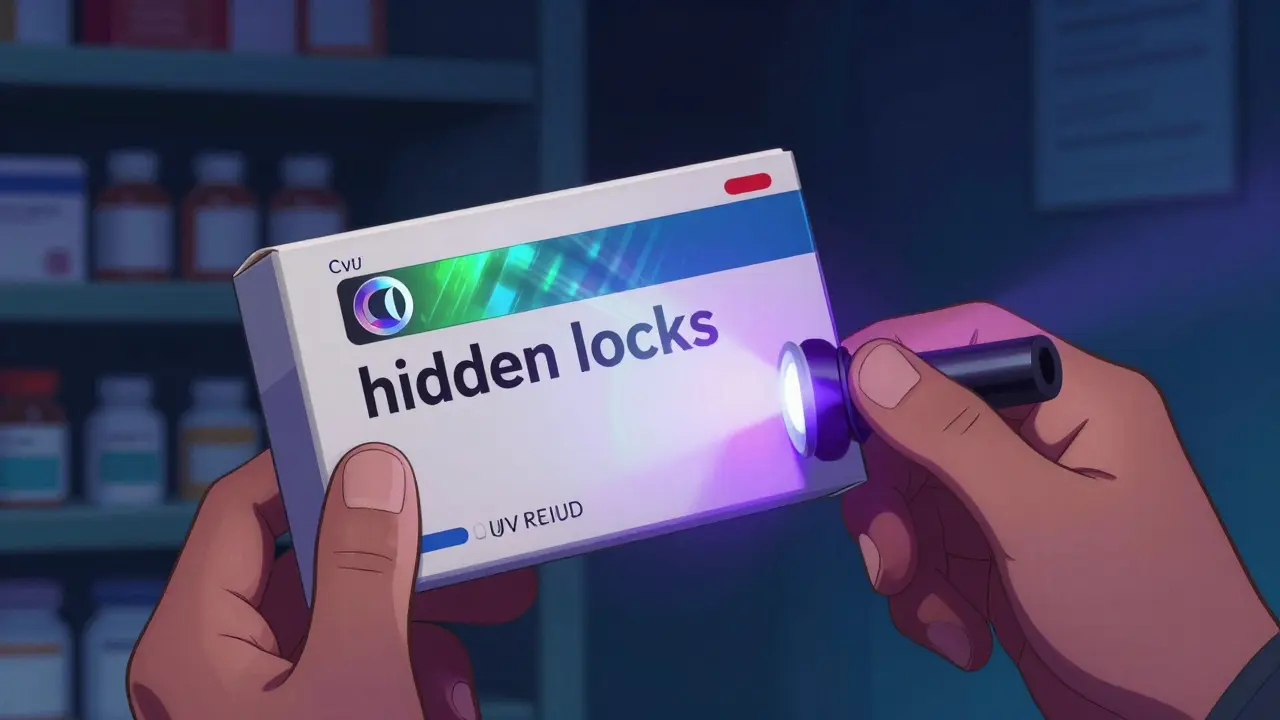
Covert features require simple tools to verify. These are the "hidden locks." Many packages use UV-sensitive inks that only appear under ultraviolet light. For instance, Johnson & Johnson has used 365nm UV markers on Tylenol packaging since 2015. A handheld UV flashlight costs less than $20 and can reveal hidden logos or patterns invisible to the naked eye. Other covert methods include RFID tags operating at 13.56 MHz, which store unique data about the product’s origin and batch.
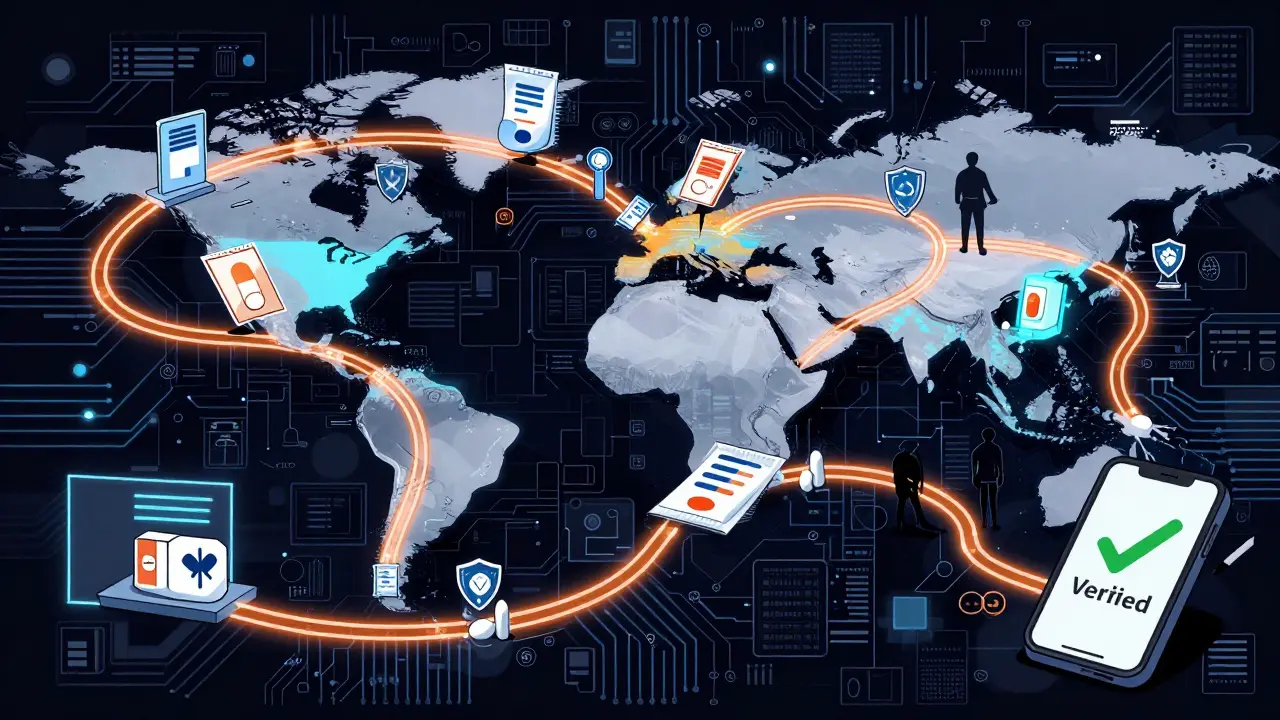
Track-and-trace systems form the backbone of modern supply chain security. In the European Union, the Falsified Medicines Directive (FMD) mandates safety features like unique serial numbers and tamper-evident devices on all prescription medicines. Similarly, the U.S. Drug Supply Chain Security Act (DSCSA) requires full product tracing by November 2023. These systems assign a unique identifier to every package, allowing pharmacies and regulators to scan barcodes and verify the drug’s journey from manufacturer to patient.
| Feature Type | Visibility | Tools Required | Counterfeiter Replication Difficulty |
|---|---|---|---|
| Overt (e.g., Holograms) | Visible to naked eye | None | Medium (High-end fakes exist) |
| Covert (e.g., UV Ink) | Invisible normally | UV Light / Magnifier | Hard |
| Track-and-Trace (e.g., Serial Numbers) | Barcode/QR Code | Scanner/App | Very Hard (Requires database access) |
Labeling Clues: What Pharmacists Look For
If you cannot check the packaging security features yourself, pay close attention to the label. Pharmacists are trained to spot subtle inconsistencies that signal a fake product. One common red flag is font variation. In a widely discussed case on Reddit’s r/pharmacy community, a pharmacist identified fake Nexium® generics because the expiration date font was slightly different from authentic batches. It took three comparisons to spot, but the difference was undeniable.
Other labeling issues include:
- Spelling errors: Misspellings on the box or leaflet are a major warning sign. Legitimate manufacturers have rigorous quality control processes.
- Blurry printing: High-resolution text should be sharp. Blurry or smeared ink suggests low-quality printing equipment.
- Mismatched batch numbers: The batch number on the box should match the one printed on the bottle or blister pack. If they differ, do not use the medication.
- Missing or altered NDC codes: In the U.S., the National Drug Code (NDC) is a unique identifier. Check if the code matches the drug name and strength online via the FDA database.
Generic medicines face additional challenges here. According to the National Community Pharmacists Association (NCPA), 68% of independent pharmacists reported difficulty verifying generic medicines compared to only 22% for branded products. Why? Because generic manufacturers vary widely in how they apply security features. Some invest heavily in serialization, while others use minimal packaging due to cost constraints. This inconsistency makes visual verification harder but no less important.
Beyond the Box: Spectroscopic Verification
Visual checks are helpful, but they are not foolproof. Modern counterfeiters can replicate packaging with 95% accuracy. To truly verify the contents, you need to analyze the active pharmaceutical ingredient (API). This is where technology steps in.
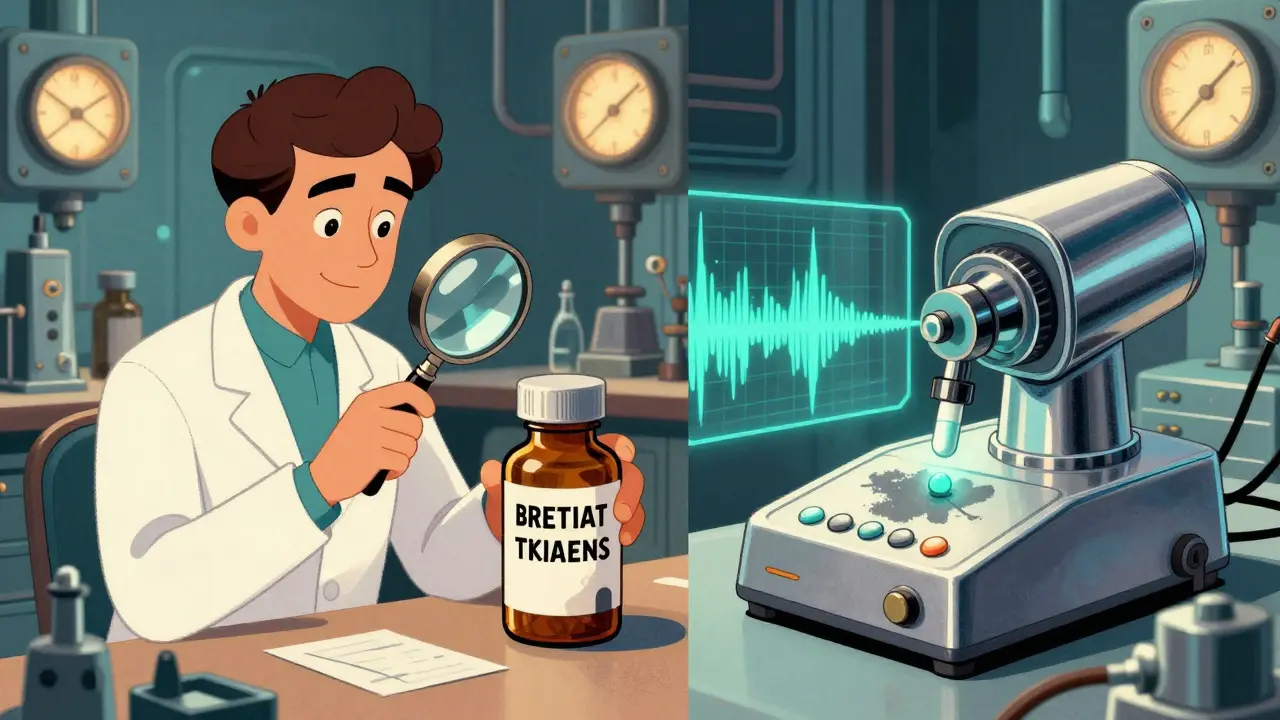
Handheld spectrometers are becoming standard tools in advanced pharmacies and hospitals. Two main technologies dominate this space:
Near-Infrared (NIR) Spectroscopy is a non-destructive analytical technique that measures the absorption of near-infrared light by chemical bonds. Devices like the Thermo Fisher TruScan RM weigh just 1.4 kg and provide results in 10-30 seconds. NIR is particularly effective at detecting coating defects and moisture content variations. Studies show it achieves 92-97% accuracy in identifying counterfeits, especially when correlation coefficients drop below 0.85.
Raman Spectroscopy is a vibrational spectroscopy technique that provides a molecular fingerprint of a substance. The B&W Tek NanoRam, weighing 1.8 kg, offers spectral ranges between 785-1064 nm. Raman excels at identifying specific chemical constituents but struggles with dark-colored tablets due to fluorescence interference. Its accuracy ranges from 88-94%.
These devices cost between $15,000 and $50,000, making them inaccessible for most individual consumers. However, regional verification centers are emerging. As of 2023, 22 U.S. states have established such centers where patients or small pharmacies can send suspicious samples for analysis. If you suspect your medication is fake, contact your local health department or hospital pharmacy to inquire about testing services.
Digital Verification Tools and Apps
For everyday users, mobile apps offer a convenient way to verify track-and-trace codes. The European Medicines Verification System (EMVS) processes over 2.5 billion requests annually with 99.998% uptime. In India, the Drug Authentication and Verification Application (DAVA) handles 200 million verifications yearly.
However, user feedback reveals significant limitations. Trustpilot reviews for apps like MediMark highlight that barcode scanning fails 40-50% of the time with generics due to inconsistent serialization. Field workers in Nigeria reported that mobile apps work only 65% of the time due to poor network connectivity. Always remember: a successful scan confirms the package exists in the system, but it does not guarantee the contents inside are genuine if the seal was broken and resealed.
To maximize effectiveness:
- Download official verification apps recommended by your national regulatory authority (e.g., FDA, EMA).
- Scan the 2D data matrix code or barcode on the outer packaging.
- Check for tamper-evident seals. If the seal is broken but the app says "verified," discard the product.
- Compare the scanned information (batch number, expiry date) with the physical label.
Why Generics Are More Vulnerable
You might wonder why generic drugs seem to attract more scrutiny. The answer lies in economics and supply chain complexity. Generic medicines represent 90% of prescriptions in the U.S. but only 22% of pharmaceutical spending. Lower profit margins mean manufacturers may invest less in advanced security features. The International Federation of Pharmaceutical Manufacturers & Associations (IFPMA) reports that verification costs average 1.2-1.8% of revenue for generic makers, compared to 0.7-1.1% for branded ones.
Additionally, generic supply chains are longer. A typical generic medicine passes through 5-7 distribution points before reaching the patient, versus 3-4 for branded drugs. Each handoff is an opportunity for diversion or substitution. With 137 countries implementing some form of medicine verification requirements as of 2023, compliance varies wildly. The EU achieves 98% manufacturer compliance, while Southeast Asia sits at just 45%. This global disparity creates loopholes that counterfeiters exploit.
What You Can Do Today
Protecting yourself starts with awareness. Here is a practical checklist for every prescription pickup:
- Inspect the seal: Ensure the tamper-evident band is intact. If it looks glued or torn, ask the pharmacist for a replacement.
- Check the print quality: Look for sharp text, correct spelling, and consistent colors.
- Verify the batch: Note the batch number and expiry date. Keep this info in case you need to report an issue later.
- Use trusted sources: Buy medications only from licensed pharmacies. Avoid online sellers who do not require a valid prescription.
- Report suspicions: If something feels off, do not take the drug. Contact your pharmacist or the FDA MedWatch program immediately.
Technology is advancing rapidly. The FDA’s 2023 pilot program using blockchain for generic verification achieved 99.2% accuracy across four distribution tiers. By 2026, the Generic Pharmaceutical Association aims for 100% serialization of all U.S. generics. Until then, your eyes and caution remain the first line of defense.
Can I verify generic drug authenticity at home?
Yes, partially. You can inspect overt features like holograms and color-shift inks, check for spelling errors, and verify batch numbers against the label. For deeper verification, use a UV light to check for covert inks. However, confirming the actual chemical composition requires professional spectroscopic equipment available at hospitals or verification centers.
Are generic drugs safer than branded ones regarding counterfeiting?
Not necessarily. While both are targeted, generics face higher risks due to complex supply chains and lower investment in security features by manufacturers. Branded drugs often have stricter serialization protocols, but sophisticated counterfeiters target high-value brands too. Always verify regardless of type.
What should I do if I suspect my medication is fake?
Stop taking the medication immediately. Do not flush it down the toilet. Contact your pharmacist to report the suspicion and request a replacement from a verified stock. Report the incident to your national regulatory body (e.g., FDA in the U.S.) and keep the original packaging for investigation.
How reliable are mobile verification apps?
Mobile apps are useful for checking track-and-trace codes but have limitations. They may fail with generics due to inconsistent serialization or poor network connectivity. A "verified" status confirms the package ID exists in the database but does not guarantee the contents are untouched. Always combine app scans with physical inspection.
What is the role of spectroscopy in drug verification?
Spectroscopy analyzes the molecular structure of the drug to confirm its identity. Near-Infrared (NIR) and Raman spectroscopy can detect differences in active ingredients, coatings, and fillers that are invisible to the eye. These methods achieve 90-97% accuracy and are considered the gold standard for field verification by experts.