How Pharmacogenomics Influences Drug Interaction Risk
 Mar, 11 2026
When you take multiple medications, the risk of dangerous drug interactions doesn’t just depend on what’s in the pills-it depends on your DNA. Two people taking the exact same combo of drugs can have wildly different outcomes: one feels fine, another ends up in the hospital. Why? Because pharmacogenomics is changing how we understand and predict these risks.
Pharmacogenomics studies how your genes affect the way your body processes drugs. It’s not science fiction-it’s already being used in hospitals to prevent life-threatening reactions. A 2022 meta-analysis of 42 studies found that using genetic data to guide drug choices reduced adverse drug reactions by over 30% and improved treatment effectiveness by nearly 27%. That’s not a small improvement. It’s life-changing for people on multiple medications.
How Your Genes Change How Drugs Work
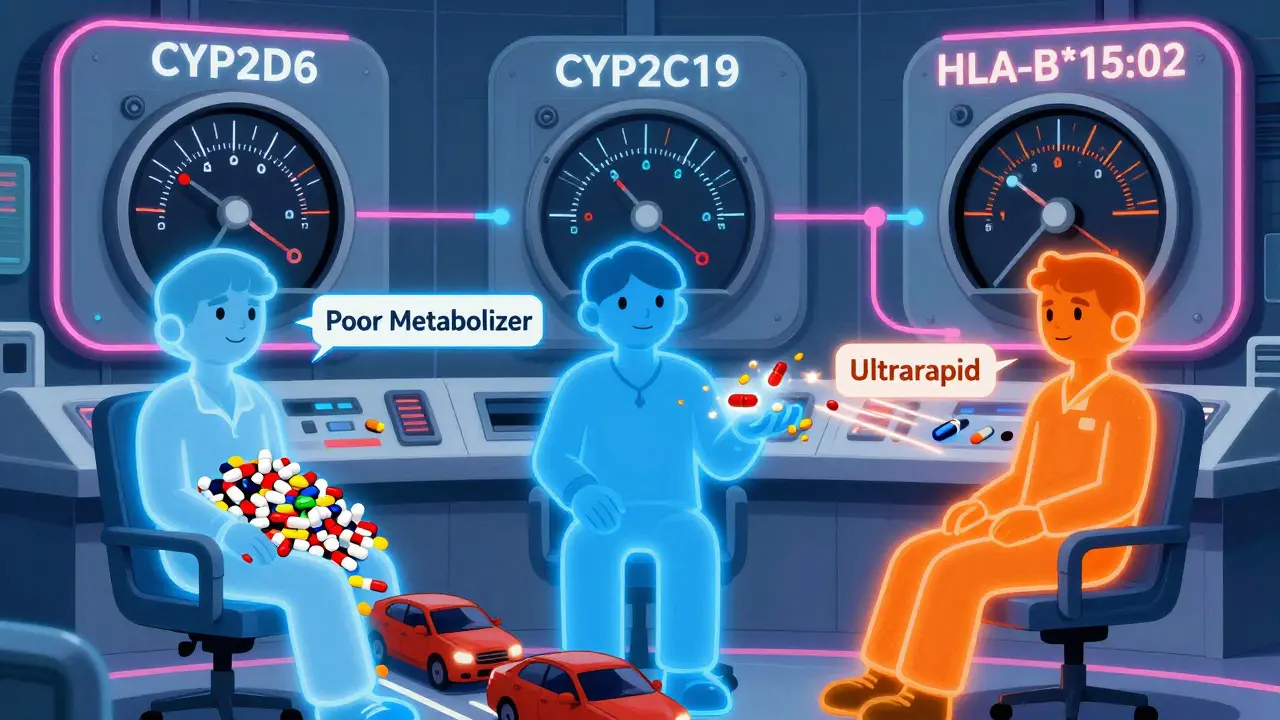
Your body uses enzymes to break down drugs. The most important of these are the CYP450 enzymes-especially CYP2D6 and CYP2C19. These enzymes act like molecular scissors, cutting drugs into pieces so your body can eliminate them. But not everyone has the same scissors. Your genes determine whether you have fast, slow, or broken scissors.
If you’re a “poor metabolizer” of CYP2D6, your body can’t break down certain drugs efficiently. That means those drugs build up in your bloodstream. Take a common antidepressant like fluoxetine, or a painkiller like codeine, and you could overdose even at normal doses. On the flip side, if you’re an “ultrarapid metabolizer,” your body clears the drug too quickly. The drug stops working before it should. You might think the medication isn’t helping, when in reality, your genes are making it useless.
The FDA tracks over 140 gene-drug pairs with known clinical impact. For example, people with the HLA-B*15:02 gene variant have a 50 to 100 times higher risk of developing Stevens-Johnson Syndrome-a deadly skin reaction-when taking carbamazepine for seizures. That’s not a rare fluke. It’s predictable. And it’s preventable with a simple genetic test.
Drug-Drug-Gene Interactions: The Hidden Danger
Traditional drug interaction checkers only look at what drugs you’re taking. They miss the biggest player: your genes. This is called a drug-drug-gene interaction (DDGI). It’s when one drug changes how another drug behaves, but only if your genes make you vulnerable.
Imagine someone who’s a CYP2D6 ultrarapid metabolizer. They take codeine for pain. Normally, their body converts codeine into morphine quickly, giving them pain relief. Now, they also start taking fluoxetine, a common antidepressant. Fluoxetine blocks CYP2D6. Suddenly, the person can’t convert codeine into morphine. The pain returns. But here’s the twist: if they had been tested, we’d know their genes made them a fast metabolizer. We’d avoid fluoxetine and pick a different antidepressant. Without the genetic data, the interaction looks like a simple drug-drug conflict. With it, we see a gene-driven problem.
Even more confusing: some drugs can cause “phenoconversion.” That’s when a medication temporarily turns a fast metabolizer into a slow one. A CYP2D6 ultrarapid metabolizer might be fine on a drug-until they take another medication that blocks the enzyme. Now, they suddenly behave like a poor metabolizer. Their body can’t clear the drug. Toxic levels build up. This is invisible to standard interaction tools. Only pharmacogenomics catches it.
Why Traditional Drug Interaction Checkers Fall Short
Most pharmacy systems use tools like Lexicomp or Micromedex. They list tens of thousands of possible drug interactions. But they don’t know your genes. They assume everyone responds the same way. That’s like saying everyone drives the same car at the same speed-when some people have sports cars and others have broken engines.
A 2022 study in the American Journal of Managed Care found that when genetic data was added to drug interaction checks, the number of predicted clinically relevant interactions jumped by 90.7%. The chance of a major, dangerous interaction increased by 30.4%. That means traditional tools are missing over 90% of the real risks.
For drugs like antidepressants, antipsychotics, and blood thinners, the gap is even wider. CYP2D6 and CYP2C19 are involved in over 25% of all prescription drugs. When you’re on five or more medications-something 13% of U.S. adults do-you’re playing Russian roulette with your genes.
Real-World Successes and Failures
Some hospitals are already doing this right. Mayo Clinic has been testing patients preemptively since 2011. They found that 89% of patients had at least one gene variant that affected how they responded to a drug. When their electronic health system started warning doctors about dangerous combinations based on genetic data, inappropriate prescribing dropped by 45%.
At Vanderbilt, over 100,000 patients have been tested through the PREDICT program. Warfarin, a blood thinner, is a perfect example. Before pharmacogenomics, dosing was guesswork. Now, they use two genes-CYP2C9 and VKORC1-to calculate the starting dose. This cuts the time it takes to get the right dose by 27% and reduces major bleeding by 31%.
But outside of academic centers, progress is slow. A 2023 survey of 1,200 pharmacists found only 28% felt confident interpreting genetic results. Two-thirds said their pharmacy systems don’t even show them the data. Many doctors don’t know how to use it. And most insurance plans won’t cover the test unless it’s already clear the patient is at high risk.
The Cost of Not Knowing
Adverse drug reactions cost the U.S. healthcare system about $30 billion every year. About half of those are preventable. Pharmacogenomics could cut that number in half. But we’re not using it.
Only 15% of U.S. healthcare systems have integrated genetic data into their electronic records. And even when tests are done, they’re often ordered too late-after the patient has already had a bad reaction. The goal should be preemptive testing: test once, use the data for life.
The biggest barrier isn’t science. It’s infrastructure. Setting up a pharmacogenomics program costs an average of $1.2 million per hospital. Training clinicians takes 15 to 20 hours. Reimbursement is patchy-only 19 CPT codes exist for PGx testing, and insurers pay $250 to $400 per test, which barely covers the cost.
What’s Next? AI, Equity, and the Future
The future is combining pharmacogenomics with artificial intelligence. A 2023 study in Nature Medicine showed an AI model that included genetic data improved warfarin dosing accuracy by 37% compared to older methods. That’s not just better-it’s safer.
But there’s a dark side. Most genetic research has been done on people of European descent. Only 2% of participants in PGx studies are of African ancestry. That means the guidelines we have might not work for everyone. A gene variant that’s common in one population might be rare in another. If we don’t fix this, we risk making healthcare even less fair.
The FDA is updating its list of gene-drug pairs in 2024, adding 24 more. The Clinical Pharmacogenetics Implementation Consortium (CPIC) is working on guidelines for complex cases-like when a patient has two gene variants that interact with three different drugs. That’s the new frontier: polypharmacy meets polygenetics.
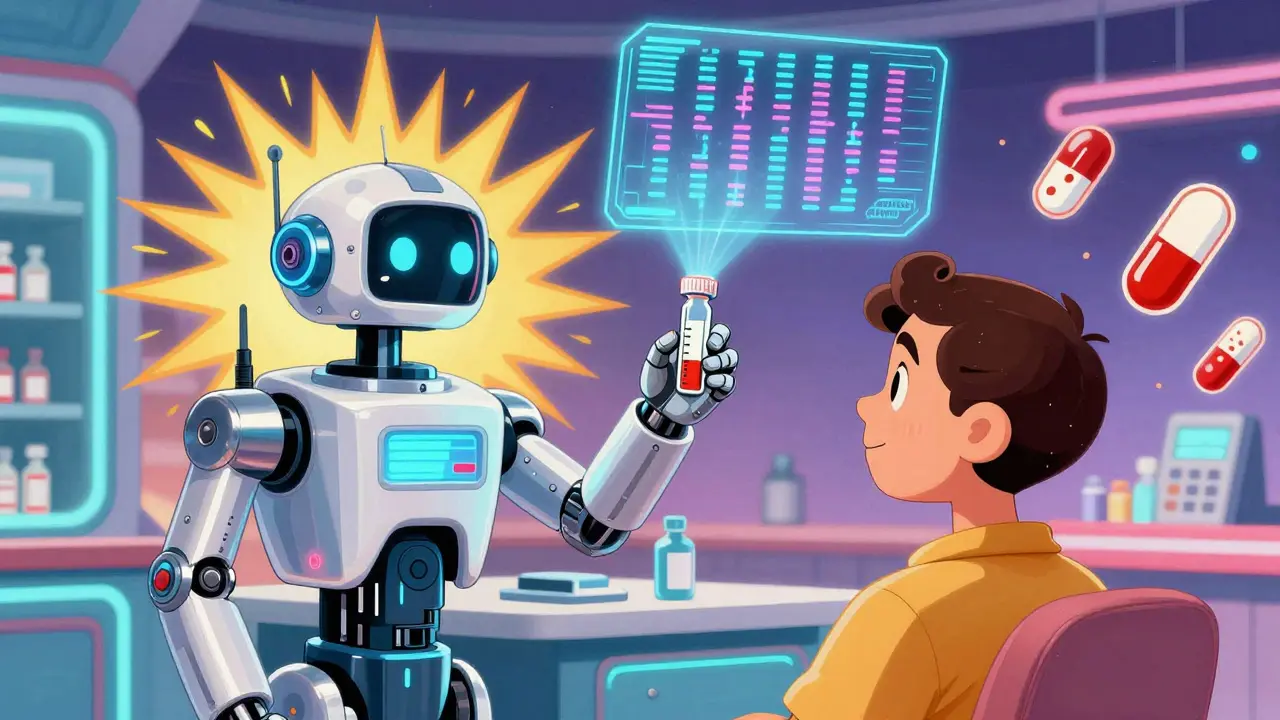
The message is clear: your genes matter more than you think. A simple blood or saliva test can prevent a hospital visit, a life-changing side effect, or even death. The tools are here. The data is solid. The only thing missing is widespread use.
What is pharmacogenomics?
Pharmacogenomics is the study of how your genes affect how your body responds to medications. It looks at genetic variations that influence drug metabolism, effectiveness, and risk of side effects. Unlike traditional drug interaction checkers, it personalizes treatment based on your DNA, not just the drugs you’re taking.
Which genes are most important for drug interactions?
The CYP2D6 and CYP2C19 enzymes are the most common. CYP2D6 affects about 25% of all prescription drugs, including antidepressants, painkillers, and beta-blockers. CYP2C19 is critical for drugs like clopidogrel (Plavix), proton pump inhibitors, and some antidepressants. Other important genes include TPMT (for chemotherapy drugs), VKORC1 (for warfarin), and HLA-B*15:02 (for carbamazepine).
Can pharmacogenomics prevent dangerous drug interactions?
Yes. Studies show that using genetic data to guide drug choices reduces adverse drug reactions by over 30% and improves treatment success by nearly 27%. For example, testing for HLA-B*15:02 before prescribing carbamazepine can prevent a deadly skin reaction. Testing for CYP2D6 status can prevent overdoses or treatment failures with common painkillers and antidepressants.
Why don’t more doctors use pharmacogenomic testing?
Three main reasons: lack of integration into electronic health records, limited training for clinicians, and poor reimbursement. Only 15% of U.S. healthcare systems have genetic data in their systems. Many doctors don’t know how to interpret results, and insurance often won’t pay for the test unless it’s already clear the patient is at high risk.
Is pharmacogenomic testing covered by insurance?
Sometimes. There are 19 CPT codes for pharmacogenomic tests, and reimbursement ranges from $250 to $400 per test. Medicare and some private insurers cover it for specific situations-like before starting clopidogrel or warfarin. But coverage is inconsistent, and many plans still consider it experimental. Preemptive testing (testing before any drug is prescribed) is rarely covered.
Sabrina Sanches
March 13, 2026 AT 03:38Finally someone's talking about this! I've been on 5 meds for years and my doctor never mentioned genetic testing. Then I got sick for no reason. Turned out I'm a slow CYP2D6 metabolizer. Fluoxetine + codeine = nightmare. Once they adjusted based on my DNA, I felt like a new person. Why isn't this standard??
PS: Just got my 23andMe results last month. Took 3 weeks to find the PGx report buried in there. Worth it.
Sally Lloyd
March 13, 2026 AT 04:16They're hiding this from us. Big Pharma doesn't want you to know your genes can make their drugs useless-or deadly. Why? Because if you know your metabolism type, you can skip the expensive meds and go natural. Or worse-they'd have to retest every drug on every population. That'd cost billions. And we all know who pays for that.
They test you after you almost die. Not before. That's not medicine. That's profit-driven triage.
Emma Deasy
March 15, 2026 AT 02:00Let me just say this-this is the most important medical breakthrough since penicillin-and we’re still treating it like a side project?!
Imagine this: You’re on your 12th antidepressant because the first 11 didn’t work. You’re sobbing in a CVS parking lot at 2 a.m. because your insurance won’t cover the $300 test. Meanwhile, your neighbor in Iowa got tested at 18 because her school district partnered with a lab. She’s now thriving on one pill. One. Pill.
And we call this healthcare? This isn’t science. This is a moral failure wrapped in bureaucracy and coded in CPT billing forms.
My cousin died from a drug reaction. She was 24. They never tested her. They never asked. They never cared. This isn’t theoretical. It’s personal. And it’s happening every day. To someone’s mother. To someone’s son. To someone’s sister. We need to act. Now. Before it’s too late.
tamilan Nadar
March 15, 2026 AT 05:40In India, we don’t even have access to basic meds, let alone genetic testing. But I’ve seen this firsthand-two cousins, same age, same symptoms, same prescription. One got better. One went into coma. No one asked why. Maybe genes? Maybe diet? Maybe both?
Still, I’m glad someone in the West is talking about it. We need global data. Not just European genomes. We need African, South Asian, Indigenous DNA in the studies. Otherwise, we’re just building a medical system for white people.
Adam M
March 15, 2026 AT 14:59Stop wasting time on this. If you’re on five drugs, you’re already doing it wrong. Get off the pills. Fix your diet. Sleep. Move. Then you won’t need genetic testing-you won’t need doctors at all.
Rosemary Chude-Sokei
March 17, 2026 AT 07:47I appreciate the depth of this post. It’s rare to see such a thorough breakdown of pharmacogenomics without oversimplifying.
I work in a rural clinic. We tested 47 patients last year. 38 had actionable variants. One patient was on warfarin for 18 months-dosing adjusted by guesswork. After testing, her INR stabilized in 3 days. No bleeding. No ER visits.
We can’t wait for big hospitals to lead. We need tools for community clinics. Simple. Affordable. Integrated.
And yes-I agree with the point about equity. We’re not just missing data. We’re missing trust. And that’s harder to fix than a database.
Noluthando Devour Mamabolo
March 19, 2026 AT 02:34OMG this is sooo relevant!! 🤯
I’m a pharmacogenomics nerd (yes, that’s a thing now 😎) and I just got my full PGx panel done. CYP2C19 poor metabolizer + HLA-B*15:02 negative. So I’m safe from carbamazepine rash but I can’t process SSRIs like they’re water. My doc was like ‘oh, that’s why fluoxetine gave you migraines.’
Also-AI + PGx is the future. Imagine a model that says ‘you’re on 7 meds, your genes say avoid this combo, here’s a safer alternative.’ That’s not sci-fi. That’s 2025. 🚀
PS: Can we please make this a mandatory part of primary care? Like, at your annual checkup? Just a cheek swab. Done.
Buddy Nataatmadja
March 20, 2026 AT 02:39I’ve been a nurse for 22 years. I’ve seen patients die because a drug interaction wasn’t flagged. I’ve also seen patients get better overnight after a genetic test.
The problem isn’t the science. It’s the system. EHRs don’t alert you. Pharmacists don’t get paid to read the reports. Doctors don’t have time to explain it.
It’s not that we don’t know. It’s that we’re not allowed to act.
mir yasir
March 21, 2026 AT 16:35One must acknowledge the epistemological framework underpinning pharmacogenomics as a paradigm shift in clinical therapeutics. The reductionist model of drug-drug interaction, predicated upon pharmacokinetic and pharmacodynamic axioms, is rendered obsolete in the presence of genomic heterogeneity.
Furthermore, the ontological implications of preemptive genotyping demand a reconfiguration of the physician-patient dyad, wherein autonomy is not merely informed but genetically contextualized.
One wonders whether the current CPT code structure, with its antiquated fee-for-service logic, is adequate to sustain a genomic medicine infrastructure predicated upon longitudinal data stewardship.
One must also interrogate the hegemony of Eurocentric reference genomes, which, as a consequence of sampling bias, effectively constitute a form of epistemic violence against non-European populations.
Thus, the imperative is not merely clinical, but civilizational.
Stephanie Paluch
March 22, 2026 AT 22:23I had no idea my genes could make my anxiety meds useless… until I almost died.
My doctor said ‘it’s probably stress.’ I said ‘I’ve been on this for 2 years.’
Then I got tested. Turned out I’m an ultrarapid CYP2D6 metabolizer. My body was burning through the drug before it could work. They switched me to a different class. Within 3 days, I slept through the night for the first time in years.
I cried. Not because I’m weak. Because I almost didn’t make it-and no one even asked if my genes were involved.
Please, if you’re on more than 3 meds, ask for a test. It’s not expensive. It’s not scary. It’s just… necessary.
And if your doctor says ‘we don’t do that here’-find one who does.
Hugh Breen
March 23, 2026 AT 12:00This. This right here. This is the future. 🙌
I’ve been pushing this in my hospital for 3 years. Got mocked. Got ignored. Got told ‘it’s not cost-effective.’
Then we ran a pilot. 200 patients. Tested preemptively. Saved $1.2M in avoided ER visits in 8 months. Paid for the whole program 4x over.
Now they’re rolling it out statewide.
It’s not magic. It’s math. And math doesn’t lie.
Let’s stop pretending we’re being careful. We’re just being lazy.
Test early. Test often. Save lives.
And if you’re reading this and you’re a clinician-start asking. Start pushing. Start caring.
We’ve got the tools.
Now let’s use them.