How Generic Drugs Control Healthcare Costs: The Real Impact on Spending
 Jul, 29 2026
Imagine filling a prescription for a heart medication. You hand over the card, and the pharmacist hands you back a pill that looks slightly different from the one your doctor originally prescribed. It’s cheaper-often drastically so-but it works exactly the same way in your body. This is the power of generic drugs. They are not just a budget option; they are the single most effective tool we have for keeping healthcare costs from spiraling out of control.
When we talk about rising medical bills, prescription drugs are usually the biggest worry. But here is the twist: while brand-name drugs get all the marketing hype, generics do the heavy lifting. In 2024, generic medications made up 90% of all prescriptions filled in the United States. Yet, they accounted for only 12% of total spending. Brand-name drugs? They were just 10% of prescriptions but consumed 88% of the money. That disparity isn’t an accident. It’s the result of decades of policy, regulation, and market dynamics designed to keep essential medicines affordable.
The Economics of Saving Billions
To understand why generics matter so much, you have to look at the numbers. According to the 2025 U.S. Generic & Biosimilar Medicines Savings Report, patients saved $445 billion in 2023 alone by using generic versions of their medications. That number continues to grow. When a brand-name drug loses its patent protection, the price typically drops by 80% to 85% within the first year. Compare that to other cost-control strategies, like value-based pricing models, which often achieve only 1-3% savings in pilot programs. Generics deliver immediate, massive reductions without requiring complex negotiations or new clinical trials.
| Mechanism | Average Savings | Time to Impact | Scope |
|---|---|---|---|
| Generic Competition | 80-85% | Immediate upon entry | All off-patent small molecules |
| Biosimilar Entry | 15-35% | 6-12 months post-approval | Complex biologic drugs |
| Value-Based Pricing | 1-3% | Years (pilot dependent) | Select high-cost therapies |
| Medicare Negotiation | 38-79% | Multi-year process | Limited number of drugs annually |
The Congressional Budget Office (CBO) has noted that generic competition reduces drug prices by 90% within one year of patent expiration. This is far more efficient than government negotiation scenarios, which might see a 42% reduction under similar timelines. For chronic conditions like hypertension, diabetes, or high cholesterol, where patients take medication for years or decades, this difference between paying full price and paying a fraction of it can mean the difference between adhering to treatment and skipping doses.
How Generics Are Made: Safety Without Redundancy
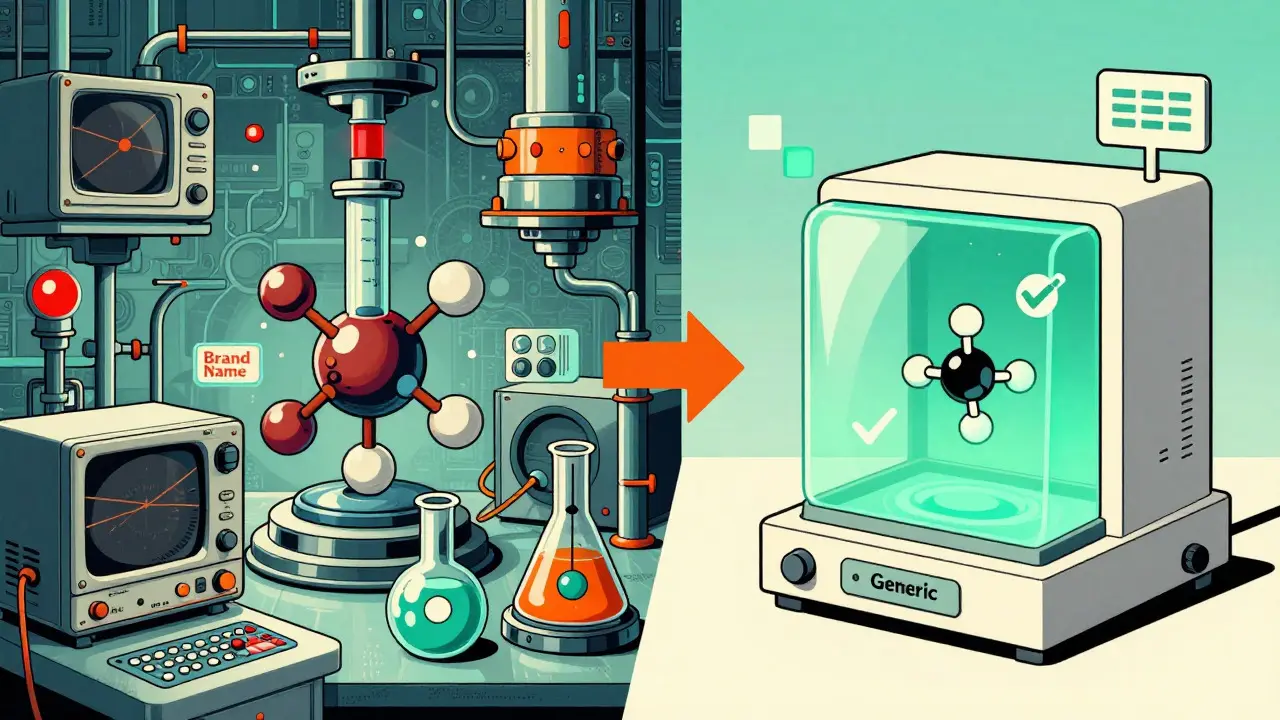
A common concern among patients is whether generic drugs are truly as safe and effective as their brand-name counterparts. The short answer is yes, but the process behind that assurance is rigorous. Under the Hatch-Waxman Act of 1984, manufacturers don’t need to repeat expensive clinical trials involving thousands of patients. Instead, they must prove two things: pharmaceutical equivalence and bioequivalence.
Pharmaceutical equivalence means the generic contains the exact same active ingredient, in the same strength, dosage form, and route of administration as the brand-name drug. Bioequivalence, however, is where the science gets interesting. Manufacturers conduct studies on 24 to 36 healthy volunteers to show that the generic drug enters the bloodstream at the same rate and extent as the brand-name version. The Food and Drug Administration (FDA) requires that the 90% confidence intervals for key metrics like Cmax (peak concentration) and AUC (total exposure) fall within 80-125% of the reference product.
This 80-125% range might sound loose, but statistically, it ensures there is no clinically meaningful difference in safety or efficacy. The FDA’s Orange Book lists over 14,000 approved generic products, assigning therapeutic equivalence codes to help pharmacists and doctors know which generics can be safely substituted. For example, an 'A' code indicates no known bioequivalence problems. This system allows the healthcare system to bypass redundant testing, saving billions in development costs that would otherwise be passed on to consumers.
The Rise of Biosimilars: Tackling Complex Drugs
While traditional generics work well for simple chemical compounds (small molecules), they hit a wall with complex biological drugs. These are large, intricate molecules produced in living cells, used to treat conditions like cancer, rheumatoid arthritis, and Crohn's disease. You can't just copy-paste a biologic. Instead, we have biosimilars, which are highly similar to existing biologic drugs but not identical copies.
Biosimilars offer discounts of 15-35% compared to reference biologics. While this seems smaller than the 80% drop seen with small-molecule generics, the impact is significant because specialty drugs account for 51% of total drug spending despite representing only 5% of prescriptions. The challenge, however, is adoption. In Europe, biosimilar uptake rates reach 70-85%. In the U.S., they lag at 25-30%, largely due to rebate-driven formulary restrictions imposed by Pharmacy Benefit Managers (PBMs). The RAND Corporation projects that if the U.S. could close this gap, the healthcare system could save an additional $133 billion by 2025.
The "biosimilar void" remains a critical issue. Currently, 90% of brand-name biologics losing patent protection in the next decade have zero biosimilar competitors in development. Addressing this requires policy interventions, such as expedited development pathways and liability protections, to encourage manufacturers to enter this complex market.
Barriers to Access: Why Prices Don't Always Drop
If generics are so effective at cutting costs, why do some patients still struggle with affordability? The answer lies in systemic barriers that delay or prevent generic entry.
- Patent Thickets: Brand manufacturers often file 140+ patents per drug, covering everything from the molecule itself to the color of the tablet or the packaging. This strategy extends market exclusivity long after the core patent expires.
- Pay-for-Delay Settlements: Brand companies sometimes pay generic manufacturers to stay out of the market. The Federal Trade Commission found these agreements increase entry delays by 17 months on average, costing consumers $3.5 billion annually.
- Product Hopping: Manufacturers make minor changes to a drug’s formulation right before a generic competitor arrives, forcing patients to switch to a new version that resets the patent clock.
- PBM Rebates: Some insurance plans charge higher copays for generics than for brand-name drugs if the brand offers a larger rebate to the PBM. This perverse incentive discourages the use of lower-cost options.
Additionally, supply chain vulnerabilities expose us to risks. During the 2020-2022 pandemic, shortages affected hundreds of generic drugs because 80% of active pharmaceutical ingredients (APIs) are manufactured overseas, primarily in India and China. Diversifying supply chains is now a priority for regulators to ensure consistent access.
Patient Perspectives: Real-World Impact
Behind every statistic is a person managing their health. On forums like Reddit and PatientsLikeMe, patients share stories that highlight both the benefits and frustrations of generic substitution. One user described switching their mother from brand-name Humalog insulin ($350/month) to generic insulin lispro ($25/month), resulting in $325 in monthly savings that prevented dose rationing. GoodRx’s 2024 report found that 68% of patients skipped doses when generics weren’t available, underscoring how vital affordability is for adherence.
However, concerns persist. Some patients report adverse reactions to inactive ingredients (fillers, dyes) in generics, particularly those with sensitive stomachs. The FDA received 1,247 adverse event reports related to generic substitutions in 2023, mostly gastrointestinal issues. For narrow therapeutic index drugs like levothyroxine (used for thyroid conditions), even minor variations can cause symptoms to return. About 23% of users on PatientsLikeMe reported negative experiences with switches for these specific drugs, leading some to request brand-name reversion despite higher costs.
Looking Ahead: Policy and Future Trends
The landscape of drug pricing is evolving. The Inflation Reduction Act introduced Medicare drug price negotiations, achieving 38-79% discounts on select drugs for 2026. However, these savings apply only to Medicare’s share of spending. To achieve system-wide cost control, experts argue that robust generic and biosimilar competition remains essential. The FDA’s Biosimilars Action Plan aims to cut review times by 50%, accelerating access to these lower-cost alternatives.
As we move forward, the focus will shift toward overcoming the technical challenges of genericizing complex molecules and reforming rebate structures that distort market incentives. For patients, staying informed about therapeutic equivalence codes and advocating for transparent pricing will continue to play a crucial role in navigating the healthcare system.
Are generic drugs as effective as brand-name drugs?
Yes. The FDA requires generic drugs to be bioequivalent to their brand-name counterparts, meaning they deliver the same amount of active ingredient into the bloodstream in the same timeframe. Clinical studies show no significant difference in safety or efficacy for the vast majority of medications.
Why are generic drugs so much cheaper?
Generics don’t require costly clinical trials to prove safety and efficacy because that data already exists for the brand-name drug. Manufacturers only need to demonstrate bioequivalence. Additionally, competition among multiple generic producers drives prices down significantly once patent protections expire.
What is the difference between a generic and a biosimilar?
Generics are chemically identical copies of small-molecule drugs. Biosimilars are highly similar versions of complex biologic drugs, which are too large and intricate to be exact copies. Biosimilars undergo rigorous testing to ensure no clinically meaningful differences exist compared to the reference biologic.
Can my pharmacist substitute a generic for a brand-name drug?
In most cases, yes. All 50 states allow pharmacist substitution unless the prescriber explicitly marks the prescription "Dispense as Written." Pharmacists rely on the FDA’s Orange Book to verify therapeutic equivalence before making the switch.
Why do some people experience side effects with generics?
While the active ingredient is identical, inactive ingredients (like fillers or dyes) may differ. Most people tolerate these changes fine, but some individuals may have sensitivities or allergies to specific excipients. If you experience issues, consult your doctor or pharmacist about alternative formulations.