How Generic Combination Drugs Save Money Compared to Individual Generics
 Dec, 31 2025
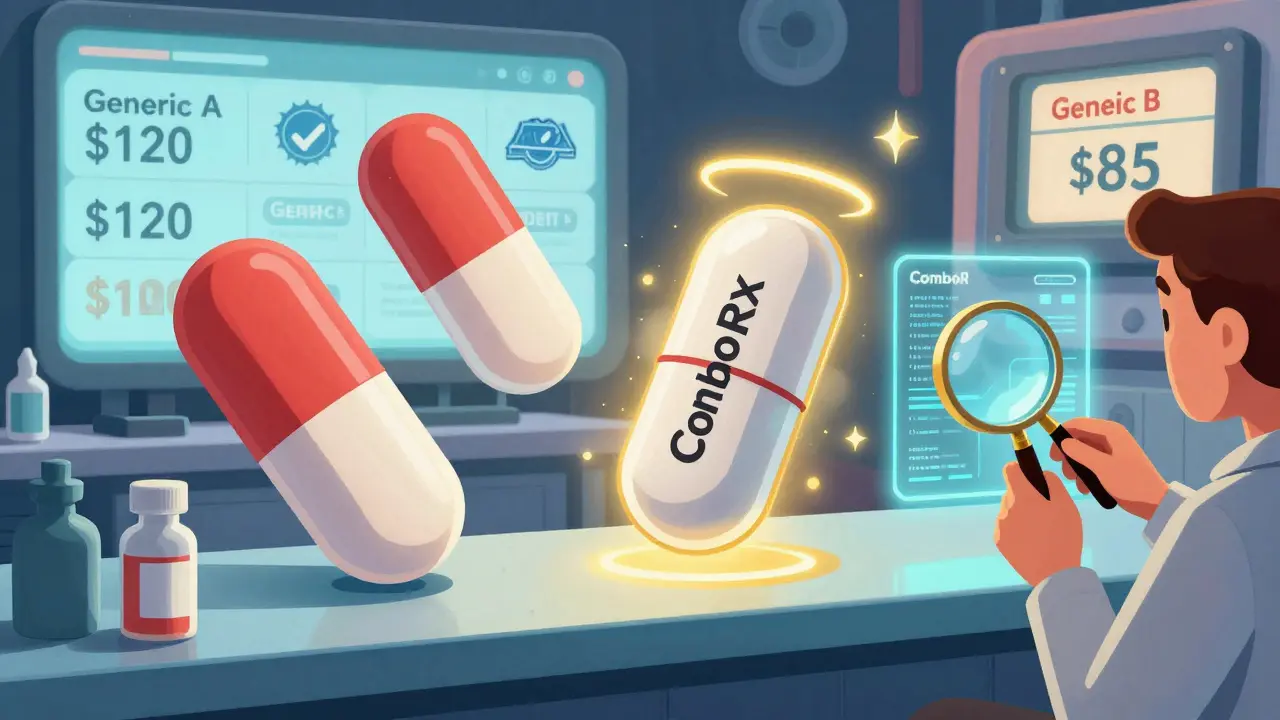
When you pick up a prescription, you might assume that generic drugs are always the cheapest option. But that’s not always true. Some generic medications cost more than others-even when they do the exact same thing. And sometimes, buying two separate generics costs way more than one combination pill that does the same job. The real savings aren’t just in switching from brand to generic. They’re in knowing which generics to pick-and which combinations to choose instead.
Why Some Generics Cost More Than Others
Not all generics are created equal. A 2022 study from JAMA Network Open looked at the top 1,000 generic drugs in Colorado and found 45 that were shockingly expensive-even though cheaper, equally effective alternatives existed. These high-cost generics weren’t brand-name drugs. They were generics. But they were priced 15.6 times higher than other generics with the same active ingredients. For example, one generic version of a common blood pressure medication cost $7.5 million in total spending over a year. But a different strength or dosage form of the same drug-still fully approved by the FDA-cost just $873,711. That’s an 88% drop in cost for the exact same treatment. The difference wasn’t in effectiveness. It was in pricing. Why does this happen? Sometimes it’s because a single manufacturer holds the rights to a specific formulation. Other times, it’s because pharmacies or pharmacy benefit managers (PBMs) haven’t updated their formularies to include the cheaper version. The result? Patients and insurers pay more than they should-just because no one checked.Combination Drugs: One Pill, Double Savings
Combination drugs-medications that pack two or more active ingredients into a single pill-are often overlooked as a cost-saving tool. But they can cut expenses in two ways: by reducing the number of pills you take and by lowering the total price compared to buying each drug separately. Take asthma inhalers. Before generic versions came out, Advair Diskus (a combination of fluticasone and salmeterol) cost about $334 per inhaler. When Wixela Inhub, the first generic version, hit the market in 2019, the price dropped to $115. That’s a 65% savings per inhaler. But here’s the kicker: if you were buying the two ingredients separately as individual generics, you’d still pay more than $115. The combination pill is cheaper than the sum of its parts. This isn’t just true for asthma. The same pattern shows up in diabetes, heart disease, and arthritis. For instance, a combination pill with metformin and sitagliptin (Janumet) costs less than buying metformin and sitagliptin as two separate generics. Why? Because manufacturers can streamline production, reduce packaging, and pass savings along. And insurers often favor combination drugs because they improve adherence-patients are more likely to take one pill than two.How Competition Drives Down Prices
The more companies make a generic drug, the cheaper it gets. That’s not theory-it’s data. When three or more manufacturers start producing the same generic, prices drop by about 20% within three years. With five or more, they can fall by 80% or more. Crestor (rosuvastatin) is a great example. When the brand version came off patent in 2015, the first generic cost $5.78 per pill. By 2023, with dozens of manufacturers competing, the price dropped to $0.08 per pill. That’s a 99% savings. Prilosec (omeprazole) followed the same path: from $3.31 to $0.05 per pill. But competition doesn’t always happen fast. Some drugs have only one or two generic makers because of complex manufacturing, patent tricks, or market consolidation. The top 10 generic manufacturers now control about 40% of the U.S. market. That limits competition-and keeps prices higher than they should be.
What You Can Do to Save Money
You don’t need a pharmacy degree to save hundreds a year on prescriptions. Here’s how:- Ask your pharmacist: “Is there a cheaper generic version of this?” or “Is there a combination pill that does the same thing?”
- Check the FDA’s Orange Book: It lists which generics are therapeutically equivalent. Look for drugs marked with an “A” rating-they’re interchangeable.
- Compare costs: Sometimes buying two separate generics costs more than one combo pill. Always ask for a price breakdown.
- Use discount programs: Sites like GoodRx or the Mark Cuban Cost Plus Drug Company can show you cash prices that beat insurance copays.
- Ask your plan to review formularies: If you’re on Medicare or employer insurance, your plan might be paying too much for a high-cost generic. Push them to switch to cheaper alternatives.
Who Saves the Most?
Savings aren’t the same for everyone. A 2023 study analyzing over 840 million prescriptions found that uninsured patients saved the most-28.9% of their fills had lower cash prices than their insurance copays. For them, generic combinations and discount programs made the biggest difference. Medicare patients saw savings on 5.5% of fills. Private insurance patients, 7.1%. Medicaid patients? Almost none. Why? Because Medicaid already negotiates low prices upfront. But that also means they’re less likely to switch to even cheaper options. The biggest savings? Over $10 per prescription. That’s not rare. Nearly 30% of the savings analyzed were over $10. For someone taking five medications a month, that’s $50 saved. In a year? $600.
Layla Anna
January 2, 2026 AT 06:56Heather Josey
January 2, 2026 AT 09:29Donna Peplinskie
January 2, 2026 AT 12:35Olukayode Oguntulu
January 3, 2026 AT 05:52jaspreet sandhu
January 3, 2026 AT 19:01Alex Warden
January 5, 2026 AT 07:57LIZETH DE PACHECO
January 6, 2026 AT 10:56Lee M
January 7, 2026 AT 13:33Kristen Russell
January 7, 2026 AT 21:27Bryan Anderson
January 8, 2026 AT 02:58Matthew Hekmatniaz
January 8, 2026 AT 16:24