How Doctors Around the World View Generic Medications
 Feb, 3 2026
When you walk into a pharmacy and get a pill labeled as a generic, what do you think? That it’s cheaper? Less effective? Or maybe you don’t think about it at all. But for doctors and pharmacists in different countries, generics aren’t just a cost-cutting trick-they’re a core part of how healthcare works. And their views on these drugs vary wildly depending on where they practice.
Europe: Generics as Policy, Not Choice
In Germany, France, and the UK, doctors don’t just accept generics-they’re expected to prescribe them. Government rules push pharmacies to swap brand-name drugs for generics unless a doctor specifically says no. It’s not about trust-it’s about budgets. European health systems are under constant pressure to control spending. Generics, which can cost 80% less than the original drug, are the easiest way to do that. A doctor in Berlin won’t hesitate to prescribe a generic statin for high cholesterol. Why? Because the system rewards it. The same drug, same active ingredient, same results. Patients don’t notice the difference. And if they do complain? The pharmacist is trained to explain why the switch is safe and standard. This isn’t optional. It’s built into the system. Even so, growth in Europe’s generic market is slowing. It’s already mature. Most common pills-like those for blood pressure or diabetes-are already generic. The next wave of savings will come from complex generics: injectables, inhalers, and skin creams. But those are harder to make, and not every country has the infrastructure to handle them yet.Asia-Pacific: Generics as Lifelines
In India and China, generics aren’t just preferred-they’re the only option for millions. A farmer in rural Uttar Pradesh doesn’t choose between brand and generic. He gets what’s available and affordable. India produces about 20% of the world’s generic pills and supplies nearly 40% of the U.S. market. That’s not luck. It’s strategy. Indian doctors see generics as essential infrastructure. Just like clean water or electricity, they’re part of the system that keeps people alive. With chronic diseases like diabetes and heart failure rising fast, and incomes still low in many areas, there’s no room for expensive brand-name drugs. A single monthly insulin dose can cost $100 in the U.S.-but under $5 in India. That’s the difference between treatment and death. China’s government pushes generics hard too. Price cuts every two years force manufacturers to keep prices low. Doctors adapt. They prescribe generics first. If a patient needs something more complex-like a cancer drug-they turn to biosimilars, which are generic versions of biologic drugs. These are growing fast. By 2029, oncology biosimilars alone could save $25 billion globally. The region’s market is growing at over 6% a year-the fastest in the world. Why? Because demand keeps rising. Aging populations. More diabetes. More heart disease. And no country can afford to treat them all with expensive drugs.United States: Generics as a Necessary Compromise
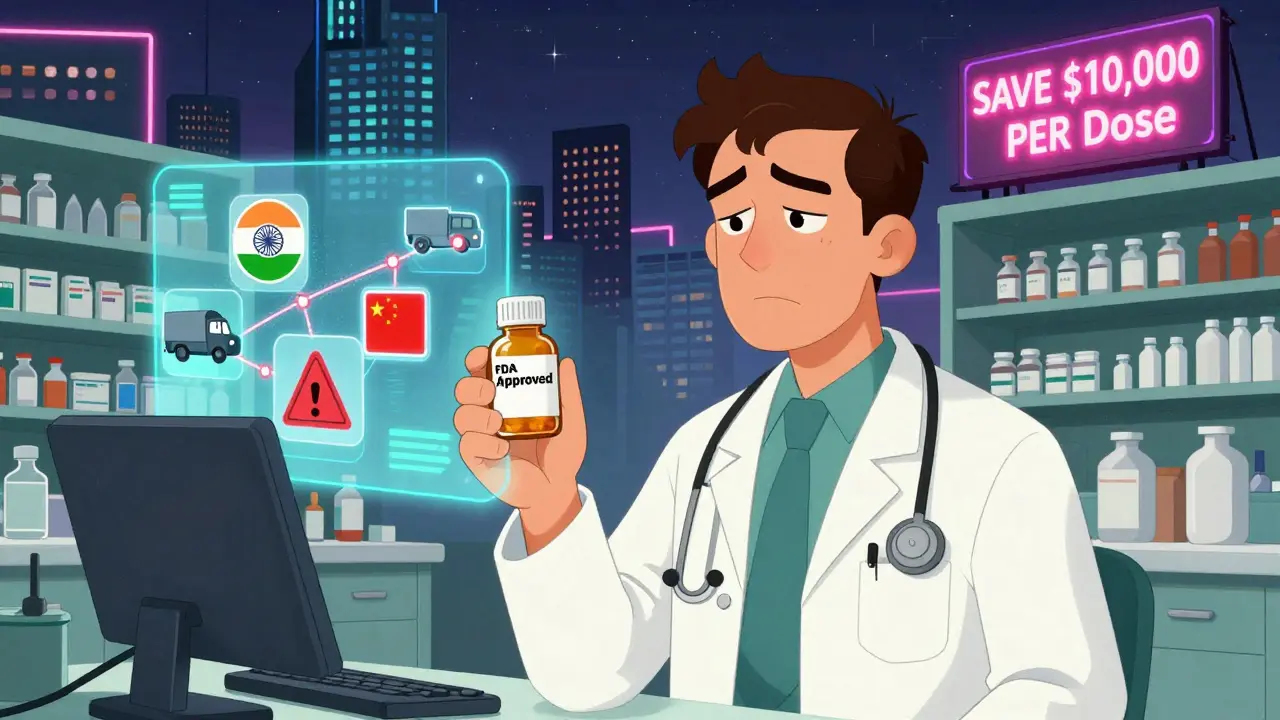
In the U.S., 90% of prescriptions are filled with generics. That sounds like a win. But here’s the catch: generics make up only 15% of total drug spending. Why? Because the few brand-name drugs that still have patents-especially for cancer, autoimmune diseases, and rare conditions-are insanely expensive. A single dose of a new biologic can cost $10,000 a month. Generics can’t touch those yet. Doctors know this. They prescribe generics whenever they can. But they’re also frustrated. Drug shortages happen often. A hospital runs out of a generic antibiotic, and the only alternative is a brand-name version that costs ten times as much. Or worse-there’s no alternative at all. Quality is another concern. The U.S. gets most of its generics from India and China. When a plant in Hyderabad gets flagged by the FDA for bad records, shipments stop. Doctors wait. Patients miss doses. Trust erodes. Still, providers see generics as the only way to keep care affordable. Without them, millions of Americans couldn’t afford their meds. The real issue isn’t whether generics work-it’s whether the supply chain can keep up.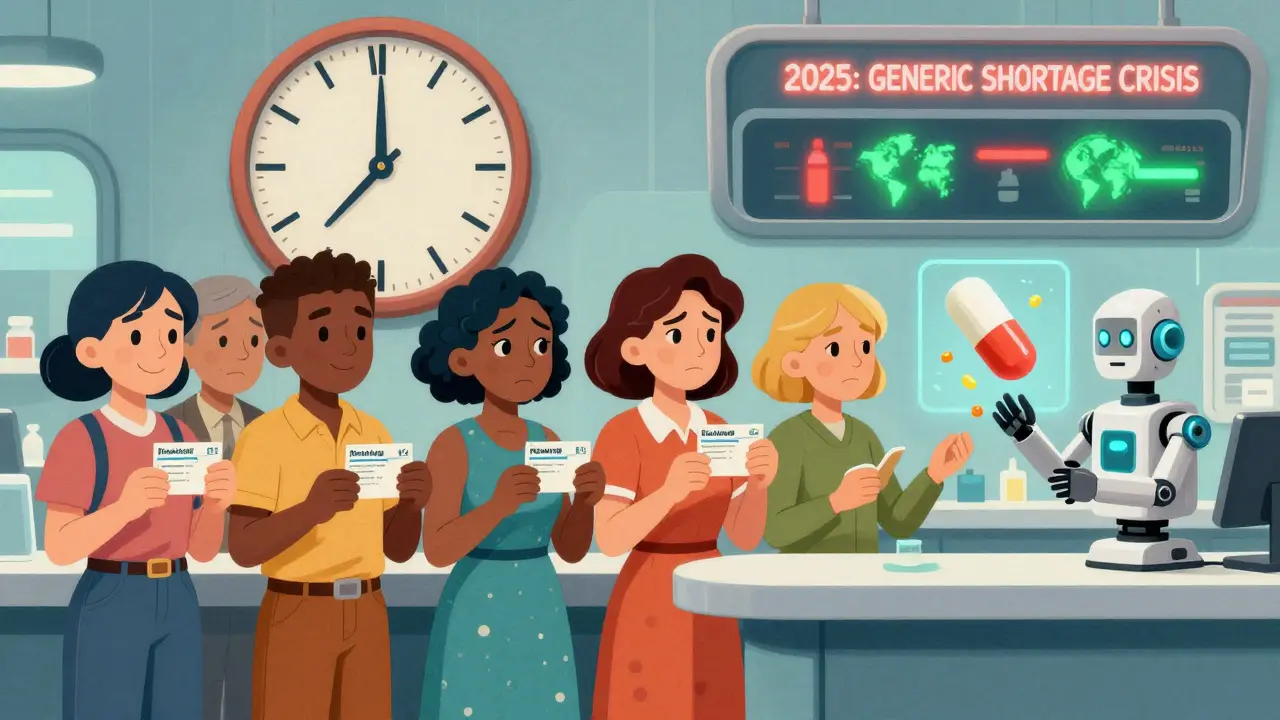
Japan: Generics by Government Mandate
Japan’s approach is unique. The government doesn’t just encourage generics-it forces them. Every two years, drug prices are slashed across the board. Brand-name drugs lose value fast. Generics gain ground. By 2025, over 80% of prescriptions in Japan were for generics. Doctors here don’t debate whether generics are safe. They’re told to prescribe them. Patients are told to accept them. The system works because it’s consistent. No confusion. No exceptions. Even for complex conditions like rheumatoid arthritis, generics are the first-line choice. The result? Japan’s overall pharmaceutical spending is flat or shrinking-even as the population ages. That’s rare. Most countries see drug costs climb as people get older. Japan proves that with strong policy, you can break that cycle.Emerging Markets: Generics as the New Standard
In Brazil, Turkey, and parts of Africa, generics aren’t just common-they’re the only realistic option. These countries don’t have the budgets to pay for expensive brand-name drugs. So they build their systems around generics from day one. Doctors in Lagos or São Paulo don’t need to be convinced. They’ve seen what happens when patients can’t afford meds. A diabetic who skips insulin because it’s too expensive ends up in the hospital-with a $5,000 bill. A generic version for $5? That’s the difference between life and crisis. Governments in these countries are investing in local generic production. Brazil now makes its own HIV meds. Turkey exports generics to Europe. These aren’t just cost-savers-they’re tools for national health security.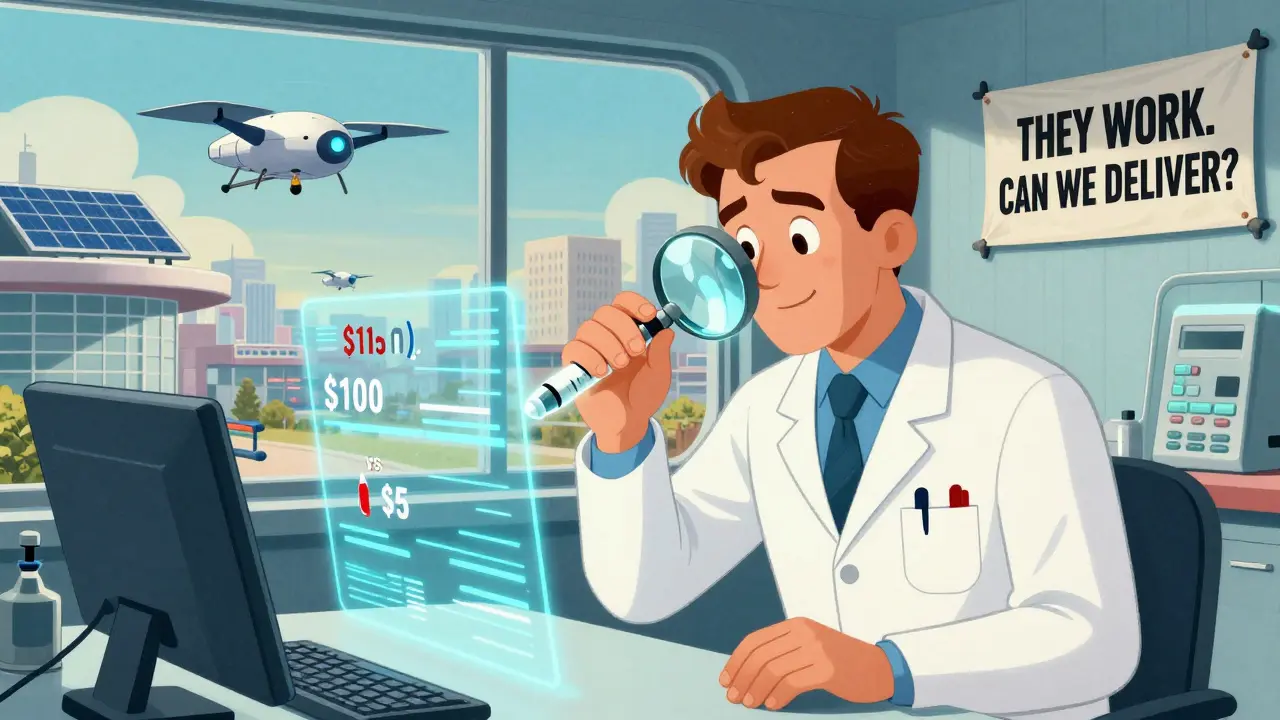
Caleb Sutton
February 5, 2026 AT 04:07Generics are a government mind-control scheme. They’re not cheaper-they’re diluted. I’ve read the studies. The active ingredient? Sometimes it’s 70% of what’s listed. And don’t get me started on the Indian factories. FDA flags? That’s just the tip of the iceberg. You think your blood pressure pill is safe? It’s a lottery ticket with your life on the line.
They’re not saving money. They’re sacrificing people. And you’re all just too numb to notice.
pradnya paramita
February 7, 2026 AT 01:43From an Indian pharma perspective, the global perception of generics is fundamentally misaligned. The API (active pharmaceutical ingredient) purity in regulated Indian facilities exceeds 99.5%-often higher than some branded manufacturers in the West. The real issue isn’t efficacy-it’s supply chain fragmentation and regulatory asymmetry. WHO-PQ (Prequalification) and USFDA-cGMP compliant plants in India produce over 60% of the world’s generic APIs. This isn’t cheap-it’s engineered precision at scale.
Jamillah Rodriguez
February 8, 2026 AT 04:05Ugh, I just read this whole thing and now I’m emotionally exhausted. Like… why does everything have to be so complicated? I just want my blood pressure meds to work without me needing a PhD in global pharmaceutical policy. Can’t we all just chill and take the pill?
Also, why is everyone so dramatic about generics? It’s not a Netflix show. It’s a pill.
Susheel Sharma
February 8, 2026 AT 13:35The entire narrative around generics is a neoliberal farce disguised as public health. In the U.S., the system doesn’t fail because generics are unsafe-it fails because the patent system is a legalized cartel. Brand-name monopolies extort $10,000/month for molecules that cost $2 to synthesize. Generics aren’t the problem. The profit-driven infrastructure is. And let’s not pretend that ‘quality control’ is neutral-it’s a geopolitical weapon. FDA inspections? Selective. Chinese plants? Targeted. Indian ones? Vilified. It’s not about safety. It’s about control.
Roshan Gudhe
February 9, 2026 AT 12:36Generics force us to ask: What is medicine for? Is it to heal? Or to commodify? In India, a generic insulin vial isn’t just a drug-it’s a covenant between society and survival. In the U.S., it’s a negotiation between insurance forms and pharmacy shelves. The difference isn’t in the molecule-it’s in the moral architecture. We’ve built systems that ration care by price, then pretend the pill is the issue. The pill doesn’t lie. The system does.
Maybe the real question isn’t whether generics work-but whether we’re still worthy of them.
Joy Johnston
February 9, 2026 AT 15:06As someone who works in hospital pharmacy, I can confirm: generics are the backbone of accessible care. We switch patients to generics daily-especially for statins, metformin, lisinopril-and outcomes are statistically identical. The FDA’s bioequivalence standards require 80-125% plasma concentration overlap. That’s not a loophole-it’s science. The only time we see issues is when supply chains break, not because the drug is inferior. We need better monitoring, not fear.
Amit Jain
February 10, 2026 AT 12:44Simple truth: in India, generics save lives. No fancy words. No politics. Just a man in a village getting his diabetes meds for $3 instead of $100. That’s not a policy-it’s justice. If you’re in a rich country and you think generics are sketchy, go try living on minimum wage and see how fast your attitude changes.
Keith Harris
February 10, 2026 AT 14:17Oh please. You think Europe’s system is perfect? Germany’s generics program is just state-enforced medical austerity. They’re not ‘saving money’-they’re starving patients of choice. And don’t even get me started on Japan. Forcing people to take generics? That’s not healthcare-it’s authoritarianism wrapped in a lab coat. The U.S. is broken? Sure. But at least we still have the illusion of freedom.
Mandy Vodak-Marotta
February 11, 2026 AT 01:42Okay so I just spent 20 minutes reading this and I’m now emotionally drained but also weirdly inspired? Like… I never thought about how a pill in my hand could be the difference between a farmer in Uttar Pradesh living or dying. And then I remembered that my generic statin cost $4 and I didn’t even think about it. That’s wild. We take this stuff for granted. Like, I’m literally sitting here in my pajamas, sipping coffee, while someone in a rural clinic in Nigeria is holding the same molecule in their hand, and it’s the only thing keeping their kid alive. I don’t even know what to say. Just… wow. We’re so lucky. And so disconnected.
Harriot Rockey
February 12, 2026 AT 16:45This made me tear up a little. Seriously. The fact that in some places, a generic pill is the difference between life and death… and in others, people are arguing about whether it’s ‘safe’? That’s not a medical issue. That’s a moral one. I hope we start treating access to medicine like a human right-not a bargaining chip. 🙏
rahulkumar maurya
February 14, 2026 AT 00:20One must acknowledge the epistemological hegemony embedded within the discourse of generic pharmaceuticals. The Western paradigm of ‘brand = quality’ is a colonial relic, a performative signal of status masquerading as clinical superiority. Meanwhile, Indian manufacturers operate under ISO 13485-certified GMP protocols with quality metrics surpassing those of many U.S.-based facilities. The stigma attached to generics is not pharmacological-it is sociological. A symptom of class anxiety disguised as scientific skepticism.
Alec Stewart Stewart
February 14, 2026 AT 02:15I’ve been on generics for years. Never had an issue. My mom’s on them too. She’s 78, has diabetes and high blood pressure. Still walking, still cooking, still arguing with us about TV. The pills work. The system’s messy? Yeah. But blaming the medicine? That’s like blaming the hammer because the house is still under construction.
Samuel Bradway
February 15, 2026 AT 19:54My cousin works at a generic drug plant in Chennai. She told me they test every batch 12 times before shipping. The lab’s cleaner than my kitchen. And they ship to 80+ countries. I used to think ‘Made in India’ meant ‘cheap junk.’ Now I get it: it means ‘cheap and actually good.’
Janice Williams
February 17, 2026 AT 15:30The entire premise of this article is dangerously naive. The notion that generics are universally ‘safe’ ignores the documented cases of substandard products entering supply chains. The FDA’s import alerts are not theoretical-they are reactive. And yet, we celebrate generics as if they are inherently virtuous. This is not public health-it is ideological romanticism. The truth is uncomfortable: quality control is not guaranteed by geography. It is guaranteed by enforcement. And enforcement is inconsistent. Therefore, caution-not celebration-is the rational stance.
Rachel Kipps
February 18, 2026 AT 00:18i read this and i just… wow. i never thought about how much this affects people in other countries. i just take my pills and never think about where they come from. but now i feel like i need to be more aware. thanks for writing this. it made me think.