HCV Reinfection and Cure: Retreatment Protocols and Harm Reduction Strategies
 Jul, 22 2026
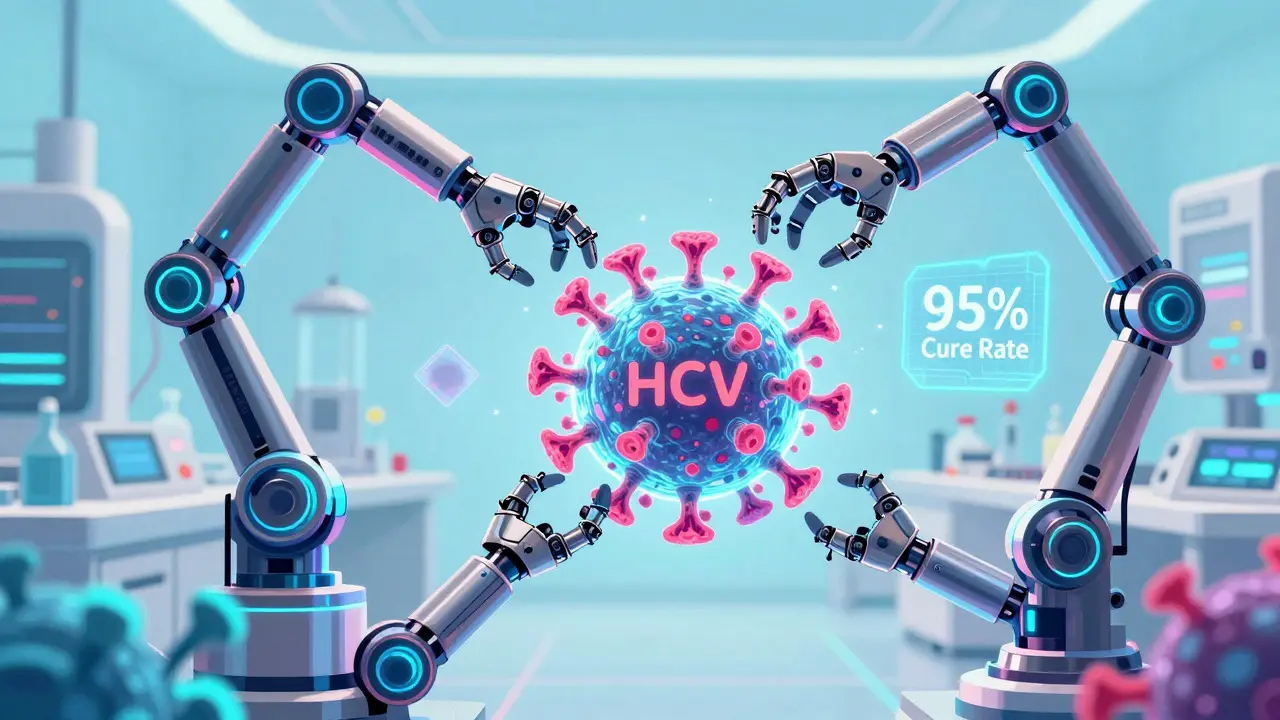
Getting cured of Hepatitis C is a huge victory. For years, the idea of a "cure" was just a dream for people living with this virus. But today, thanks to direct-acting antivirals (DAAs), more than 95% of patients achieve a sustained virologic response (SVR12)-the medical term for being cured-after just 8 to 12 weeks of oral medication. It sounds like the end of the story, right? Wrong. For many people, especially those who inject drugs or have ongoing exposure risks, the story continues. Hepatitis C virus (HCV) reinfection is a condition where the virus returns after successful treatment, requiring retreatment and integrated care strategies. This isn't a failure; it's a biological reality that demands a new approach combining clinical precision with compassionate harm reduction.
The Reality of HCV Reinfection Rates
You might think that once you are cured, you stay cured forever. That’s true for most viruses, but not for HCV. Unlike HIV or Hepatitis B, curing HCV does not give you immunity. If you are exposed to the virus again, you can get infected all over again. This is called reinfection. The good news? You can be treated again. The bad news? Stigma often gets in the way.
Data from the HERO study highlights who is at highest risk. Younger people under 30 face a significantly higher risk. Those reporting ongoing injecting drug use have an adjusted hazard ratio of 3.2 for reinfection. Methamphetamine users also show elevated risks, with a hazard ratio of 2.8. The first six months after your cure date are the critical window. Incidence peaks here before gradually decreasing over time. Understanding these numbers helps us stop blaming individuals and start looking at the structural gaps in care. Reinfection is not a moral failing; it is a public health signal that our prevention nets have holes.
Retreatment Protocols: What Works Now?
If you are reinfected, do you go back to square one? Not exactly. Modern medicine has specific pathways for this scenario. According to updated guidelines from the CDC and studies published in Clinical Infectious Diseases (2025), retreatment is highly effective. In fact, research confirms that treating reinfection is as effective as treating the primary infection.
Here is how the current protocols break down:
- For Reinfection: The standard recommendation is Glecaprevir/Pibrentasvir (G/P) for 8 weeks. This regimen is potent, well-tolerated, and pangenotypic, meaning it works across different strains of the virus.
- For Relapse: If the virus returns because the first treatment didn’t fully clear it (relapse), the protocol shifts. You might receive G/P plus ribavirin for 16 weeks, or Sofosbuvir/Velpatasvir/Voxilaprevir (SOF/VEL/VOX) for 12 weeks.
- Resistance Testing: Crucially, if you experience a relapse, doctors must perform resistance testing. This involves sequencing the NS3 and NS5A genes to look for resistance-associated substitutions. Reinfection usually doesn’t require this step because it’s a new strain, but relapse means the old strain fought back and evolved.
A major breakthrough happened in June 2025 when the FDA approved MAVYRET (glecaprevir/pibrentasvir) specifically for acute HCV infection. It boasts a 96% cure rate in just 8 weeks. This approval signals a shift toward catching the virus early, before it causes liver damage.
| Scenario | Recommended Regimen | Duration | Key Consideration |
|---|---|---|---|
| Primary Infection | Glecaprevir/Pibrentasvir (G/P) | 8-12 weeks | Standard first-line therapy |
| Reinfection | Glecaprevir/Pibrentasvir (G/P) | 8 weeks | No resistance testing needed |
| Relapse | G/P + Ribavirin OR SOF/VEL/VOX | 12-16 weeks | Requires NS3/NS5A resistance testing |
| Acute Infection (Early) | Glecaprevir/Pibrentasvir (G/P) | 4-8 weeks | FDA approved for acute cases in 2025 |
The Rise of Short-Course Therapy
Can we treat HCV faster? Scientists are betting yes. The PURGE-C trial (A5380) tested a bold hypothesis: what if we treat early infection with just four weeks of G/P? The results were striking. They achieved an 84% SVR12 rate. While this is slightly lower than the >95% seen in standard 8-12 week courses, it opens a door for populations who struggle to stay in long-term care. Imagine a person experiencing homelessness or active addiction. Asking them to commit to three months of daily pills is hard. Asking for four weeks is much more feasible.
Dr. Edward Gane from Auckland Clinical Studies noted that failing short-course treatment did not compromise future retreatment options. This safety net is vital. It means we can try simplified approaches without risking the patient’s long-term health. The NIH is now launching the PURGE-2 trial to test even shorter 2-week regimens. This evolution reflects a deeper understanding: access matters as much as efficacy.

Harm Reduction: The Missing Link in Cure
Treating the liver while ignoring the lifestyle is like mopping the floor while the tap is still running. Harm reduction is not optional; it is the foundation of sustainable HCV elimination. Without it, reinfection rates will keep climbing, wasting resources and eroding trust.
Two pillars support this strategy:
- Needle-Syringe Programs (NSPs): A meta-analysis in the International Journal of Drug Policy (2024) found that high-coverage NSPs-distributing at least 200 needles per person annually-correlate with a 54% lower HCV incidence. Simple math: fewer shared needles mean fewer transmissions.
- Opioid Agonist Therapy (OAT): Medications like methadone and buprenorphine stabilize lives. A Cochrane Review (2023) confirmed that methadone maintenance reduces HCV incidence by 50%. When people are stable, they engage better with healthcare systems.
Yet, barriers persist. A 2024 survey by the Harm Reduction Coalition revealed that 68% of people who inject drugs (PWID) experienced treatment denial due to ongoing drug use. This contradicts CDC guidance, which states treatment should be available "as often as required, without stigma." Integrated care models solve this. In Boston, 82% of participants reported improved adherence when HCV care was co-located with opioid agonist therapy clinics. Stop making patients bounce between addiction specialists and liver doctors. Bring the services together.
Barriers and Stigma in Clinical Practice
Why does stigma exist? Often, it stems from outdated beliefs that people who use drugs are "non-compliant." Reddit discussions in r/Hepatology highlight real-world frustrations. Patients report clinicians hesitating to prescribe retreatment, fearing the virus will just come back. This fear is misplaced. As Dr. Jason Grebely stated, "Reinfection presents a challenge, but should not be considered a barrier to HCV elimination."
Fragmented care systems exacerbate the problem. In San Francisco, 74% of relapsed patients struggled to navigate between addiction treatment centers and liver specialty clinics. This bureaucracy costs lives. By August 2025, 32 U.S. states implemented "treatment on demand" policies, allowing same-day DAA initiation for PWID. This policy shift acknowledges that waiting lists kill momentum. If a patient walks in ready to treat, hand them the pills. Follow up later.

Surveillance and Post-Treatment Care
Curing HCV is not a one-and-done event. Post-treatment surveillance is critical, especially for high-risk groups. The CDC recommends quarterly HCV RNA testing for the first six months post-cure. Why? Because that’s when reinfection risk peaks. Early detection allows for immediate retreatment before liver damage accumulates.
Don’t forget about Hepatitis B. Before starting any DAA regimen, mandatory HBV testing is required. DAAs can cause Hepatitis B reactivation in co-infected patients. Between 2019 and 2024, the FDA reported 12 cases of severe HBV reactivation linked to HCV treatment. This is a preventable tragedy. Always screen for both viruses.
The Path to 2030 Elimination
The World Health Organization aims to eliminate HCV as a public health threat by 2030. Is it possible? Modeling suggests yes, but only if we scale up aggressively. We need annual DAA coverage increases exceeding 15% combined with NSP coverage reaching over 60% of PWID. Currently, global prevalence stands at 58 million people with 1.5 million new infections yearly. But progress is happening. Treatment access jumped from less than 1% of eligible patients in 2010 to 20.4 million treated globally by 2023.
Cost remains a hurdle. In the U.S., Medicare Part D data from 2025 shows annual costs ranging from $24,720 for pibrentasvir-based regimens to nearly $60,000 for triple therapies. However, the cost of cirrhosis, liver transplants, and hepatocellular carcinoma far exceeds the price of a pill bottle. Investing in cure and prevention is economically sound.
The future looks cautiously optimistic. The Lancet Gastroenterology & Hepatology predicts an 80% global reduction in HCV incidence by 2030 using current tools. But success hinges on political will, funding, and dismantling stigma. Every reinfection is a call to action. Treat it. Prevent it. Repeat it.
Is HCV reinfection common among people who inject drugs?
Yes, reinfection is more common in populations with ongoing transmission risks, particularly people who inject drugs (PWID). The HERO study indicates that younger individuals under 30 and those with ongoing injection behaviors face significantly higher hazards ratios for reinfection. However, rates decrease over time post-treatment if harm reduction measures are maintained.
How many times can you take DAA treatment for Hepatitis C?
There is no strict limit. CDC guidelines recommend treating HCV "as often as required." Studies confirm that retreatment for reinfection is as effective as primary treatment. The key is ensuring proper monitoring and addressing underlying risk factors to reduce future exposure.
What is the difference between HCV relapse and reinfection?
Relapse occurs when the virus returns shortly after treatment because the initial therapy failed to fully clear it. Reinfection happens when a person is cured but contracts a new strain of the virus through subsequent exposure. Relapse requires resistance testing to guide retreatment, while reinfection typically responds to standard regimens without genetic sequencing.
Does curing Hepatitis C provide immunity against future infections?
No. Unlike some viral infections, curing HCV does not confer natural immunity. You can be reinfected multiple times. This makes ongoing harm reduction strategies, such as needle exchange programs and safe injection practices, essential for maintaining long-term health.
Are short-course treatments effective for acute Hepatitis C?
Recent trials like PURGE-C show promising results. A 4-week course of glecaprevir/pibrentasvir achieved an 84% cure rate for early infection. While slightly lower than standard 8-12 week regimens (>95%), short courses offer a viable option for patients who struggle with long-term adherence, provided they are monitored closely.
Trey Newkerk
July 23, 2026 AT 07:38You talk about "compassionate harm reduction" like it’s some new, radical concept that we haven’t tried a thousand times before. It is not. It is a band-aid on a bullet hole. The system is broken because the people in it are broken. You want to cure them? Fine. But don’t pretend that giving someone eight weeks of pills fixes the existential void that drives them to inject poison into their veins in the first place. We are treating symptoms while ignoring the disease of the soul.
Charles PINSON
July 23, 2026 AT 08:37The data presented here is pedestrian at best. While the HERO study provides adequate metrics for reinfection rates among PWID, it fails to account for the socioeconomic variables that truly dictate adherence. The assumption that Glecaprevir/Pibrentasvir is a panacea ignores the logistical nightmares faced by the uninsured. Furthermore, the distinction between relapse and reinfection is clinically significant but practically irrelevant when insurance companies deny coverage based on arbitrary prior authorization protocols. The real barrier isn't stigma; it's bureaucratic incompetence masked as clinical caution.
John Anderson
July 25, 2026 AT 08:07Stop making excuses. If you keep shooting up, you get sick. Simple as that. No one forces you to share needles. It is a choice. And now you want society to pay for your mistakes again and again? There is no limit to treatments, sure. But there should be a limit to how many times we bail you out. Take responsibility. Get clean. Stay clean. Until then, stop complaining about the system failing you when you failed yourself.
Patrick Plummer
July 25, 2026 AT 11:06Is it really just biology?!! Or is it something deeper?! Something systemic?! The article mentions the HERO study... but who funded it?! Big Pharma?! They want you reinfected so they can sell you more pills!!! Don't let them fool you!!! The cure is a lie!!! The virus is a construct!!! Wake up!!!
Kieran Healy
July 26, 2026 AT 03:58I think this is such an important topic to discuss :) It is easy to judge from the outside, but living with HCV is incredibly hard. I have friends who have been cured multiple times. They are not failures. They are fighting battles we cannot see. The fact that short-course therapy is being tested gives me so much hope! Imagine if we could make treatment even easier for those struggling with housing or addiction. That would be amazing. Let us support each other instead of blaming. <3
Kevin Burke
July 26, 2026 AT 04:53Let us consider the philosophical implications of 'cure' in a world without immunity. To be cured is to be reset, yet the conditions of existence remain unchanged. The individual returns to the same environment, the same temptations, the same structural inequalities. Is the body merely a vessel to be sanitized repeatedly, or is the spirit what requires healing? The medical model treats the liver, but ignores the human condition. We must ask: what does it mean to be well in a world that constantly invites sickness?
neal vince
July 26, 2026 AT 10:03It is interesting to note that the FDA approval of MAVYRET for acute infection in June 2025 was largely driven by cost-benefit analyses rather than pure efficacy concerns. The 96% cure rate is impressive, but the real story is the economic pressure on healthcare systems. With Medicare Part D costs ranging up to $60,000 for triple therapies, insurers are pushing for shorter courses to reduce liability. This is not just medicine; it is economics disguised as care. Patients are becoming line items in a spreadsheet.
Sinead Doyle
July 26, 2026 AT 14:48the mainstream media wants u to believe daas are safe but look at the hbv reactivation cases!!! 12 cases reported by fda is just the tip of the iceberg!!! big pharma is hiding the real side effects!!! they want u dependent on their drugs forever!!! dont trust the cdc guidelines!!! do ur own research!!! the truth is suppressed!!! :)