Generic Prescribing Incentives: How Rewards Shape Provider Decisions
 Jan, 31 2026
When a doctor writes a prescription, they’re not just choosing a medicine-they’re making a decision that affects your health, your wallet, and their own income. For years, the system rewarded brand-name drugs. But that’s changing. Today, generic prescribing incentives are reshaping how doctors choose medications, and the stakes are high: billions in savings, shifting clinical trust, and real consequences for patient care.
Why Generic Prescribing Incentives Exist
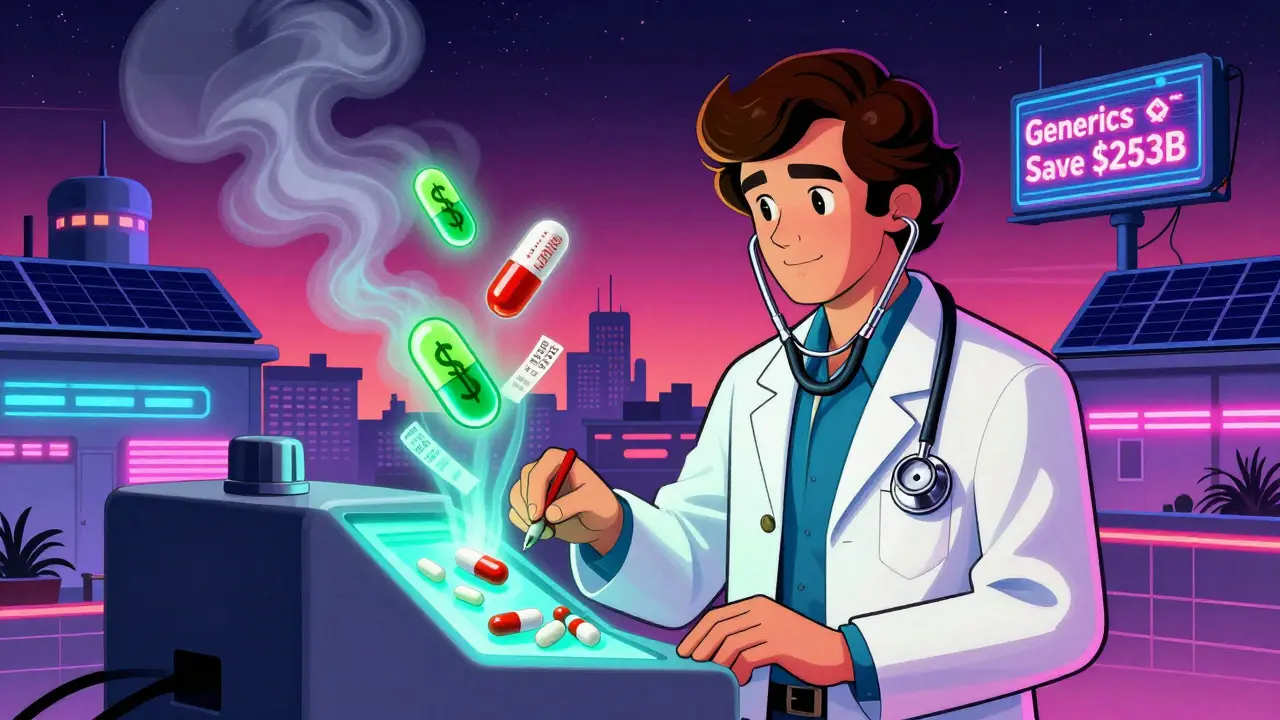
The U.S. spends $253 billion a year on prescription drugs. Generic drugs make up 90% of all prescriptions filled, but they only account for 23% of that spending. That gap isn’t accidental. Brand-name drugs cost 10 to 20 times more than their generic equivalents-even though they work the same way. The goal of these incentives is simple: cut waste without cutting corners. In the early 2000s, as drug prices kept climbing, insurers and government programs started looking for ways to push providers toward cheaper options. By 2006, Medicare Part D began using formulary tiers to nudge patients-and later, doctors-toward generics. Today, 89% of U.S. health plans have some kind of provider incentive tied to generic prescribing. It’s not just about saving money anymore. It’s about redesigning how care is delivered.How These Incentives Work
There are two main types of incentives: financial and non-financial. Both aim to make prescribing generics easier, more rewarding, or both. Financial incentives come in different forms. Some plans pay doctors directly-$5 to $15 per generic prescription in targeted drug classes. Blue Cross Blue Shield companies have programs where physicians can earn up to $5,000 a year in bonuses just for choosing generics over brand names. Others tie payments to overall performance: if a provider’s generic prescribing rate hits a certain threshold, they get a bonus at the end of the year. Non-financial rewards matter too. Some providers get faster prior authorizations, priority scheduling for patient visits, or even public recognition in internal newsletters. One program, CivicaScript, doesn’t even pay doctors-it lowers the price of generics outright, making it easier for providers to choose them without needing a financial nudge. Electronic prescribing systems now often default to generic alternatives. A 2020 study found that when EHRs automatically suggested generics, prescribing rates jumped by over 22 percentage points. That’s not a small tweak-it’s a system-wide shift.What Works-and What Doesn’t
Not all incentive programs deliver the same results. Formulary tiering, where generics are placed in the lowest-cost tier for patients, only increases generic use by 8-12%. Why? Because it puts the burden on the patient, not the provider. Direct provider incentives? They’re far more effective. UnitedHealthcare’s Value-Based Prescribing Program boosted generic use by nearly 25% in primary care. Why? Because the reward goes straight to the person making the decision. But there’s a catch. Some systems create unintended consequences. Providers who get discounted brand-name drugs through the 340B program-designed to help safety-net clinics-actually prescribe generics less often. Their financial incentive is backward: they save more money by prescribing expensive drugs. Even more troubling: doctors who receive payments or gifts from pharmaceutical companies are 37% less likely to prescribe generics, especially for newer ones. A 2023 study found that when a drug is less than a year old, this effect is strongest. It’s not about ignorance-it’s about influence.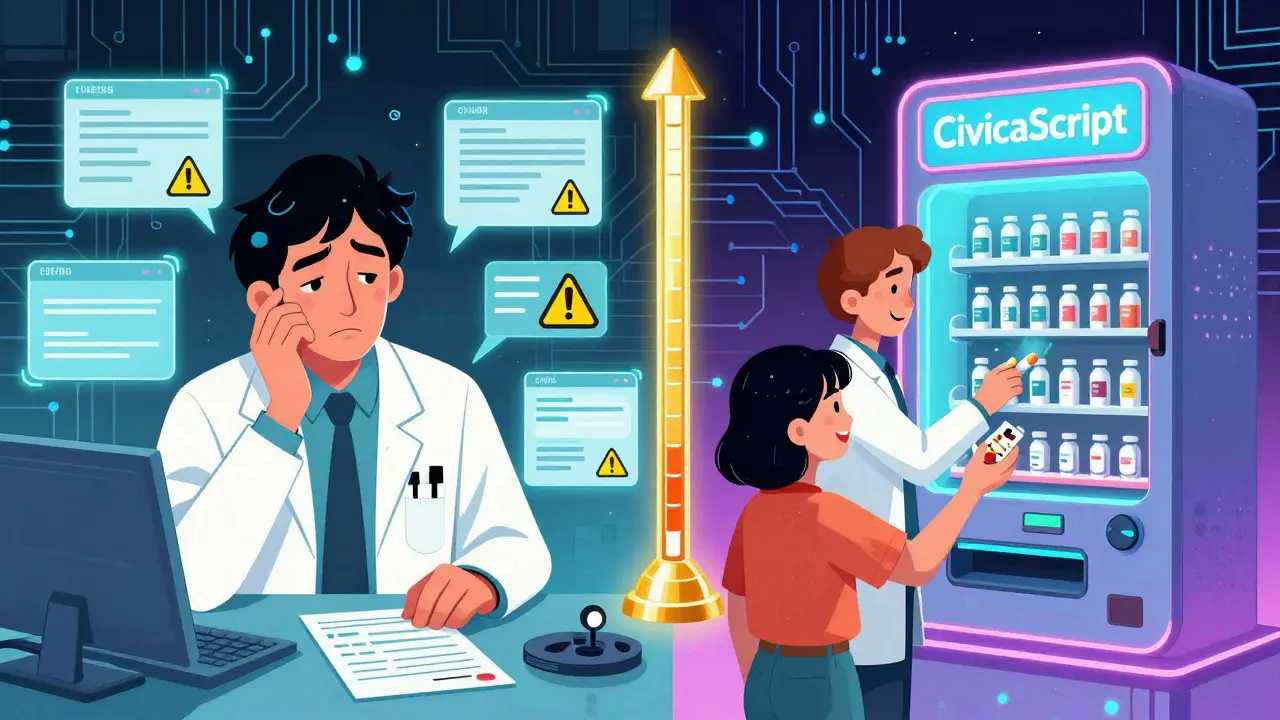
Provider Perspectives: The Real Talk
On physician forums like Sermo and Reddit, opinions are mixed. Dr. Michael Chen, an internal medicine doctor in California, says UnitedHealthcare’s program added $2,800 to his annual income with almost no extra work. He calls it a win. But Dr. Sarah Williams, a family doctor in Texas, says some programs feel coercive. “When you’re managing a patient with five chronic conditions, you shouldn’t be forced into a box because a spreadsheet says so,” she told Medscape in 2022. One Reddit user, MedDoc2020, put it bluntly: “Generic incentives work for simple cases-high blood pressure, diabetes, acid reflux. But what about a patient who needs a specific brand because the generic gives them stomach cramps? That’s not a cost-saving opportunity-that’s a clinical risk.” A 2021 survey of 1,200 providers found that 63% liked incentives when they were voluntary and tied to quality, not just cost. But 78% worried that if patients found out their doctor was being paid to prescribe generics, trust would erode. “They’ll think we’re choosing drugs based on money, not medicine,” one respondent said.The Hidden Costs of Incentives
There’s another layer most people don’t see: administrative burden. Implementing these programs isn’t free. Practices need to integrate with EHRs, train staff, track metrics, and sometimes hire compliance officers. A Duke University analysis found that full implementation takes about 4 months and 15-20 hours of provider training. And then there’s alert fatigue. If an EHR pops up a warning every time a doctor tries to prescribe a brand-name drug-even when it’s clinically necessary-it becomes noise. Doctors start ignoring it. That’s why the best programs don’t block choices-they guide them. Smart systems only suggest alternatives when there’s clear therapeutic equivalence. EHR interoperability is another headache. In a 2022 survey, 68% of organizations reported issues connecting their systems to payer databases. If the data doesn’t flow, the incentive doesn’t work.How the U.S. Compares to the World
The U.S. isn’t leading the charge-Europe is. Germany uses a system called reference pricing: if you prescribe a brand-name drug, the government only pays up to the cost of the cheapest generic in that class. The rest comes out of the patient’s pocket. Result? 93% of off-patent prescriptions are generics. In the U.S., the rate is 85%. That gap isn’t about patient preferences-it’s about how providers are paid. In countries with tighter price controls and fewer financial ties to drug companies, doctors feel less pressure to choose expensive options.
What’s Next?
The future of generic prescribing is getting smarter. In 2023, CMS expanded its “$2 Drug List” to more Medicare Advantage plans. The idea? Make essential generics cost $2 or less at the pharmacy. Early results show a 22.7% jump in adherence for chronic conditions like high blood pressure and cholesterol. The 2022 Inflation Reduction Act is also pushing patent reform, which could clear the way for more generics to enter the market. Experts predict that by 2028, 94% of prescriptions will be generic-up from 90.5% today. UnitedHealthcare is rolling out “value-based prescribing contracts” in 2024. These tie payments not just to cost savings, but to clinical outcomes. If a patient’s blood pressure improves on a generic, the provider gets rewarded. If it doesn’t, they’re not penalized-they’re supported with better tools.What Providers Need to Know
If you’re a doctor, here’s what matters:- Know your plan’s incentive structure. Is it a bonus? A penalty? A default setting?
- Understand which drugs have true therapeutic equivalence-and which don’t. Not all generics are interchangeable.
- Use clinical decision support tools, but don’t let them override your judgment.
- Communicate with patients. If you’re choosing a generic for cost reasons, say so. Transparency builds trust.
- Push back if the system ignores clinical nuance. Your voice matters in shaping better policies.
Final Thought: It’s Not About Choice-It’s About Alignment
Generic prescribing incentives aren’t good or bad. They’re tools. And like any tool, they work best when they’re aligned with the right goals. The goal isn’t to make doctors prescribe cheaper drugs. The goal is to make them prescribe the right drugs-without being financially punished for doing so. When incentives reward quality, not just cost, when they respect clinical judgment, and when they’re transparent to patients-they don’t just save money. They improve care.Do generic prescribing incentives compromise patient care?
Not when they’re designed well. Poorly structured incentives can push providers to choose generics even when brand-name drugs are clinically necessary, leading to treatment failures or side effects. But strong programs include clinical exceptions, avoid one-size-fits-all rules, and use decision support tools that only suggest alternatives when appropriate. The key is balancing cost savings with clinical flexibility.
How much money can a doctor make from generic prescribing incentives?
It varies. Some providers earn $5-$15 per generic prescription, with annual bonuses reaching $5,000. Others receive performance-based payouts tied to overall prescribing rates. In high-volume primary care practices, it’s not uncommon to add $2,000-$4,000 annually to income. But these are not guaranteed payments-they depend on plan rules, patient volume, and adherence to program guidelines.
Are generic drugs really as effective as brand-name drugs?
Yes, for the vast majority of medications. The FDA requires generics to have the same active ingredient, strength, dosage form, and route of administration as the brand-name drug. They must also meet the same strict standards for quality and bioequivalence. There are rare exceptions-like certain seizure medications or thyroid drugs-where small differences in inactive ingredients can affect absorption. But for 95% of prescriptions, generics are just as safe and effective.
Why do some doctors resist generic prescribing incentives?
Many feel it undermines their clinical autonomy. If a system forces or heavily rewards generic use without accounting for individual patient needs, doctors worry they’re being pushed toward cookie-cutter medicine. Others are concerned about patient trust-if patients find out their doctor is being paid to choose cheaper drugs, they may question whether the decision was truly in their best interest. These concerns are valid and need to be addressed through transparency and flexibility.
Can patients benefit from generic prescribing incentives?
Absolutely. When providers choose generics, patients pay less out of pocket. Lower co-pays mean better adherence-especially for chronic conditions like diabetes or hypertension. Programs like CMS’s $2 Drug List have shown that when patients don’t have to choose between medication and groceries, they take their pills consistently. Better adherence leads to fewer hospital visits, fewer complications, and lower overall healthcare costs.
Chris & Kara Cutler
January 31, 2026 AT 21:33Generics save lives AND wallets 💸🩺 No brainer! Why are we still having this debate?
Jamie Allan Brown
February 1, 2026 AT 05:14I've seen this play out in my clinic. The real win isn't the bonus-it's the patient who finally fills their statin because it's $4 instead of $40. That’s healthcare working as it should.
Lisa Rodriguez
February 1, 2026 AT 15:08My favorite part is how EHRs now default to generics-it’s like the system finally got a clue. No more nagging patients to switch, no more paperwork. Just smarter defaults. Why didn’t we do this 10 years ago
Nicki Aries
February 3, 2026 AT 05:09But… what about the patients who get stomach cramps from the generic version of their seizure med? Or the ones who have allergic reactions to the fillers? This isn’t just about cost-it’s about bioequivalence, and not all generics are created equal. We need nuance, not checkboxes.
Ishmael brown
February 3, 2026 AT 21:00Oh here we go again. ‘Generics are just as good!’ Sure… until your blood pressure spikes because the generic didn’t absorb right. Pharma’s got us all brainwashed. You think they’d be okay with this if they were paying out of pocket?
Nancy Nino
February 4, 2026 AT 10:30Let’s be clear: when a doctor receives a $5 bonus per generic prescription, and the patient’s co-pay drops from $50 to $5, the only thing being incentivized… is the illusion of savings. The system is still broken.
Donna Macaranas
February 6, 2026 AT 08:46I’ve been on both sides. As a patient, generics saved me from choosing between meds and rent. As a nurse, I’ve seen the anxiety when someone thinks their doctor ‘chose cheap’ over them. It’s not about the money-it’s about the conversation.
Rachel Liew
February 7, 2026 AT 18:49my sister takes a generic for her thyroid and she says she feels worse now… but her doctor says its the same thing so she just keeps taking it. i dont know what to believe anymore
Ed Di Cristofaro
February 7, 2026 AT 22:48Doctors taking bonuses to push generics? That’s not healthcare-that’s a scam. You’re not a sales rep. Your job is to heal, not hit quotas. Shame on anyone who takes that money.
Naresh L
February 8, 2026 AT 08:28Is the real question not whether generics work-but whether we’ve allowed financial structures to dictate clinical judgment? We’ve outsourced ethics to algorithms and bonuses. The patient becomes a line item. And we wonder why trust is collapsing.
Sami Sahil
February 10, 2026 AT 06:03if you can get the same result for 1/10th the price why wouldnt you? its not about being cheap its about being smart. i know a guy in delhi who takes generic blood pressure meds and he’s been stable for 8 years. no complaints. no drama. just health.
Nidhi Rajpara
February 11, 2026 AT 16:28While the economic rationale for generic prescribing is compelling, one must not overlook the epistemological implications of incentivizing clinical decisions. The physician-patient relationship, grounded in fiduciary trust, risks commodification when remuneration structures are introduced. Furthermore, the assumption of therapeutic equivalence across all pharmacological classes lacks sufficient empirical validation, particularly in narrow-therapeutic-index medications. Therefore, while cost-efficiency is a legitimate objective, it must not supersede the ontological primacy of individualized patient care. The systemic implementation of such incentives, without robust clinical exception protocols, constitutes a form of structural paternalism.