Generic Copays vs Brand Copays: Average 2024 Costs Explained
 Dec, 30 2025
What You Actually Pay for Generic vs Brand Name Drugs in 2024
If you’ve ever opened your prescription bottle and wondered why one pill costs $5 and another costs $100-despite treating the same condition-you’re not alone. The difference isn’t about quality. It’s about copays-the fixed amount you pay at the pharmacy, while your insurance covers the rest. In 2024, the gap between generic and brand name drug copays is wider than ever, and it’s making a real difference in how people manage their health.
Most U.S. health plans, including Medicare Part D and private insurance, use a tiered system to control costs. Think of it like a pricing ladder: generics sit at the bottom, brand names at the top. The higher the tier, the more you pay. This isn’t random. It’s designed to nudge you toward cheaper options-usually with good reason.
How Much Do Generic Drugs Cost in 2024?
Generic drugs are copies of brand name medications that have the same active ingredients, strength, and effectiveness. But they cost far less to produce because they don’t need to cover research, marketing, or patent costs. That savings gets passed to you.
In 2024, Medicare Part D plans typically charge between $0 and $10 for a 30-day supply of a preferred generic drug. Many plans now offer $0 copays for preferred generics-up from 87% in 2023 to 98% in 2024, according to CMS data. Non-preferred generics, which are still generics but less commonly used or slightly more expensive, usually cost $4.50 to $7 per fill.
For people on Extra Help (a low-income subsidy program), the maximum copay for generics in 2024 is just $4.50. That’s less than a cup of coffee. And for many commercial insurance plans, generic drugs cost only 10% to 20% of the total price-sometimes as low as $5 for a month’s supply.
But here’s the catch: not all generics are created equal. Some pharmacies charge more because of how they buy from wholesalers. Independent pharmacies often pay inflated prices due to shady deals between drug distributors and brand manufacturers. That’s why a generic drug might cost $8 at one pharmacy and $15 at another-even if it’s the exact same pill.
Brand Name Drugs: Why the Price Jump?
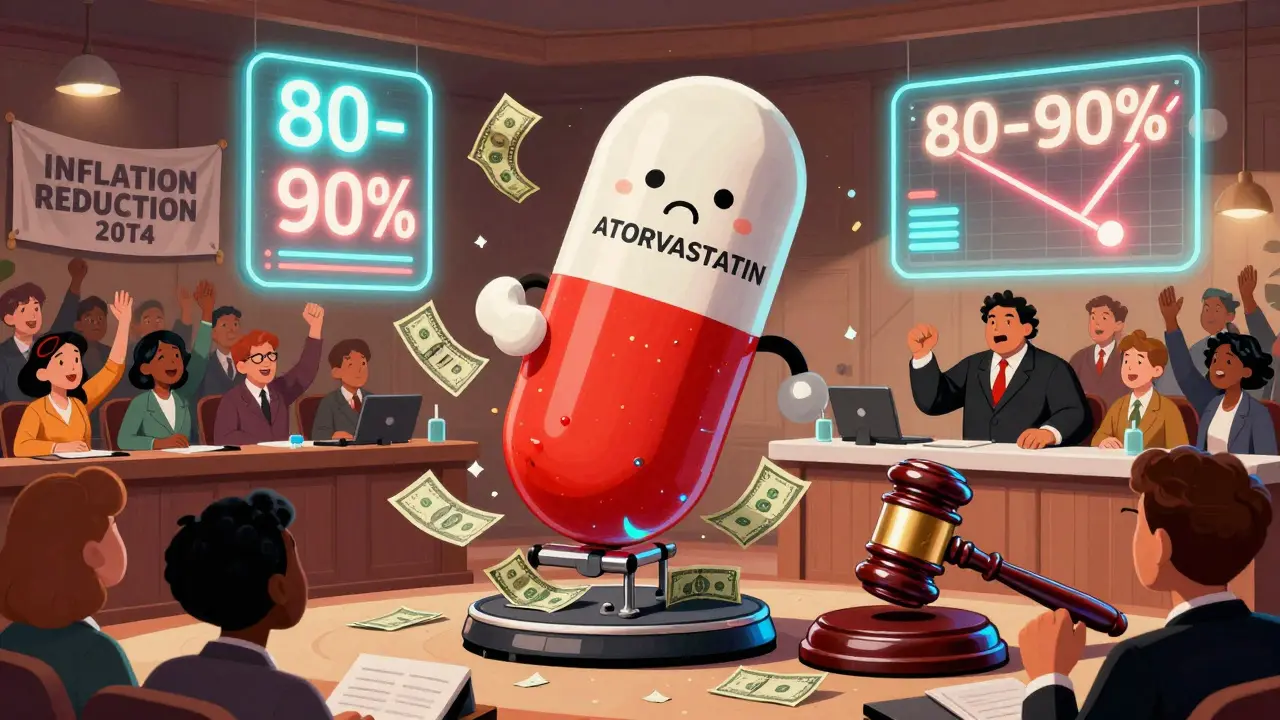
Brand name drugs are the original versions created by pharmaceutical companies. They’re protected by patents, which means no one else can legally make them until the patent expires. Once it does, generics enter the market-and prices usually drop by 80% to 90%.
In 2024, the median copay for a preferred brand name drug under Medicare Part D is $47. For non-preferred brands-drugs your plan doesn’t encourage-you’re looking at $100 or more per fill. Some commercial plans don’t even use fixed copays. Instead, they charge coinsurance: 30% to 50% of the drug’s total cost. If your brand medication costs $300, that’s $90 to $150 out of your pocket.
And it gets worse. Some plans have a “Member Pay the Difference” rule. If your doctor prescribes a brand name drug but a generic is available, you pay not just your copay-but also the full price difference between the brand and the generic. One user on Reddit shared they were charged $42 extra just for choosing Lipitor over atorvastatin, even though their doctor said “dispense as written.”
For specialty drugs-like those for cancer, rheumatoid arthritis, or multiple sclerosis-copays can hit $150 to $5,000 per month. These are often in Tier 5, and most plans require prior authorization before covering them.
Medicare Advantage vs Standalone Drug Plans: Big Differences
Not all Medicare plans work the same way. About half of Medicare beneficiaries are in Medicare Advantage Prescription Drug (MA-PD) plans. The other half are in standalone Prescription Drug Plans (PDPs).
MA-PD plans almost always use fixed copays. That means you know exactly what you’ll pay: $47 for a preferred brand, $100 for a non-preferred one. Predictable. Simple.
PDPs? They’re more likely to use coinsurance. Instead of a flat fee, you pay a percentage of the drug’s cost. For non-preferred brands, that’s often 47%-which means if your drug costs $200, you pay $94. And since drug prices change often, your bill can jump unexpectedly.
That’s why someone on a PDP might pay $80 one month and $130 the next for the same drug. No warning. No notice. Just a higher bill.
What the Inflation Reduction Act Changed in 2024
The Inflation Reduction Act of 2022 didn’t just make headlines-it changed how much you pay at the pharmacy counter.
First, insulin is now capped at $35 per month. That applies to both brand and generic insulin. Before 2023, many people paid $100 to $300 for a vial. Now, it’s a flat $35.
Second, the out-of-pocket cap for all drugs is now $3,300 to $3,800 per year for people who reach catastrophic coverage. That means once you’ve paid that much in 2024, you pay only 5% coinsurance or a small copay for the rest of the year.
And here’s the big one: starting in 2025, there’s a hard $2,000 annual cap on out-of-pocket drug costs. That’s a game-changer. If you’re taking expensive brand name drugs, you’ll never pay more than $2,000-no matter how many pills you need.
Real People, Real Costs
Survey data from the Medicare Rights Center shows that 63% of people taking brand name drugs say they struggle to afford them. Only 28% of those on generics feel the same way.
One retiree in Florida told a forum: “I pay $95 for a 90-day supply of my brand medication. The generic would be $15. My doctor won’t switch me because of side effects. But I’m choosing between my pills and my groceries.”
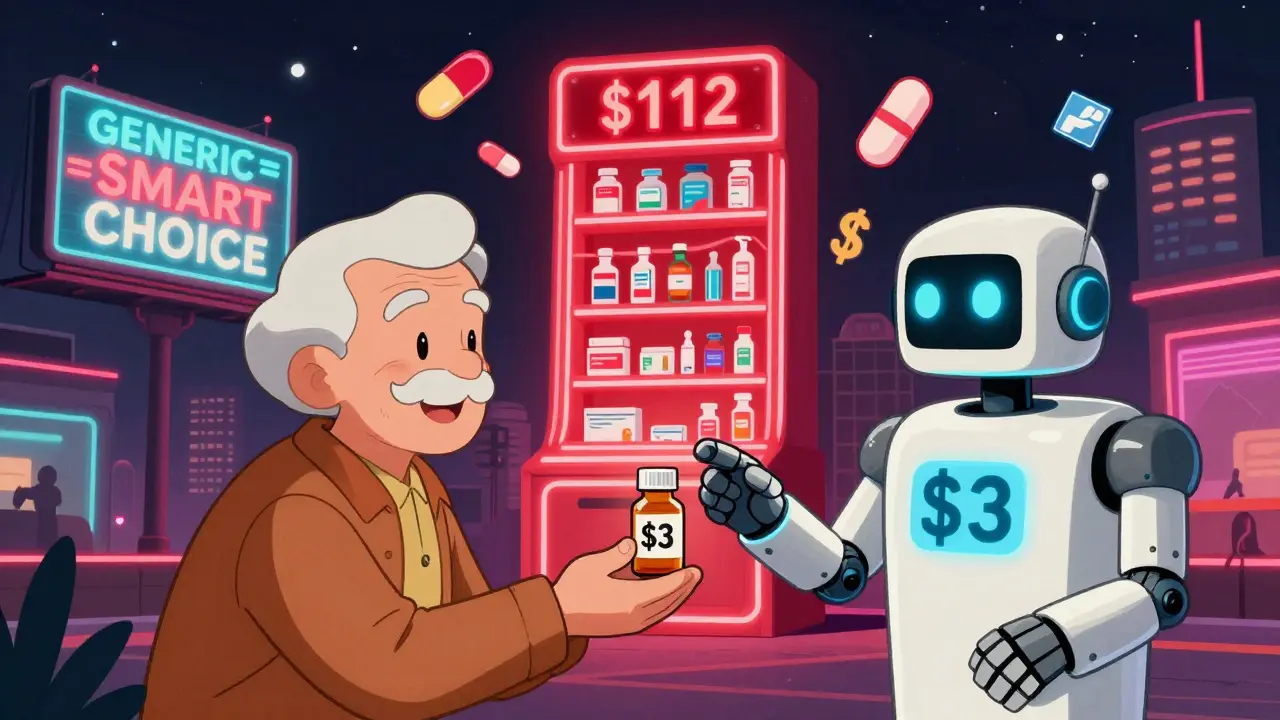
Another person on Reddit said: “I had to pick up my blood pressure med last week. The generic was $3. The brand was $112. I took the generic. My BP didn’t change. My wallet did.”
Meanwhile, plans with $0 generic copays get 4.7 out of 5 stars in user reviews. Plans with high generic copays? They hover around 3.2.
How to Save Money Right Now
You don’t have to guess. You can find your exact costs today.
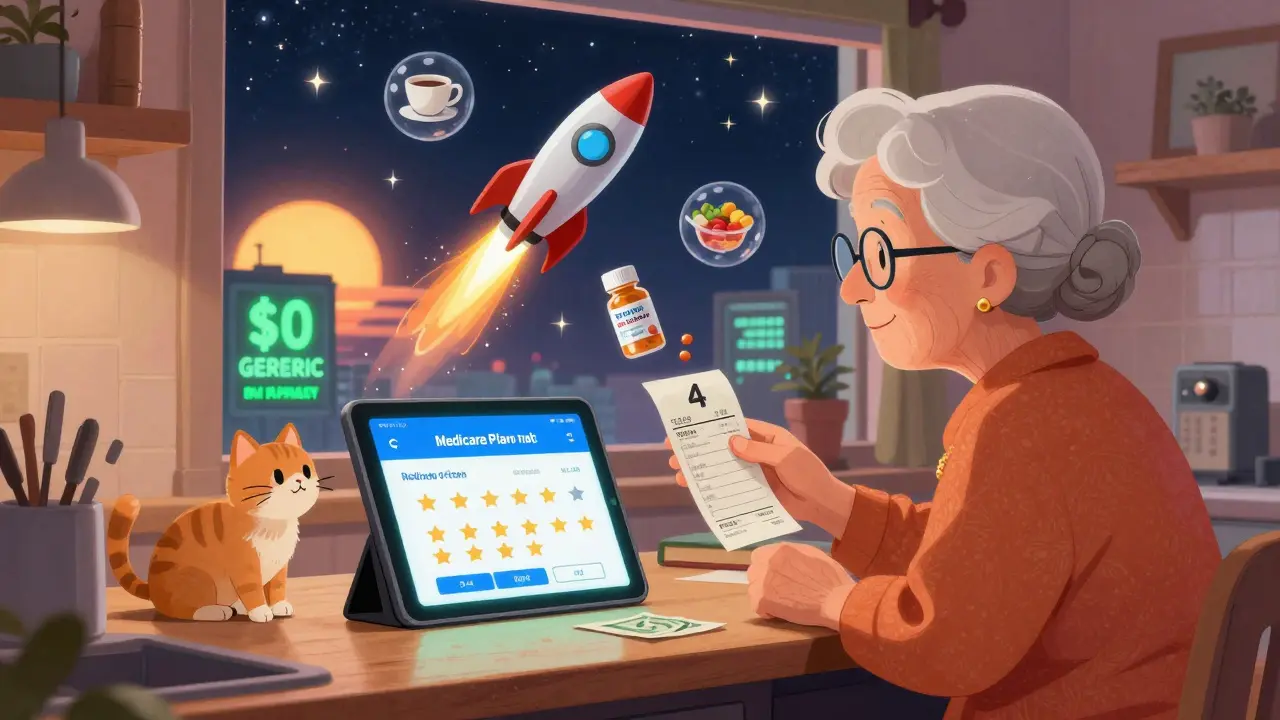
First, use the Medicare Plan Finder. Type in your medications. Compare plans side by side. Look at the total annual cost-not just the monthly copay. A plan with a $5 generic copay but a $100 brand copay might cost you $1,200 a year if you take one brand drug. Another plan with a $40 brand copay might cost only $480.
Second, ask your pharmacist about cash prices. Sometimes, paying out of pocket is cheaper than using your insurance. Generic drugs, especially, can cost less than $10 at Walmart, Costco, or CVS without insurance.
Third, ask your doctor: “Is there a generic alternative?” In 2024, 72% of Medicare plans offer a preferred generic for at least 80% of common brand drugs. You might be able to switch without side effects.
Fourth, check if you qualify for Extra Help. If your income is low, you could pay as little as $4.50 for generics and $11.20 for brands.
And if you’re overwhelmed? A professional plan review costs $75 to $150-but on average, saves people $420 a year. That’s a 5x return.
What’s Coming in 2025
2025 will bring even bigger changes. The $2,000 out-of-pocket cap kicks in. Most plans will offer $0 preferred generic copays. Non-preferred brand copays are expected to rise to $105 on average.
But here’s the problem: drug companies are still finding ways to inflate prices. Wholesalers are accused of “tying arrangements”-linking the price of generics to brand drugs so pharmacies can’t offer true discounts. The government is investigating. But for now, you’re still on your own.
Bottom line: generics are almost always the smarter choice. They’re safe, effective, and cheaper. But if you need a brand name drug-for medical reasons, not preference-know your plan. Know your options. And don’t assume your copay is fixed. It might change tomorrow.
Frequently Asked Questions
Why are generic drugs so much cheaper than brand name drugs?
Generic drugs contain the same active ingredients as brand name drugs and work the same way. They’re cheaper because they don’t require expensive research, clinical trials, or marketing. Once a brand’s patent expires, other companies can make the drug without those upfront costs. That savings gets passed to you in lower copays.
Can I switch from a brand name drug to a generic without side effects?
For most people, yes. The FDA requires generics to be bioequivalent to the brand version-meaning they work the same in your body. Studies show 90% of patients have no difference in effectiveness or side effects when switching. But some medications-like seizure drugs, thyroid meds, or blood thinners-require close monitoring. Always talk to your doctor before switching.
What if my plan doesn’t cover the generic version of my drug?
If your plan doesn’t cover the generic, ask your doctor to request a formulary exception. You can also file an appeal with your insurer. In many cases, especially for common medications, plans will approve the generic if you show it’s medically appropriate. If all else fails, pay cash-sometimes it’s cheaper than your copay.
Why does my copay change every month for the same brand drug?
If your plan uses coinsurance instead of a fixed copay, your cost changes when the drug’s price changes. Drug prices fluctuate based on manufacturer pricing, pharmacy contracts, and market demand. Medicare Advantage plans usually have fixed copays, so your bill stays the same. Standalone drug plans (PDPs) often use coinsurance, so your cost can jump unexpectedly.
Is it true I can pay cash for a generic instead of using insurance?
Yes, and it’s often smarter. Many pharmacies offer cash prices for generics that are lower than your insurance copay. For example, Walmart’s $4 list includes over 100 generics for $4 for a 30-day supply. CVS and Costco have similar deals. Always ask the pharmacist: “What’s your cash price?” before using insurance.
Will the $2,000 out-of-pocket cap in 2025 help people taking brand name drugs?
Absolutely. Before 2025, people taking expensive brand drugs could pay thousands each year with no cap. The $2,000 limit means no one will pay more than that, regardless of how many brand drugs they take. This is especially helpful for people with chronic conditions like diabetes, cancer, or autoimmune diseases. Even if your copay is $100 per pill, once you hit $2,000, you pay nothing more for the rest of the year.
Kevin Lopez
January 1, 2026 AT 06:08Generic copays at $0? That’s a Tier 1 win. But don’t sleep on the formulary tiers-pharma’s playing 4D chess with preferred/non-preferred labels to keep you hooked on brand-name premiums. You think you’re saving? You’re just being nudged.
Duncan Careless
January 3, 2026 AT 04:46Interesting breakdown, though i’m still confused about why some pharmacies charge more for the exact same generic. Is it the wholesaler deals or just bad pharmacy management? I’ve seen $3 at costco and $12 at my local chain-same script, same pill. Feels like a scam.
Samar Khan
January 3, 2026 AT 05:29Ughhh I hate this system 😭 I pay $90 for my RA med and the generic would be $12… but my doctor says ‘it’s not the same’-but I’ve read 90% of people switch fine. I’m just broke and tired of choosing between meds and rent 💸
Russell Thomas
January 4, 2026 AT 02:23Oh wow, so the ‘Inflation Reduction Act’ just means we get to pay $35 for insulin instead of $300? Congrats, we’re now on par with 1990s drug prices. 🎉 Meanwhile, brand manufacturers just raised the price of every other drug by 12% to compensate. This isn’t reform-it’s a magic trick where the wallet disappears.
Joe Kwon
January 5, 2026 AT 00:12Good breakdown. One thing to add: if you’re on Medicare Part D, always check the ‘Total Annual Cost’ column-not just the copay. I switched plans last year based on that and saved $890 even though my brand drug copay went up $5. The math matters. Also, Extra Help is way easier to qualify for than people think-don’t assume you’re above the limit.
Nicole K.
January 5, 2026 AT 11:27People who choose brand over generic are just being irresponsible. If your doctor says it’s fine to switch, then DO IT. You’re not special. Your body doesn’t need the fancy packaging. Stop wasting money and start being adult about your health.
Fabian Riewe
January 5, 2026 AT 21:49Just wanted to say-this is one of the clearest explainers I’ve seen on this topic. And yes, cash prices for generics are wild. I got metformin for $4 at Walmart last week. Didn’t use insurance. My pharmacist even smiled and said ‘good call.’ Small wins, right? 😊
Jasmine Yule
January 6, 2026 AT 05:03Why are we still letting drug companies get away with this? The $2,000 cap in 2025 is a start, but what about the people who can’t even afford the $35 insulin? And why do we let wholesalers tie generic prices to brand markups? This isn’t healthcare-it’s a corporate extortion racket. I’m tired of being punished for being sick.