Diabetes Medications Safety Guide: Insulin and Oral Agents Risks Explained
 May, 27 2026
Managing diabetes is a balancing act. You want your blood sugar levels to stay steady, but the medications used to get there come with their own set of risks. Whether you are taking insulin or an oral agent like metformin or sulfonylureas, understanding how these drugs work-and where they can go wrong-is the difference between staying healthy and ending up in the emergency room. The biggest danger isn't usually the high blood sugar itself; it's often the crash that comes from treatment.
Hypoglycemia, or low blood sugar, affects 20% to 40% of patients on certain oral medications. For many, this means dizziness, confusion, or worse, a fall that leads to broken bones or head injuries. With over 37 million Americans using diabetes medications, knowing the specific safety profile of your prescription is not just smart-it’s essential for survival.
The Hidden Danger of Low Blood Sugar (Hypoglycemia)
When people think about diabetes dangers, they often worry about high numbers. But the immediate threat from medication is often the opposite. Hypoglycemia is the most critical safety concern across almost all diabetes treatments. It happens when your medication lowers your glucose too much, too fast.
Sulfonylureas, such as glyburide, glipizide, and glimepiride, are notorious for this. These older oral agents force your pancreas to release more insulin regardless of your current blood sugar level. Studies show that 1% to 7% of patients on these drugs experience severe hypoglycemia requiring help from someone else. Even scarier? Continuous glucose monitoring reveals that 30% of well-controlled patients on sulfonylureas suffer from asymptomatic nocturnal hypoglycemia. That means you could be dangerously low while sleeping, without any warning signs like shakiness or sweating.
If you are over 65, this risk spikes. Older adults are more likely to have frequent and severe reactions, especially if doctors aim for tight glycemic control. The dizziness and lightheadedness from a sugar crash can lead to falls. In older populations, a fall caused by a medication side effect can be life-altering, leading to fractures or traumatic brain injury.
Insulin Formulations and Administration Errors
Insulin is the backbone of treatment for type 1 diabetes and many cases of type 2. However, it is also the most error-prone medication class. Insulin isn't just one thing; it comes in rapid-acting (lispro, aspart), short-acting (regular), intermediate-acting (NPH), and long-acting (glargine, detemir, degludec) forms. Using the wrong type at the wrong time can cause a dangerous swing in blood sugar.
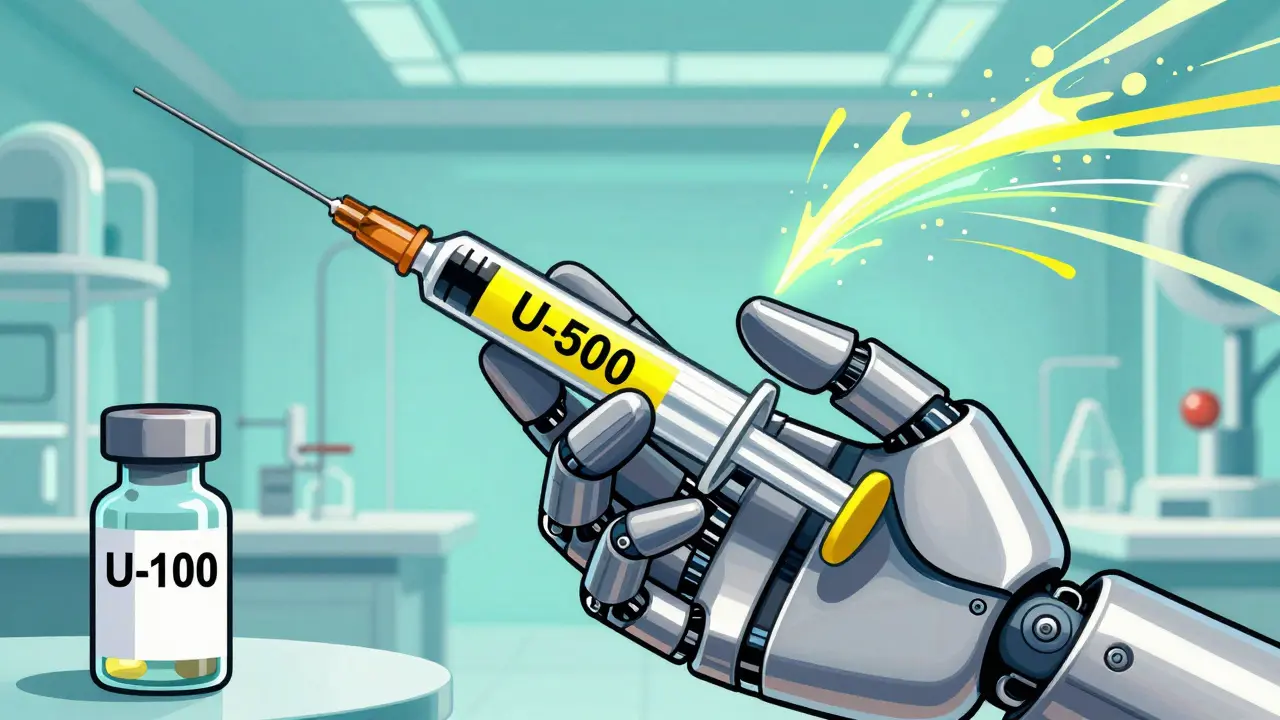
A major safety issue involves concentrated formulations like Humulin R U-500. This insulin is five times stronger than standard U-100 insulin. Confusion between these strengths has led to accidental overdoses. If you use a syringe meant for U-100 with U-500 insulin, you could inject five times the intended dose. Always double-check the label. Never swap pens or vials without verifying the concentration.
Injection technique matters too. Injecting into muscle instead of fat causes insulin to absorb faster, leading to sudden drops in blood sugar. Rotate your injection sites-abdomen, thighs, buttocks, arms-to prevent lipohypertrophy (lumpy skin tissue), which can mess with absorption rates. Newer automated insulin delivery (AID) systems have shown promise in reducing these errors by adjusting doses automatically based on continuous glucose monitor data, keeping more patients in a safe range.
Oral Agents: Metformin and Kidney Health
Metformin is the first-line treatment for type 2 diabetes for good reason. It rarely causes hypoglycemia because it doesn't stimulate insulin production. Instead, it tells your liver to stop making excess glucose. However, its safety depends entirely on your kidney function.
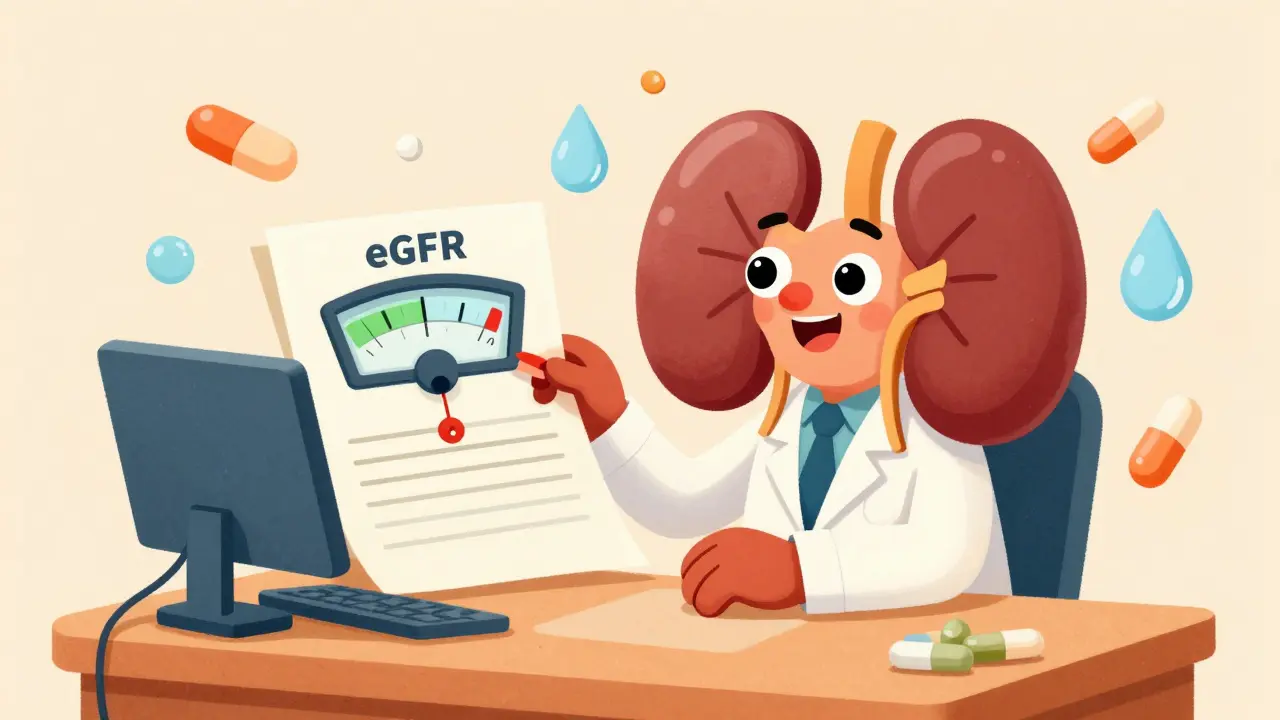
The risk here is lactic acidosis, a rare but serious buildup of lactic acid in the blood. This is why your doctor checks your eGFR (estimated glomerular filtration rate) regularly. Here is the rule of thumb:
- eGFR above 45 mL/min/1.73m²: Generally safe to use.
- eGFR between 30 and 45: Use with caution; dose may need reduction.
- eGFR below 30: Do not start or continue metformin.
If you have chronic kidney disease, your body can't clear the drug efficiently. Ignoring these thresholds turns a safe medication into a toxic one. Always ask for your latest kidney function results before starting or continuing this drug.
Newer Drugs: SGLT2 Inhibitors and GLP-1 Agonists
Newer classes of drugs offer benefits beyond blood sugar control, including heart and kidney protection. But they bring unique side effects you need to watch for.
SGLT2 inhibitors (like empagliflozin and dapagliflozin) work by flushing sugar out through your urine. This lowers blood sugar but increases the risk of genital yeast infections by about 4% to 5% compared to placebo. More seriously, they carry a risk of diabetic ketoacidosis (DKA). Unlike typical DKA, which happens with very high blood sugar, SGLT2-induced DKA can occur with normal or only slightly elevated blood sugar levels (euglycemic DKA). This makes it harder to spot. Symptoms include nausea, vomiting, abdominal pain, and trouble breathing. If you are scheduled for surgery, stop these drugs 24 hours beforehand to reduce this risk.
GLP-1 receptor agonists (like semaglutide and tirzepatide) mimic gut hormones that slow digestion and increase insulin sensitivity. They are highly effective but notoriously hard on the stomach. Nausea and vomiting affect 30% to 50% of users, especially when starting or increasing doses. Most people tolerate it after a few weeks, but for some, it’s debilitating. Start low and go slow. Never rush the dose escalation.
| Medication Class | Primary Risk | Key Monitoring Requirement | Best For |
|---|---|---|---|
| Sulfonylureas | Severe Hypoglycemia | Frequent blood sugar checks | Patient adherence issues (pill once daily) |
| Metformin | Lactic Acidosis (rare) | Kidney function (eGFR) annually | First-line Type 2 treatment |
| SGLT2 Inhibitors | Genital infections, Euglycemic DKA | Hydration status, surgical hold | Heart/kidney protection needs |
| GLP-1 Agonists | Gastrointestinal distress | Tolerance building, hydration | Weight loss + glucose control |
| Insulin | Hypoglycemia, Injection errors | Dose accuracy, site rotation | Type 1 or advanced Type 2 |
Drug Interactions: The Silent Threat
Your diabetes medication doesn't exist in a vacuum. Other drugs you take can interfere with glucose control. One of the biggest concerns is the potential for loss of glucose control due to interactions.
For example, antibiotics like sulfamethoxazole/trimethoprim can potentiate the effects of insulin and sulfonylureas, leading to unexpected lows. Steroids (prednisone) do the opposite-they spike blood sugar, rendering your current dose ineffective. Even common supplements like quinine or sunitinib can increase hypoglycemia risk. Always keep a master list of every medication and supplement you take. Share it with every doctor and pharmacist you see. If you start a new antibiotic, expect your blood sugar to behave differently for a week or two.
Practical Safety Steps for Daily Management
Safety isn't just about choosing the right drug; it's about how you live with it. Here are actionable steps to minimize risk:
- Monitor Consistently: If you are on insulin or sulfonylureas, checking your blood sugar before meals and bedtime is non-negotiable. Consider a continuous glucose monitor (CGM) if you have hypoglycemia unawareness.
- Eat Regularly: Skipping meals while on insulin secretagogues is a recipe for disaster. Match your carbohydrate intake to your medication schedule.
- Limit Alcohol: Alcohol blocks the liver from releasing glucose. Combined with insulin or sulfonylureas, this can cause prolonged, dangerous lows. Avoid binge drinking and never drink on an empty stomach.
- Hydrate: Especially important for SGLT2 inhibitor users to prevent dehydration and DKA. Drink water throughout the day.
- Review Meds Annually: Ask your doctor, "Is this still the safest option for me given my age and kidney function?" As we age, our bodies process drugs differently. What worked at 40 might be risky at 70.
Collaborative Drug Therapy Management (CDTM) is recommended by the CDC for this reason. Involve your pharmacist. They are experts in drug interactions and can catch conflicts your primary care provider might miss.
Special Considerations for Older Adults
If you are caring for an older adult with diabetes, tighten the safety net. The American Diabetes Association recommends less aggressive blood sugar targets for seniors to avoid hypoglycemia. An A1C target of 7.0% might be appropriate for a young adult, but 8.0% or even higher might be safer for an elderly person with multiple health conditions.
Glipizide is often preferred over other sulfonylureas in older adults because it is metabolized by the liver and doesn't rely on kidneys for clearance. This reduces the risk of drug accumulation if kidney function declines. Lower starting doses are crucial. Remember, a fall from a sugar crash is far more immediately dangerous than a moderately high A1C.
What are the most dangerous side effects of diabetes medications?
The most dangerous side effect is severe hypoglycemia (low blood sugar), which can lead to seizures, loss of consciousness, and death. This is most common with insulin and sulfonylureas. Another serious risk is lactic acidosis from metformin in patients with poor kidney function, and euglycemic diabetic ketoacidosis (DKA) from SGLT2 inhibitors, which can be hard to detect because blood sugar levels may appear normal.
Can I take metformin if I have kidney disease?
It depends on your eGFR level. Metformin is generally safe if your eGFR is above 45. If it is between 30 and 45, your doctor may lower the dose. If your eGFR is below 30, you should not take metformin due to the risk of lactic acidosis. Always have your kidney function tested regularly.
Why do SGLT2 inhibitors cause yeast infections?
SGLT2 inhibitors work by removing excess glucose from your blood through your urine. This extra sugar in the urine creates a breeding ground for yeast and bacteria in the genital area, leading to higher rates of yeast infections and urinary tract infections compared to other diabetes drugs.
How can I prevent hypoglycemia while on insulin?
Prevent hypoglycemia by matching your insulin dose to your carbohydrate intake, exercising consistently, and monitoring your blood sugar frequently. Avoid skipping meals. If you feel symptoms like shakiness or sweating, treat it immediately with 15 grams of fast-acting carbs (like juice or glucose tabs). Consider using a continuous glucose monitor (CGM) for real-time alerts.
Are newer diabetes drugs like Ozempic or Mounjaro safer than older ones?
Newer drugs like GLP-1 agonists (Ozempic, Mounjaro) have a lower risk of hypoglycemia compared to insulin and sulfonylureas because they only stimulate insulin when blood sugar is high. However, they come with significant gastrointestinal side effects like nausea and vomiting. They are generally considered safer regarding acute crashes but require management of digestive issues.
What should I do if I am scheduled for surgery and take SGLT2 inhibitors?
You must stop taking SGLT2 inhibitors at least 24 to 48 hours before elective surgery to reduce the risk of euglycemic diabetic ketoacidosis (DKA). Inform your surgeon and anesthesiologist about this medication. Follow their specific instructions on when to restart the drug after the procedure.