Cushing’s Syndrome Treatment: Managing Excess Cortisol Through Surgery
 Apr, 23 2026
Key Takeaways
- Cushing’s Syndrome occurs when cortisol levels soar far above the normal 5-25 mcg/dL range.
- Surgical treatment is the primary cure for endogenous cases, targeting the source of overproduction.
- Transsphenoidal surgery for pituitary tumors has high success rates, especially at high-volume centers.
- Post-op recovery requires careful cortisol monitoring and often temporary steroid replacement.
- Early intervention significantly improves the chances of full remission and lowers heart risks.
How Excess Cortisol Changes Your Body
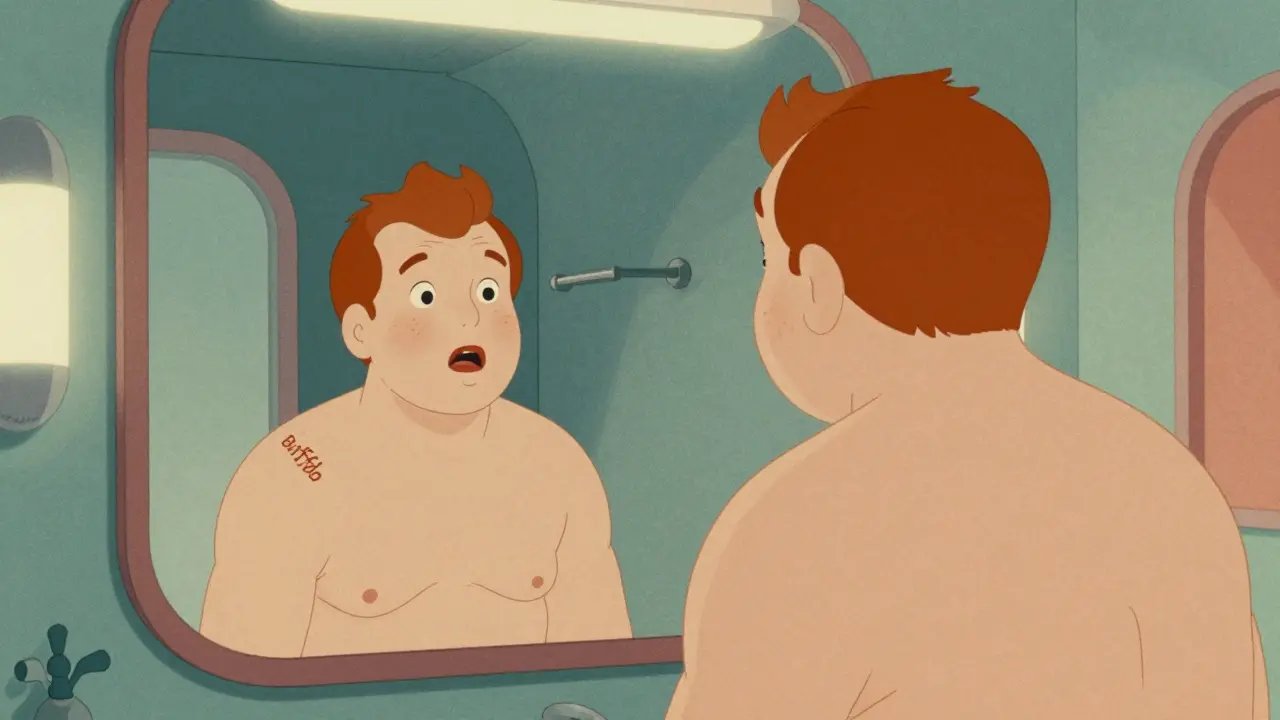
Cortisol is a vital hormone produced by the Adrenal Glands, but too much of a good thing becomes toxic. When levels consistently exceed 50-200 mcg/dL over a 24-hour period, your body starts to change in very specific, often distressing ways. Most people notice the "moon facies"-a rounded, full appearance of the face-and a "buffalo hump," which is a fat pad that develops between the shoulders. You might also see wide, purple stretch marks called violaceous striae on the abdomen. It's not just about looks, though. The metabolic toll is heavy. About 85% of patients struggle with hypertension, and 70% develop impaired glucose tolerance, often leading to type 2 diabetes. Perhaps most frightening is the impact on bones; 50% of patients see their T-score drop below -2.5, signaling severe osteoporosis.The Different Roots of the Problem
Before talking about surgery, we have to figure out where the cortisol is coming from. Not all cases of Cushing’s are the same. About 80% of cases are "exogenous," meaning they come from external sources like long-term use of glucocorticoid medications. These don't require surgery-just a carefully managed taper of the meds. However, the other 20% are "endogenous," meaning the body is producing the hormone internally. This is where the surgical path begins. The cause usually falls into one of three buckets:- Pituitary Adenomas: A tumor on the pituitary gland causes the release of too much ACTH, which then tells the adrenal glands to pump out cortisol. This specific version is called Cushing’s Disease and accounts for 60-70% of internal cases.
- Adrenal Tumors: A growth directly on the adrenal gland produces cortisol independently of any other signal.
- Ectopic Tumors: Rarely, a tumor in another part of the body (like the lungs) produces ACTH, tricking the adrenals into overdrive.
Surgical Options: The Road to Remission
If you have a tumor-related cause, surgery is the gold standard. The type of operation depends entirely on where the "glitch" is located. For those with Cushing’s Disease, the go-to is Transsphenoidal Surgery. In this procedure, a surgeon reaches the pituitary gland through the nose, avoiding a traditional brain opening. For small tumors (microadenomas <10mm), the remission rate is an impressive 80-90%. If the tumor is larger (macroadenomas), that rate drops to about 50-60%. When the problem is in the adrenal glands, a Laparoscopic Adrenalectomy is used to remove the offending gland. This is generally very successful, with a 95% rate of normalizing cortisol levels. In extreme cases where pituitary surgery fails or the problem is widespread across both adrenals, a bilateral adrenalectomy is performed. While this provides a 100% biochemical cure, it comes with a lifetime commitment to replacement hormones and a risk of Nelson's syndrome, where the pituitary tumor grows aggressively after the adrenals are gone.| Procedure | Target Source | Success Rate (Remission) | Typical Recovery | Primary Risk |
|---|---|---|---|---|
| Transsphenoidal Surgery | Pituitary Gland | 65-90% | 2-5 Days Hospital stay | CSF Leak (2-5%) |
| Laparoscopic Adrenalectomy | Unilateral Adrenal Gland | ~95% | 1-2 Days Hospital stay | Bleeding/Infection (2-5%) |
| Bilateral Adrenalectomy | Both Adrenal Glands | 100% (Biochemical) | Short stay; lifelong meds | Nelson's Syndrome (40%) |

Why Volume Matters: Choosing Your Surgeon
Here is a hard truth: not all surgeons are equal when it comes to Cushing’s. The outcome of your surgery depends heavily on how many of these procedures your doctor performs each year. Data shows that centers performing fewer than 10 pituitary surgeries annually have remission rates of only 50-60%. In contrast, high-volume centers-those doing 20 or more a year-push that success rate up to 80-90%. Why the gap? Pituitary surgery is incredibly precise work. High-volume surgeons are more likely to use the latest tech, like 3D endoscopic visualization or intraoperative monitoring, which can tell them if the cortisol levels have dropped *during* the surgery rather than waiting a week for blood tests. If you're facing this, don't be afraid to ask your doctor, "How many of these specific surgeries have you done this year?"Life After Surgery: The Recovery Phase
Getting the tumor out is only half the battle. The day after surgery, your body may enter a state of shock because it has been relying on massive amounts of cortisol for years. Suddenly, that supply is gone. This leads to adrenal insufficiency, where 30-40% of patients experience temporary crashes. For the first 6-12 weeks, you'll likely be on a strict taper of hydrocortisone. This is a critical period. You have to learn how to recognize symptoms of a "crash"-like extreme fatigue, nausea, and low blood pressure-and how to administer "stress-dose" steroids if you get a fever or an injury. If you don't manage this, you risk an adrenal crisis, which is a medical emergency. On the bright side, the physical recovery can be rewarding. Many patients report their "moon face" disappearing and blood pressure normalizing within a few months. However, be patient with your energy levels; it can take 3-6 months to fully return to your normal work and social life.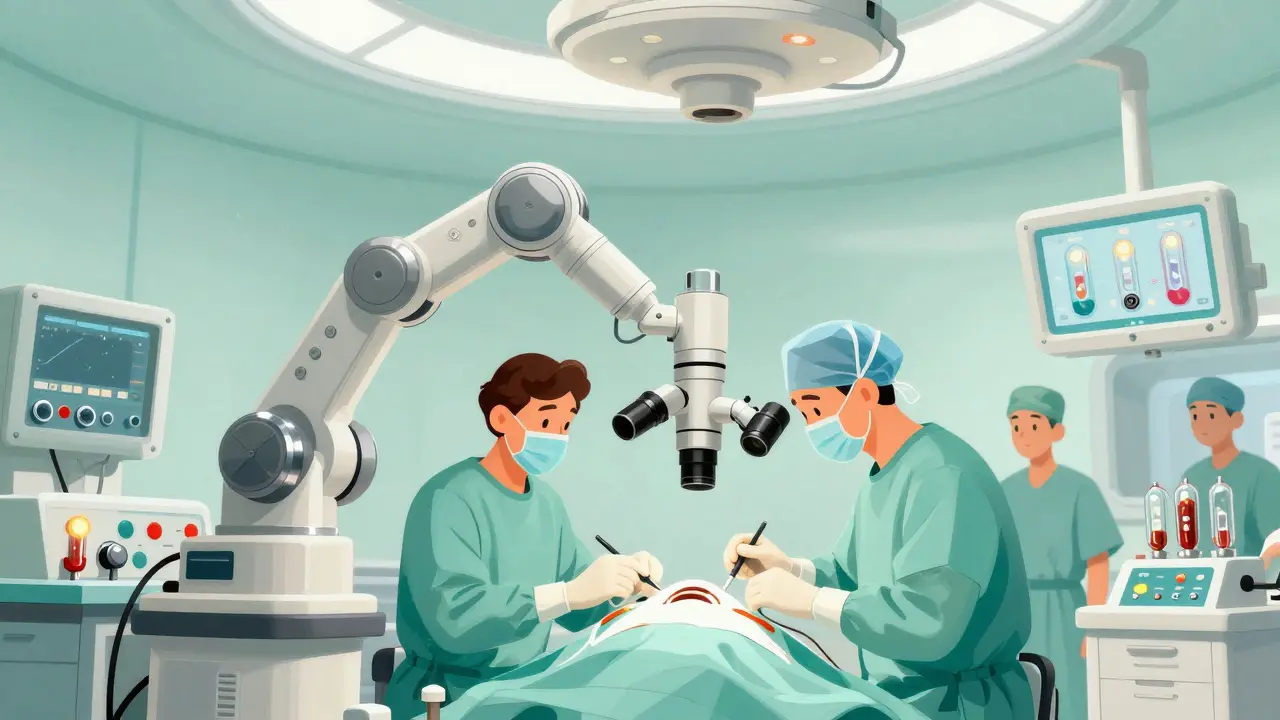
The Future of Cushing's Treatment
We are moving toward a more precise era of surgery. The FDA recently approved the Neuro-Robotic Scope system, which provides 3D visualization with 0.5mm resolution. This means surgeons can see smaller tumors more clearly and reduce the risk of cerebrospinal fluid leaks. Even more exciting is the development of molecular imaging, such as 11C-metomidate PET/CT scans. Right now, finding a small adrenal tumor can be like finding a needle in a haystack, with about 70% accuracy. These new scans could push that accuracy to 95%, ensuring the surgeon hits the target on the first try. Combined with a shift toward multidisciplinary teams-where endocrinologists, neurosurgeons, and specialized nurses work together-the goal is to bring mortality rates for Cushing's patients back down to the level of the general population.How long does it take to see results after Cushing's surgery?
While biochemical changes (cortisol levels) happen almost immediately, physical changes take longer. Many patients see their moon face fade and blood pressure stabilize within 3 to 6 months, though full metabolic recovery can take up to a year.
Will I need to take steroids for the rest of my life?
It depends on the surgery. After a transsphenoidal pituitary surgery, most people only need temporary steroid replacement while their own gland wakes up. However, if you have a bilateral adrenalectomy, you will need lifelong glucocorticoid and mineralocorticoid replacement because you no longer have the organs that produce these hormones.
What is the risk of the tumor coming back?
Recurrence is a possibility. For pituitary tumors, studies show a recurrence rate of about 10-25% over a 10-year period. This is why quarterly endocrine check-ups and regular cortisol monitoring are essential for several years after the procedure.
Can medication replace the need for surgery?
Medications like pasireotide or mifepristone can help manage symptoms, but their success rates for full remission are much lower (roughly 15-30%) compared to surgery (65-90%). Surgery is generally the only curative option for tumor-based Cushing's.
What is a "stress dose" of steroids?
A stress dose is an increased amount of replacement steroids given during periods of severe physical stress, such as a high fever, major infection, or surgery. Because the body can't produce its own cortisol to handle the stress, this extra dose prevents a life-threatening adrenal crisis.
Nikita Shabanov
April 23, 2026 AT 23:50The distinction between exogenous and endogenous causes is crucial because the treatment paths are completely different. For those on long-term steroids, the danger is actually tapering too fast, which can trigger an adrenal crisis since the body stopped making its own cortisol. Slow and steady is the only way for those cases.
Sharyl Foster
April 24, 2026 AT 21:30Sure, surgery is the gold standard, but let's not pretend it's a magic wand. Plenty of people have recurrence years later and end up right back where they started, only with a scar in their nose to show for it.
Vijay AGarwal
April 25, 2026 AT 16:09Absolutely terrifying how fast this ruins a person's life! The bone density drop is a complete nightmare! Imagine your skeleton basically turning into chalk while you're still in your prime! It's a medical emergency the moment those symptoms hit!
James Harrison
April 26, 2026 AT 11:40It's wild how a tiny glitch in a gland can rewrite who you are in the mirror. Makes you realize how fragile the balance of our internal chemistry really is.
Eric Mwiti
April 26, 2026 AT 21:44Oh great, so we just let surgeons go up the nose and hope they hit the right spot. Sounds like a foolproof plan.
Edwin Perez
April 28, 2026 AT 11:25Typical pharma-backed advice. They want you on the operating table so they can sell you lifelong steroid replacements. The real causes of these hormone spikes are probably environmental toxins they don't want us to talk about.
Karyn Tindall
April 29, 2026 AT 11:30The psychological toll of the 'moon face' is just devastating! I've seen people lose their entire sense of identity because they can't recognize themselves anymore! It's an absolute tragedy that goes unnoticed for so long!
Michael Deane
April 29, 2026 AT 18:32We really have the best medical centers in the US for this stuff and anyone who thinks otherwise is delusional because our surgeons have the kind of tech that the rest of the world can only dream of and it's why you come here if you actually want to survive a brain-adjacent surgery without ending up as a vegetable in some third-world ward.
Elle Torres Sanz
May 1, 2026 AT 11:41It is so important to remember that everyone's journey with endocrine disorders is different. Whether it's surgery or medication, having a supportive community and a multidisciplinary team makes all the difference in recovery. Let's keep supporting each other through the healing process.
sachin singh
May 1, 2026 AT 16:03This is a very helpful overview. The statistics regarding hypertension and glucose tolerance are quite sobering.