Common Translation Issues on Prescription Labels and How to Get Help
 Dec, 15 2025
Getting the right medicine is only half the battle. If you can’t understand the label, you might be taking it wrong-maybe dangerously wrong. For millions of Americans with limited English proficiency, prescription labels are written in a language they don’t speak, and the translations they get are often broken. This isn’t just inconvenient. It’s life-threatening.
How Translation Errors Turn Medicine Into Poison
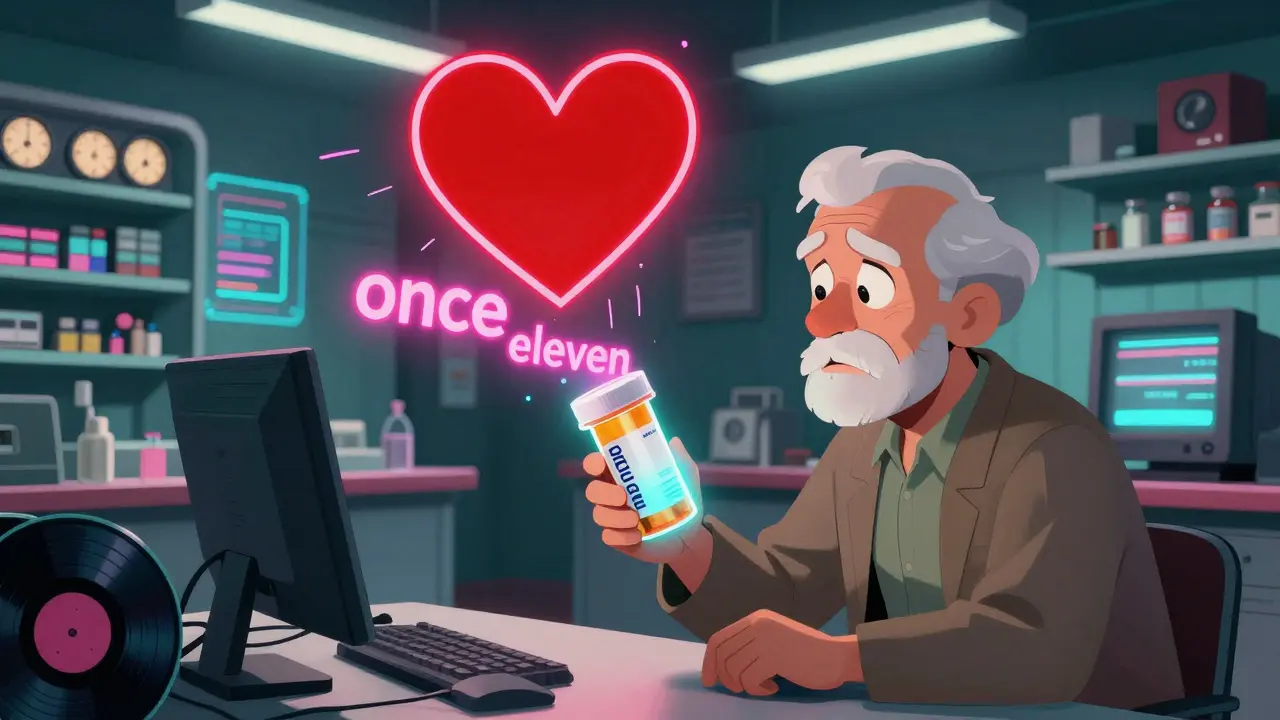
A simple word can kill. Take the word "once." In English, it means "one time." In Spanish, "once" means "eleven." If your label says "tome once al día," you might think it means "take eleven times a day." That’s not a typo. That’s what happens when pharmacies use machine translation without human review. A 2010 study in the Pediatrics journal found that half of all Spanish-language prescription labels in the Bronx had dangerous mistakes. Many of those errors came from automated systems that spit out "Spanglish"-a jumbled mix of English and Spanish that confuses even bilingual patients. These aren’t isolated cases. Patients have reported being told to take pills "twice weekly" when the correct instruction was "twice daily." Others were given labels that said "take with food" when the real instruction was "take on an empty stomach." In one documented case, a patient took 11 times the prescribed dose of a blood pressure medication because the label mistranslated "once" as "eleven." That patient ended up in the ER. The problem isn’t just Spanish. Medical terms vary wildly across dialects. In Latin America, "alcohol" on a label usually means rubbing alcohol. In Spain, it means drinking alcohol. If a label says "avoid alcohol," does that mean no beer? No wine? No hand sanitizer? The confusion isn’t theoretical-it’s happening every day.Why Pharmacies Keep Using Bad Translation Systems
You might assume pharmacies would hire professional translators for something this important. But they don’t. According to the same 2010 study, 86% of pharmacies in high-Spanish-speaking areas used computer-generated translations. Only 3% used certified medical interpreters. Why? Cost. Automated translation costs about $0.02 to $0.05 per label. Professional human translation? $0.15 to $0.30. That might not sound like much, but multiply that by millions of prescriptions a year, and the difference becomes millions of dollars. Most pharmacies choose the cheaper option-even though machine translation alone gets only 65-75% accuracy for medical instructions. With no human review, error rates jump to 50%. Even worse, pharmacy software often pulls translations from third-party vendors that don’t even use consistent terminology. One pharmacy might translate "take as directed" as "tome según indicaciones," while another uses "tome según las instrucciones." Both are technically correct, but patients get confused when they see different versions at different stores. That inconsistency makes it harder to learn what the instructions mean.
Which States Actually Require Accurate Translations
You’d think the federal government would step in. But it doesn’t. Only two states have laws requiring accurate, human-translated prescription labels: California and New York. California passed Senate Bill 853 in 2016, requiring all prescription labels in Spanish to be translated by certified professionals and verified by a second bilingual staff member. The results? A 32% drop in medication errors among Spanish-speaking patients, and a 27% reduction in emergency room visits related to prescription mistakes. It’s proof that good translation saves lives-and money. New York followed with Local Law 30 in 2010, mandating translation services for the most common languages. But in the other 48 states? There’s no legal requirement. Pharmacies can-and often do-rely on Google Translate or outdated software. And it’s not just Spanish. Only 23% of major pharmacy chains offer translation into Chinese, Vietnamese, or Arabic-even though those languages are spoken by over 2 million Americans with limited English proficiency. For many, getting a correct label is pure luck.How to Get Help When Your Label Doesn’t Make Sense
If you or a loved one can’t read the prescription label, don’t guess. Don’t assume. Don’t take the risk. Here’s what to do:- Ask for a certified translator. Call ahead or ask at the counter: "Do you have a certified medical interpreter available?" If they say no, ask to speak with the pharmacist directly. Pharmacists are trained to explain medications, even if the label is wrong.
- Use the pharmacy’s phone service. Many chains like CVS and Walgreens offer free phone interpretation in over 200 languages. Ask for the "Language Line" or "Interpreter Services" when you pick up your prescription.
- Request a printed bilingual label. You have the right under Title VI of the Civil Rights Act to receive medical information in a language you understand. If the pharmacy refuses, ask for a supervisor. Write down the date, time, and name of the person you spoke to.
- Take a photo and get a second opinion. If you’re unsure, take a picture of the label and show it to a trusted bilingual friend, community health worker, or even a local clinic. Many nonprofit organizations offer free medication counseling for LEP patients.
- Report the error. If you see a dangerous mistranslation, report it to the pharmacy’s corporate office and to your state’s board of pharmacy. Your complaint could help change policy.

What’s Changing-and What’s Still Broken
There’s progress. In October 2023, Walgreens launched MedTranslate AI, which uses artificial intelligence to flag suspicious translations and route them to pharmacists for review. CVS Health rolled out LanguageBridge in early 2024, combining neural machine translation with mandatory pharmacist verification. These systems have cut translation errors by over 60% in pilot locations. The federal government is also stepping up. In March 2024, the HHS launched a $25 million Language Access Grant Program to help pharmacies pay for professional translation tools. The FDA also released new draft guidance in January 2024, pushing for plain-language labels that are easier to translate accurately. But here’s the truth: 61% of federally funded health centers still don’t have certified translation services. Most small pharmacies can’t afford the $12,000-$18,000 it costs to set up a proper system. Until every pharmacy is required to use certified translators, the risk remains.What You Can Do Right Now
You don’t need to wait for laws to change. You can protect yourself today:- Always ask: "Can you read this label to me in my language?"
- Don’t rely on the printed label alone. Ask the pharmacist to explain dosage, timing, and warnings out loud.
- If you’re helping a parent, grandparent, or neighbor, go with them to the pharmacy. Bring a phone with translation apps as backup-but don’t trust them alone. Human verification matters.
- Keep a written list of all your medications, including the correct instructions, in your native language. Update it every time you get a new prescription.
- Support organizations pushing for language access. Your voice helps.
Medicine is meant to heal. But a broken label turns healing into harm. The system isn’t working for millions of people-and it doesn’t have to be this way. You have the right to understand your prescription. Use it.
What should I do if my prescription label is in a language I don’t understand?
Don’t guess or assume. Ask the pharmacist to read the label to you in your language. Most major pharmacies offer free interpreter services by phone in over 200 languages. You can also request a printed bilingual label. Under federal law, you have the right to receive medical information in a language you understand.
Are pharmacy translation services free?
Yes. By law, pharmacies receiving federal funding must provide language assistance at no cost to patients. This includes phone interpreters, printed translated labels, and in-person help. You should never be charged for translation services.
Why do some pharmacies use machine translation instead of human translators?
Cost. Automated translation costs pennies per label. Professional human translation costs 5-10 times more. Most pharmacies choose the cheaper option, even though it leads to dangerous errors. Only California and New York require human-reviewed translations by law.
Can I get my prescription label translated into languages other than Spanish?
Yes, but availability varies. Major chains like CVS and Walgreens offer translation into Chinese, Vietnamese, Arabic, and other languages at about 23% of locations. Call ahead or ask at the counter. If they don’t offer it, request that they add your language-they’re required to make reasonable efforts to accommodate you.
What are the most common translation mistakes on prescription labels?
The top mistakes are: confusing "once" (one time) with "once" (eleven) in Spanish; mixing up "daily" and "weekly"; mistranslating "take with food" as "take after food" or "take during meals"; and using incorrect medical terms like "alcohol" or "tablet" that vary by region. Dosage and frequency errors cause the most harm.
How can I report a dangerous translation error?
First, report it to the pharmacy’s corporate customer service. Then, file a complaint with your state’s Board of Pharmacy. You can also report it to the FDA’s MedWatch program. Your report helps track patterns and push for policy changes. Keep a copy of the label and note the date, pharmacy name, and what was wrong.
Dave Alponvyr
December 16, 2025 AT 11:52So let me get this straight-we’re risking people’s lives because pharmacies won’t spend 25 cents more per label? 🤡
Tiffany Machelski
December 16, 2025 AT 13:16i had this happen to my abuela last year shes on blood thinners and the label said take 11 times a day… she almost died. pharmacy just shrugged and said ‘google translate is fine’ 😭
Kim Hines
December 18, 2025 AT 13:10Wow. Just… wow. I never realized how dangerous this was.
Kitty Price
December 19, 2025 AT 20:33My mom’s from Mexico and she always asks me to check her labels. I didn’t know it was this common 😔❤️
SHAMSHEER SHAIKH
December 21, 2025 AT 02:19It is a profound and deeply troubling systemic failure-when human life is placed at risk due to cost-cutting measures in pharmaceutical translation services. The ethical imperative to employ certified medical interpreters is not a luxury; it is a non-negotiable moral obligation. The data is unequivocal: human-reviewed translations reduce errors by over thirty percent, and yet, in forty-eight states, this is treated as an optional convenience. This is not merely negligence-it is institutionalized harm.
Moreover, the reliance on machine translation reflects a broader societal devaluation of linguistic diversity, wherein non-English-speaking populations are treated as afterthoughts rather than entitled stakeholders in their own health. The fact that only California and New York have enacted enforceable standards is a national disgrace. We must demand federal legislation-now.
Every pharmacy, regardless of size or location, must be mandated to employ bilingual pharmacists or certified interpreters. The cost of human life cannot be measured in pennies per label.
I implore you: if you are reading this, speak up. Contact your state board of pharmacy. Share this post. Demand change. Lives depend on it.
Arun ana
December 21, 2025 AT 22:52So true 😔 I work in a clinic in Delhi and we get patients from all over who come with meds from the US. Sometimes they show us labels and we just… freeze. One guy had a pill that said ‘take once’ but he thought it meant ‘take 11’ because of Spanish. We had to call his pharmacy in Texas and beg them to fix it. 🙏
Also-why don’t apps like Google Translate have a medical mode? Like, a toggle for ‘this is for medicine, don’t just translate word-for-word’? That’d help so much.
James Rayner
December 23, 2025 AT 06:58It’s funny how we build AI that can diagnose skin cancer from a photo… but can’t reliably translate ‘take once daily’ without turning it into ‘take eleven times daily.’
We treat language like a bug to be optimized, not a bridge to safety. Maybe if the algorithm had to explain its translation to a 70-year-old grandmother, it’d be less… aggressive.
Also, why is ‘alcohol’ still ambiguous? Is it the drink? The wipe? The hand sanitizer? Shouldn’t the label say ‘avoid drinking alcohol’ or ‘avoid topical alcohol’? Simple fix. But nope. Let’s just let people guess.
We’ve got the tech. We’ve got the data. We just don’t care enough.
Cassandra Collins
December 24, 2025 AT 10:38THIS IS ALL A GOVERNMENT PLOT TO CONTROL IMMIGRANTS. WHY DO YOU THINK THEY LET GOOGLE TRANSLATE DO THIS? THEY WANT PEOPLE TO MESS UP THEIR MEDS SO THEY GET SICK AND CAN’T WORK. THEY’RE USING PHARMACIES AS A TOOL FOR DEMOGRAPHIC CONTROL. I SAW A VIDEO ON TRUTHSOCIAL ABOUT IT. THEY’RE ALSO USING QR CODES ON LABELS TO TRACK YOU. DON’T SCAN THEM. 🕵️♀️
Mike Smith
December 25, 2025 AT 05:34This is one of those issues that flies under the radar-but it shouldn’t. Every single person deserves to understand their own medication. Period. Full stop.
Pharmacies aren’t just businesses-they’re health care partners. And when they cut corners on translation, they’re breaking their covenant with the community.
If your pharmacy doesn’t offer certified translation services, ask why. If they say ‘we don’t have the budget,’ ask them how much they spent on new logo design last year. If they say ‘it’s not required,’ ask them how many lives they’re willing to risk to save $0.25 per label.
And if you’re reading this and you’re a pharmacist, please-go to your manager. Push for human review. Push for training. Push for change. You have more power than you think.
This isn’t politics. It’s patient safety. And we all win when someone understands their medicine.
Colleen Bigelow
December 26, 2025 AT 22:53Oh, so now we’re giving free translation services to illegal aliens? What’s next? Free housing? Free Uber rides to the ER? This country used to be about American values-not handing out free medical help to people who didn’t even bother learning the language. If you can’t speak English, you shouldn’t be here. And if you can’t read a label? Tough. That’s what your country’s language is for. We don’t owe you anything. 🇺🇸
Billy Poling
December 28, 2025 AT 01:45It is incumbent upon the reader to recognize that the systemic failure delineated herein is not merely an issue of linguistic fidelity, but rather a symptom of a broader structural malaise within the American healthcare delivery paradigm, wherein commodification supersedes care, and efficiency eclipses equity. The statistical preponderance of machine-generated translations-86% as cited-is not merely an operational choice, but a moral abdication. The disparity between $0.02 and $0.30 per label is not a fiscal consideration; it is a quantification of human expendability. Furthermore, the absence of federal regulation constitutes a legislative dereliction of duty, wherein the Hippocratic Oath is subordinated to the quarterly earnings report. One must conclude, therefore, that the current state of pharmaceutical translation is not an accident-it is an architecture of neglect.
It is therefore imperative that regulatory bodies, including the FDA and CMS, institute mandatory certification standards for all translation services utilized in prescription labeling, with penalties for noncompliance. Additionally, pharmacists must be legally obligated to verbally confirm dosage instructions in the patient’s primary language, irrespective of the printed label. Without such intervention, the risk of iatrogenic harm will persist as an unacknowledged epidemic.
Let us not forget: the patient does not owe the pharmacy their compliance. The pharmacy owes the patient clarity.
James Rayner
December 28, 2025 AT 03:03Just read Billy’s comment above. He’s right. We’re not just talking about words-we’re talking about who we are as a society. If we can’t make sure someone knows how to take their medicine… what else are we failing at?