Carpal Tunnel Syndrome: Causes, Symptoms, and Treatment Options
 Sep, 3 2026
You wake up at 3 AM, your hand feels like it’s asleep. You shake it out, hoping the pins and needles will stop so you can go back to sleep. If this sounds familiar, you’re not alone. Carpal Tunnel Syndrome is the most common nerve compression issue in the upper body, affecting about 10% of people in the US. It happens when the median nerve gets squeezed as it passes through a narrow passageway in your wrist called the carpal tunnel. While it often starts with annoying nighttime tingling, ignoring it can lead to permanent nerve damage and muscle weakness. The good news? Most cases are manageable without surgery if caught early.
What Is Actually Happening in Your Wrist?
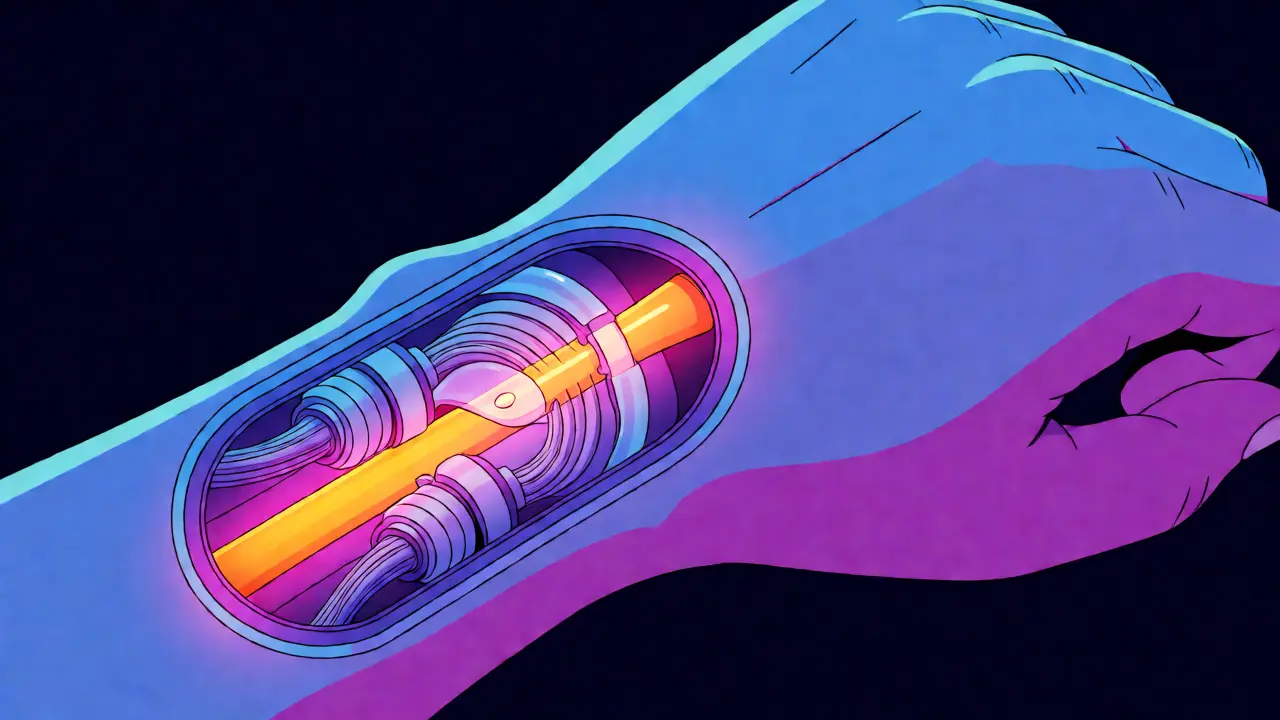
To understand why your hand hurts, you have to look at the anatomy. Your wrist isn’t just a joint; it’s a tight squeeze box for tendons and nerves. The carpal tunnel is a rigid passageway formed by carpal bones on the bottom and the transverse carpal ligament on top. Inside this tunnel, nine flexor tendons (which help you bend your fingers) share space with one critical passenger: the median nerve, which provides sensation to your thumb, index, middle, and half of your ring finger.
When pressure builds up inside this tunnel-due to swelling, repetitive motion, or anatomical factors-it chokes off blood flow to the median nerve. This creates a vicious cycle: increased pressure leads to swelling, which increases pressure further. Over time, this damages the nerve’s protective coating (myelin), slowing down signals. If left untreated, the nerve fibers themselves can degrade, leading to irreversible loss of function. This isn’t just "wrist pain"; it’s a neurological bottleneck.
Spotting the Signs: From Tingling to Weakness
Symptoms rarely hit all at once. They follow a predictable progression that clinicians use to gauge severity. Early stages are characterized by intermittent numbness, usually worse at night. Many patients report waking up and shaking their hands to "wake them up." This nocturnal pattern occurs because we often sleep with our wrists bent, increasing tunnel pressure.
As the condition advances to moderate stages, symptoms creep into daytime activities. You might drop coffee mugs more often or struggle to button a shirt. Pain may radiate up your forearm toward your shoulder, confusingly mimicking neck issues. In severe cases, the damage becomes structural. The thenar eminence-the fleshy pad at the base of your thumb-starts to shrink (atrophy). At this point, grip strength drops significantly, and sensory loss becomes permanent. If you notice your thumb muscle looking smaller or feeling weak, don’t wait. That’s a red flag for advanced nerve compromise.
Who Gets It and Why?
It’s tempting to blame typing, but keyboard warriors aren’t the only ones at risk. While repetitive hand motions contribute, systemic health plays a huge role. Women are three times more likely to develop CTS than men, possibly due to smaller carpal tunnel structures. Age also matters, with prevalence peaking between 45 and 60 years old.
Underlying conditions increase susceptibility. Diabetes, rheumatoid arthritis, thyroid disorders, and pregnancy-related fluid retention all cause swelling that compresses the nerve. Occupational hazards are real too. The Bureau of Labor Statistics notes high rates among manufacturing, healthcare, and food service workers who perform forceful gripping or vibration-heavy tasks. However, having these risk factors doesn’t guarantee you’ll get CTS; it just raises the odds. Lifestyle factors like obesity and smoking also impair circulation, making the nerve more vulnerable to pressure.

How Doctors Diagnose Carpal Tunnel
A diagnosis isn’t always straightforward. Some people have classic symptoms but normal test results, while others have abnormal tests but no symptoms. Clinicians rely on a combination of physical exams and history. Common bedside tests include:
- Phalen Test: Pressing the backs of your hands together for 60 seconds to provoke tingling.
- Tinel Sign: Tapping lightly over the median nerve at the wrist to trigger an electric shock sensation.
- Carpal Compression Test: Applying direct pressure to the tunnel to reproduce symptoms.
If clinical signs are unclear, doctors may order electrodiagnostic studies (nerve conduction studies and EMG). These measure how fast electrical signals travel through the nerve. A median sensory latency greater than 3.7 milliseconds across the wrist typically confirms compression. Recently, high-resolution ultrasound has gained traction as a non-invasive alternative. Measuring the nerve’s cross-sectional area (>12mm²) offers high sensitivity for diagnosis, sparing some patients from the discomfort of needle-based tests.
Conservative Treatments: Saving Your Nerve Without Surgery
For mild to moderate cases, surgery isn’t the first line of defense. Evidence strongly supports conservative management as the initial approach. The gold standard here is nighttime wrist splinting, which keeps the wrist in a neutral position (0-10 degrees extension). This prevents the bending that exacerbates pressure during sleep. Studies show consistent use for 4-6 weeks improves symptoms in 60-70% of patients.
Activity modification is equally critical. This doesn’t mean quitting your job, but rather adjusting ergonomics. Keep your wrists straight while typing, take frequent breaks, and avoid prolonged wrist flexion. Physical therapists often teach nerve gliding exercises, gentle movements designed to keep the median nerve moving freely within the tunnel. These aren’t stretches for muscles; they mobilize the nerve itself to prevent adhesions.
If splints and exercises aren’t enough, corticosteroid injections can provide temporary relief. Injecting anti-inflammatory medication directly into the tunnel reduces swelling around the nerve. About 70% of patients see improvement for 3-6 months post-injection. However, repeated injections lose effectiveness over time and carry a small risk of nerve injury.
| Feature | Conservative Management | Surgical Release |
|---|---|---|
| Best For | Mild to moderate symptoms; duration <10 months | Severe symptoms; thenar atrophy; failed conservative care |
| Success Rate | ~75% if started early; ~35% if delayed | 90-95% symptom resolution |
| Recovery Time | Weeks to months (ongoing management) | 2-3 weeks light duty; 6-8 weeks full duty |
| Risks | Minimal; potential skin irritation from splints | Pillar pain (15-30%), scar tenderness, rare nerve injury |
| Cost (US Avg) | $450-$750 (splints, PT, injections) | $1,200-$2,500 out-of-pocket with insurance |
When Is Surgery Necessary?
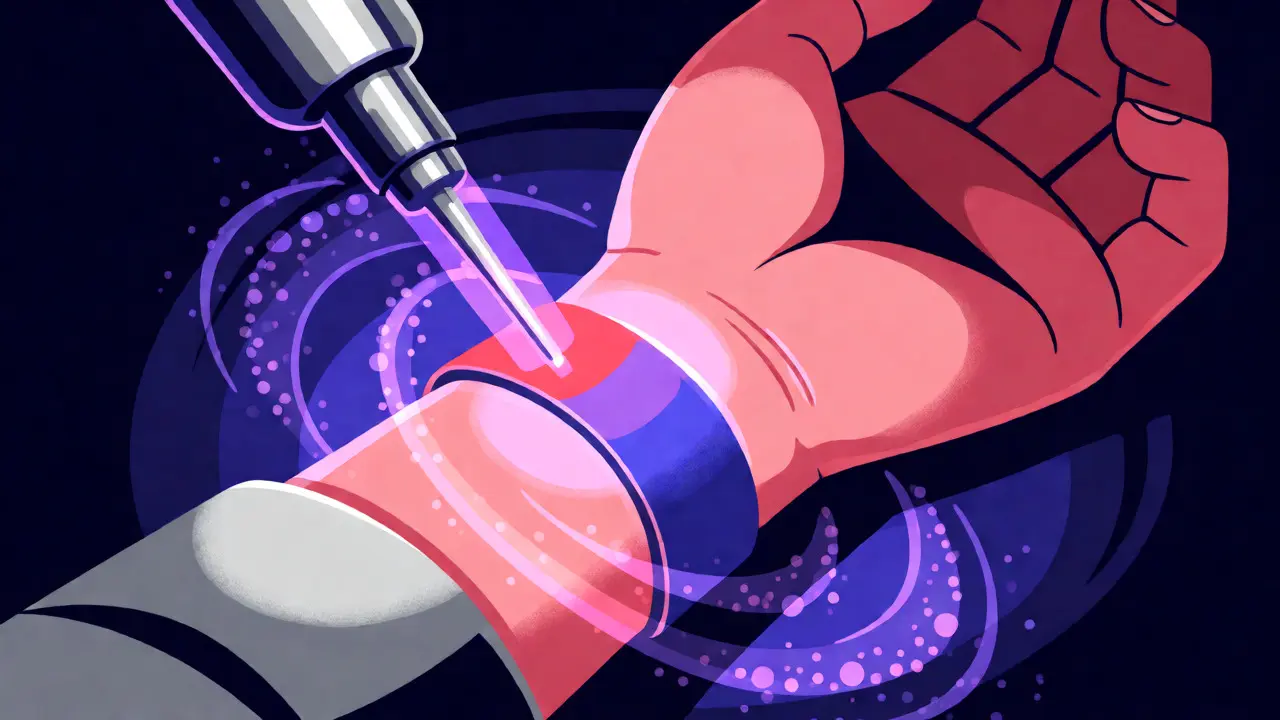
If you’ve tried conservative methods for 6-8 weeks with no improvement, or if you already have muscle wasting, surgery becomes the logical next step. The goal is simple: cut the transverse carpal ligament to expand the tunnel and relieve pressure on the median nerve. There are two main techniques:
- Open Carpal Tunnel Release: A traditional incision in the palm. It’s highly effective and allows direct visualization of the nerve.
- Endoscopic Release: Uses a camera and smaller incisions. Recovery is often faster, with less postoperative pain, though costs may be slightly higher.
Newer options exist, such as the ultrasound-guided percutaneous release using devices like the SX-One MicroKnife. Approved by the FDA in 2021, this minimally invasive technique shows promise for faster return-to-work timelines. Regardless of the method, success rates hover around 90%. Be prepared for "pillar pain"-tenderness in the palm near the incision site-which affects 15-30% of patients but usually resolves within a few months.
Prevention and Long-Term Management
Once treated, can CTS come back? Yes, especially if root causes remain unaddressed. Ergonomics are your best friend. Ensure your workstation promotes neutral wrist positions. Use voice-to-text tools if typing triggers symptoms. Maintain a healthy weight to reduce systemic inflammation. If you have diabetes or thyroid issues, keeping those conditions well-controlled protects your nerves.
Listen to your body. If tingling returns after months of being fine, restart splinting immediately. Don’t wait for the pain to become unbearable. Early intervention saves money and preserves function. Remember, nerve recovery is slow. Even after successful surgery, full sensation and strength may take months to return as the nerve regenerates at a rate of roughly 1 inch per month.
Can carpal tunnel syndrome heal on its own?
In very mild cases, especially if caused by temporary factors like pregnancy or minor strain, symptoms may resolve with rest and activity modification. However, true CTS rarely heals completely without intervention. Conservative treatments like splinting manage symptoms effectively, but they do not reverse structural narrowing of the tunnel. Ignoring persistent symptoms risks permanent nerve damage.
Does typing cause carpal tunnel syndrome?
Typing alone is a controversial cause. While repetitive motion contributes, studies suggest that forceful gripping, vibration, and awkward wrist angles are bigger culprits than light keyboard work. Many heavy typists never develop CTS, while non-typists with other risk factors (like diabetes) do. Poor posture and wrist positioning matter more than the volume of typing.
How long does recovery take after carpal tunnel surgery?
Most patients can return to light daily activities within 1-2 weeks. Driving is usually permitted once sensation returns and you can safely operate controls, often within 2 weeks. Full recovery, including return to heavy manual labor or sports, typically takes 6-8 weeks. Nerve healing continues for months, with full sensory recovery sometimes taking up to a year in severe cases.
Is carpal tunnel surgery painful?
The procedure itself is done under local anesthesia, so you won’t feel pain during surgery. Post-operatively, most patients report manageable soreness rather than sharp pain. "Pillar pain"-aching in the palm arch-is common but treatable with anti-inflammatories and time. Endoscopic techniques generally result in less postoperative discomfort than open surgery.
Can I prevent carpal tunnel syndrome?
You can lower your risk by maintaining ergonomic workspaces, taking frequent breaks to stretch and move your hands, and managing underlying health conditions like diabetes and obesity. Avoiding prolonged wrist flexion or extension helps. While genetics play a role, lifestyle adjustments significantly reduce the likelihood of developing symptomatic compression.
Jeremy Westcott
September 4, 2026 AT 12:04They don't want you to know that the 'repetitive motion' narrative is a smokescreen designed by Big Ergonomics to sell us $40 mouse pads and $200 chairs. The real culprit is the electromagnetic field radiation from our devices frying the myelin sheath, combined with fluoride in the water softening our bones so they collapse inward on the nerve. It’s not just typing; it’s systemic poisoning disguised as anatomy.
Kim Pender
September 4, 2026 AT 12:53Most people ignore this until their hand feels dead.
Just wear a brace at night.
It works for most.
Eric Schultze
September 6, 2026 AT 11:40The assertion that conservative management resolves symptoms in 60-70% of patients is statistically suspect when one considers the lack of longitudinal control groups in these studies. Furthermore, the omission of environmental toxin exposure as a primary etiological factor suggests a bias toward mechanical explanations favored by insurance companies who wish to deny claims related to systemic health issues. One must question the integrity of data sources funded by orthopedic device manufacturers.
Falgun R Patel
September 8, 2026 AT 07:36It is fascinating how the body communicates its limits through pain, isn't it? Instead of viewing the tingling as an enemy, perhaps we should see it as a gentle teacher urging us to slow down and reconnect with our physical selves. Healing is not just about fixing the nerve but about adjusting our lifestyle to honor the vessel that carries us through life. Be patient with your hands; they have served you well.
Amanda SF
September 9, 2026 AT 19:59This article is painfully basic and fails to address the critical nuance of proximal median nerve entrapment versus distal carpal tunnel compression. By lumping them together, the author displays a shocking lack of clinical depth. Also, suggesting splinting as a gold standard without mentioning the high failure rate in cases with significant thenar atrophy is misleading at best. A true expert would discuss the differential diagnosis of thoracic outlet syndrome here.
Kimberley Odish
September 10, 2026 AT 02:29I find it exhausting that medical advice is constantly dumbed down for the masses while ignoring the complex interplay of hormonal fluctuations and autoimmune responses. Women are three times more likely to get this? Obviously. We carry the burden of inflammation due to societal stressors and biological cycles that men simply do not understand. This article treats CTS as a mechanical issue rather than a symptom of broader systemic neglect of female physiology.
Adam Viruet
September 10, 2026 AT 19:37Actually... I disagree!!!
Typing causes it!!!
My cousin got it from Excel!!!
Jenn Bell
September 11, 2026 AT 07:12This is such helpful info! I started using a vertical mouse last year and my wrist pain has completely vanished. It really does make a huge difference to keep things neutral. Keep listening to your body!
Neil Martin
September 11, 2026 AT 11:53The reliance on Phalen's test is archaic and lacks specificity compared to modern sonographic evaluation of the median nerve cross-sectional area. If clinicians are still relying on subjective provocation maneuvers, they are failing to adhere to current evidence-based protocols. Furthermore, the discussion on surgical outcomes ignores the biomechanical consequences of ligament release on grip strength mechanics in the long term.
Neil Sahli
September 12, 2026 AT 02:36Who cares about the science if you can just take a pill and go back to grinding? Oh wait, no pills fix this. So you gotta actually change your habits. Revolutionary concept: stop being lazy with your posture and maybe your hands won't feel like they're falling off at 3 AM. Get up, stretch, and stop blaming the keyboard for your own ergonomic negligence.
Aurelio Haney
September 14, 2026 AT 00:45Great read! 👍 Just wanted to add that yoga poses like downward dog can aggravate this if you aren't careful with wrist alignment. Be safe out there! 🧘♂️
Mary Tait
September 14, 2026 AT 11:25In America, we value productivity above all else, which is why we tolerate chronic pain rather than addressing the root cause of poor workplace design. This condition is a direct result of our national failure to enforce proper labor standards for office workers. We are a nation of weak wrists because we refuse to stand up to corporations that prioritize output over employee health.
Pramay Dattani
September 15, 2026 AT 07:34Why you Americans always complain about small things?? In India we work hard with no breaks and no problems!! You guys are too soft. My father worked in factory for 40 years and his hands were fine. Maybe you need to stop whining and start working harder. This is why US economy is declining. Weakness starts in the hands.