Cardiovascular Disease: Understanding Heart Attacks, Stroke, and Vascular Conditions
 Jan, 21 2026
Cardiovascular disease isn't just one thing. It’s a group of conditions that quietly damage your heart, brain, and blood vessels - often without warning. Every year in the U.S., nearly 800,000 people die from heart disease alone. Another 800,000 suffer a stroke. These aren’t rare events. They’re everyday tragedies, and most of them are preventable.
What Exactly Is Cardiovascular Disease?
Cardiovascular disease, or CVD, covers a range of problems that start with plaque building up in your arteries. This is called atherosclerosis. Over time, that plaque hardens and narrows your blood vessels. When it blocks blood flow to your heart, you get a heart attack. When it cuts off blood to your brain, you have a stroke. When it affects your legs or kidneys, it’s peripheral artery disease or chronic kidney disease - all part of the same underlying problem.
The American Diabetes Association defines this group as atherosclerotic cardiovascular disease (ASCVD). That includes:
- Heart attack or unstable angina
- Coronary artery bypass or stent placement
- Stroke or transient ischemic attack (TIA)
- Peripheral artery disease (PAD)
- Aortic aneurysm
If you’ve had any of these, you’re in the high-risk group. And here’s the thing: having one of these conditions makes you far more likely to have another. It’s not coincidence - it’s the same disease showing up in different places.
The Big Risk Factors - And Who’s Most Affected
You can’t change your genes, but you can change your habits. The biggest drivers of CVD are well-known, but still wildly under-controlled:
- Hypertension: 116 million U.S. adults have high blood pressure. Only about half have it under control.
- High LDL cholesterol: 71 million Americans have levels above 100 mg/dL - the threshold where damage begins.
- Diabetes: 11.3% of U.S. adults have it. For them, CVD risk jumps by 2 to 4 times.
- Obesity: Nearly 42% of adults have a BMI over 30. Fat isn’t just weight - it’s inflammation waiting to happen.
- Smoking: 11.5% of adults still smoke. One pack a day doubles your risk of a heart attack.
But here’s what most people don’t realize: where you live matters more than your DNA. In the U.S., Black Americans die from CVD at 30% higher rates than White Americans - even when their blood pressure, cholesterol, and diabetes levels are the same. Zip code is a stronger predictor than genetics. That’s not biology. That’s systemic inequality.
How It All Starts - The Silent Process
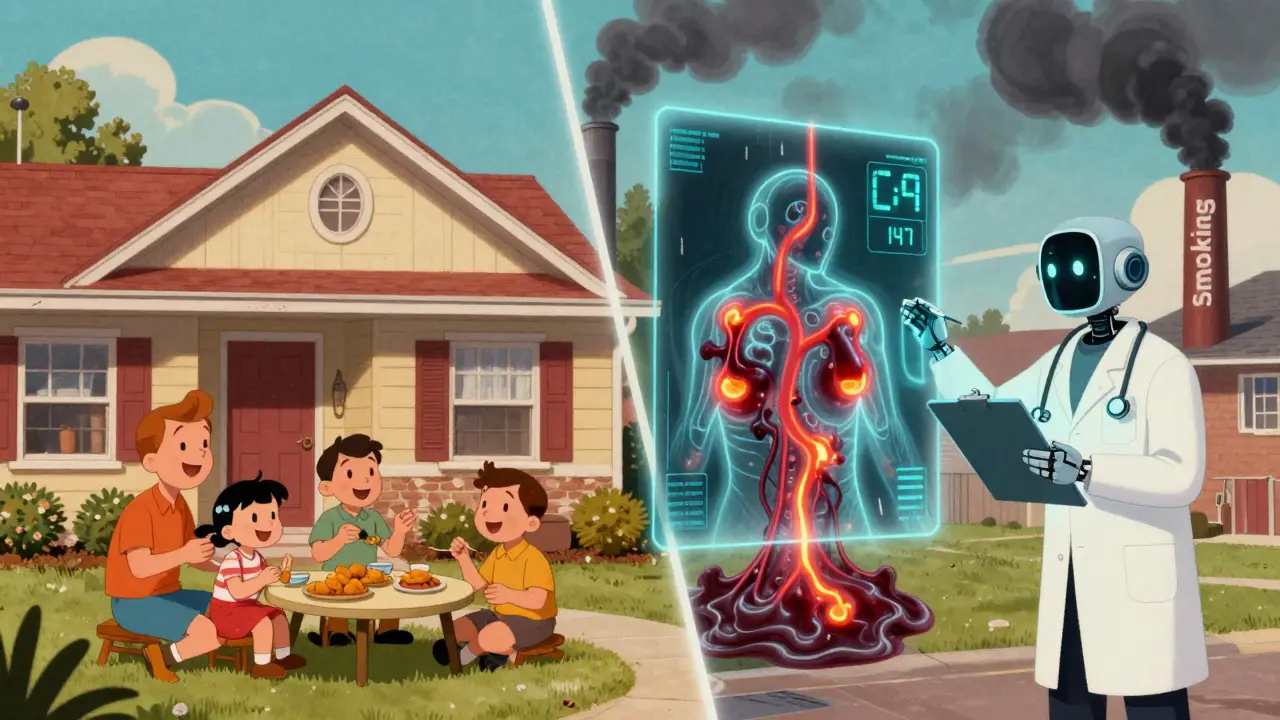
Plaque doesn’t form overnight. It begins with damage to the inner lining of your arteries - the endothelium. High blood sugar, smoking, or high blood pressure scrape that lining. Your body tries to fix it, but instead, fat and calcium build up. Inflammation kicks in. White blood cells swarm the area. The plaque grows. Eventually, it cracks.
That’s when the real danger hits. A cracked plaque triggers a blood clot. If the clot blocks a coronary artery, you have a heart attack. If it blocks a brain artery, you have a stroke. If it blocks an artery in your leg, you get pain when walking - a sign of peripheral artery disease.
And here’s the twist: many people have plaque for years with zero symptoms. That’s why screening matters. The 2023 ACC/AHA guidelines now recommend a coronary artery calcium (CAC) scan for people with intermediate risk - especially if you’re in your 40s or 50s and have one or two risk factors. A CAC score of zero means your risk is very low. A score over 100? That’s a red flag.
New Treatments - Beyond Statins
Statins have saved millions. But they’re not the whole story anymore. In the last five years, two new classes of drugs have changed everything:
- SGLT2 inhibitors (like empagliflozin and canagliflozin) - originally for diabetes, now proven to reduce heart failure hospitalizations and kidney damage.
- GLP-1 receptor agonists (like semaglutide and liraglutide) - known for weight loss, but also cut heart attack and stroke risk by up to 20% in high-risk patients.
The 2025 ADA guidelines now say: if you have type 2 diabetes AND ASCVD, heart failure, or kidney disease - you should be on one of these drugs, regardless of your A1C. That’s huge. These aren’t just sugar pills. They’re heart protectors.
Even blood pressure targets have gotten stricter. The new goal is under 130/80 for most people with CVD. And for those with very high risk - like someone who’s had a heart attack and has diabetes - LDL cholesterol should be under 55 mg/dL. That’s aggressive. But studies show it cuts events by another 25%.
The Mental Health Connection
Depression isn’t just a mood disorder. It’s a cardiovascular risk factor. People with depression are 30% more likely to have a heart attack. And after a stroke or heart attack, 3 to 4 times more people develop depression than the general population.
The European Society of Cardiology’s 2025 guidelines are the first to make depression screening mandatory for all CVD patients. They recommend asking two simple questions:
- Over the past two weeks, have you felt down, depressed, or hopeless?
- Over the past two weeks, have you had little interest or pleasure in doing things?
If the answer is yes to either, it’s not just ‘in your head.’ It’s part of the disease. Treating depression improves medication adherence, reduces inflammation, and lowers death rates. Mental health isn’t separate from heart health - it’s woven into it.
What Works in the Real World
Guidelines are great. But what actually changes outcomes? Real programs do.
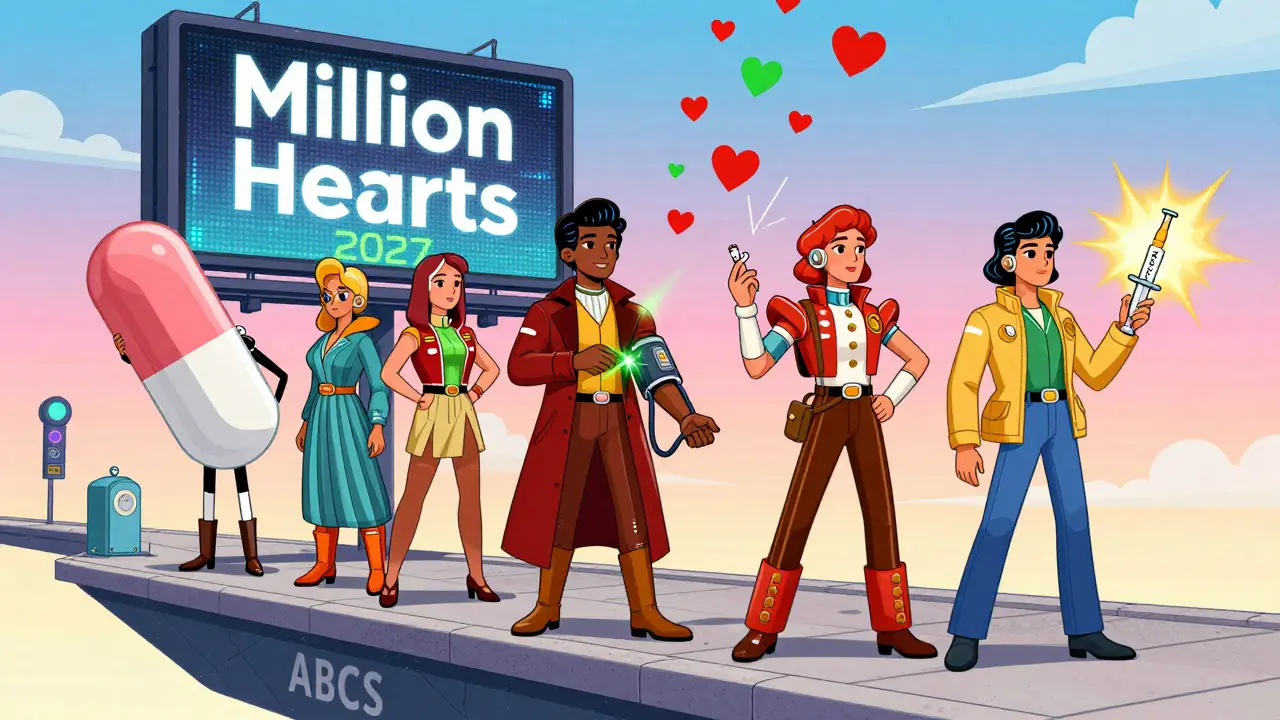
The Million Hearts initiative - led by the U.S. Department of Health and Human Services - focuses on the ABCS:
- Aspirin when appropriate
- Blood pressure control
- Cholesterol management
- Smoking cessation
Between 2000 and 2019, CVD deaths dropped by 21.6% in the U.S. - even as obesity rose. That’s because these simple, proven strategies were scaled up.
Workplaces like Johnson & Johnson cut employee CVD risk by 26% over 10 years with health coaching, gym access, and healthy cafeteria options. Community programs like the National Diabetes Prevention Program reduced CVD events by 18% in people with prediabetes.
The HEARTS package - used in 21 countries - cuts CVD deaths by 15-25% by training primary care teams to manage hypertension, offer tobacco counseling, and ensure patients get essential medicines. It’s not fancy. It’s systematic.
Why This Matters Now
The cost of CVD in the U.S. hit $444 billion in 2023. By 2035, it could hit $1.1 trillion. That’s not just money - it’s lost years of life, broken families, and overwhelmed hospitals.
And the future? If current trends continue, half of all U.S. adults will have obesity by 2030. That could reverse decades of progress. But there’s hope. The Million Hearts 2027 goal is to reduce CVD deaths by 20%. Early results show states using the ABCS approach are already seeing 14% drops in mortality.
The message is clear: you don’t need a miracle drug or a magic diet. You need consistent action - control your blood pressure, lower your LDL, move daily, quit smoking, and treat depression if it’s there. Your heart isn’t just an organ. It’s the center of your life. Protect it like it matters - because it does.
What’s the difference between a heart attack and cardiac arrest?
A heart attack happens when a blocked artery stops blood flow to part of the heart muscle. The person is usually awake, may feel chest pain, nausea, or shortness of breath, and can survive with prompt treatment. Cardiac arrest is when the heart suddenly stops beating. The person collapses, loses consciousness, and stops breathing. It’s immediately life-threatening and requires CPR and defibrillation within minutes.
Can you have cardiovascular disease without symptoms?
Yes - and many people do. Plaque builds up slowly over years. You might have no chest pain, no leg cramps, and no warning signs until a heart attack or stroke happens. That’s why screening - like checking blood pressure, cholesterol, and getting a coronary calcium scan if you’re at intermediate risk - is so important. Silent disease is the most dangerous kind.
Is cardiovascular disease only a problem for older adults?
No. While risk increases with age, the damage starts much earlier. Studies show that plaque buildup begins in your 20s and 30s. High blood pressure, diabetes, and obesity in younger adults are pushing heart attacks into people in their 40s and even 30s. Prevention can’t wait until you’re 60.
Do I need to take statins for life if I start them?
For most people with established cardiovascular disease, yes. Statins don’t cure plaque - they slow and sometimes reverse it. Stopping them means your LDL rises again, and your risk returns. There are exceptions - like if you develop severe side effects - but for the vast majority, long-term use is safer than stopping. Talk to your doctor about your specific risk level and goals.
Can losing weight reverse cardiovascular disease?
Losing weight doesn’t erase plaque, but it can dramatically improve your condition. Losing just 5-10% of your body weight can lower blood pressure, improve cholesterol, reduce inflammation, and improve insulin sensitivity. In people with early-stage disease, this can mean fewer medications and lower risk of future events. It’s not a cure, but it’s one of the most powerful tools you have.
Patrick Roth
January 23, 2026 AT 11:31Yeah right, another ‘preventable’ disease article. Tell that to my cousin who ate nothing but kale and ran marathons until his arteries turned to concrete at 42. Prevention? More like genetic roulette. You can’t out-exercise bad DNA.
Tatiana Bandurina
January 24, 2026 AT 21:35Let’s not romanticize lifestyle changes. The data shows that even with perfect cholesterol and BP, 38% of CVD events occur in people with no traditional risk factors. The real culprit? Chronic low-grade inflammation from environmental toxins, processed seed oils, and endocrine disruptors in plastic packaging. No one talks about that because Big Pharma doesn’t profit from it.
Neil Ellis
January 26, 2026 AT 00:28Man, this post hit different. I used to think heart disease was something old guys got. Then my buddy, 34, went into cardiac arrest after a late-night burger run. He’s fine now, thanks to a bystander who knew CPR. But here’s the thing - we’re all one bad day away from becoming a statistic. That’s why I started doing 10-minute walks after every meal. Doesn’t sound like much, but it’s the little things that stitch your life back together.
Lana Kabulova
January 26, 2026 AT 07:06Statins? Sure. But have you looked at the real side effect data? Muscle degradation, cognitive fog, mitochondrial dysfunction - all underreported. And don’t even get me started on the fact that 90% of people on statins have no idea what LDL actually does. You’re treating a symptom, not the cause. The real solution? Intermittent fasting, circadian rhythm alignment, and ditching the ‘low-fat’ processed garbage they call food.
Rob Sims
January 27, 2026 AT 12:30Oh wow, another ‘systemic inequality’ lecture. So the Black community has higher CVD mortality because… they don’t like kale? Let me guess - the solution is more government programs and less personal responsibility. Funny how the same people who scream ‘personal choice’ about vaccines suddenly want the state to fix your arteries.
Kenji Gaerlan
January 28, 2026 AT 09:53lol statins r the only thing keeping me alive but i still eat donuts every sunday. also why does everyone act like clogged arteries are new? my grandpa had one in the 60s and he smoked 3 packs a day. we’re just living longer now so we notice it more.
Oren Prettyman
January 30, 2026 AT 09:43It is incumbent upon the reader to recognize that the conflation of correlation with causation in the context of cardiovascular disease risk factors represents a fundamental epistemological flaw in contemporary public health discourse. The assertion that hypertension, hyperlipidemia, and diabetes are ‘drivers’ of atherosclerosis presumes a linear, deterministic model of pathophysiology, which is demonstrably inconsistent with the multifactorial, non-linear, and dynamically adaptive nature of biological systems. Furthermore, the reliance on population-level epidemiological data to dictate individual therapeutic protocols constitutes an egregious violation of the principle of clinical individuality.
Liberty C
February 1, 2026 AT 02:23Of course you mention the Million Hearts initiative - because it’s funded by the CDC and backed by pharmaceutical lobbying. The real solution? Stop subsidizing corn syrup, end food deserts, and stop pretending that a 10-minute walk in a Walmart parking lot counts as ‘exercise.’ You think someone working two jobs and raising kids on food stamps cares about CAC scans? This isn’t medicine. It’s performative virtue signaling.
shivani acharya
February 1, 2026 AT 06:33they’re lying. the whole thing is a scam. heart disease is caused by 5G radiation and the flu shot. the doctors don’t want you to know that. they’re paid by the pharmaceutical giants to sell you statins so you stay sick forever. i read it on a forum in india. my cousin’s friend’s neighbor died after taking one. and now they’re pushing these new GLP-1 drugs? they’re just making you dependent. wake up. the system is rigged.
Sarvesh CK
February 2, 2026 AT 15:19There is a profound truth embedded in the intersection of biology and social determinants. While individual behaviors matter, we must not reduce systemic injustice to a matter of personal failure. The fact that zip code outperforms genetics as a predictor of cardiovascular outcomes is not an accident - it is the consequence of decades of disinvestment in public infrastructure, food sovereignty, and mental health access. Healing the heart requires healing the community. And that begins with policy, not prescriptions.
Hilary Miller
February 3, 2026 AT 00:43My mom had a stroke at 58. No warning. No symptoms. Just gone. Now I get my CAC scan every 3 years. Worth every penny.
Alec Amiri
February 3, 2026 AT 11:40So you’re telling me depression causes heart attacks? Wow. I guess I didn’t realize crying into my pillow counts as a cardiovascular event. Next you’ll say my breakup gave me high blood pressure. Cool. Let’s all go to therapy and call it prevention.
arun mehta
February 4, 2026 AT 05:15Thank you for this. I’m from a village in India where people think heart disease is ‘American disease.’ I showed this to my uncle - he’s 52, smokes, eats fried food daily. He’s now walking 30 minutes every morning. Small change. Big impact. 🙏❤️