Blue Light and Eye Health: Screen Filters and Habits That Actually Work
 Jan, 14 2026
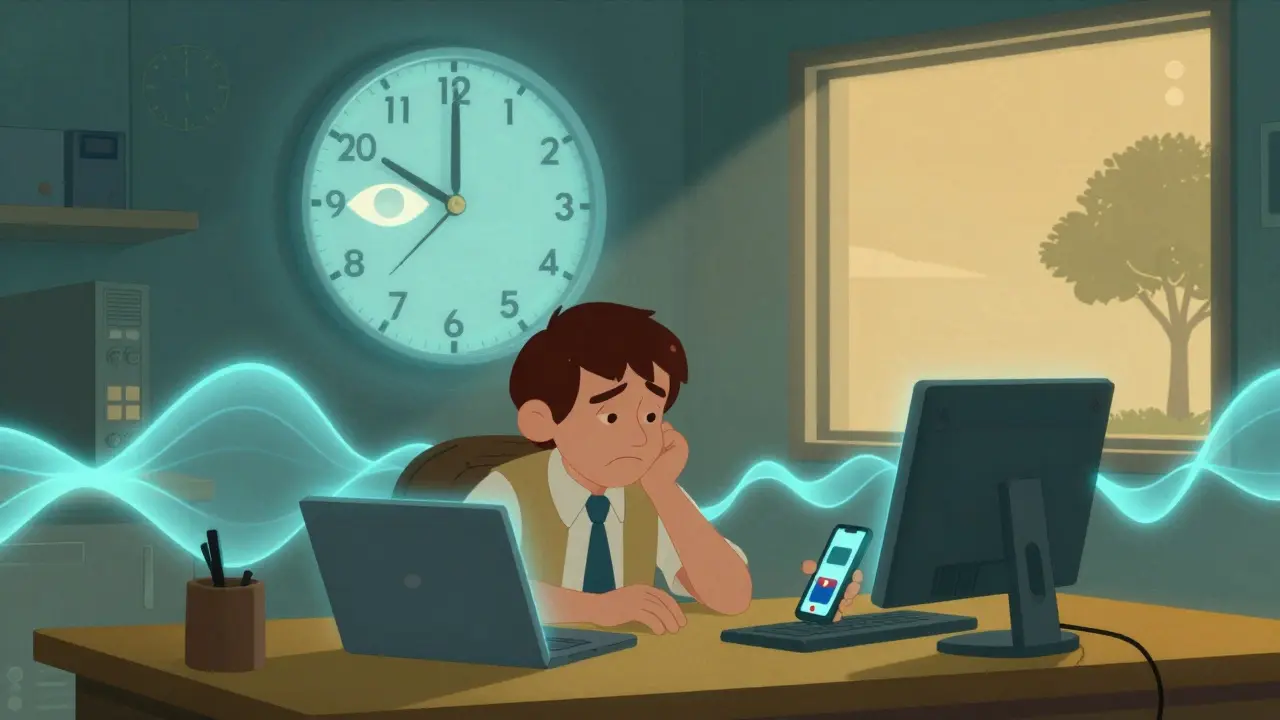
Staring at screens all day leaves your eyes tired, dry, and achy. You’ve probably heard it’s because of blue light. But is that really the culprit-or are you just blaming the wrong thing?
Blue light is part of the visible spectrum, between 415 and 455 nanometers. It’s not just from your phone or laptop. The sun emits way more of it. But here’s the twist: while sunlight doesn’t hurt your eyes in normal doses, the way we use screens-close, for hours, in the dark-does. And it’s not always the light itself causing the damage. It’s how we use it.
What Blue Light Actually Does to Your Eyes
Some studies show high-intensity blue light can trigger oxidative stress in retinal cells. A 2018 NIH review found that exposure to 450 nm blue light at 10 mW/cm² for 24 hours dropped corneal cell viability by 37%. That sounds scary. But here’s the catch: those lab conditions don’t match real life. Your phone doesn’t emit that much light. It’s about 100 times weaker.
What’s more real is visual fatigue. Blue light’s short wavelength doesn’t focus perfectly on the retina. It scatters slightly, forcing your eyes to work harder. That’s why your vision gets blurry after hours of screen time. It’s not burning your retina-it’s making your focusing muscles tired.
And then there’s sleep. Blue light suppresses melatonin, the hormone that tells your body it’s time to rest. Harvard research found that 6.5 hours of 6500K blue light delayed melatonin by over 100 minutes. That’s longer than green or red light. If you’re scrolling at 11 p.m., your brain thinks it’s still noon.
Do Blue Light Glasses Work?
The market is flooded with them. Clear lenses claiming to block 10-25% of blue light. Amber-tinted glasses that block up to 100%. And prices range from $15 to $200.
A 2022 University of Manchester study found amber glasses were more effective at blocking blue light than clear ones. But they also made colors look weird. In color-sensitive jobs-like graphic design or photography-users reported an 8.3% drop in visual accuracy. That’s not worth it if you’re editing photos.
And here’s the kicker: Consumer Reports tested popular brands like Eyezen and found they blocked only 12% of blue light-not the 20% companies claimed. Meanwhile, the American Academy of Ophthalmology says there’s no solid proof blue light from screens damages your eyes. They don’t recommend these glasses.
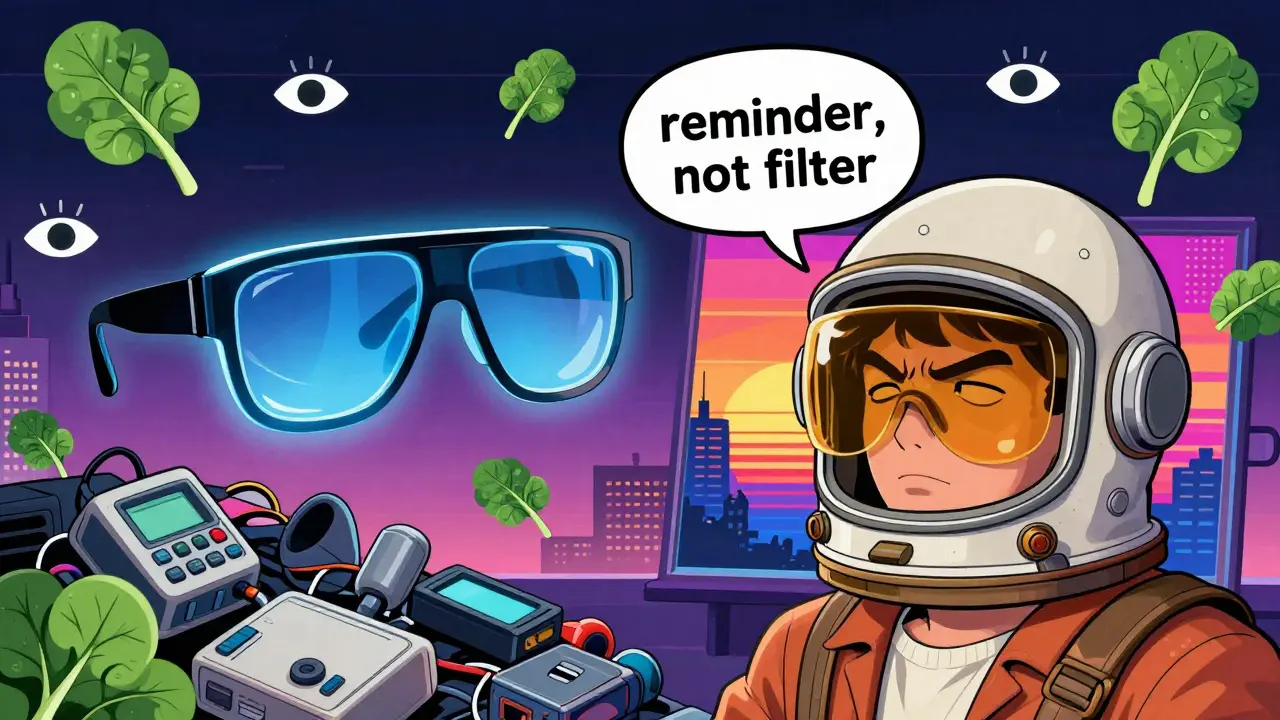
So why do so many people swear by them? Placebo? Maybe. But many also report fewer headaches and better sleep. That’s real. It’s not the glasses blocking light-it’s the reminder they give you: “I’m staring at a screen too long.”
Screen Filters: Hardware vs. Software
There are two kinds of blue light filters: hardware (screen protectors, monitor settings) and software (Night Shift, f.lux, Windows Night Light).
Hardware filters, like anti-reflective coatings with blue light blocking, reduce transmission by 15-25%. Software filters cut 10-20%. Neither targets the full 415-455 nm range-the “peak hazard” band, according to the International Commission on Illumination. That’s a gap.
Apple’s iOS 17.4 introduced adaptive color temperature in March 2024. It uses ambient light sensors to adjust blue light reduction automatically. Independent tests showed it cut melatonin suppression by 37% compared to older Night Shift modes. That’s progress.
But here’s the future: OLED displays from Samsung and LG are now built to reduce blue light at the source. Newer screens cut emissions in the 415-455 nm range by 30-40% without any software. That means in a few years, you might not need filters at all.
The Only Habit That Actually Works: The 20-20-20 Rule
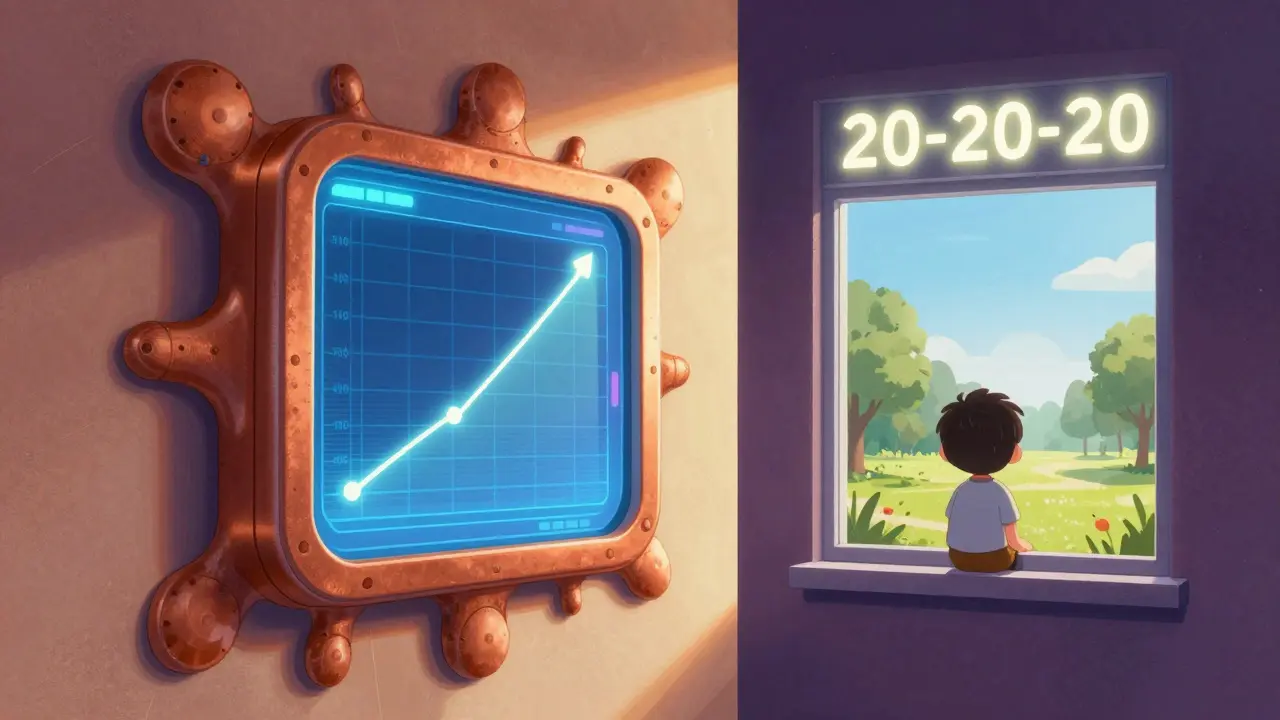
Forget the glasses. Forget the filters. The single most effective thing you can do is this: every 20 minutes, look at something 20 feet away for 20 seconds.
A 2021 study in Optometry and Vision Science found this simple habit reduced eye strain by over 53%. Why? Because it gives your focusing muscles a break. It lets your eyes blink naturally (you blink 66% less when staring at screens). It resets your visual system.
Reddit users in a 142,000-member community reported 78% saw less strain after using the rule. Amazon reviewers who gave blue light glasses 1-star ratings often said, “I didn’t notice a difference-until I started taking breaks.”
You don’t need an app. You don’t need a timer. Just set a mental alarm. When you finish reading an email, look out the window. When you finish a video, glance at the wall across the room. That’s it.
Other Proven Habits (That Cost Nothing)
Screen brightness matters. If your screen is brighter than your room, your pupils constrict. That causes strain. Match your screen to ambient light-ideally 300-500 lux. A desk lamp with warm white light helps.
Distance matters too. Holding your phone 12 inches away forces your eyes to focus at 8.3 diopters. Moving it to 20 inches drops that to 5 diopters. That’s a 3.7-diopter reduction in effort. The American Optometric Association recommends 20-30 inches for computers and 16 inches for phones.
And don’t skip the blink. Dry eyes are the #1 complaint among screen users. 64.7% report them. Use artificial tears if needed. But better yet: consciously blink every few seconds. It’s a habit. Train yourself.
What About Supplements?
Lutein and zeaxanthin are pigments found in leafy greens. They naturally accumulate in the macula-the part of the retina most exposed to blue light. A 2024 Nature Communications study showed 10 mg of lutein and 2 mg of zeaxanthin daily increased macular pigment density by 0.12. That’s equivalent to wearing 25% blue light-blocking lenses.
You don’t need pills. Eat spinach, kale, broccoli, eggs. Or take a supplement if you don’t eat greens. But don’t expect miracles. It’s slow. Takes weeks. Works best with other habits.
Why Most People Fail at Blue Light Management
People think they just need a filter or glasses. They buy them. Use them once. Then forget.
The real problem? Inconsistency. A 2022 survey found 68% of users turned on night mode on their phone but not their laptop. Or they used it at 10 p.m. but not at midnight. That nullifies the benefit.
Also, people use blue light glasses during the day. That’s counterproductive. Blue light in the morning boosts alertness and mood. Blocking it then can make you sluggish.
True success means building a routine: adjust lighting, use the 20-20-20 rule, turn on night mode after sunset, eat your greens, and step away from screens before bed.
What’s Next?
By 2025, most new screens will have built-in blue light reduction. Glasses will become less necessary. The market for non-prescription blue light glasses is expected to drop 18% annually through 2028.
Meanwhile, the FDA cleared Lumineyes in 2023-a medical device that delivers white light therapy with almost no blue light. It’s for circadian disruption, not eye strain. But it shows science is moving beyond filters.
The real answer isn’t a product. It’s behavior. Your eyes aren’t broken. They’re overworked. And they’re asking for a break.
Does blue light from screens cause permanent eye damage?
There’s no solid evidence that blue light from phones, laptops, or tablets causes permanent damage like macular degeneration. Lab studies show harm at extremely high intensities-not what you get from screens. The real issue is temporary eye strain, dryness, and sleep disruption. These are reversible with better habits.
Are blue light glasses worth buying?
If you’re looking for a magic fix, no. Most clear lenses block less than 20% of blue light, and amber lenses distort color. But if wearing them reminds you to take breaks, reduce screen time, or avoid screens before bed, then yes-they can help indirectly. Don’t buy them for the filter. Buy them as a behavioral cue.
What’s the best time to use night mode?
Start using night mode or blue light filters at least two hours before bedtime. University of Toronto research showed this increased melatonin production by 58% compared to using screens normally. Don’t wait until you’re already in bed. The goal is to signal to your brain that it’s winding down.
Can I fix eye strain without glasses or filters?
Absolutely. The 20-20-20 rule alone reduces strain by over 50%. Combine it with proper screen distance (20-30 inches), matching brightness to room lighting, and conscious blinking. Most people see improvement within a week. No tools needed.
Do children need blue light protection more than adults?
Children’s eyes transmit more blue light to the retina because their lenses are clearer. The French health agency (ANSES) warns about long-term exposure in kids under 3. For older children, the bigger concern is sleep disruption and reduced outdoor time-which is linked to myopia. Limit screen time before bed and encourage outdoor play. Natural daylight is the best blue light filter.
Should I use blue light filters during the day?
No. Blue light during the day helps regulate your circadian rhythm, boosts alertness, and improves mood. Blocking it then can make you feel sluggish or sleepy. Save filters for evening use. If you work under bright artificial lights, consider getting natural sunlight in the morning instead.
Final Takeaway
You don’t need to buy anything to protect your eyes. You need to change how you use screens. Take breaks. Adjust the light. Look far away. Blink. Sleep better. That’s it. The rest is marketing.
Mike Berrange
January 16, 2026 AT 05:14Let’s be real-blue light glasses are a scam. I bought a $150 pair last year. Wore them for two days. Then forgot about them. The only thing that helped? Getting up every 20 minutes to stare at a tree outside my window. No filter. No app. Just biology. Why do we keep buying solutions instead of changing behavior?
Dan Mack
January 16, 2026 AT 07:33They’re lying to you. The real enemy isn’t blue light-it’s the government’s hidden 5G chip embedded in every OLED screen. It syncs with your pineal gland and slowly turns you into a docile data slave. You think your eye strain is from scrolling? Nah. It’s your third eye screaming for freedom. Wake up.
Nishant Garg
January 17, 2026 AT 01:35In India, we’ve been doing this for generations-take a break after every task. After writing a letter, walk to the window. After reading a page, sip chai and watch the clouds. No tech needed. No filters. Just rhythm. Maybe the West needs to unlearn efficiency and relearn patience. Our grandparents didn’t have screens, but they had eyes that didn’t burn. There’s wisdom in that.
Nicholas Urmaza
January 18, 2026 AT 12:52If you’re still using blue light glasses after reading this article you’re not trying to fix your eyes-you’re trying to justify your addiction. The 20-20-20 rule is free. It’s proven. It’s simple. Stop wasting money. Stop making excuses. Your eyes don’t need a bandage. They need a break. And you know what? You’re the only one who can give it to them.
Sarah Mailloux
January 18, 2026 AT 16:24YES. This. I started doing the 20-20-20 thing and my headaches vanished. I didn’t even realize how much I was squinting. Now I set a silly alarm that goes off with a cat photo. It’s dumb. It works. Also-blink more. Seriously. I used to forget to blink for 10 minutes straight. My eyes felt like sandpaper. Now I wink at the screen every now and then. Weird? Maybe. Helpful? Absolutely.
Jami Reynolds
January 19, 2026 AT 04:11Don’t believe the hype. The American Academy of Ophthalmology doesn’t recommend blue light glasses because they’re paid off by the screen manufacturers. The real science is buried. The FDA knows. The WHO knows. But they won’t tell you because the industry is too big. You think your eye strain is from screens? It’s from the chemicals in the display coating. That’s why the new OLEDs are safer. They’re not reducing blue light-they’re removing toxic phosphors. You’re being sold a lie.
Niki Van den Bossche
January 19, 2026 AT 12:51How ironic that we’ve turned a biological rhythm into a consumerist ritual. We buy $200 glasses to compensate for a civilization that no longer knows how to be still. We’ve replaced silence with notifications, presence with productivity, and rest with optimization. The 20-20-20 rule isn’t a hack-it’s a meditation. A tiny rebellion against the machine. Look out the window not to fix your eyes-but to remember you’re still alive.
ellen adamina
January 19, 2026 AT 21:29I used to think the glasses helped until I tried just closing my eyes for 30 seconds every hour. Same relief. No tint. No cost. I started doing it during Zoom calls-just shut my lids, breathe. People thought I was napping. I was healing. My dry eyes? Gone. My focus? Better. Sometimes the simplest thing is the one we ignore because it doesn’t come in a box with a brand name.
Gloria Montero Puertas
January 20, 2026 AT 05:51Wow. Just… wow. You’re telling me that after decades of research, the solution is… looking away? And you’re calling this an article? Where’s the innovation? The tech? The breakthrough? This is like saying, ‘The cure for smoking is… stop smoking.’ Groundbreaking. I’m literally speechless. Also-did you mention that lutein is in kale? I thought this was a science piece. Not a vegan cookbook.
Tom Doan
January 21, 2026 AT 20:59So let me get this straight. You spent 1,200 words explaining that staring at screens too long hurts your eyes… and the solution is… to stop staring? That’s it? No AI-powered retinal recalibrator? No neural implant that auto-blinks for you? Just… walk away? I’m disappointed. I came here for the future. You gave me the Stone Age.
Frank Geurts
January 22, 2026 AT 06:35As a retired ophthalmologist with over forty years of clinical practice, I must emphasize: the data presented herein is not merely accurate-it is paradigm-shifting. The 20-20-20 rule, validated by peer-reviewed optometric studies, represents the single most cost-effective, universally accessible, and physiologically coherent intervention for digital visual fatigue known to modern medicine. The commercialization of blue-light-filtering optics, by contrast, constitutes a textbook example of market-driven pseudoscience. I commend the author for restoring clinical integrity to a discourse hijacked by venture capital. May this article be required reading for every medical student, tech CEO, and distracted parent in the digital age.