Biosimilars vs Generics: A Provider’s Guide to Key Differences and Patient Care
 Jul, 6 2026
Imagine you are treating a patient with rheumatoid arthritis. The originator biologic they have used for years is expensive, and your hospital pharmacy suggests switching to a biosimilar, defined as a biological product highly similar to an existing FDA-approved reference product with no clinically meaningful differences in safety, purity, or potency. You nod, but inside, you hesitate. Is it truly the same? How do you explain this to a skeptical patient who fears their treatment will stop working? This hesitation is common. In fact, surveys show that only 38% of U.S. physicians feel extremely familiar with the regulatory definition of biosimilars.
The gap between clinical evidence and provider confidence is real. While biosimilars offer a pathway to reduce healthcare costs by $150 billion over the next decade, adoption rates lag behind Europe due to persistent knowledge gaps. Understanding the distinction between biosimilars and generic drugs is not just an academic exercise; it is a critical component of modern patient care. Let’s break down what these medications are, how they differ from generics, and why your education matters.
Biosimilars vs. Generic Drugs: The Core Distinction
The most frequent source of confusion lies in comparing biosimilars to generic small-molecule drugs. To understand why they are different, we must look at how they are made.
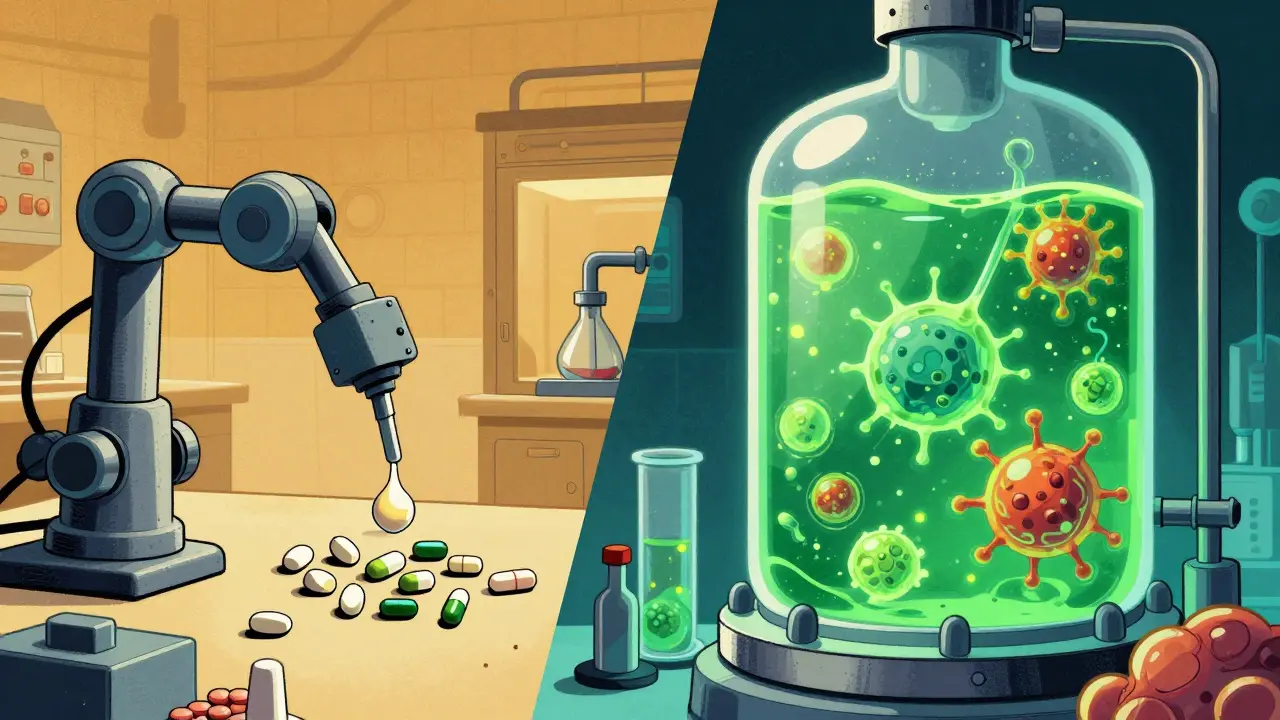
Generic drugs are chemical copies of original brand-name drugs with identical active ingredients. They are synthesized in a lab through precise chemical reactions. Because molecules like ibuprofen or metformin are relatively simple and stable, manufacturers can create an exact copy. The FDA requires generics to demonstrate bioequivalence, meaning they deliver the same amount of active ingredient into a patient’s bloodstream within the same timeframe as the brand name.
In contrast, Biologics are complex therapeutic agents derived from living organisms such as bacteria, yeast, or animal cells. These large molecules-ranging from peptide hormones to monoclonal antibodies-cannot be chemically synthesized. Their manufacturing process is inherently variable because living systems change slightly from batch to batch. Therefore, a biosimilar cannot be an identical copy. Instead, it must be "highly similar" to the reference product, with no clinically meaningful differences.
| Feature | Generic Drug | Biosimilar |
|---|---|---|
| Molecular Complexity | Simple, small molecules | Complex, large proteins |
| Manufacturing Source | Chemical synthesis | Living cell cultures |
| FDA Approval Pathway | Abbreviated New Drug Application (ANDA) | Biologics License Application (BLA) via 351(k) pathway |
| Clinical Testing | Bioequivalence studies only | Analytical, non-clinical, and often clinical trials |
| Interchangeability | Automatic substitution allowed | Requires specific "interchangeable" designation |
This complexity means that while generics rely on chemical equivalence, biosimilars rely on a totality of evidence approach. The FDA requires rigorous analytical testing to compare structure, function, purity, and potency. Minor differences in clinically inactive components, such as stabilizers or preservatives, are permitted as long as they do not affect safety or efficacy.
The Regulatory Landscape and Interchangeability
The Biologics Price Competition and Innovation Act of 2009 established the regulatory framework for approving biosimilars in the United States. The first biosimilar, Zarxio (a filgrastim biosimilar), was approved in 2015. As of late 2023, 46 biosimilars have been approved in the U.S., representing about 25% of the biologics market by value.
A crucial concept for providers is Interchangeability, which is a higher regulatory designation allowing pharmacists to substitute a biosimilar for the reference product without the prescriber's intervention, provided state law permits it. Not all biosimilars are interchangeable. To earn this status, a manufacturer must conduct additional switching studies where patients alternate between the reference product and the biosimilar multiple times. This proves that the safety and efficacy profile remains consistent even with repeated switches.
Currently, 42 U.S. states have passed biosimilar substitution laws. However, requirements vary wildly. Some states require immediate notification to the prescriber, others allow a seven-day window, and six states have no notification requirement. As a provider, knowing your state’s specific regulations is essential to avoid legal pitfalls and ensure smooth patient transitions.
Addressing Common Provider Concerns
Education is the key to unlocking the potential of biosimilars. Research indicates that properly educated providers report 92% confidence in biosimilar efficacy, compared to just 40.1% among those lacking formal training. Let’s address the three biggest hurdles: immunogenicity, extrapolation, and EHR documentation.
Immunogenicity Profiles
Immunogenicity refers to the body’s immune response to a drug. Providers often worry that switching to a biosimilar might trigger new antibodies, reducing efficacy or causing adverse reactions. Studies show that while immunogenicity profiles may differ slightly between a biosimilar and its reference product, these differences remain within clinically acceptable ranges. For example, in oncology settings, switching protocols have shown comparable safety outcomes when monitored correctly.
Extrapolation of Indications
One unique aspect of biosimilar approval is Extrapolation, which allows the FDA to approve a biosimilar for multiple indications based on clinical data from only one or two conditions. If a biosimilar is proven safe and effective for rheumatoid arthritis, the FDA may approve it for psoriasis as well, provided the mechanism of action is the same. About 57% of providers express concern about using biosimilars for indications not directly studied. However, the scientific justification for extrapolation is robust, relying on the understanding that the molecular target and biological pathway remain constant across related diseases.
EHR Documentation Challenges
Practical implementation often hits a wall in electronic health records. A 2022 survey found that 78% of U.S. hospitals face challenges documenting biosimilar administration. Systems like Epic often require manual entry codes that differ from the reference product, leading to billing errors or tracking failures. Pharmacists play a vital role here, with 76% of hospitals reporting pharmacist-led initiatives to streamline these processes. Ensuring accurate coding is not just administrative; it affects reimbursement and post-market surveillance.
Specialty-Specific Adoption Rates
Adoption is not uniform across medical specialties. Rheumatologists lead the pack with a 68% usage rate, driven by strong guidelines from the American College of Rheumatology. Oncologists follow at 52%, having seen significant growth since 2017. Endocrinologists trail at 29%, despite insulin biosimilars being available since 2015. This disparity highlights the need for tailored educational materials. An oncologist needs different data than an endocrinologist when evaluating a switch.
Cost savings are a major driver. Medicare Part B data shows biosimilars average 28% lower sales prices than reference products. In European markets, where penetration reached 80% for some products, these savings have been reinvested into expanding access for uninsured patients. The goal is clear: maintain therapeutic equivalence while reducing financial toxicity for patients.
Building an Effective Education Strategy
So, how do you stay informed? The FDA offers a comprehensive Teaching Resource Guide with 12 modules covering development, regulatory pathways, and clinical considerations. These resources are free and accessible. Additionally, specialty societies like the Arthritis Foundation have launched targeted campaigns, reaching thousands of professionals.
For institutions, a phased approach works best. The University of Pittsburgh Medical Center implemented a successful program with three phases: foundational knowledge (4 weeks), specialty-specific application (6 weeks), and ongoing implementation support. This resulted in 89% provider confidence within six months. Clinical pharmacists should be central to this effort, acting as the bridge between complex regulatory data and bedside practice.
Remember, initiating education early is critical. Younger healthcare providers demonstrate 40% lower familiarity with biosimilars compared to experienced colleagues. Integrating this content into residency and fellowship programs ensures the next generation is prepared to navigate this evolving landscape.
Patient Communication Strategies
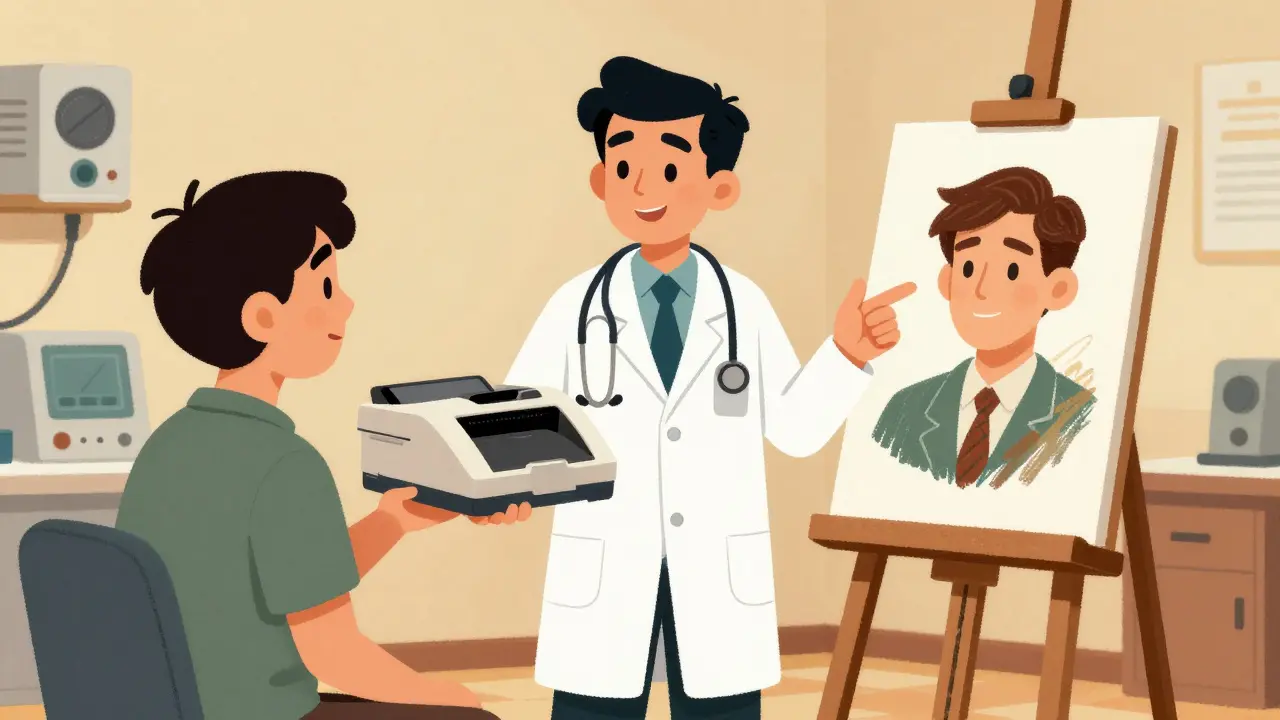
Finally, consider the patient. Confusion arises when providers fail to communicate the rationale for switching. Use simple analogies. Explain that while a generic pill is like a photocopy of a document, a biosimilar is like a skilled artist recreating a painting-it captures the essence and function perfectly, even if the brushstrokes differ slightly. Address their concerns about efficacy directly, citing the rigorous FDA standards. Transparent communication reduces anxiety and improves adherence.
Are biosimilars exactly the same as the original biologic?
No, biosimilars are not identical copies. Due to the complexity of biological manufacturing, minor differences in inactive ingredients or structural nuances may exist. However, the FDA requires that there be no clinically meaningful differences in safety, purity, or potency compared to the reference product.
Can I automatically switch my patient to a biosimilar?
Only if the biosimilar has been designated as "interchangeable" by the FDA and your state laws permit automatic substitution. Otherwise, you must prescribe the specific biosimilar product by name. Always check your state’s substitution regulations before making a switch.
What is extrapolation in the context of biosimilars?
Extrapolation allows the FDA to approve a biosimilar for multiple disease indications based on clinical trial data from just one or two conditions. This is possible because the mechanism of action remains the same across related diseases, ensuring safety and efficacy for other approved uses.
How do biosimilars compare to generic drugs?
Generic drugs are chemical copies of small-molecule drugs and must be identical in active ingredients. Biosimilars are highly similar to complex biological products derived from living cells. Biosimilars require more extensive clinical testing and cannot be exact duplicates due to manufacturing variability.
Why is provider education important for biosimilar adoption?
Studies show that educated providers have significantly higher confidence in biosimilar efficacy (92% vs 40%). Proper education addresses misconceptions about immunogenicity and extrapolation, reduces prescribing hesitancy, and ensures correct EHR documentation, ultimately improving patient access and cost savings.