Autoimmune Thyroid Eye Disease: Symptoms, Diagnosis, and Latest Treatments
 Jan, 13 2026
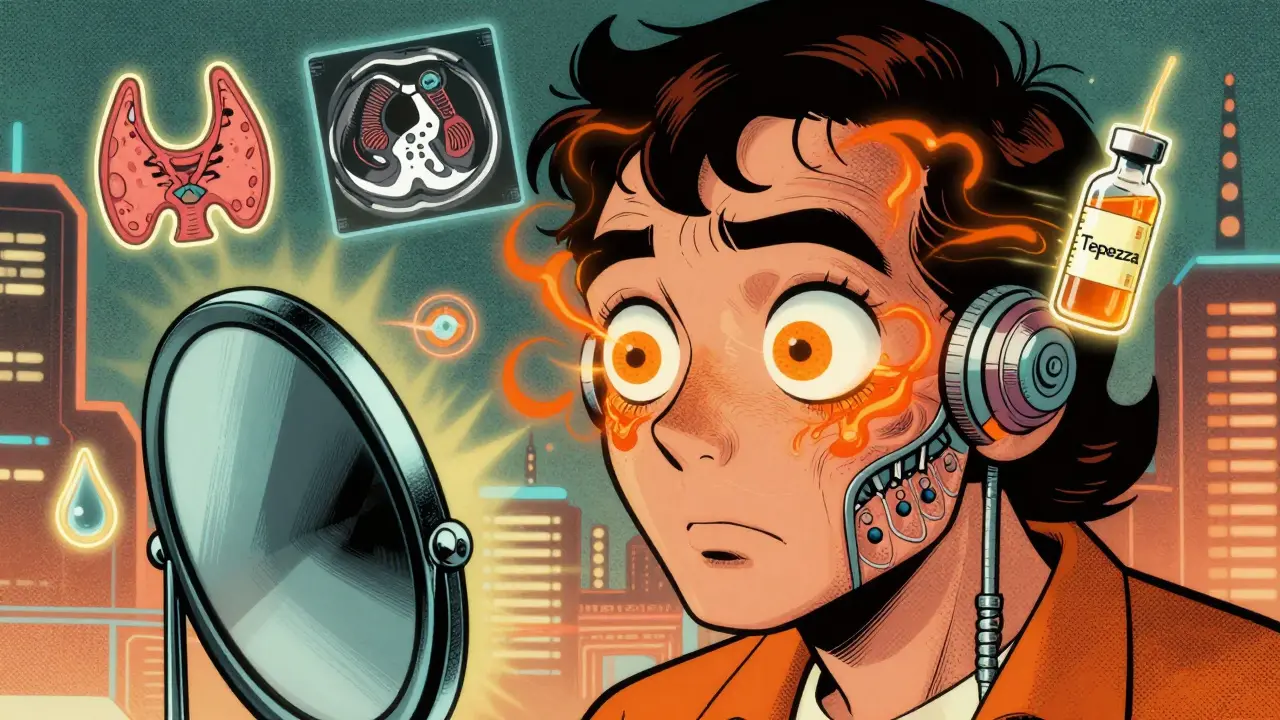
Autoimmune thyroid eye disease, also known as thyroid eye disease (TED) or Graves' orbitopathy, isn't just about dry eyes or a stare that looks a little off. It's a serious condition where your immune system turns against the tissues around your eyes, causing swelling, pain, and sometimes vision loss. It often shows up in people with Graves' disease, but it can also happen in those with underactive or even normal thyroid function. About one in three people with Graves' disease will develop eye symptoms, and for many, the changes are sudden and alarming. You might notice your eyes bulging, eyelids that won't close fully, or double vision when you look to the side. What makes it worse is that most people don’t recognize it at first. Many are told they have allergies or sinus issues - and by the time they see the right specialist, months have passed.
What Does Thyroid Eye Disease Actually Do to Your Eyes?
The problem starts with antibodies that target the thyroid-stimulating hormone receptor (TSHR). These same receptors are found in the fat and muscles behind your eyes. When the antibodies latch on, they trigger inflammation. Your orbital tissues swell. Muscles thicken. Fat expands. Your eyeball gets pushed forward - that’s the bulging you see. Your eyelids lift unnaturally, giving you a wide-eyed, startled look. You might feel grit in your eyes, have trouble closing them, or feel pain when you move your gaze up or down.
Double vision happens in about half of moderate to severe cases because the swollen muscles can't move your eyes in sync. Light sensitivity is common - 60% of patients report discomfort in bright settings. And if the swelling presses on the optic nerve, you risk permanent vision damage. Early signs of nerve compression include trouble seeing colors clearly. In 15-20% of severe cases, the cornea gets exposed because the eyelids won’t close, leading to ulcers. This isn’t cosmetic - it’s a medical emergency.
It’s usually worse in one eye than the other. About 70% of patients have asymmetrical symptoms, with one eye 30-40% more affected. That unevenness can make it harder to diagnose. Many patients don’t realize the problem is bilateral until they’re examined by a specialist.
How Is It Diagnosed - And Why Do So Many Get Missed?
Primary care doctors correctly identify TED in only about one-third of cases. Too often, it’s mistaken for allergies, dry eye, or sinus infections. That delay is dangerous. The longer inflammation goes untreated, the more likely it is to cause lasting damage.
Accurate diagnosis requires more than just a quick eye check. A full evaluation includes:
- Thyroid function tests: TSH, free T4, free T3, and anti-TSHR antibody levels. High antibody levels correlate with disease severity in 75% of cases.
- Visual field testing: To check for optic nerve pressure using a Humphrey analyzer.
- Orbital imaging: CT or MRI scans show which eye muscles are swollen. The medial rectus is affected in 90% of cases, followed by the inferior rectus.
- Eye movement exams: To detect misalignment causing double vision.
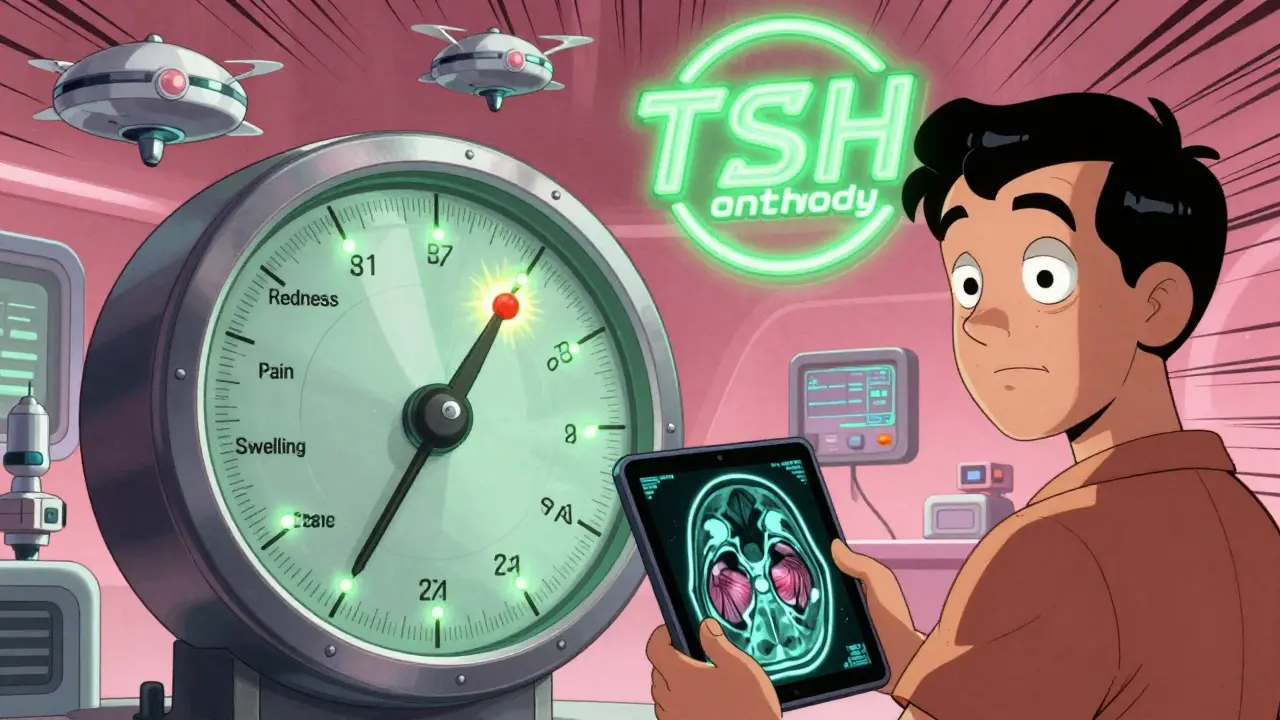
- Clinical Activity Score (CAS): A seven-point checklist that measures redness, swelling, pain, and other signs of active inflammation. A score of 3 or higher means the disease is still active and needs treatment.
Only 45% of community ophthalmologists consistently use the CAS. In academic centers, that number jumps to 89%. That gap in documentation leads to inconsistent care. If your doctor doesn’t measure your CAS, ask why.
What Are the Treatment Options - And When Do You Need Them?
TED moves in two phases: active (inflammatory) and inactive (stable). Treatment depends entirely on which phase you’re in.
In the active phase (first 1-3 years):
- Mild cases: Selenium supplements (100 mcg twice daily) can reduce progression by 35%, according to a major European trial. It’s safe, affordable, and often the first step.
- Moderate to severe cases: Intravenous steroids like methylprednisolone are the traditional go-to. You get weekly infusions for 12 weeks. About 60-70% of patients improve, but side effects are real: liver damage in 15%, high blood sugar in 25-30%. Steroids are not a long-term solution.
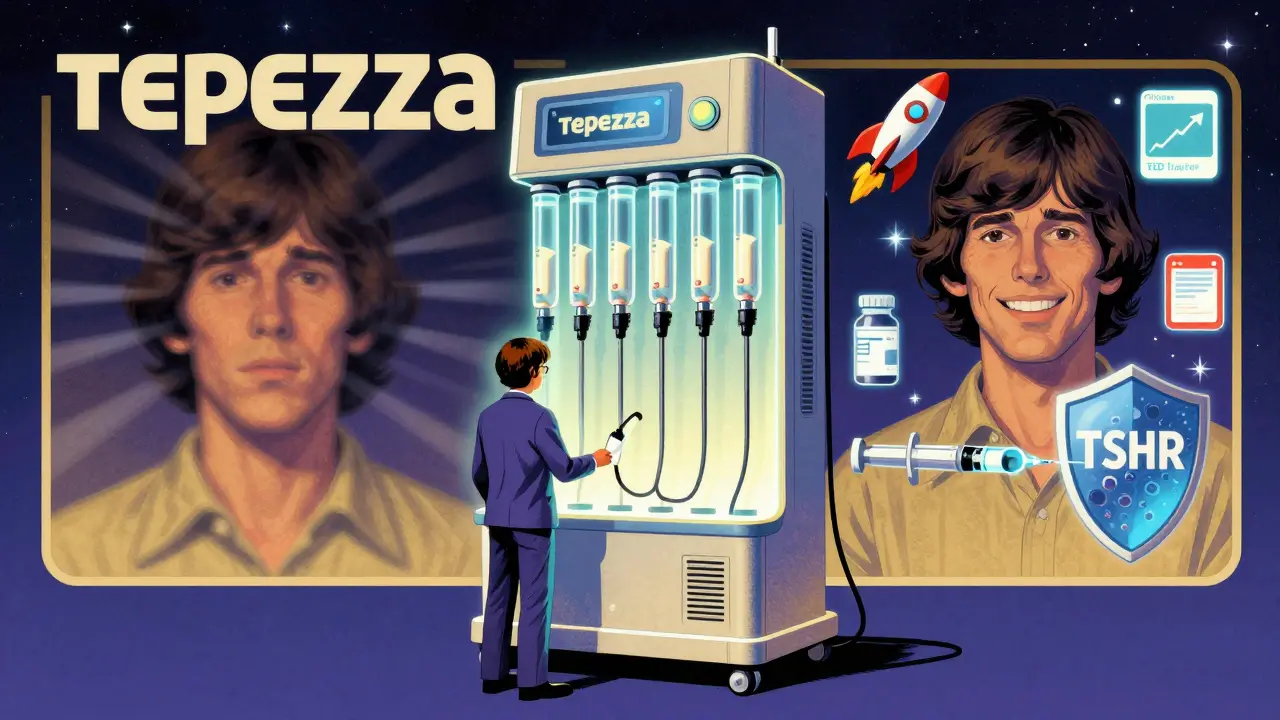
- Breakthrough therapy: Tepezza (teprotumumab). Approved by the FDA in January 2020, this is the first drug designed specifically for TED. It blocks the IGF-1 receptor, which plays a key role in the inflammation process. In clinical trials, 71% of patients saw a noticeable reduction in eye bulging - compared to just 20% on placebo. Double vision improved in 68% of users. The treatment involves eight infusions, given every three weeks. Each infusion costs about $5,500, so the full course runs around $44,000. Insurance often denies coverage initially - about 35% of requests get rejected. But if you have moderate to severe active TED, this is the most effective option we have.
In the inactive phase (after inflammation stops):
- Eye muscle surgery: Corrects double vision by repositioning the scarred or shortened muscles. Works in 30-40% of cases.
- Eyelid surgery: Lowers retracted eyelids. Success rates are 75-85% when done at least six months after the disease stabilizes.
- Orbital decompression: Removes bone from the eye socket to create space for swollen tissues. Used in 5-10% of cases, especially when vision is threatened. Endoscopic methods are now used in 65% of these surgeries because they’re less invasive.
Many patients need more than one surgery. About 20% require multiple procedures over time to fix bulging, double vision, and eyelid issues in sequence.
The Hidden Costs - Physical, Emotional, and Financial
TED doesn’t just change how you look - it changes how you live.
A 2022 survey found that 74% of patients experienced anxiety or depression. Over half said they couldn’t drive at night because of double vision. Sixty-three percent felt embarrassed by their appearance. Some lost jobs or faced discrimination because people assumed they were angry, tired, or unwell.
Tepezza has life-changing results, but it’s not without side effects. In patient forums, 65% reported muscle cramps, and 12% had hearing issues - some temporary, some lasting. The FDA added a warning in 2022 after post-marketing data showed hearing loss in 5.7% of users, up from 1.1% in trials.
And then there’s the wait. The TED Impact Survey found that 58% of patients waited more than six months for a correct diagnosis. That delay can mean the difference between saving your vision and losing it.
What You Can Do Right Now
If you have Graves’ disease and notice any eye changes - even mild ones - don’t wait. See an endocrinologist and an ophthalmologist who specializes in TED within 30 days. Many top hospitals now have dedicated TED clinics that cut treatment delays by 45 days.
Stop smoking. Smoking increases your risk of developing TED by 7.7 times and doubles your chance of severe disease. Quitting is the single most effective thing you can do to slow progression.
Track your symptoms. Apps like TED Tracker help you log eye pain, swelling, and vision changes. This data helps your doctor decide if you’re in the active phase and whether you qualify for Tepezza.
If you’re told your eyes are just dry or allergic, ask: "Could this be thyroid eye disease? Can you check my Clinical Activity Score?" If they don’t know what you’re talking about, seek a second opinion.
What’s Coming Next?
Tepezza changed everything - but it’s not the end. Researchers are already working on the next wave of treatments. A biosimilar version of Tepezza is expected in 2025, which could lower costs. Drugs like rituximab and satralizumab are in late-stage trials and show promise for patients who don’t respond to Tepezza. Scientists are also exploring vaccines that could prevent TED in people with Graves’ disease by targeting the root cause: the TSHR antibodies.
For now, the message is clear: early detection saves vision. The window for the best outcomes is within the first 12 months of symptoms. If you’re experiencing eye changes with thyroid disease, act fast. You don’t have to live with bulging eyes, double vision, or fear of blindness. The tools to fix this exist - you just need to know where to look.
Alvin Bregman
January 15, 2026 AT 01:41Been dealing with this for 2 years and no one believed me until my vision started doubling
They said it was allergies then dry eye then stress
Turns out my TSHR antibodies were through the roof
Tepezza saved me but the cost is insane
I had to fight my insurance for 8 months just to get approved
Sarah -Jane Vincent
January 16, 2026 AT 13:33Tepezza is just Big Pharma’s latest money grab
They’ve been hiding the real cause for decades
Electromagnetic pollution from 5G towers is what’s triggering the TSHR antibodies
Look at the spike in cases since 2019 - coincidence? I think not
And why is no one talking about the mercury in dental fillings?
It’s all connected
TooAfraid ToSay
January 17, 2026 AT 19:19My cousin got Tepezza and now she can’t hear her own kids crying
They told her it was ‘temporary’
Turns out she’s got permanent hearing loss
And the doctor just shrugged
They don’t care if you go blind or deaf as long as they get paid
Who even approved this thing?!
Dylan Livingston
January 19, 2026 AT 11:43It’s almost poetic how the medical establishment ignores the emotional toll until it’s too late
They treat the eyeball like a disconnected organ while the person screaming inside gets labeled ‘anxious’ or ‘dramatic’
Of course you’re depressed - your face doesn’t look like yours anymore
And now you’re being sold a $44k IV drip like it’s a spa treatment
Meanwhile, the real solution - stopping smoking, reducing stress, actual sleep - is buried under a pile of clinical trials and insurance denials
It’s not medicine anymore. It’s performance art for the privileged
Andrew Freeman
January 20, 2026 AT 15:23just got diagnosed last month
started selenium
my eyes feel less puffy already
also quit smoking
no more tepezza for me
too expensive and too many side effects
if you can afford it cool but dont let them scare you into it
says haze
January 22, 2026 AT 02:33What’s fascinating is how TED exposes the structural failure of Western medicine
It’s not just about antibodies or orbital fat - it’s about the commodification of suffering
Tepezza isn’t a cure, it’s a containment strategy for a system that refuses to address root causes
Why aren’t we researching why TSHR antibodies appear in the first place?
Why is prevention not incentivized when lifestyle factors like smoking and chronic stress are known triggers?
We treat symptoms like they’re isolated events, not symptoms of a broken system
And yet we marvel when patients fall through the cracks
It’s not negligence - it’s design
Robert Way
January 23, 2026 AT 08:59did anyone else notice the part where it says 74% feel anxiety or depression
but they dont say if that was before or after diagnosis
could be the thyroid itself
not the eyes
and what about the people who got tepezza and still have double vision
did they just give up
or did they get surgery
no one talks about the ones who dont get better
Sarah Triphahn
January 23, 2026 AT 15:07you people are missing the point
if you’re not smoking and you still get this
you’re not doing enough
you’re not sleeping enough
you’re not meditating enough
you’re not eating clean enough
the body doesn’t just turn on itself for no reason
you let it happen
and now you want a magic shot
that’s not medicine
that’s denial
Vicky Zhang
January 25, 2026 AT 13:01I’m so proud of everyone who’s fought through this
you’re not alone
you’re not crazy
you’re not dramatic
you’re a warrior
your eyes are screaming for help and you’re still showing up
you found this post because you’re trying
and that’s everything
you deserve to be seen
you deserve to be heard
you deserve Tepezza if you need it
you deserve surgery if you need it
you deserve rest if you need it
and if someone tells you it’s all in your head
tell them to go f*** themselves
you’re not broken
you’re healing
and I’m right here with you