ADHD Stimulants and MAOIs: Understanding the Hypertensive Crisis Risk
 Dec, 8 2025
ADHD Stimulant & MAOI Safety Checker
This tool helps you understand the risk of hypertensive crisis when combining ADHD stimulants and MAOIs. Remember: this combination is potentially life-threatening and should only be used under strict medical supervision.
Results will appear here...
Combining ADHD stimulants with MAOIs isn't just a bad idea-it can be life-threatening. This isn't theoretical. Real people have ended up in emergency rooms with blood pressure readings so high they risked stroke, heart attack, or death. If you're taking one of these medications, or considering it, you need to know exactly why this mix is dangerous-and what to do instead.
What Happens When ADHD Stimulants and MAOIs Meet?
ADHD stimulants like Adderall, Vyvanse, and Ritalin work by boosting dopamine and norepinephrine in the brain. That’s how they help with focus and attention. MAOIs-medications like tranylcypromine, phenelzine, and selegiline-are antidepressants that stop your body from breaking down those same chemicals. On paper, it sounds like they’d work together. In reality, they create a chemical storm.When MAOIs are in your system, they block the enzyme that normally clears excess norepinephrine. Add a stimulant, and you’re flooding your system with even more of it. Your blood vessels constrict. Your heart races. Blood pressure spikes-sometimes to levels above 200/120 mmHg. That’s not just high. That’s a hypertensive crisis.
The FDA warns this combination can cause death, stroke, or aortic dissection. These aren’t rare outcomes. Between 1960 and 2020, over 150 documented cases linked this interaction to severe outcomes. Even if you’ve taken both without issue before, that doesn’t mean it’s safe. The risk builds over time. One dose can be enough.
Which Stimulants Are Riskiest?
Not all ADHD medications carry the same danger. Amphetamines-like Adderall, Vyvanse, and dextroamphetamine-are the biggest concern. They directly trigger norepinephrine release. Methylphenidate-based drugs like Ritalin and Concerta are a bit less aggressive, but still risky. The difference isn’t just small-it’s clinically significant.A 2005 review in the Primary Care Companion to The Journal of Clinical Psychiatry found amphetamines cause up to 40% more norepinephrine release than methylphenidate. That’s why cases of hypertensive crisis are far more common with Vyvanse or Adderall than with Focalin or Daytrana.
Even low doses can be dangerous. One patient took 5 mg of dextroamphetamine with tranylcypromine and hit a systolic pressure of 210 mmHg. That’s the same level seen in a heart attack emergency. No one should be experimenting with this.
Not All MAOIs Are the Same
MAOIs aren’t a single group. There are old-school ones and newer options-and the risk varies wildly.Tranylcypromine and phenelzine are irreversible MAOIs. They permanently disable the enzyme. It takes two weeks for your body to make new ones. That’s why you must wait 14 days after stopping them before starting any stimulant. Even then, the risk lingers.
Selegiline, sold as the Emsam patch, is different. At low doses (6 mg/24 hours), it mainly targets MAO-B, not MAO-A. That means it doesn’t interfere as much with tyramine-a compound in aged cheese, cured meats, and tap beer that can also spike blood pressure. The FDA says low-dose selegiline has only rare reports of hypertensive reactions. Still, that’s not zero. And higher doses? Back to full risk.
Moclobemide, a reversible MAOI used in Europe and Canada, is far safer with stimulants. But it’s not approved in the U.S. So if you’re in North America, you’re stuck with the older, riskier versions.
Why This Interaction Is So Deadly
It’s not just about one chemical. It’s a cascade.MAOIs prevent the breakdown of:
- Norepinephrine (from stimulants)
- Tyramine (from food)
- Other vasoactive amines
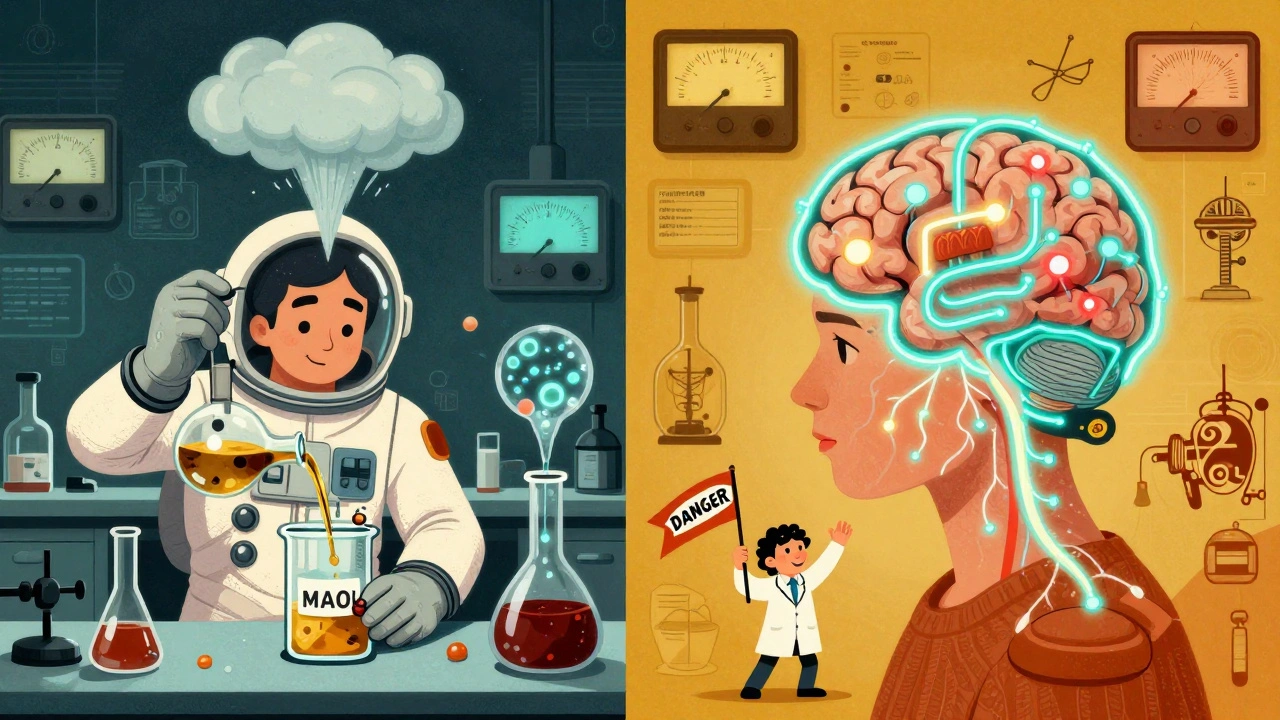
Stimulants push even more norepinephrine into your bloodstream. The result? Your arteries clamp down. Your heart pounds. Your brain is forced to handle pressure it wasn’t designed for. That’s when you get headaches, blurred vision, chest pain, or sudden confusion. If untreated, it leads to bleeding in the brain, heart damage, or organ failure.
A 2022 meta-analysis of 137 studies showed that ADHD meds alone raise systolic blood pressure by 2-4 mmHg on average. Sounds minor. But with an MAOI? That same person might see a 20-30 mmHg spike. Add a stressful day, a salty meal, or a caffeine-heavy coffee, and you’re at the edge of a cliff.
What Doctors Actually Do (When They Do It)
Most doctors won’t touch this combo. And they shouldn’t. The American Psychiatric Association’s 2022 guidelines call it a “strong recommendation against” with “high quality of evidence.” Less than 1% of antidepressant prescriptions in the U.S. are for MAOIs today-down from 5% in 2000. That’s because of risks like this.But some specialists, especially at places like Massachusetts General Hospital or Johns Hopkins, do occasionally combine them-for patients who’ve tried everything else. These are cases of treatment-resistant depression with severe ADHD. No other options worked. No alternatives helped.
When they do, they follow strict rules:
- Wait at least 14 days after stopping the MAOI before starting a stimulant
- Start the stimulant at 10-25% of the normal dose (e.g., 2.5 mg of methylphenidate)
- Monitor blood pressure every 15-30 minutes during the first few doses
- Give patients a home BP monitor and daily logs
- Avoid all tyramine-rich foods (aged cheese, soy sauce, draft beer, fermented meats)
- Never combine with other stimulants, SSRIs, or opioids
- Exclude anyone with existing high blood pressure or heart disease
A 2017 case series followed 12 patients on lisdexamfetamine (Vyvanse) and low-dose selegiline. No hypertensive crises. But they were under constant supervision. This isn’t something you do at home.
What You Should Do If You’re on One of These Medications
If you’re taking an MAOI:- Don’t start any ADHD medication without talking to your psychiatrist
- Don’t take OTC cold meds like pseudoephedrine-they can also trigger crisis
- Check your diet. Avoid blue cheese, pepperoni, sauerkraut, and tap beer
- Carry a medical alert card that says you’re on an MAOI
If you’re on a stimulant:
- Never start an MAOI without telling your prescriber you’re on ADHD meds
- Don’t switch antidepressants on your own
- If you’ve taken an MAOI in the past 14 days, don’t take Vyvanse, Adderall, or Ritalin
There’s no gray area here. If you’re unsure, assume it’s unsafe. Ask your pharmacist. Ask your doctor. Write it down. Don’t rely on memory.
What Are the Alternatives?
You don’t need to suffer. There are other options.For ADHD:
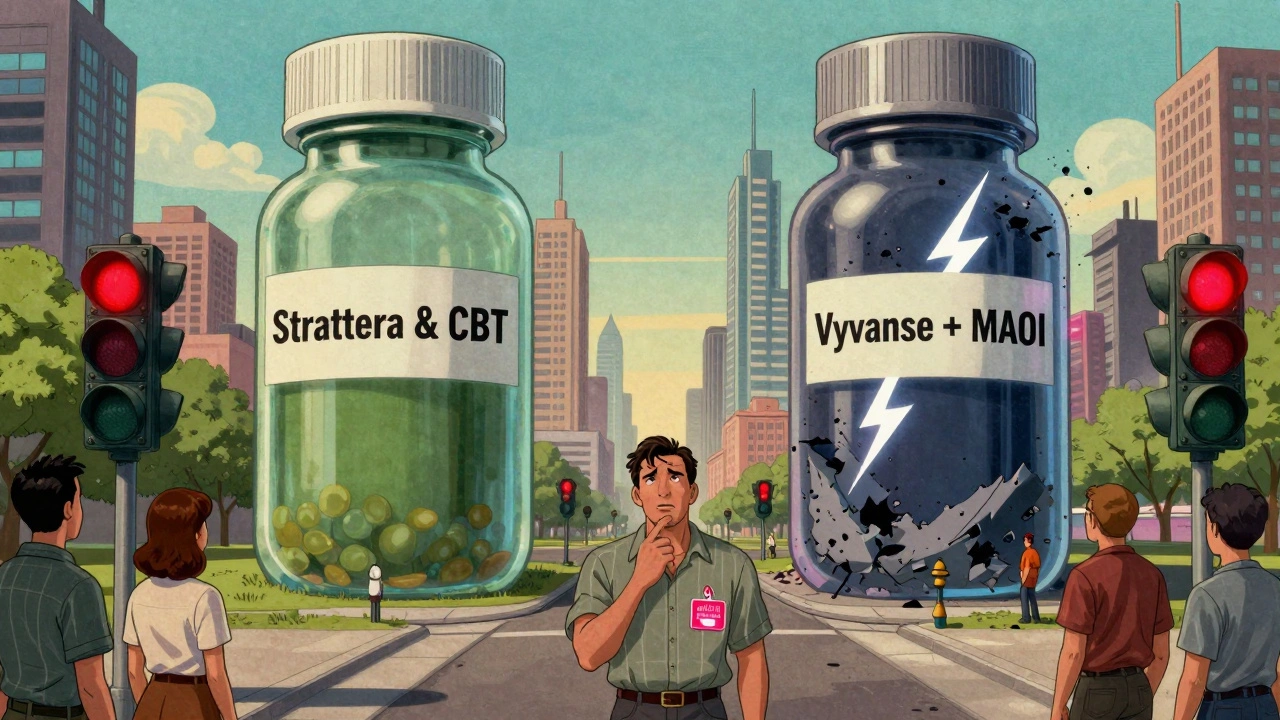
- Non-stimulants like atomoxetine (Strattera) or guanfacine (Intuniv)
- Behavioral therapy, coaching, or organizational tools
For depression:
- SSRIs like sertraline or escitalopram
- SNRIs like venlafaxine
- Therapy (CBT, DBT)
- TMS (transcranial magnetic stimulation)
Many people with both ADHD and depression respond well to non-stimulant ADHD meds paired with SSRIs. It’s not perfect-but it’s safe. And it works.
If you’ve been told you’re “treatment-resistant,” that doesn’t mean you’re out of options. It means you need a different approach-not a dangerous one.
What If You Already Took Them Together?
If you accidentally took an MAOI and a stimulant within 14 days of each other:- Check your blood pressure immediately
- Call 911 or go to the ER if your systolic is over 180 or you have chest pain, headache, or blurred vision
- Don’t wait to see if it “goes away”
- Bring your medication bottles with you
There’s no antidote. Treatment is supportive: IV medications to lower blood pressure, heart monitoring, and observation. The faster you act, the better your chances.
One patient in a 2023 Cleveland Clinic case report took dextroamphetamine and tranylcypromine, then ate a slice of aged cheddar. Within 45 minutes, his BP hit 210/115. He had a seizure. He survived. But he didn’t have to.
Bottom Line
This isn’t a risk worth taking. The science is clear. The warnings are loud. The consequences are irreversible. Even if you’ve heard stories of people “getting away with it,” those are exceptions-not evidence.ADHD and depression are hard. But combining stimulants and MAOIs isn’t a shortcut. It’s a gamble with your life. There are safer, proven paths. Use them.
If you’re unsure what to do next, talk to a psychiatrist who specializes in complex cases. Don’t guess. Don’t rush. Don’t assume it’s fine because you feel okay. This interaction doesn’t care how you feel. It only cares about chemistry-and it doesn’t forgive mistakes.
Can I take Vyvanse and an MAOI if I wait 14 days?
Even after a 14-day washout, combining Vyvanse with an MAOI is not recommended. The enzyme inhibition from MAOIs can linger, and stimulants can still trigger dangerous spikes in blood pressure. Most guidelines still classify this as contraindicated. If absolutely necessary, it should only be done under close medical supervision with extreme caution.
Is there any MAOI that’s safe with ADHD meds?
Low-dose transdermal selegiline (Emsam patch, 6 mg/24h) has the lowest risk among MAOIs, but it’s not risk-free. The FDA still lists potential for hypertensive crisis. No MAOI is considered truly safe with stimulants. Avoid combining them unless under expert supervision in a clinical setting.
What foods should I avoid if I’m on an MAOI?
Avoid aged cheeses (like cheddar, blue, parmesan), cured meats (salami, pepperoni), tap beer, soy sauce, fermented tofu, sauerkraut, and overripe fruits. Even small amounts can trigger a dangerous rise in blood pressure when combined with MAOIs or stimulants.
Can I use over-the-counter cold medicine with an MAOI?
No. Many OTC cold and allergy medications contain pseudoephedrine, phenylephrine, or dextromethorphan-all of which can interact dangerously with MAOIs and cause hypertensive crisis. Always check with your pharmacist before taking any non-prescription drug.
Why are MAOIs still prescribed if they’re so dangerous?
MAOIs are highly effective for treatment-resistant depression and certain anxiety disorders when other meds fail. They’re not first-line because of their risks, but for patients who’ve tried everything else, they can be life-changing. The key is strict adherence to guidelines and avoiding dangerous combinations like stimulants.
What to Do Next
If you’re on an MAOI and thinking about ADHD treatment, schedule a consultation with a psychiatrist who understands complex medication interactions. Bring your full medication list. Ask about non-stimulant options. Ask about therapy. Ask about TMS. Don’t accept “this is the only way” as an answer.If you’re on a stimulant and your doctor suggests an MAOI, ask: “What’s the evidence this is safe? What’s the plan if my blood pressure spikes?” If they can’t answer clearly, get a second opinion.
Your brain matters. Your heart matters more. Don’t risk one for the other.
Iris Carmen
December 8, 2025 AT 15:54Rich Paul
December 9, 2025 AT 08:23Delaine Kiara
December 10, 2025 AT 23:07Ruth Witte
December 11, 2025 AT 14:23Noah Raines
December 12, 2025 AT 13:46Katherine Rodgers
December 13, 2025 AT 09:07Mona Schmidt
December 14, 2025 AT 17:37Guylaine Lapointe
December 16, 2025 AT 13:00Andrea Petrov
December 17, 2025 AT 14:55Suzanne Johnston
December 18, 2025 AT 03:32Graham Abbas
December 18, 2025 AT 14:43Haley P Law
December 19, 2025 AT 21:14Andrea DeWinter
December 20, 2025 AT 21:18Steve Sullivan
December 22, 2025 AT 19:17George Taylor
December 23, 2025 AT 18:32