Acetaminophen Overdose: Recognizing Liver Damage Signs and Getting Treatment Fast
 Jan, 1 2026
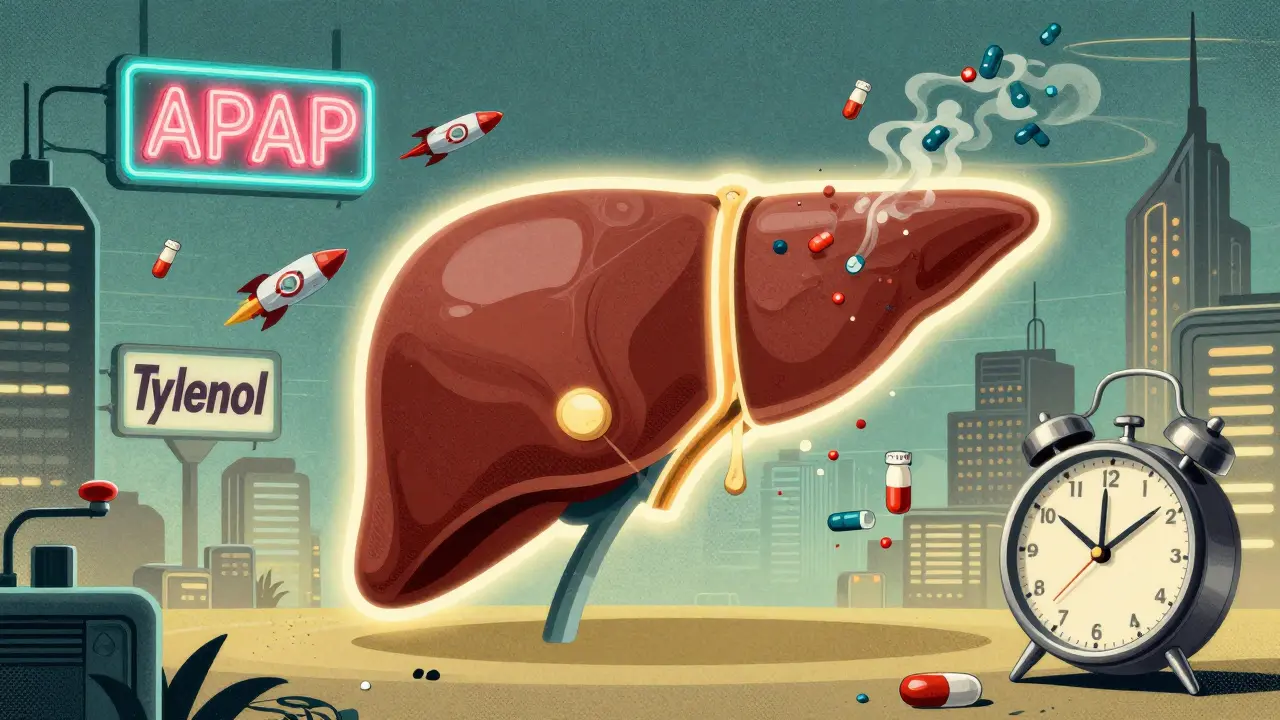
Every year, thousands of people end up in the emergency room because they took too much acetaminophen - the active ingredient in Tylenol and hundreds of other painkillers. Many didn’t mean to overdose. They just didn’t realize how easy it is to go over the safe limit. Acetaminophen is everywhere: cold medicines, prescription painkillers, sleep aids. And when the liver can’t handle the load, damage starts quietly - often with no symptoms at first. By the time you feel sick, it might already be too late.
What Happens When You Take Too Much Acetaminophen?
Acetaminophen is broken down in the liver. Most of it turns into harmless waste and leaves your body. But a small portion becomes a toxic chemical called NAPQI. Normally, your liver uses glutathione - a natural antioxidant - to neutralize it. But when you take more than 4,000 mg in 24 hours, that system gets overwhelmed. Glutathione runs out. NAPQI starts attacking liver cells. The damage builds up silently. By the time you feel pain or see yellowing skin, your liver is already under severe stress.
The threshold isn’t high. Eight 500 mg pills in one day - that’s it. And if you drink alcohol regularly, your liver is already working harder. Even one drink a day can triple your risk of damage. Same goes for people with hepatitis B or C, or those taking seizure medications like carbamazepine. These drugs speed up how fast your liver turns acetaminophen into poison.
Stage 1: The Silent Phase (0-24 Hours)
This is the most dangerous stage because you might feel fine. No pain. No nausea. No warning. In fact, 30 to 40% of people who overdose show no symptoms at all during this time. But inside, the chemical storm is already brewing. If you took more than the recommended dose - even if you feel okay - don’t wait. Go to the ER.
Some people do get early signs: mild nausea (78% of cases), vomiting (65%), or just feeling off. These aren’t strong enough to scare most people. Many assume it’s a stomach bug. But if you took acetaminophen in the last 24 hours and feel even slightly unwell, treat it like an emergency.
Stage 2: The Warning Signs (24-72 Hours)
Now the body starts screaming. Right upper abdominal pain becomes common - 85% of people feel it. It’s not gas. It’s not indigestion. It’s your liver swelling. Nausea and vomiting get worse. You might feel dizzy or unusually tired.
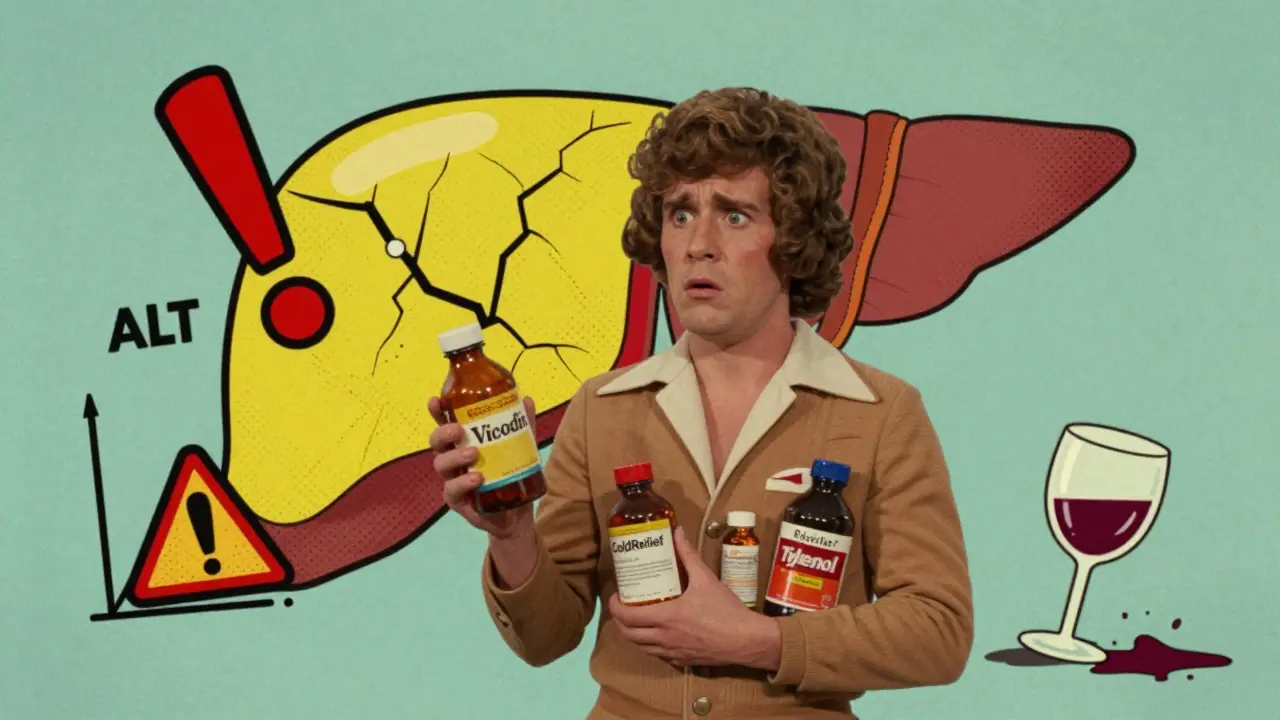
This is when blood tests begin to show damage. Liver enzymes like ALT, which normally sit between 7 and 56 IU/L, can jump to over 1,000. That’s a red flag. If you’ve taken acetaminophen recently and your ALT is rising, you need treatment - even if you don’t feel terrible yet.
Stage 3: The Crisis (72-96 Hours)
This is where things turn life-threatening. ALT levels can spike past 10,000 IU/L. Jaundice appears - yellow eyes and skin. Your urine turns dark. Your stool turns pale. You might feel confused, disoriented, or have trouble staying awake. This isn’t just fatigue. It’s brain fog from liver failure.
Your blood can’t clot properly. INR levels rise above 1.5, meaning even a small cut could bleed uncontrollably. Kidneys start failing in half of severe cases. Some develop pancreatitis. At this point, survival depends on immediate medical intervention.
Stage 4: Recovery or Death (Beyond 5 Days)
If you get treated early, recovery is likely. About 85 to 90% of people who receive N-acetylcysteine (NAC) within the first 8 hours fully recover. Their liver repairs itself. Blood tests return to normal. They go home in a few days.
But if treatment is delayed, the odds flip. Without NAC, death rates jump to 25-40%. Even with treatment after 15 hours, effectiveness drops to 55%. If your liver shuts down completely, you might need a transplant. About 1-2% of severe overdoses reach this point. But for those who get one, 85% survive at least five years.
The Only Antidote: N-Acetylcysteine (NAC)
NAC is the only FDA-approved treatment for acetaminophen overdose. It works by replacing the glutathione your liver lost and binding to leftover NAPQI before it can do more damage. The sooner you get it, the better.
The standard IV protocol is 21 hours long: 150 mg/kg over the first hour, then 50 mg/kg over the next four hours, then 100 mg/kg over the remaining 16 hours. Oral NAC takes longer - 72 hours of doses every four hours - but it works if you can’t get IV access.
Studies show NAC is 98% effective if given within 8 hours. After 8 hours, it still helps - but less so. Even if you’re 24 hours past ingestion, NAC is still recommended. It can reduce inflammation and support healing, even when the damage is already done.
What Else Do Hospitals Do?
At the ER, they’ll check your acetaminophen level with a blood test. If it’s above 150 µg/mL at the 4-hour mark, you’ll get NAC. If you took it within the last 1-2 hours, they might give you activated charcoal to stop more absorption.
You’ll get fluids to keep your kidneys working. Ondansetron helps with vomiting. Vitamin K or fresh frozen plasma may be used if your blood won’t clot. If your kidneys fail, dialysis might be needed. If your liver is beyond repair, doctors use the King’s College Criteria to decide if you need a transplant. If your pH is below 7.3, your INR is over 6.5, and your creatinine is above 3.4 mg/dL - you’re in critical condition with no chance without a new liver.
Why People Overdose Without Realizing It
Most overdoses aren’t intentional. They’re accidental. And the biggest reason? Hidden acetaminophen.
Many prescription painkillers - like Vicodin, Percocet, and Norco - contain acetaminophen. One Vicodin tablet has 300 mg. Take two for pain, then grab a Tylenol for a headache? You’ve already hit 900 mg. Add a cold medicine with 325 mg? Now you’re at 1,225 mg in just a few hours. Do that twice a day for a few days? You’re over the limit.
Studies show 68% of people on patient forums didn’t know this. They thought they were just taking “pain pills” and “fever reducers” separately. They didn’t realize they were doubling up.
Also, many don’t know the difference between regular and extended-release pills. Some extended-release versions are designed to be taken every 8 hours - not every 4. Taking them too often pushes you over the edge.
Who’s at Highest Risk?
- People who drink alcohol regularly - even one drink a day increases liver damage risk by 3-4 times.
- Those with hepatitis B or C - their livers are already damaged, making them 65% more vulnerable.
- People on seizure meds - drugs like phenytoin or carbamazepine speed up toxin production.
- Those with poor nutrition - low protein intake cuts glutathione by 25-30%, leaving the liver defenseless.
- Older adults - metabolism slows, so the drug stays in longer.
- Children and teens - accidental overdoses are common when pills are left within reach.

What You Can Do to Prevent Overdose
- Always check labels - look for “acetaminophen” or “APAP” on every pill bottle. It’s in more than 600 products.
- Never mix painkillers - if you’re taking a prescription with acetaminophen, don’t take Tylenol or cold medicine on top.
- Stick to 3,000 mg max per day - even though the official limit is 4,000 mg, experts now recommend 3,000 mg for safety, especially if you drink or have liver issues.
- Use a pill tracker - write down every dose. Use a phone app if needed.
- Keep meds out of reach - kids and teens accidentally overdose more than you think.
- Don’t take it for more than 10 days straight - if pain lasts longer, see a doctor. There are better long-term options.
What If You Think You Overdosed?
Don’t wait. Don’t hope it’ll pass. Don’t call a friend first. Go to the ER immediately. Bring the pill bottle with you. Tell them exactly what you took, when, and how much.
Time is everything. Every hour after ingestion increases your risk of liver failure by 8.5%. If you’re treated within 8 hours, your chance of survival is over 99%. After 15 hours, it drops below 60%.
Even if you feel fine, get checked. Silent damage is real. And NAC works best when given early.
What’s Next for Treatment?
Researchers are looking at new ways to help. One promising area is nitric oxide. Early studies in animals show it helps the liver regenerate faster - even after damage has started. That could mean NAC doesn’t need to be given within 8 hours to work. Future treatments might combine NAC with nitric oxide boosters to extend the treatment window.
Another breakthrough is a blood test for microRNA-122. It can detect liver injury within 2 hours of overdose - way before ALT levels rise. This test is in phase II trials and could soon be in ERs, letting doctors treat people before symptoms even appear.
Recovery After the Overdose
If you survive and get treated, most people recover fully. About 92% have normal liver function within three months. No scarring. No long-term issues.
But 8% have mild, ongoing enzyme elevations. That doesn’t mean damage is still happening. It just means their liver is still healing. They need follow-up blood tests every few months for a year to make sure everything settles.
There’s no permanent scar from acetaminophen overdose - if caught in time. The liver is one of the few organs that can regenerate completely. But only if you stop the poison and give it time.
Final Warning
Acetaminophen is safe when used correctly. But it’s also one of the most dangerous drugs if misused. You don’t need to be suicidal to overdose. You just need to be unaware. A single extra pill. A forgotten cold medicine. A drink with dinner. That’s all it takes.
Know the signs. Know the limits. Know the risks. And if you’re ever unsure - go to the ER. It’s better to be safe than sorry. Your liver can’t ask for help. You have to do it for it.
Kristen Russell
January 2, 2026 AT 21:55Just took a second look at my medicine cabinet after reading this. Scary how easy it is to accidentally stack up. I’m switching to ibuprofen for headaches now.
Lee M
January 3, 2026 AT 05:41They call it 'safe' like it's a virtue. It's not. It's a silent killer disguised as comfort. We've been conditioned to trust pills like they're holy water. The liver doesn't beg. It just stops. And then you're dead. No fanfare. No warning. Just silence. And the pharmaceutical companies? They're still selling it in every drugstore aisle like it's candy.
Matthew Hekmatniaz
January 5, 2026 AT 01:55As someone who's had hepatitis C, this hits hard. I never realized how much more vulnerable I was. I used to take Tylenol for back pain like it was nothing. Now I avoid it completely. Even one drink with it? No way. This post saved me from a potential disaster. Thank you for sharing.
Bryan Anderson
January 5, 2026 AT 02:53Thank you for the thorough breakdown. I appreciate the clinical precision and the emphasis on NAC timing. I’ve shared this with my elderly parents who take multiple medications daily. Many doctors don’t emphasize the hidden acetaminophen risk in combination drugs. This is exactly the kind of public health information that needs to be more widely known.
Liam George
January 6, 2026 AT 23:07Let me ask you something. Who really benefits from acetaminophen being so widely available? Big Pharma. They know the liver can’t regenerate forever. They know people will keep popping pills. They know the ERs will be there to patch them up with NAC - which they also sell. It’s a closed-loop profit machine. The FDA? Complicit. The CDC? Silent. They don’t want you to know that 4,000 mg is a death sentence for half the population. They want you to keep buying. Wake up.
Dusty Weeks
January 8, 2026 AT 12:30bro i took 6 tylenol last night for my headache and then had a beer 😬 i’m gonna go to the er rn brb
Sally Denham-Vaughan
January 9, 2026 AT 10:27My mom took too much after surgery and didn’t realize it until she turned yellow. She’s fine now - got NAC at 6 hours - but I swear, I now check every pill bottle like it’s a bomb. I even made a little cheat sheet for my family. This stuff is too easy to mess up.
Bill Medley
January 10, 2026 AT 20:08The data presented is both compelling and clinically significant. The distinction between the 4,000 mg regulatory limit and the 3,000 mg recommended safety threshold is a critical public health nuance. I recommend dissemination to primary care providers.
Richard Thomas
January 12, 2026 AT 08:32There’s something deeply human about how we treat our bodies like machines we can overwork without consequence. We push through pain, numb the symptoms, ignore the whispers of our organs - because we’ve been taught that relief is a right, not a privilege. The liver doesn’t scream. It doesn’t beg. It just… stops. And we wonder why we’re tired. Why we’re sick. Why we don’t feel like ourselves. We’ve outsourced our health to pills and convenience. We don’t want to hear that the answer isn’t more medicine - it’s rest, it’s water, it’s listening. But here we are. Again. Another overdose. Another silent failure. Another liver that gave everything and got nothing in return. We don’t need more warnings. We need more humility.
Paul Ong
January 13, 2026 AT 09:42Just saved this for my sister shes on seizure meds and takes tylenol all the time she needs to see this
Ann Romine
January 14, 2026 AT 00:17In my culture, we use herbal teas and rest for headaches. No pills. I never understood why Americans reach for Tylenol so quickly. Now I see - it’s not just habit. It’s a system. And this post helped me understand why so many people end up in crisis. Thank you for the clarity.